Free Shipping
on orders over $150.00
$0.00
$150.00
Add $150.00 more for free shipping!


Many adults consider cannabis for wellness or recreation but face overwhelming choices across product types, potencies, and consumption methods. Complex terminology and inconsistent labelling complicate selection, increasing risks of unsatisfying or unsafe experiences. A structured workflow helps you prepare, assess, compare, verify, and refine product choices to maximise benefits while minimising risks.
| Point | Details |
|---|---|
| Structured approach empowers safe selection | A step-by-step workflow reduces confusion and improves cannabis product outcomes |
| Prerequisites include legal eligibility and basic cannabis knowledge | Know THC, CBD, terpenes, and verify lab reports before purchasing |
| Personal profiling optimises product matching | Track consumption details to refine future selections based on real experiences |
| Quality verification prevents safety issues | Lab test results confirm potency and absence of contaminants |
| Understanding consumption methods guides choices | Inhalation offers rapid onset while edibles provide longer duration effects |
Before selecting cannabis products, verify your legal eligibility and residence in a region where licensed sales are permitted. Understanding basic cannabis terminology empowers informed decisions.
You need working knowledge of key compounds:
Access to lab reports and trustworthy vendor information is essential for verifying product quality. Awareness of personal health conditions and medication interactions protects against adverse reactions. Clinical guidelines recommend healthcare consultation before cannabis use, especially for patients on other medications.
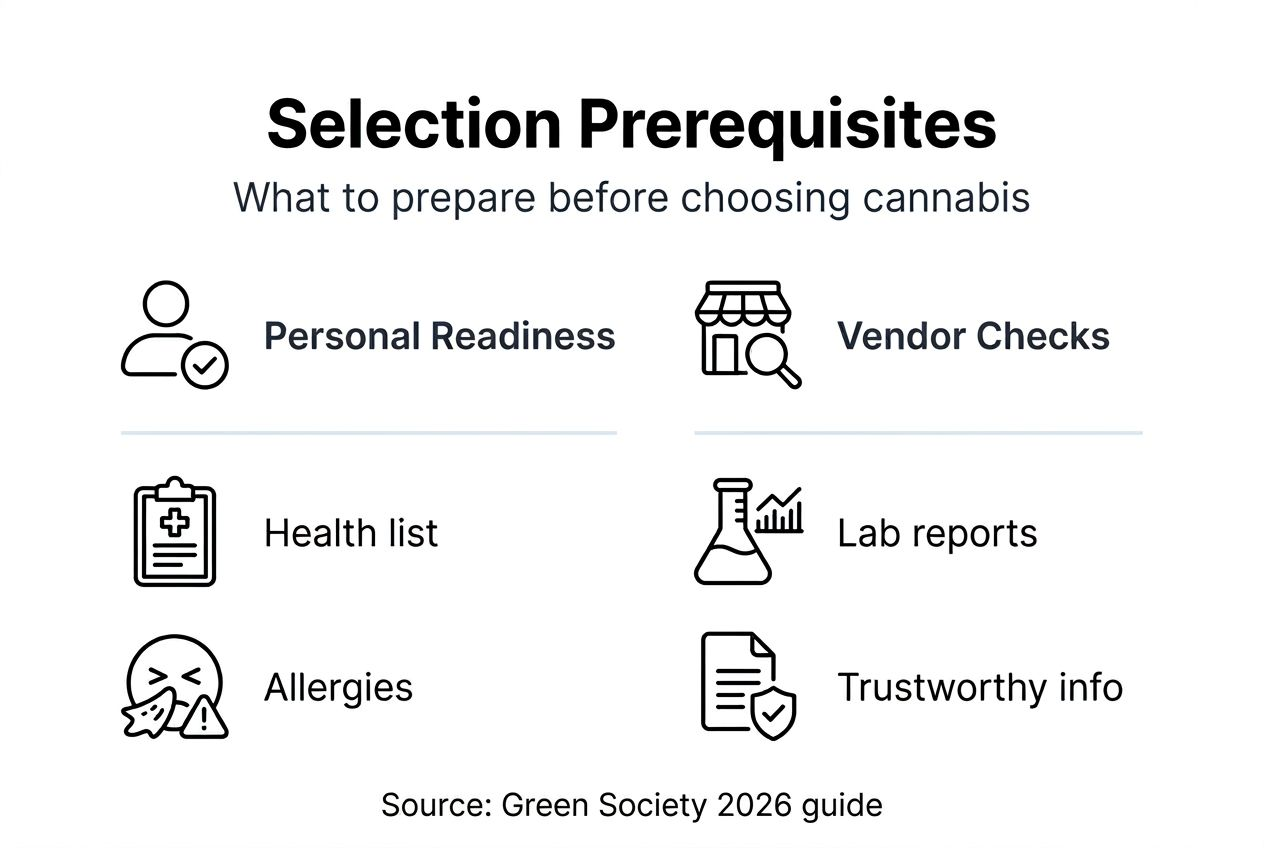
Pro Tip: Document allergies, existing medications, and health conditions in a personal reference sheet before consulting vendors or healthcare providers.
When considering medical cannabis, professional guidance ensures appropriate product selection aligned with treatment goals. Review our cannabis purchasing guide for detailed preparation steps and legal requirements.
Clarifying your cannabis goals guides product selection effectively. Start by defining your primary motivation: medical symptom management or recreational enjoyment. Medical users seek relief from specific conditions like chronic pain, anxiety, or sleep disorders. Recreational users prioritise relaxation, social enhancement, or creative stimulation.
Evaluate past cannabis experiences honestly. Consider previous consumption methods, doses, and reactions to different product types. New users should acknowledge zero tolerance, while experienced consumers can identify preferred strains and potencies. Past negative experiences like paranoia or excessive sedation reveal products or doses to avoid.
Identify desired effects with precision:
Document preferences in a personal cannabis profile tracking consumption goals, tolerance levels, preferred effects, and products to avoid. This living document evolves as you gain experience and refine preferences.
Pro Tip: Start with low doses (2.5-5mg THC for edibles, single inhalation for smoking) and note effects in your profile to refine future choices safely.
Clearer personal goals enable understanding different cannabis product types and consumption methods, which we explore next. Visit choosing cannabis products for detailed guidance on matching products to specific needs.
Cannabis products fall into distinct categories, each offering unique benefits and considerations. Flower (dried cannabis buds) allows traditional smoking or vaporising with immediate effect control. Edibles (gummies, chocolates, beverages) provide discreet consumption with longer-lasting effects. Concentrates (shatter, wax, oils) deliver high potency for experienced users. Vapes offer portable convenience with rapid onset. Pre-rolls provide ready-to-use convenience without preparation.
Consumption methods dramatically affect onset time and effect duration:
| Method | Onset Time | Duration | Best For |
|---|---|---|---|
| Smoking/Vaping | 2-5 minutes | 2-3 hours | Immediate relief, precise dosing |
| Edibles | 30-90 minutes | 4-6 hours | Long-lasting effects, discreet use |
| Tinctures | 15-45 minutes | 3-4 hours | Sublingual absorption, flexible dosing |
| Topicals | 15-30 minutes | 2-4 hours | Localised relief without psychoactive effects |
Inhalation methods provide rapid onset (2-5 minutes) allowing precise dosage control, favoured by users needing immediate effects. Smoking delivers fast results but may irritate lungs. Vaping heats cannabis without combustion, producing smoother vapour with fewer irritants.
Edibles produce longer lasting effects (4-6 hours) with delayed onset (30-90 minutes), requiring careful dosage consideration to avoid overconsumption. Liver metabolism converts THC into a more potent form, intensifying psychoactive effects compared to inhalation.
Concentrates suit experienced users seeking maximum potency through dabbing or vaporising. Topicals address localised pain and inflammation without entering the bloodstream, ideal for users avoiding psychoactive effects.
Pro Tip: Always wait at least 90 minutes before redosing edibles to avoid overconsumption from delayed onset effects.
Understanding these categories and methods prepares you to analyse specific product details like potency and reviews. Explore our cannabis product types guide for comprehensive comparisons.
Evaluating product specifications requires examining cannabinoid profiles carefully. THC/CBD ratios determine psychoactive intensity and therapeutic potential. High THC products (15-30%+) produce stronger euphoria but may increase anxiety in sensitive users. Balanced ratios (1:1 THC:CBD) offer therapeutic benefits with milder psychoactive effects. CBD-dominant products provide relaxation without intoxication.
Terpene contents influence flavour, aroma, and effects through the entourage effect, where compounds work synergistically:
Potency directly affects psychoactive and therapeutic outcomes. Beginners should start with lower potency products (5-10% THC) to assess tolerance safely. Experienced users may prefer higher potency for efficient dosing and cost effectiveness.
Lab-tested data verifies product claims and ensures accuracy. Certificates of Analysis (COAs) confirm advertised potency matches actual cannabinoid content. Discrepancies between marketing and lab results signal unreliable vendors.
User reviews provide real-world feedback on effects, taste, and quality. Focus on detailed reviews describing specific experiences rather than vague praise. Look for patterns across multiple reviews regarding onset time, duration, and side effects. Verified purchase badges increase review credibility.
Distinguish verified details from vague marketing claims. Terms like “premium quality” or “best strain” lack substance without supporting data. Specific information about cultivation methods, curing processes, and terpene profiles indicates transparency.
After shortlisting products, verifying quality and compliance becomes critical. Check our online cannabis purchasing guide for detailed comparison strategies.
Lab reports (Certificates of Analysis) decode product safety and quality. Each COA displays cannabinoid percentages, contaminant screening results, and testing dates. Verify THC and CBD levels match product labelling within acceptable variance (typically ±10%). Testing dates should be recent, ideally within six months of purchase.
Lab test results verifying cannabinoid profiles and contamination absence are essential quality indicators. Contaminant screening detects:
Compliance standards vary by jurisdiction but typically mandate third-party testing, child-resistant packaging, and clear labelling. Licensed vendors display regulatory approval numbers and batch tracking information. Packaging must include warnings, dosage instructions, and cannabinoid content.
Recognise red flags signalling quality concerns:
| Quality Indicator | What to Look For | Red Flag |
|---|---|---|
| Lab Testing | Recent COA with detailed results | No lab report or expired dates |
| Packaging | Child-resistant, compliant labelling | Generic bags, missing warnings |
| Vendor Licence | Visible regulatory approval | No licence number displayed |
| Batch Tracking | Unique identifiers for traceability | No batch or lot information |
“Third-party lab testing is not optional—it’s a regulatory requirement ensuring consumer safety and product integrity across legal cannabis markets.”
Once assured of quality, finalise product selection using your personal cannabis profile. Review our cannabis buying online guide for compliance verification checklists.
Maintaining a consumption diary optimises future product choices. Document each experience with specific details:
Use past experiences to adjust product selection and dosage strategically. If a product caused excessive drowsiness, try lower doses or switch to sativa-dominant strains for daytime use. Insufficient effects indicate tolerance increases requiring potency adjustments.
Track contextual factors influencing experiences. Cannabis effects vary based on empty versus full stomach, stress levels, and concurrent medications. Evening consumption may produce different results than morning use due to natural circadian rhythms.
Strain-specific responses reveal personal sensitivities. Some users find indica strains ideal for sleep but anxiety-inducing during daytime. Others prefer hybrid strains offering balanced effects across situations.
Benefit from a refined personal cannabis profile by matching products to specific occasions. Your diary becomes a personalised reference guide identifying reliable products for sleep, social events, pain management, or creative activities.
Pro Tip: Regularly update your profile every 2-3 months to reflect changing tolerance levels, new product discoveries, and evolving preferences.
With the workflow complete, understanding common mistakes helps avoid selection pitfalls. Visit choosing cannabis products for profile templates and tracking tools.
Ignoring lab test results exposes users to safety risks including contaminant exposure and inaccurate dosing. Always request COAs before purchasing and verify results through independent databases when available. Skipping this step may result in consuming pesticide-laden products or mislabelled potencies.
Assuming all products work identically causes significant dosing errors. A 10mg THC gummy affects users differently than 10mg smoked flower due to metabolism differences. Edibles undergo liver processing, creating stronger psychoactive compounds. Inhalation bypasses first-pass metabolism, producing milder effects at equivalent doses.
Neglecting health conditions and medication interactions creates dangerous situations. Cannabis affects blood pressure, heart rate, and medication metabolism. Anticoagulants, sedatives, and antidepressants may interact adversely with cannabinoids. Consultation with healthcare providers prevents serious complications.
Overlooking delayed onset in edibles leads to overconsumption. Impatient users consume additional doses before initial effects manifest, resulting in overwhelming intoxication hours later. This mistake accounts for most emergency room visits related to cannabis.
About 30% of new users report suboptimal experiences due to poor selection practices. Common errors include:
“The most preventable cannabis experiences stem from impatience with onset times and neglecting to start with low doses, especially among new users unfamiliar with their tolerance levels.”
After learning pitfalls, understanding expected outcomes helps measure selection success. Review detailed mistake prevention strategies to refine your approach.
Successful cannabis product selection produces predictable, satisfying experiences aligned with your documented goals. Onset and duration should match consumption method benchmarks:
| Product Type | Expected Onset | Typical Duration | Success Indicator |
|---|---|---|---|
| Smoked Flower | 2-5 minutes | 2-3 hours | Immediate symptom relief, controlled intensity |
| Vaporised Concentrates | 2-10 minutes | 2-4 hours | Smooth effects without harshness |
| Edibles | 30-90 minutes | 4-6 hours | Sustained relief without overwhelming peaks |
| Tinctures (sublingual) | 15-45 minutes | 3-4 hours | Flexible dosing, predictable effects |
| Topicals | 15-30 minutes | 2-4 hours | Localised relief without psychoactive effects |
Effective therapeutic experiences demonstrate measurable symptom improvement. Pain reduction, anxiety relief, or improved sleep quality indicate appropriate product matching. Recreational satisfaction includes desired mood enhancement, social comfort, or creative stimulation without adverse reactions.
Safety and compliance indicators confirm responsible selection:
Evaluate future purchases by comparing new products against your consumption diary baseline. Consistent positive experiences with specific strains or brands indicate reliable choices worth repeating. Disappointing results prompt adjustments in potency, consumption method, or product category.
Adjustment strategies include:
With clear outcome expectations, you’re ready to explore trusted resources supporting confident cannabis selection and purchase.
Green Society offers comprehensive guides supporting every stage of your cannabis selection workflow. Our educational resources explain product categories, consumption methods, and quality verification in practical detail.
Access detailed selection frameworks matching your specific needs and preferences. Our product types guide breaks down differences between flowers, edibles, concentrates, and vapes with clear comparison tables. Complete your confident purchase using our step-by-step online purchasing guide covering legal requirements, vendor verification, and order placement best practices. Every resource helps you apply the workflow principles covered in this article to real purchasing decisions.
Start with low-dose products (2.5-5mg THC for edibles, single inhalation for smoking) and wait full onset periods before considering additional doses. Consult healthcare providers if using cannabis for medical purposes or taking prescription medications. Choose lab-tested products from licensed vendors to ensure quality and safety.
Look for cannabinoid percentages matching product labels, contaminant screening showing zero detections of pesticides and heavy metals, and recent testing dates within six months. Verify the lab conducting tests holds independent accreditation. COAs should display batch numbers matching product packaging for traceability.
Tracking consumption details helps identify optimal products, doses, and consumption methods for your specific needs. Documented experiences reveal tolerance changes over time and prevent repeated mistakes. Your personalised diary becomes a reliable reference guide improving future product selections and avoiding adverse reactions.
Trustworthy vendors display regulatory licence numbers, provide third-party lab reports for all products, and maintain transparent sourcing information. Check for secure payment systems, clear return policies, and responsive customer service. Licensed vendors comply with packaging requirements including child-resistant containers and complete ingredient labelling.