Free Shipping
on orders over $150.00
$40.00
$150.00
Add $110.00 more for free shipping!
-
×
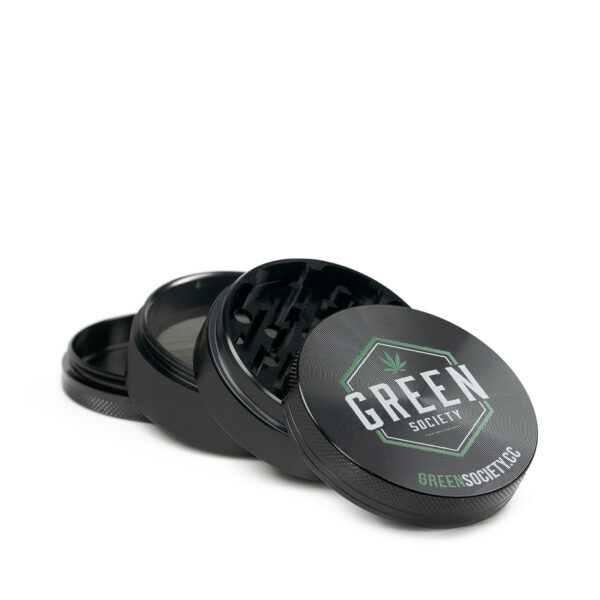 Green Society Herb Grinder
$40.00
Green Society Herb Grinder
$40.00


TL;DR:
- Microdosing involves taking sub-perceptual doses of substances like cannabis, LSD, or psilocybin to improve mood and focus.
- Scientific evidence suggests benefits are often placebo-driven, with no consistent measurable improvements beyond expectation.
- Safety considerations include legal restrictions, dosage accuracy, potential anxiety, and contraindications for certain health conditions.
Most people hear “microdosing” and immediately picture someone experimenting with psychedelics in a Silicon Valley office. That association isn’t wrong, but it’s far from the full picture. Microdosing actually spans a range of substances, including cannabis, and interest in it has grown well beyond tech circles into mainstream wellness conversations. Whether you’re curious about the science, the claimed benefits, or how to approach it safely, this guide covers everything you need to know, from core definitions to practical routines and honest caveats.
| Point | Details |
|---|---|
| Microdosing defined | Microdosing involves taking tiny amounts of psychedelics or cannabis to seek subtle mental or wellness benefits. |
| Claims vs science | Many report improved wellbeing, but strong studies suggest effects may not exceed placebo. |
| Key safety concerns | Risks include misdosing, side effects, and legality—careful planning is essential. |
| Practical approach | Start with small doses, track results, and consult medical guidance for safety. |
Microdosing means taking a sub-perceptual dose of a substance, small enough that you don’t feel high or intoxicated, but potentially enough to influence mood, focus, or creativity. The goal isn’t to get impaired. It’s to stay fully functional while nudging your mental state in a positive direction.
The most commonly discussed substances in microdosing circles are LSD (lysergic acid diethylamide), psilocybin (the active compound in magic mushrooms), and cannabis. Each has a different typical microdose range. According to WebMD’s microdosing overview, typical microdoses are 1/10 to 1/20 of a standard recreational dose, covering substances like LSD, psilocybin, and cannabis.
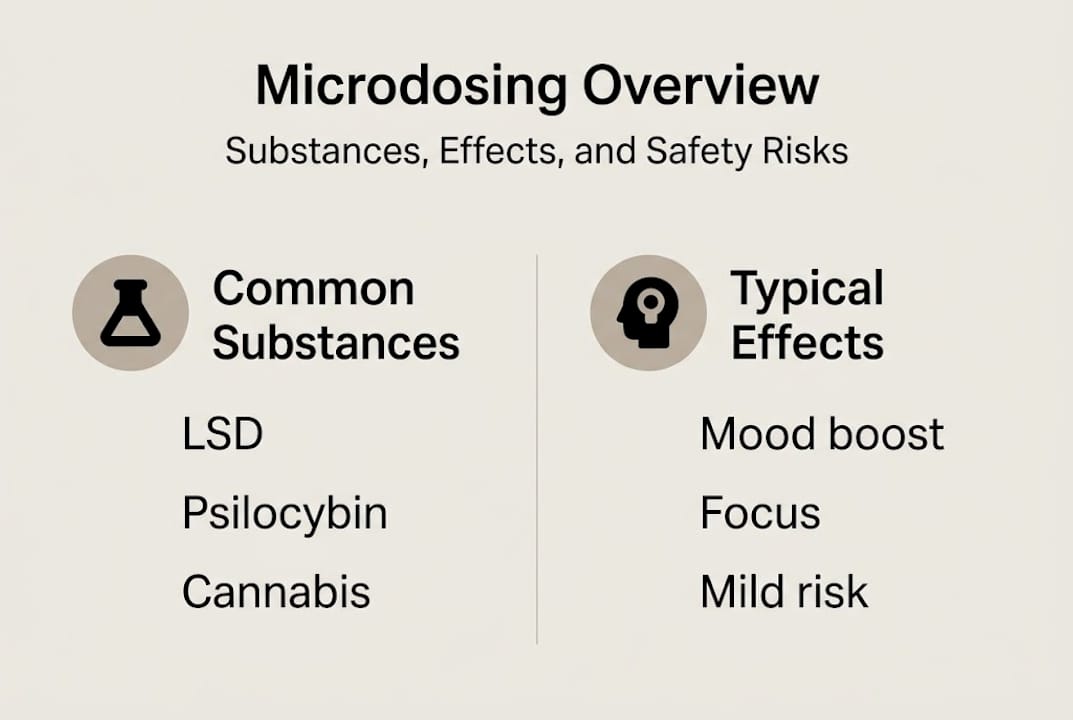
| Substance | Recreational dose | Typical microdose |
|---|---|---|
| LSD | 75-150 mcg | 5-20 mcg |
| Psilocybin | 2-3.5g dried mushrooms | 0.1-0.3g |
| Cannabis (THC) | 10mg+ | 1-2.5mg |
For cannabis specifically, a microdose sits well below the threshold where most people feel noticeable psychoactive effects. This makes it particularly interesting for those who want potential wellness benefits without impairment. You can explore the full breakdown in our complete cannabis microdosing guide for more detail on how cannabis fits into this space.
The intended purposes vary by person. Some seek improved mood or reduced anxiety. Others are after sharper focus, enhanced creativity, or simply a gentler way to manage daily stress. The key distinction from recreational use is intent and quantity.
Microdosing is not about getting high. It’s about taking the smallest amount possible to potentially support wellbeing, while remaining completely clear-headed and functional throughout the day.
Understanding this distinction matters because it shapes how you approach dosing, tracking, and evaluating whether it’s working for you.
People who microdose regularly tend to speak enthusiastically about their experiences. The self-reported benefits are compelling, but the scientific picture is more nuanced.

Surveys of microdosers consistently highlight a cluster of perceived improvements. Self-reports show perceived benefits including reduced anxiety, enhanced productivity, and increased energy. These are meaningful signals worth taking seriously, even if they don’t constitute clinical proof.
Commonly reported benefits from user surveys include:
However, controlled research tells a more cautious story. Surveyed users report improved wellbeing and focus, but controlled studies often show placebo-level effects when expectancy is accounted for. A scientific microdosing review covering 14 studies with over 1,600 participants found no consistent cognitive improvements beyond what placebo could explain.
| Claimed effect | User survey reports | Controlled study findings |
|---|---|---|
| Improved mood | Frequently reported | Inconsistent; placebo likely |
| Better focus | Commonly cited | Limited evidence |
| Reduced anxiety | High prevalence | Mixed results |
| Enhanced creativity | Popular claim | Not confirmed in trials |
| Energy boost | Often noted | No significant findings |
“When expectancy effects are controlled for, the cognitive and emotional benefits of microdosing largely disappear in clinical settings. This doesn’t mean people aren’t experiencing something real, but it does suggest the mind plays a powerful role.”
This doesn’t mean microdosing is useless. It means the research is still young and the placebo effect is genuinely powerful. For those curious about cannabis-specific outcomes, our guide on cannabis microdosing benefits digs deeper into what the current evidence suggests.
Before you try microdosing, the legal and safety landscape deserves serious attention. Skipping this step is where many people run into trouble.
In Canada, cannabis is legal for adults, which makes cannabis microdosing the most accessible and legally straightforward option. Psilocybin and LSD remain controlled substances under the Controlled Drugs and Substances Act, meaning possession and use are illegal outside of specific exemptions or clinical settings. Internationally, the legal picture varies widely, so always check local laws before proceeding.
On the safety side, risks include inaccurate dosing, tolerance, anxiety, and legal issues, and microdosing is not appropriate for people with a history of psychosis, those who are pregnant, or individuals under 25 whose brains are still developing. These aren’t minor caveats. They’re genuine contraindications.
Key risks to understand before starting:
For cannabis specifically, our cannabis microdosing safety resource outlines what to watch for, and our cannabis dosing guidelines offer practical benchmarks.
Pro Tip: Start with the lowest possible dose and wait at least two hours before considering any adjustment. With edibles especially, onset can be slow and it’s easy to take too much too soon.
Also worth noting: WebMD microdosing safety guidance recommends consulting a healthcare provider before starting, particularly if you take any prescription medications, as interactions are possible and not always predictable.
If you’ve weighed the evidence and risks and want to explore microdosing, a careful and structured approach makes all the difference. Rushing in without a plan is how people end up with unpleasant experiences.
Here’s a practical starting framework:
Careful starting protocols and tracking are essential, and medical consultation is strongly advised before beginning. Our Canada microdosing guide walks through the Canadian context in detail, while our resource on dosing for optimal results helps you calibrate more precisely.
For those interested in microdosing edge cases, including animal studies and atypical responses, the research literature is expanding quickly and worth following.
Pro Tip: If you notice your microdose starting to feel more noticeable over time, take a full week off before resuming. Tolerance resets faster than most people expect.
Here’s something we think deserves more honest discussion: the microdosing conversation has a confidence problem. Enthusiastic user communities, wellness influencers, and even some researchers present findings in ways that outpace the actual evidence. That matters.
The truth is that expectancy and placebo effects are significant in empirical microdosing studies. When people believe something will help them feel better, they often do, regardless of the substance. This isn’t a reason to dismiss microdosing entirely. It’s a reason to be honest with yourself about what you’re measuring.
We’re cautiously optimistic about where the research is heading. Cannabis in particular has a more accessible legal pathway in Canada, which means better quality studies are possible. But right now, microdosing is not a proven treatment for anything. It’s a personal wellness experiment that some people find genuinely useful.
If you’re going to try it, go in with clear intentions, realistic expectations, and a willingness to stop if it isn’t working. Our editorial on cannabis microdosing reflects this same balanced perspective.
If this guide has sparked your curiosity, GreenSociety has a library of resources to help you take the next step with confidence. Whether you’re looking to understand accurate dosing, compare product types, or explore the wellness side of cannabis more broadly, we’ve got you covered.
Check out our roundup of CBD edibles on the market for low-THC options that are well-suited to microdosing beginners. If you’re ready to go deeper, our dedicated section to explore microdosing cannabis covers benefits, product formats, and practical tips. Start slow, stay informed, and let the evidence guide your choices.
Cannabis microdosing is permitted under Canada’s existing cannabis laws for adults 19 and older. Psychedelic microdosing with substances like psilocybin or LSD remains illegal in most places and carries real legal risk outside of approved clinical programmes.
A typical cannabis microdose is 1 to 2.5mg THC, well below the intoxicating threshold for most people. For context, cannabis edibles average 7.3mg THC, which is already several times higher than a microdose.
The main risks include inaccurate dosing, anxiety, and legal issues with controlled substances, plus tolerance build-up if you dose too frequently without breaks.
Some users report real benefits, but a meta-analysis of 14 studies found no consistent cognitive improvements beyond placebo, suggesting expectation plays a major role in perceived outcomes.
Yes, particularly if you have existing health conditions, take prescription medications, or are under 25. A doctor can help you assess whether microdosing is appropriate and flag any potential interactions before you begin a microdosing protocol.