Free Shipping
on orders over $150.00
$0.00
$150.00
Add $150.00 more for free shipping!

TL;DR:
- Crossing international or state borders with cannabis is illegal and can lead to severe penalties.
- Proper documentation, storage, and behavior are critical to minimizing travel risks with cannabis.
- Admitting past cannabis use at borders can result in lifelong entry bans, regardless of possession.
Many Canadians assume that because cannabis is legal at home, travelling with it is straightforward. It isn’t. A single misstep at an international border can mean criminal charges, a lifetime entry ban, or in extreme cases, decades behind bars in a foreign prison. Transporting cannabis across international borders is never legal, regardless of the laws on either side of that border. This guide breaks down exactly what the rules are, which myths could get you in serious trouble, and how to travel as safely as possible with cannabis in 2026.
| Point | Details |
|---|---|
| Never cross borders with cannabis | International and US state borders trigger strict enforcement and carry severe penalties for cannabis possession. |
| Airport policies vary greatly | Some airports allow limited possession, but federal and local rules may still expose travellers to prosecution. |
| Store and buy wisely | Buy cannabis at your destination, store it safely and never drive impaired to stay compliant within legal states. |
| Medical and CBD rules differ | Medical cannabis and CBD have their own requirements—always carry documentation and check destination laws. |
| Research official sources | Reliable information from government and embassy websites minimises risk and clarifies local legal status for travel. |
After setting up the broad risks, it’s worth understanding precisely how crossing a boundary changes everything, often in ways travellers least expect.
Cannabis law doesn’t travel with you. The moment you step across a border, whether it’s an international checkpoint or even a state line within the US, you leave one legal framework behind and enter another. Most travellers underestimate how dramatically and instantly that shift occurs. Customs officers operate under federal and international law, not local or provincial law. That distinction is critical.
Even crossing from one legal jurisdiction to another does not create a grey area. Never transport cannabis across international borders is not a guideline. It is an absolute rule backed by international treaty law. Countries like Thailand have handed out multi-year prison sentences to tourists found carrying cannabis, even tiny amounts. In Saudi Arabia, cannabis-related offences can carry the death penalty. These are not hypothetical edge cases. They are documented outcomes.
The misconception that legal states create a safe corridor is equally dangerous. Crossing US state lines with cannabis violates federal interstate commerce law, full stop. Federal law classifies cannabis as a Schedule I substance, which means no state-level legalisation changes your exposure to federal criminal charges when you carry it across a state boundary. There is no legal defence based on the policies of the states you’re travelling between.
One of the most overlooked risks involves what you say, not just what you carry. Admitting past cannabis use to a US Customs and Border Protection officer as a non-citizen can trigger a lifetime entry ban without you being in possession of anything at all. Officers are trained to probe for admissions, and many travellers don’t realise the permanence of that outcome.
| Destination | Legal status | Risk level | Potential penalty |
|---|---|---|---|
| Canada (domestic) | Legal | Low | Minor violation if limits exceeded |
| US legal state | State-legal, federally illegal | Moderate | Federal charges if crossing state lines |
| Thailand | Now partially legal | Very High | Years of imprisonment |
| Saudi Arabia | Illegal | Extreme | Death penalty |
| Netherlands | Decriminalised | Moderate | Confiscation, fines, possible arrest |
Key risks to remember at any border:
Understanding border laws sets the groundwork. Now let’s get into the practical realities of air travel and what you actually face inside airports.
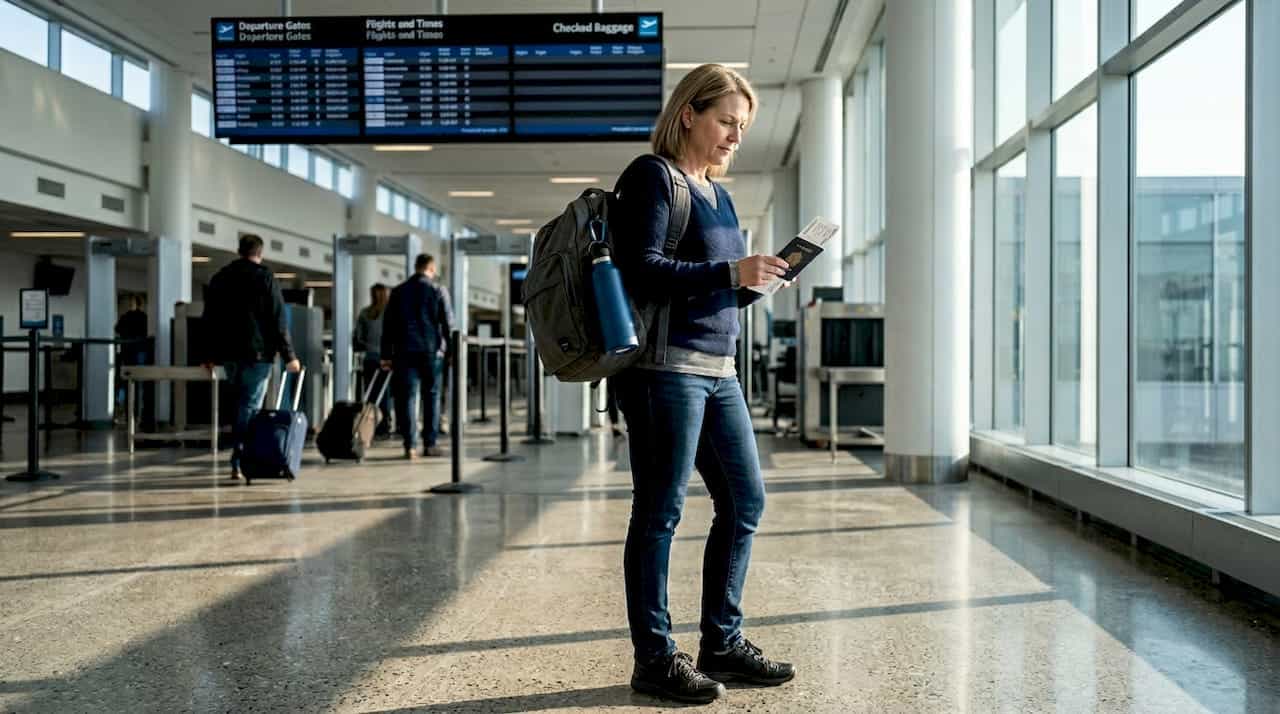
The Transportation Security Administration (TSA) does not actively search for cannabis, but that fact is frequently misunderstood. Federal law prohibits cannabis on US domestic flights, and while TSA focuses on security threats rather than narcotics, any discovery of cannabis during screening is referred to local law enforcement. What happens next depends entirely on which airport and state you’re in.
Outcomes vary more than most guides acknowledge. Airports like LAX and Denver International allow small amounts within state limits, meaning local police may simply ask you to dispose of it. At airports in prohibition states, the same discovery could lead to arrest and criminal charges. The TSA’s referral is not the end of the story. Local law enforcement discretion is.
Some airports in legal states have installed amnesty boxes near security checkpoints where you can surrender cannabis without penalty before passing through. These are a smart option if you’ve forgotten to leave product behind. Check whether your departure airport has them before you travel.
“The best protection at any airport is to treat every checkpoint as if cannabis is fully prohibited, regardless of where you’re flying from or to.”
For carry-on versus checked baggage, carry-on is considered safer if cannabis is discovered. Checked bags go through additional federal screening processes, and discoveries there are treated with more scrutiny. Keep anything in your direct control where you can address it immediately.
Here’s a practical approach for navigating airport travel:
For proper preparation, understanding how to store cannabis products correctly before travel is critical. Proper storage reduces odour and keeps products stable during transit.
Pro Tip: Never place cannabis in a bag that also contains prescription medication, identification documents, or electronics. If the bag is flagged for any reason, everything inside becomes part of the inspection.
| Airport | State status | Cannabis discovery policy |
|---|---|---|
| LAX (Los Angeles) | Legal | Dispose or leave; no arrest for legal amounts |
| Denver International | Legal | Amnesty boxes available; may dispose |
| Hartsfield-Jackson (Atlanta) | Illegal | Arrest and criminal charges possible |
| Dallas Fort Worth | Illegal | Arrest and criminal charges possible |
| O’Hare (Chicago) | Medical-only | Depends on officer discretion |
Flying is complicated, but road travel brings its own distinct rules, particularly when you’re moving across state or provincial boundaries.
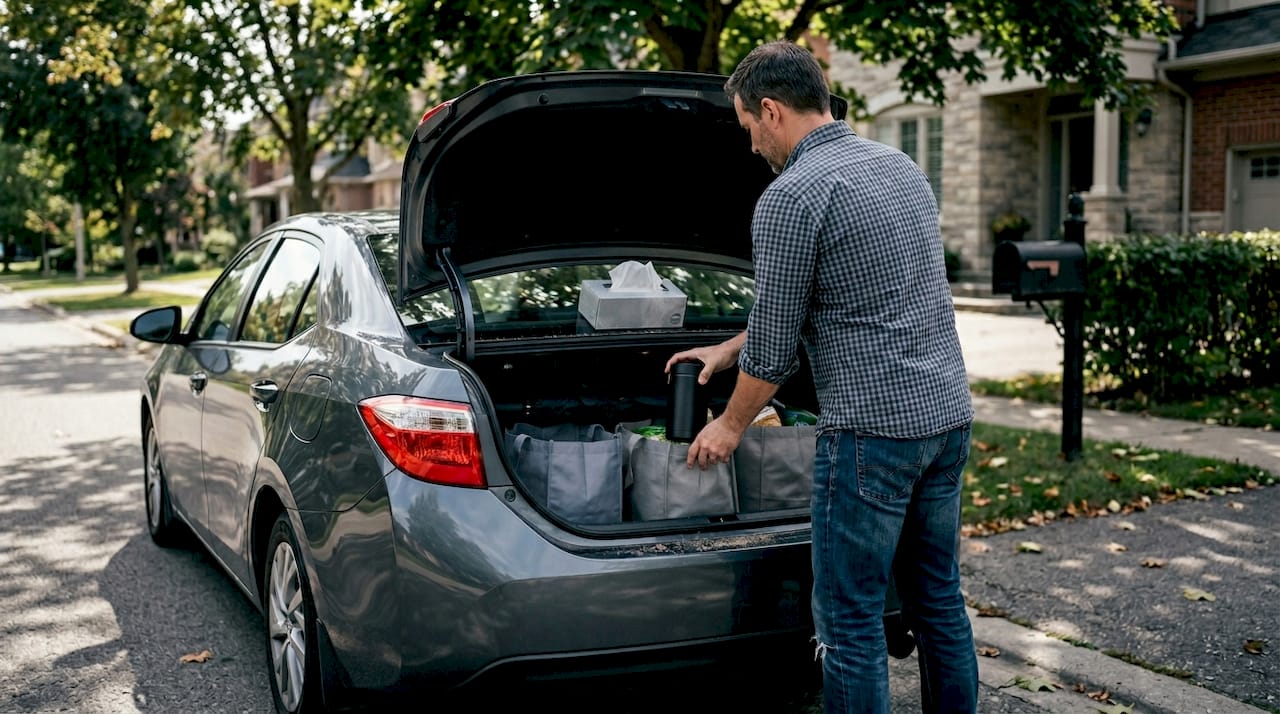
The core rule for driving with cannabis within any legal state is simple but non-negotiable: store it in the trunk, in its original or sealed packaging, and never drive impaired. For driving within legal states, these are the baseline requirements to stay on the right side of the law. Violating any one of them can provide grounds for a search or an arrest, even if you’re technically within possession limits.
Odour alone can create reasonable suspicion. Law enforcement officers are trained to identify the smell of cannabis, and that smell coming from your vehicle gives them legal grounds to stop you in most jurisdictions. Even if you’re not impaired and you’re within your legal possession limit, an open container or a product that isn’t properly sealed can lead to a costly interaction.
Here’s what to keep in mind before you pull out of the driveway:
The buy-local strategy deserves more attention than it gets. Buying cannabis at your destination in a legal area removes transport risk entirely. You purchase what you need when you arrive, consume it locally, and don’t carry anything across any boundary. This approach is especially practical for road trips where your route touches multiple jurisdictions.
Understanding safe cannabis storage at home also translates to travel. The principles are the same: minimise exposure to air, light, and heat, and keep products sealed until use. Preserving cannabis potency during travel is easier when you pack correctly from the start.
Pro Tip: Before any road trip that crosses state lines, map your route and identify exactly where state borders fall. Disposal of any cannabis before you reach those points is always the safest decision, and it’s one that most travellers skip because they feel the risk is abstract. It isn’t.
Whether you’re travelling for personal or medical reasons, the type of product you carry and your documentation both affect your legal exposure significantly.
Medical cannabis patients face a particular frustration: their legitimate therapeutic needs don’t translate cleanly across borders or even state lines. Medical cannabis patients should carry their current physician’s recommendation, their state-issued medical cannabis ID, and copies of any relevant prescriptions. These documents matter, but they matter only within jurisdictions that recognise them.
Fourteen US states currently offer reciprocity for out-of-state medical cannabis patients, meaning they honour another state’s medical programme. But reciprocity is not automatic. Most states require advance registration, a processing fee, and documentation submitted before you arrive. Walking in with your home-state card and expecting it to work is a common and costly mistake.
CBD and hemp products occupy a different but still complex legal space. CBD and hemp products with ≤0.3% THC are federally legal for travel in the US when accompanied by a Certificate of Analysis (COA) confirming the THC content. But many states have their own stricter rules, and several countries outright ban CBD regardless of THC concentration. Always check both the state and country you’re entering, not just the departure rules.
Here’s how to organise your documentation before travelling as a medical user:
Understanding the differences between THC and CBD is foundational before any medical travel. The two compounds are treated very differently by law, and what’s permitted for one may be completely restricted for the other. If you’re new to medical cannabis travel, safe medical cannabis use guidance is worth reviewing before you pack. For strain-specific considerations, a medical cannabis strains comparison can help you choose products with clearer legal profiles for travel.
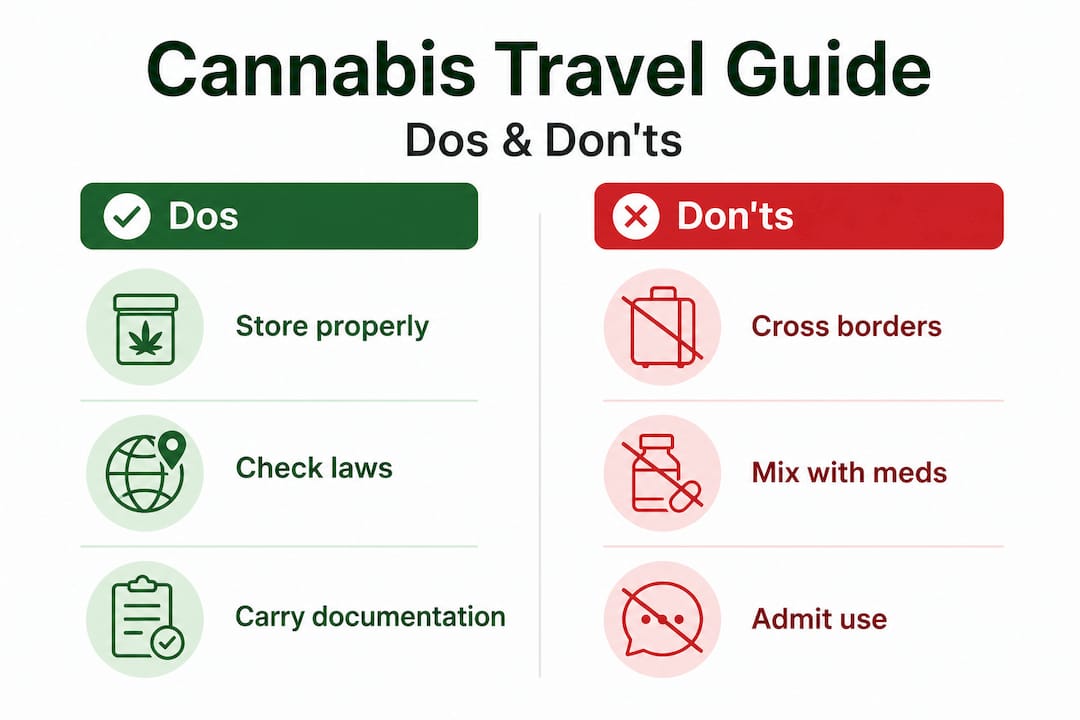
Pro Tip: Keep your COA as a PDF on your phone and in printed form. Officers may not recognise what it is, but presenting it promptly and confidently demonstrates you’re a compliant, informed user rather than someone trying to hide something.
| Product type | Federal US status | Documentation required | Travel risk level |
|---|---|---|---|
| THC cannabis flower | Schedule I illegal | None grants federal travel rights | High |
| Medical cannabis (in-state) | State-legal only | Rec + state ID | Moderate (state-specific) |
| CBD isolate (≤0.3% THC) | Federally legal | COA required | Low to moderate |
| Full-spectrum hemp | Federally legal | COA strongly recommended | Moderate |
| International travel with any | Illegal universally | No documentation helps | Extreme |
Most travel guides cover the official rules reasonably well. What they consistently miss is the gap between written policy and real-world enforcement, and that gap is where most problems actually happen.
TSA referral outcomes depend heavily on local law enforcement discretion, not on a uniform policy. A carry-on discovery at LAX might result in a polite request to dispose. The same discovery at a different airport could lead to criminal processing. No guide can predict which officer you’ll encounter or how the situation will unfold. That unpredictability is the real risk, not the official policy.
The federal property angle is consistently underplayed. Even in legal states, airports are federal facilities. The moment you’re in a security line, you’re on federal ground. That matters because it shifts the legal framework under which any discovery is handled, regardless of what state law says outside the terminal doors.
Smell-proof containers are mentioned everywhere, but few guides explain why they’re as critical on federal property as proper documentation. A container that controls odour removes one of the primary grounds for a search. Combined with keeping cannabis in carry-on rather than checked luggage, it gives you the most control over the situation if something does go wrong.
The admission issue is perhaps the most underreported risk of all. Non-citizens asking about THC versus CBD differences at a border crossing, or volunteering past cannabis use information to an officer, can face consequences that no product or documentation can undo. A lifetime entry ban to the United States is a real outcome from a verbal admission alone, with no cannabis in hand. Mainstream blogs rarely emphasise this with the gravity it deserves.
The takeaway from years of watching travellers navigate these situations is this: the rules are important, but behaviour matters just as much. Staying calm, having documentation ready, and knowing when not to volunteer information are skills that serve you as much as any legal knowledge.
Navigating cannabis travel is complex, but being well-prepared makes a genuine difference. Whether you’re planning a domestic trip or a longer journey, having the right accessories and storage solutions on hand reduces risk and keeps your experience enjoyable.
At Green Society, we’ve put together practical guides covering everything from choosing cannabis accessories that work for travel to detailed advice on safe storage methods that protect your products and reduce odour during transit. Browse our educational resources to find the right tools for smarter, more confident cannabis experiences wherever you’re headed. Whether you’re stocking up before a trip or researching the best approach for your needs, we’re here to help you make informed decisions.
Yes, Canadian adults can carry cannabis on domestic flights within Canada, but must stay within federal and provincial possession limits and cannot cross into any international destination with it.
Crossing US state lines with cannabis violates federal law regardless of either state’s legalisation status, and can result in criminal charges under federal interstate commerce regulations.
CBD and hemp products with ≤0.3% THC are federally legal for US travel with proper documentation, but some states and many countries maintain their own bans on even compliant products.
Medical cannabis patients should carry a current physician’s recommendation, a state-issued patient ID, and COA documents for any products, and must research reciprocity requirements in advance for each destination state.
No. Admitting past cannabis use to US Customs and Border Protection as a non-citizen can result in a permanent lifetime entry ban, even when you’re not carrying any cannabis at the time.