Free Shipping
on orders over $150.00
$0.00
$150.00
Add $150.00 more for free shipping!

TL;DR:
- Older adults in Canada are increasingly using cannabis mainly for pain, sleep, and anxiety relief.
- Research shows moderate evidence supporting cannabis for pain management and short-term anxiety reduction.
- Risks include falls, drug interactions, and cognitive effects, requiring careful, informed use.
Cannabis is no longer a topic whispered among younger generations. A striking shift is happening among Canadians aged 50 and over, with past-month use reaching 7% in 2023, up from 4.8% just two years earlier. Whether you are living with chronic pain, struggling with restless nights, or managing anxiety that seems to deepen with age, cannabis is increasingly on the radar as a possible tool. This guide cuts through the noise to offer you a clear, balanced look at what cannabis may realistically do for you, where the evidence stands, and how to approach it with your health and safety firmly in mind.
| Point | Details |
|---|---|
| Rising popularity | Cannabis use among Canadians aged 50 and over is rapidly increasing, especially for pain and sleep. |
| Targeted benefits | Most evidence supports short-term pain relief, with some benefits for sleep and anxiety when used carefully. |
| Know the risks | Older adults face unique risks such as falls, drug interactions, and cognitive effects, making medical guidance essential. |
| Personalized approach | Start with a low dose, keep track of effects, and consult your healthcare provider for the safest outcome. |
| Quality information matters | Seek guidance from evidence-based resources and your doctor, not just retailers, for the best results. |
Something significant is changing in how people over 50 think about cannabis. Not long ago, most older Canadians associated it with recreational use or counterculture. Today, the conversation is shifting toward medicine, quality of life, and personal autonomy. The 7% past-month use statistic is not a fluke. It reflects a generation that has watched legal markets open, access improve, and stigma begin to dissolve.
The reasons older adults are turning to cannabis are practical. According to research from Harvard Health, older adults primarily use cannabis for pain (63%), sleep disturbances (68%), and anxiety or mood concerns (53%). These are not niche complaints. They are among the most common and persistent challenges that come with aging, and they are often poorly managed by conventional medications alone.
The reasons most often cited include:
Legalisaton across Canada has removed many of the old barriers. Products are now tested, labelled, and available through licensed retailers. That accessibility matters enormously for people who might never have considered buying cannabis before. It is also worth noting that women over 50 represent one of the fastest-growing user groups, often driven by pain and sleep concerns rather than recreational interest.
“The conversation about cannabis in older adults is no longer fringe. It’s a legitimate health discussion that deserves the same rigour we apply to any other treatment.”
Still, access and popularity do not automatically mean safety. Making an informed decision means understanding both sides. If you are curious about how cannabis might address mood-related symptoms specifically, our guide on CBD oil for anxiety is a useful place to start.
Research on cannabis and aging has grown substantially, and the picture it paints is nuanced. There is genuine evidence of benefit for certain conditions, but the strength and duration of that evidence varies. Here is what we know.
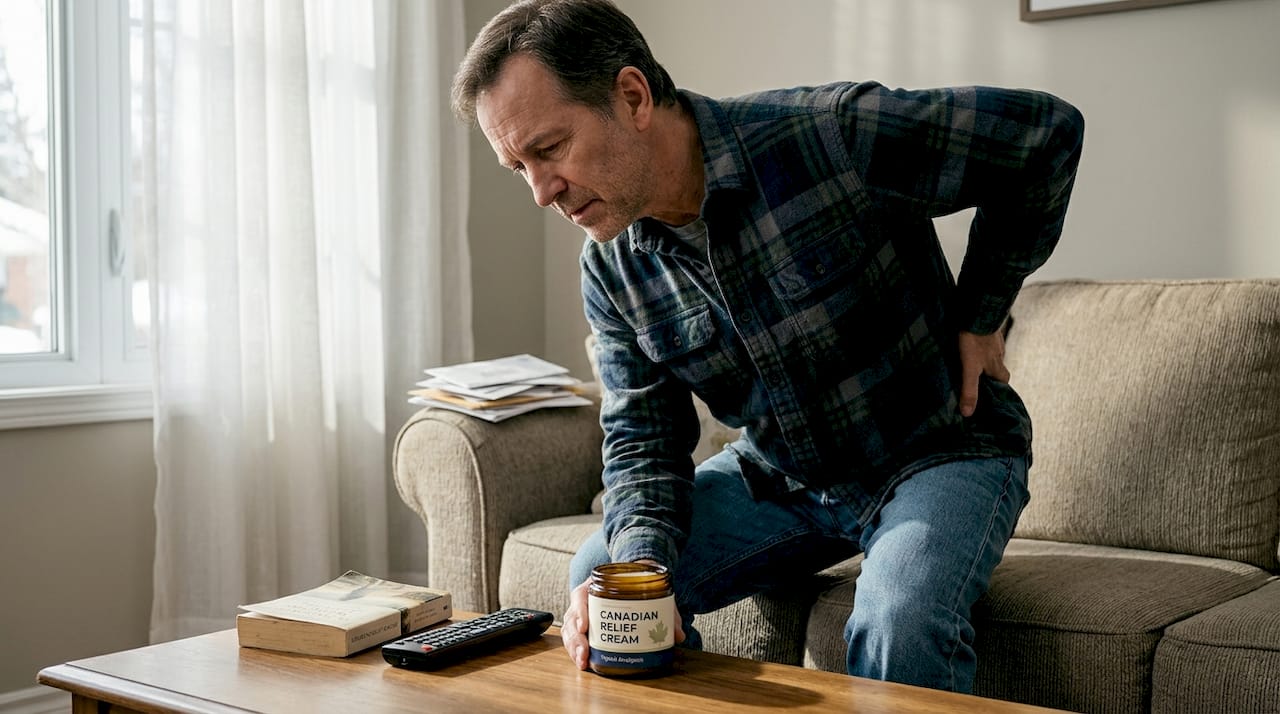
Pain relief has the most support. A recent randomised controlled trial found that full-spectrum cannabis extract reduced chronic low back pain by 1.9 points on a numeric rating scale compared to placebo. That is a clinically meaningful difference for people who have lived with persistent pain for years. Separately, research on fibromyalgia found that THC enhanced offset analgesia, a marker of the brain’s central pain-processing system, suggesting cannabis may work through pathways that standard pain medications do not reach.
Sleep and anxiety show moderate promise. Cannabis can help with sleep onset and early-stage rest, though the evidence for sustained, long-term sleep quality is less clear. Anxiety relief appears more consistent in the short term, particularly for situational or generalised worry rather than clinical anxiety disorders.
Tailored, low-dose regimens appear to be the most effective approach. A recent study published in Frontiers in Pharmacology showed that individualised dosing in women with chronic pain syndromes produced multi-symptom benefits including improvements in pain, sleep, anxiety, and overall quality of life. This is significant because it suggests that a one-size-fits-all approach is unlikely to work.
| Condition | Strength of evidence | Best product type |
|---|---|---|
| Chronic pain | Moderate to strong | Balanced CBD/THC or CBD-dominant |
| Sleep disturbance | Moderate | Low-dose THC or CBD-dominant |
| Anxiety and mood | Moderate (short-term) | CBD-dominant |
| Nausea and appetite | Moderate (palliative) | Low-dose THC |
| Cognitive enhancement | Weak or mixed | CBD only |
Pro Tip: If you are new to cannabis, look for products with a higher CBD-to-THC ratio. They are generally gentler, carry fewer psychoactive effects, and still offer meaningful therapeutic support for pain and anxiety.
It is also worth being honest about what the research does not yet confirm. Long-term benefits, preventive effects, and outcomes for people over 70 with complex health profiles are all areas where data is still thin. Exploring strains for pain relief can help you find a starting point, and understanding how CBD affects sleep will give you a clearer picture of what to expect.
Any honest guide about cannabis for older adults must give equal time to the risks. This is not about fear. It is about making smart, informed choices.
Researchers and clinicians at Stanford have highlighted several key risks for adults over 50: falls and balance problems, drug interactions, exposure to increasingly potent products (today’s cannabis averages 20% THC, compared to 1 to 4% historically), cardiovascular events including a 29% increase in heart attack risk with heavy use, and cognitive impairment. These are not theoretical concerns. They represent real outcomes documented in clinical literature.
Cognitive effects deserve particular attention because they are complex. Research published in the International Business Times found that memory impairment appeared in 70% of users, though some studies simultaneously link lifetime use to better cognitive performance on certain tasks. The honest answer is: it depends on how much you use, what you use, how often, and your individual biology.
Mental health concerns also deserve a close look. Daily cannabis users aged 50 and over had 133% higher odds of poor mental health days and 76% higher odds of poor physical health days compared to non-users. These numbers do not mean cannabis causes poor health in every user, but they do suggest that daily, heavy use is not without consequence.
“The risks are real, but they are manageable with the right approach. The problem is when people treat cannabis the same way they would have in their twenties.”
Here are the key cautions to take seriously:
| Product type | Common side effects | Risk level for 50+ |
|---|---|---|
| High-THC flower | Anxiety, confusion, dizziness, rapid heart rate | High |
| Balanced CBD/THC edibles | Mild sedation, dry mouth | Moderate |
| CBD-dominant tinctures | Minimal, occasional fatigue | Low to moderate |
| Vapes (high potency) | Lung irritation, rapid THC onset | High |
Pro Tip: Always check that the products you choose are clearly labelled with THC and CBD content per serving. Our potency matters guide explains exactly what those numbers mean and how to use them to stay safe.
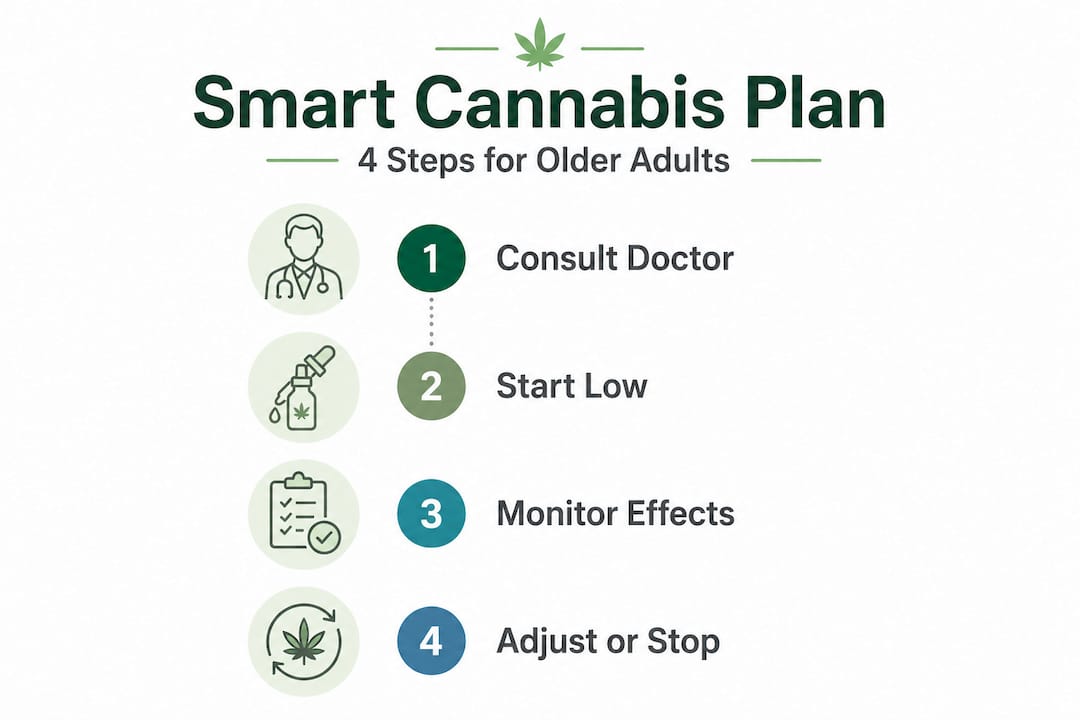
If you have weighed the benefits and risks and want to explore cannabis thoughtfully, here is how to build a sensible approach from the ground up.
One of the most telling findings in recent research is that many older adults get their cannabis information from retailers rather than from healthcare providers, largely because healthcare professionals remain hesitant or uninformed. This is a gap that matters. Retailer staff can be knowledgeable, but they are not your doctor and cannot account for your full medical history.
A step-by-step starting plan:
Additional practical points worth keeping in mind:
Research confirms that usage in legal states has risen 46% in two years, and emergency room visits linked to cannabis have surged 27 times over the same period. This is not because cannabis is more dangerous than before. It is because more people are using it without the right information. Education and medical guidance are the most effective tools for avoiding that outcome. Our comprehensive guide to chronic pain goes deeper into how to match specific cannabis approaches to specific pain types.
Here is what gets missed in most cannabis conversations aimed at older adults: the extremes dominate the dialogue while the majority experience something far more moderate.
Media coverage oscillates between “cannabis cures everything” and “cannabis is destroying your brain.” Neither is accurate. Most people who use cannabis thoughtfully, at low doses, with medical guidance, and with clear goals, have a fundamentally different experience than both headlines suggest.
The evidence reviewed by Stanford researchers makes clear that there are genuine clinical benefits for pain and nausea in limited conditions, while long-term evidence for anxiety and sleep remains weaker. This does not mean cannabis is useless for sleep or anxiety. It means those outcomes are harder to predict, harder to sustain, and more dependent on individual factors than for pain.
From our perspective at GreenSociety.cc, the older adults who benefit most from cannabis share three things in common. They are patient. They are systematic. And they stay connected to their healthcare team throughout the process. Cannabis works best as part of a care plan, not as a replacement for one.
CBD-dominant products are significantly underused by older adults who could benefit from them. The hesitation is understandable since many people associate cannabis with the psychoactive effects of THC. But CBD for chronic pain represents a real, lower-risk option that more people over 50 should be aware of.
Finally, it is worth saying plainly: for some people, the best choice is not to use cannabis at all. If your pain, sleep, or anxiety has a treatable root cause that has not yet been adequately addressed, cannabis may provide short-term relief while a bigger issue goes unresolved. Use it as a tool, not a distraction.
If you are ready to take the next step, starting with well-formulated, clearly labelled products designed for people who want therapeutic benefit without unnecessary complexity makes good sense.
At GreenSociety.cc, we carry a curated selection built with quality, transparency, and safety in mind. Our CBD edibles options are a popular starting point for older adults who want a smoke-free, low-risk introduction to cannabis. Before you browse, our cannabis potency guide will give you the knowledge to read labels confidently. And if you want to understand the full range of ways CBD can be used, our guide to ways to use CBD covers tinctures, edibles, topicals, and more so you can choose what fits your lifestyle. Always consult your healthcare provider before beginning any new wellness regimen.
Cannabis can be used safely by some seniors, but those with multiple health conditions or medications face higher risks including falls, drug interactions, and cardiovascular events, and should consult their healthcare provider before trying it.
Effects on memory vary widely depending on how much and how often you use it. Some research links heavy long-term use to memory impairment, while other studies show mixed cognitive outcomes among older adults.
CBD-dominant and balanced CBD/THC products tend to offer pain relief with fewer side effects. Research confirms that individualised low-dose regimens produce the most meaningful multi-symptom benefits in chronic pain conditions.
Cannabis may help some older adults fall asleep more easily, particularly in the short term. 68% of older adult cannabis users report sleep improvement as a primary motivation, though long-term evidence is still limited.
Yes, always. Many older adults currently rely on retailer information because healthcare providers often avoid the topic due to stigma or limited training, but a medical conversation is essential to manage interactions and tailor your approach safely.