Free Shipping
on orders over $150.00
$0.00
$150.00
Add $150.00 more for free shipping!


TL;DR:
- Cannabis-impaired driving is illegal across Canada because THC affects reaction time, lane tracking, and decision-making. Impairment lasts up to 4-5 hours after inhalation and longer with edibles, regardless of feeling sober. Laws vary by jurisdiction but often include immediate suspensions, fines, or criminal charges, with enforcement based on behavioral signs and tests.
Cannabis-impaired driving is defined as operating a vehicle while THC has reduced your ability to drive safely, and it is illegal across all Canadian provinces and territories. Cannabis and driving laws exist because THC directly affects reaction time, lane tracking, and decision-making. Penalties range from immediate licence suspensions to criminal charges carrying up to 10 years in prison. Whether you use cannabis recreationally or medically, understanding the rules before you get behind the wheel is not optional. It is the difference between a clean record and a conviction.
Cannabis impairment lasts consistently up to 4–5 hours after inhalation. That window is not a suggestion. It is the period during which THC measurably degrades your ability to judge speed, react to hazards, and maintain lane position.
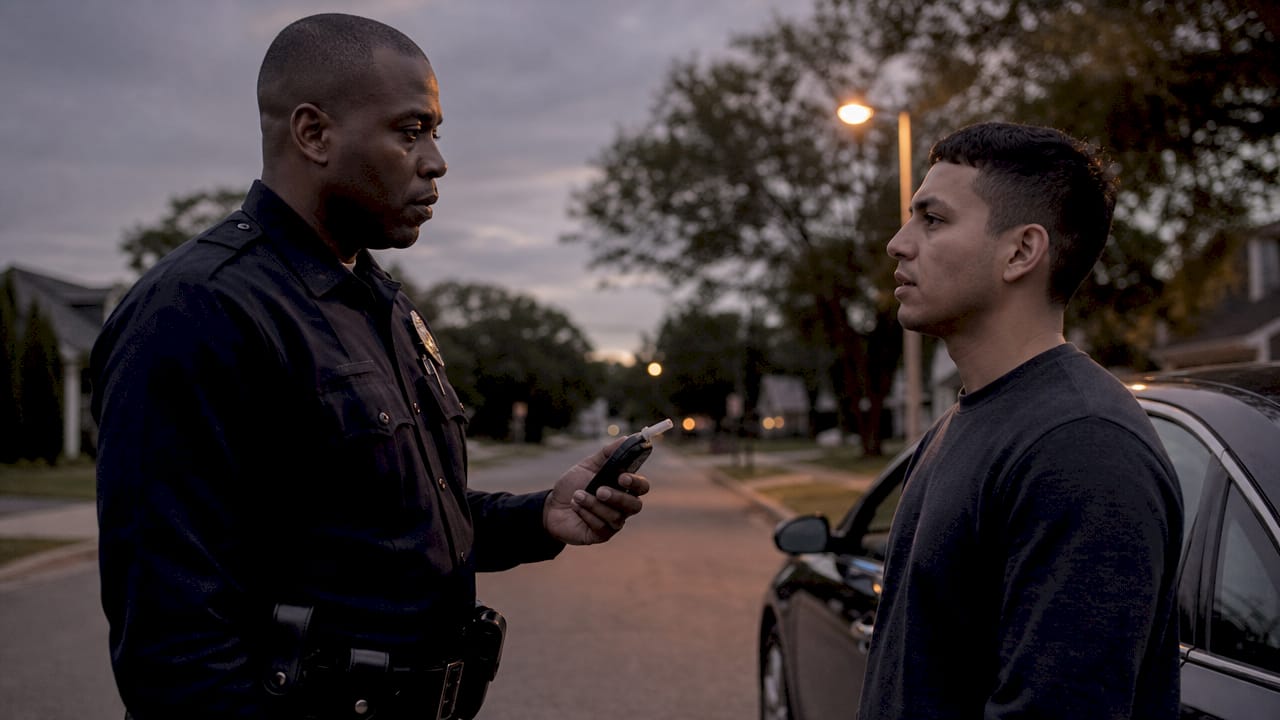
Impairment does not feel the same for everyone. A regular user may feel functional while still performing poorly on a sobriety test. A first-time user may be severely impaired after a single inhalation. Consumption method also matters. Edibles delay onset by 30–90 minutes and can produce impairment lasting well beyond the 4–5 hour window typical of smoked or vaped cannabis.
Combining alcohol and cannabis significantly raises the risk of impaired driving crashes. The two substances amplify each other’s effects on coordination and perception. Even a single drink alongside cannabis use can push an otherwise borderline situation into clear impairment.
CBD does not impair driving at typical doses. However, many products contain both CBD and THC, which complicates the picture. If you are using a full-spectrum product, check the THC content carefully. The difference between CBD and THC is not just chemical. It has direct legal consequences.
Key impairment facts to keep in mind:
Pro Tip: If you consumed an edible, wait longer than you think you need to. The delayed onset means impairment can peak hours after you feel the initial effects.
Three legal frameworks govern cannabis-impaired driving across North America: zero-tolerance laws, per se THC limits, and behavioural impairment standards. Each takes a different approach to proving a driver is unfit.
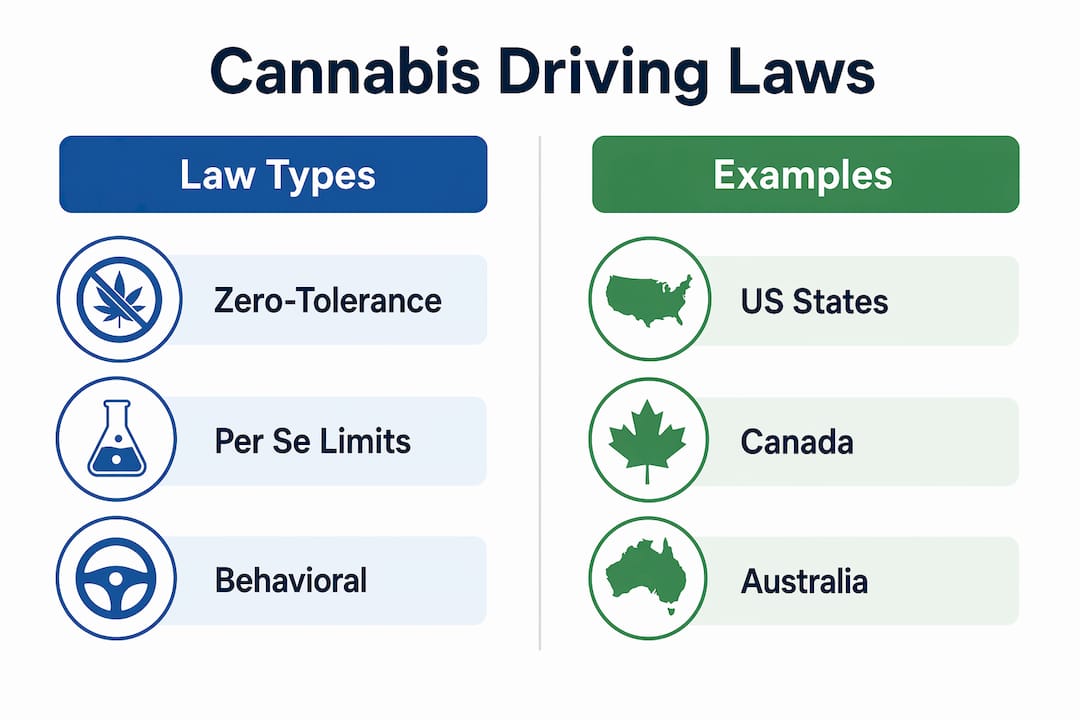
Sixteen U.S. states have zero-tolerance laws that prohibit any detectable THC or metabolites in a driver’s system. Five states set specific per se THC blood concentration thresholds. That distinction matters enormously. Zero-tolerance means you can be charged days after use, long after any real impairment has passed.
| Law type | How it works | Example jurisdiction |
|---|---|---|
| Zero-tolerance | Any detectable THC or metabolite triggers a charge | 16 U.S. states |
| Per se THC limit | Charge triggered at a set blood THC level (e.g., 5 ng/mL) | Several U.S. states |
| Behavioural impairment | Charge based on observed driving and sobriety test performance | Canada, many jurisdictions |
| Administrative suspension | Immediate licence action without criminal charge | British Columbia |
In Canada, the primary standard is behavioural impairment, but administrative consequences can be immediate. British Columbia’s 90-day Administrative Driving Prohibition applies the moment you fail a roadside THC screening. You do not need to be convicted in court. The suspension happens on the spot.
New South Wales in Australia uses a three-strike warning system before escalating to fines and suspensions. That approach prioritises education on first contact, which is a meaningful contrast to Canada’s immediate administrative penalties. Understanding cannabis law in Canada requires knowing which framework applies in your province or territory, because the rules are not identical coast to coast.
Officers use a layered detection process. They begin with driving behaviour observation, move to physical signs of impairment, and then administer formal tests. No single step is conclusive on its own.
The standard detection sequence works as follows:
THC metabolites remain detectable long after psychoactive effects end. This creates genuine legal risk in zero-tolerance jurisdictions. A driver who used cannabis two days ago and is fully sober can still test positive for metabolites and face charges.
Drivers can be charged based on observed impairment alone, even if their THC blood level falls below any legal threshold. Passing a blood test does not guarantee immunity. Officers and prosecutors can rely entirely on behavioural evidence.
Refusing a roadside test carries its own penalties under implied consent laws. In most Canadian provinces, refusal results in an immediate licence suspension and can be used as evidence of guilt in court.
Pro Tip: Knowing your rights matters, but refusing a roadside screening device in Canada is treated as a criminal offence under the Criminal Code. Compliance is always the safer legal choice.
The consequences for driving under the influence of cannabis are serious and escalate quickly with severity or repeat offences.
Penalties include fines, licence suspensions, and criminal charges depending on jurisdiction and the circumstances of the offence. In British Columbia, a failed roadside test triggers a 90-day administrative suspension immediately, before any court process begins. Fines start above $700 in many jurisdictions.
At the criminal level, Canada’s Criminal Code sets maximum sentences for impaired driving causing serious bodily harm or death at up to 10 years in prison. That is not a theoretical ceiling. Courts apply it. A single collision while impaired can result in a criminal record that follows you for life.
Key penalty categories to understand:
Cannabis consumption inside a vehicle is a separate offence from impaired driving. Even if you are parked, having an open cannabis package or consuming cannabis in a vehicle is illegal and enforced independently. The legal considerations for cannabis products in Canada extend well beyond the act of driving itself.
The clearest rule is this: if you have used cannabis, do not drive for at least 4–5 hours, and longer if you consumed an edible or mixed cannabis with alcohol.
Practical steps for compliance:
Impairment varies significantly between individuals, and no universal safe waiting period exists. Drivers may feel sober while still impaired. Feeling fine is not a legal defence.
Pro Tip: Edibles are the most common source of unexpected impairment behind the wheel. The delayed onset means people often start driving before the peak effects hit. If you consumed an edible, treat the wait time as significantly longer than the standard 4–5 hour window.
Cannabis-impaired driving laws are strict, jurisdiction-specific, and enforced through both administrative and criminal mechanisms that can apply simultaneously.
| Point | Details |
|---|---|
| Impairment window | THC impairs driving for at least 4–5 hours after inhalation; edibles last longer. |
| Zero-tolerance risk | 16 U.S. states charge drivers for any detectable THC, even days after use. |
| Detection methods | Officers use SFSTs, oral fluid screeners, and blood tests; refusal worsens penalties. |
| Penalty severity | Fines start above $700; criminal convictions can carry up to 10 years in prison. |
| Vehicle consumption | Open cannabis packaging or consumption inside a vehicle is a separate offence. |
The biggest misconception I encounter is that cannabis impairment works like alcohol impairment. People assume there is a clear line, a number they can stay under, and a predictable window after which they are safe. That is not how THC works.
Cannabis-impaired driving laws are genuinely difficult to enforce because there is no consistent relationship between THC blood levels and actual impairment. A regular user with a high tolerance can have elevated THC levels and drive competently. A first-time user can be severely impaired at a much lower level. The science does not give us a clean answer, and the law has not caught up.
What concerns me more is the public’s misunderstanding of metabolite detection. People think that if they feel sober, they are legally safe. In a zero-tolerance jurisdiction, that is completely wrong. THC metabolites linger in the body for days or weeks. You can be charged without being impaired. That gap between biological reality and legal standard is where people get caught off guard.
The practical takeaway is simple. Do not rely on how you feel. Do not rely on how much time has passed. Know the laws in your jurisdiction, plan your consumption around your schedule, and treat driving as a separate decision from cannabis use entirely.
— Juiced
Understanding cannabis and driving laws is one part of being a responsible consumer. The other part is knowing exactly what you are using, how potent it is, and how it will affect you before you make any plans that involve driving.
Greensociety publishes detailed guides to help you make informed choices about every product category. The cannabis flower buying guide covers potency, strain selection, and consumption timing in plain language. If edibles are your preference, the edibles benefits guide explains onset times and dosing clearly, which is directly relevant to planning around impairment windows. Greensociety’s product information is built for consumers who want to use cannabis safely and legally, not just conveniently.
Cannabis-impaired driving is a criminal offence under Canada’s Criminal Code. Penalties include fines, licence suspensions, and imprisonment of up to 10 years for offences causing serious harm.
Research shows impairment consistently lasts 4–5 hours after inhalation, and longer after consuming edibles. No universal safe waiting period exists because impairment varies by individual, tolerance, and consumption method.
Yes. Drivers can be charged based on observed impairment alone, even when blood THC levels fall below any set threshold. Behavioural evidence from field sobriety tests is sufficient for a charge in Canada.
Open cannabis packaging or consuming cannabis inside a vehicle is a separate offence from impaired driving and is enforced independently, even when the vehicle is parked.
CBD does not impair driving at typical doses. However, many products contain both CBD and THC, and any detectable THC can create legal risk, particularly in zero-tolerance jurisdictions.