Free Shipping
on orders over $150.00
$0.00
$150.00
Add $150.00 more for free shipping!

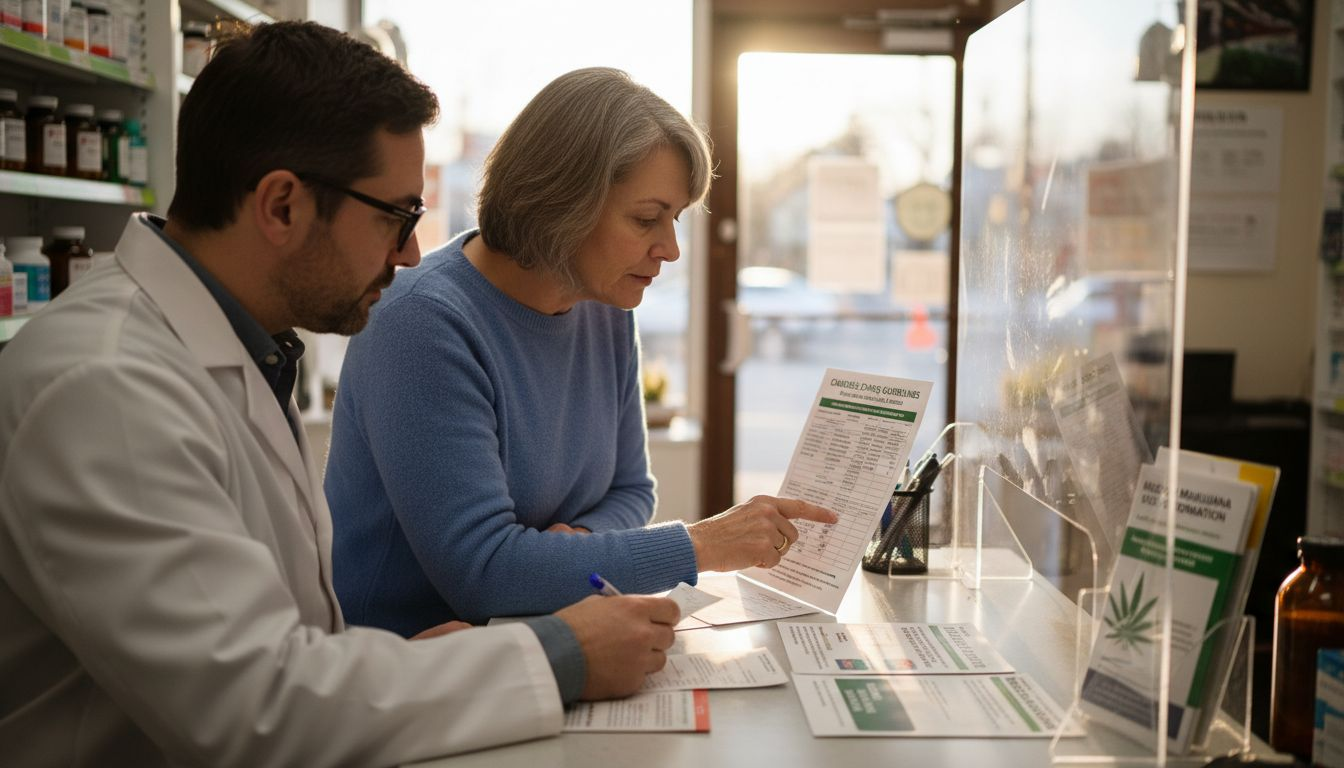
Finding the right cannabis dose can feel complicated when every product offers different effects and potencies. With compounds like THC and CBD interacting uniquely with your physiology, choosing the right amount involves more than just guessing. Whether you shop online in Canadian jurisdictions for medical or recreational use, understanding precise cannabis dosing empowers you to personalize your experience, minimize risks, and make informed decisions for safety and satisfaction.
| Point | Details |
|---|---|
| Understanding Cannabis Dosing | Cannabis dosing is personalised, requiring awareness of individual factors like body chemistry, metabolism, and specific health goals. |
| Consumption Methods Influence Effects | Different cannabis consumption methods significantly affect onset time, duration, and overall effectiveness, necessitating careful choice based on desired outcomes. |
| THC and CBD Roles | The interaction between THC and CBD is crucial; THC is psychoactive while CBD offers therapeutic benefits, making their ratios important for effective dosing. |
| Legal and Health Considerations | Familiarise yourself with local cannabis regulations and health implications to ensure safe and responsible use. |
Cannabis dosing is far more nuanced than simply consuming a random amount. Cannabis dosing involves precisely understanding how different compounds interact with your body’s endocannabinoid system, determining the right quantity to achieve desired effects while minimizing potential risks.
At its core, cannabis dosing considers several critical factors:
Research from the National Institute on Drug Abuse indicates that cannabis contains complex compounds like tetrahydrocannabinol (THC) and cannabidiol (CBD), each playing unique roles in how the substance affects human physiology. THC produces intoxicating effects, while CBD offers potential therapeutic benefits without producing a “high”.
Understanding dosing requires recognizing that individual responses vary dramatically. What works for one person might overwhelm or underwhelm another, making personalized experimentation crucial. Factors like body weight, metabolism, previous cannabis experience, and specific product potency all influence appropriate dosage.
Cannabis dosing is not a one-size-fits-all approach, but a carefully calibrated personal experience.
The Drug Enforcement Administration’s research highlights that cannabis contains over 480 constituents, with dosage effects depending significantly on consumption method and individual physiology. Short-term effects can include altered perception and coordination, while long-term risks might involve dependence.
Pro tip: Start with the lowest possible dose and incrementally adjust, keeping detailed notes about your experiences and reactions.
Cannabis consumption methods dramatically impact dosing effectiveness and overall user experience. Delivery methods play a crucial role in determining how quickly and intensely cannabis compounds interact with your body, making it essential to understand the unique characteristics of each consumption technique.
Popular cannabis product categories include:
Research from the National Institute on Drug Abuse reveals that each consumption method varies significantly in onset time, bioavailability, and duration of effects. Inhalation methods typically provide rapid onset but shorter effect duration, while edibles demonstrate delayed onset with prolonged therapeutic impact.
The U.S. Food and Drug Administration’s clinical research guidance emphasizes the critical importance of understanding product-specific dosing strategies. Different cannabis forms require unique approaches based on potency, delivery mechanisms, and individual physiological responses.
Precision in cannabis dosing is not about consuming more, but consuming strategically.
Factors influencing dosing effectiveness include:
Each consumption method presents distinct advantages and challenges. Smoking and vaping offer quick absorption but may irritate respiratory systems, while edibles provide longer-lasting effects with more controlled dosing potential. Tinctures and oils allow for precise measurement and gradual absorption.

Here’s how popular cannabis consumption methods compare:
| Method | Typical Onset Time | Duration of Effects | Notable Risk/Benefit |
|---|---|---|---|
| Smoking | Within minutes | 1–3 hours | Immediate effect, respiratory risk |
| Vaping | Within minutes | 1–3 hours | Fast action, potential lung concerns |
| Edibles | 30–90 minutes | 4–8 hours | Longer effect, delayed onset |
| Tinctures/Oils | 15–45 minutes | 2–6 hours | Accurate dosing, discreet use |
| Topicals | No intoxicating effect | Localized, up to 12 hours | Non-psychoactive, targeted relief |
Pro tip: Experiment cautiously with different consumption methods, starting with low doses and meticulously tracking your body’s unique response.
Understanding the complex interaction between THC and CBD is crucial for precise cannabis dosing. These two primary cannabinoids play dramatically different roles in how cannabis affects the human body, making their ratio and individual characteristics essential to consider when determining appropriate consumption levels.
Key differences between THC and CBD include:
Research from the National Institute on Drug Abuse reveals that THC primarily influences cognition, mood, and perception by directly interacting with brain receptors. Conversely, CBD operates more subtly, potentially mitigating some of THC’s more intense psychological effects.
The National Centre for Complementary and Integrative Health emphasizes that cannabinoids interact uniquely with individual biochemistry. Dosing complexity emerges from this intricate interaction, where the presence of CBD can significantly modulate THC’s impact.
The therapeutic potential of cannabis lies not in individual compounds, but in their nuanced interactions.
Crucial factors influencing THC and CBD dosing include:
Understanding these compounds requires recognizing that higher THC concentrations typically produce more pronounced psychoactive effects, while higher CBD levels may provide more balanced, therapeutic experiences with reduced psychological intensity.
Here is a quick reference for distinguishing THC and CBD influences:
| Cannabinoid | Psychoactive Effect | Potential Benefits | Common Side Effects |
|---|---|---|---|
| THC | Strong intoxication | Euphoria, appetite increase | Anxiety, dry mouth, impaired coordination |
| CBD | None (non-intoxicating) | Anxiety reduction, pain relief | Drowsiness, drug interactions |
Pro tip: Start with low-THC, high-CBD products to understand your personal response and gradually adjust your dosing strategy.
Navigating cannabis consumption in Canada requires a comprehensive understanding of legal frameworks designed to protect public health and ensure responsible use. Since cannabis legalization, Canadian authorities have implemented rigorous regulations that balance individual freedom with societal safety considerations.
Key legal parameters for cannabis use include:
Canadian health authorities’ framework emphasizes comprehensive strategies focused on minimizing potential health risks and preventing youth access. The legislation aims to create a controlled environment that prioritizes consumer safety and product quality.
The Cannabis Act’s regulatory approach mandates strict controls on product packaging, potency, and advertising to protect vulnerable populations. Regulatory complexity emerges from the intricate balance between personal choice and public health protection.
Responsible cannabis use requires understanding both legal boundaries and personal health implications.
Important health and safety considerations include:
Canadian provinces maintain unique regulatory frameworks, allowing for nuanced approaches to cannabis distribution and consumption that reflect local community needs and health priorities.
Pro tip: Regularly consult official Canadian health resources and stay informed about evolving cannabis regulations in your specific province.
Cannabis consumption requires a strategic approach to prevent overconsumption risks that can lead to uncomfortable or potentially harmful experiences. Understanding the nuanced factors that contribute to dosing errors is crucial for maintaining a safe and enjoyable cannabis experience.
Key strategies for preventing overconsumption include:
Research from the National Institute on Drug Abuse highlights that high THC concentrations, particularly in edibles and concentrates, significantly increase accidental overuse risks. Potential adverse effects can include anxiety, confusion, and impaired motor coordination.
The comprehensive research on marijuana overconsumption reveals specific symptoms of excessive consumption, such as severe disorientation, elevated blood pressure, and potential vomiting.
Responsible cannabis use is about understanding your limits, not testing them.
Important risk factors for overconsumption include:
Mitigating these risks requires a combination of knowledge, self-awareness, and cautious experimentation. Understanding your personal tolerance and responding to your body’s signals is paramount in maintaining a safe cannabis experience.
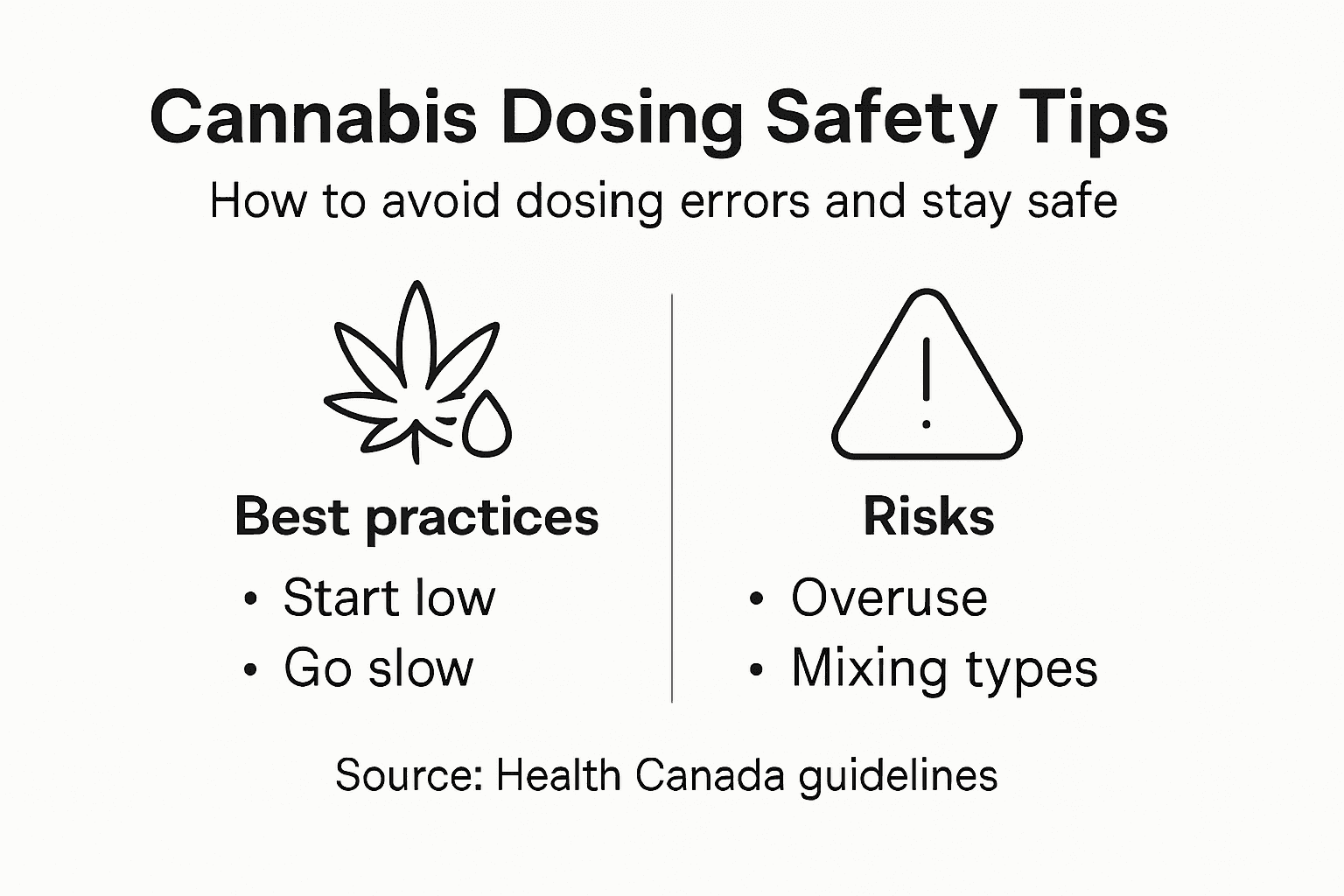
Pro tip: Always have a trusted friend present when experimenting with new cannabis products, and maintain a calm, comfortable environment.
Understanding cannabis dosing can feel overwhelming given the many factors like THC and CBD ratios, consumption methods, and individual tolerance levels. This article highlights the importance of starting low and adjusting gradually to avoid overconsumption and find your personalized sweet spot. Whether you seek balanced wellness or specific effects, having access to the right products and reliable information is crucial.
At GreenSociety.cc, we are committed to supporting your cannabis journey by offering a wide selection of high-quality flowers, edibles, tinctures, and more. Our platform simplifies the process of exploring different consumption methods and cannabinoid profiles so you can safely test and tailor your dosing. With discreet shipping and detailed product descriptions, you gain control over your experience while minimizing risks associated with dosing errors.
Take the next step to discovering your ideal cannabis dose today. Visit GreenSociety.cc to browse expertly curated products designed to meet diverse needs. For helpful tips and guides on dosing strategies, explore our educational resources and FAQs. Start smart, shop confidently, and experience cannabis on your terms.
Cannabis dosing depends on multiple factors including THC concentration, your body chemistry and metabolism, personal tolerance levels, the specific health goals you have, and the consumption method used.
Different methods of consumption, such as smoking, edibles, or tinctures, impact the onset time, duration of effects, and overall potency. Inhalation methods typically offer rapid effects, while edibles deliver longer-lasting effects but may have delayed onset.
THC is the psychoactive compound that produces a high, whereas CBD is non-intoxicating and may provide therapeutic benefits. The ratio of these cannabinoids will influence the effects you experience, making understanding their interactions vital for proper dosing.
To prevent overconsumption, start with the lowest possible dose, wait for the effects to kick in before taking more, read product labels carefully for THC concentrations, and maintain a consumption journal to track your reactions and tolerance.