Free Shipping
on orders over $150.00
$0.00
$150.00
Add $150.00 more for free shipping!


Most cannabis flower labels overstate THC by 30%, creating confusion for buyers trying to make informed decisions. Understanding potency helps you avoid overconsumption, wasted money, and disappointing experiences. This guide clarifies what cannabis potency really means for flower, edibles, and concentrates, and shows you how to read labels critically so you can shop with confidence.
| Point | Details |
|---|---|
| Potency is multifaceted | Cannabis potency determines product strength but involves more than just THC percentages. |
| Trust but verify labels | Many cannabis labels, especially for flower, may be inaccurate; always check third-party verification where possible. |
| Lab methods matter | Testing method affects potency accuracy, so HPLC is the most reliable standard. |
| Check minor components | Minor cannabinoids and terpenes significantly impact your experience, beyond THC and CBD. |
| Start low and smart | Begin with lower doses and use lab-verified information to guide safe, informed purchases. |
Cannabis potency indicates the concentration of key cannabinoids like THC and CBD in a product. THC produces the psychoactive effects you feel, while CBD offers therapeutic benefits without intoxication. For flower and concentrates, potency appears as a percentage. Edibles list milligrams per serving and per package.
Why does potency matter? It directly affects your experience, safety, and value. Higher THC percentages deliver stronger effects but also increase the risk of overconsumption. Lower percentages suit beginners or those seeking mild relaxation. Understanding THC vs CBD helps you match products to your goals.
Key cannabinoids measured:
Potency labels give you a starting point, but they don’t tell the whole story. Testing methods, storage conditions, and product type all influence accuracy. Learning why potency matters empowers you to choose products that match your tolerance and desired effects.
“Potency is your roadmap to the right cannabis experience, but only if you know how to read the signs.”
Laboratories use specialised methods to measure cannabinoid concentrations. The gold standard is HPLC (high-performance liquid chromatography), which separates and quantifies cannabinoids without altering them. LC-PDA (liquid chromatography with photodiode array detection) works similarly, preserving the natural state of compounds.
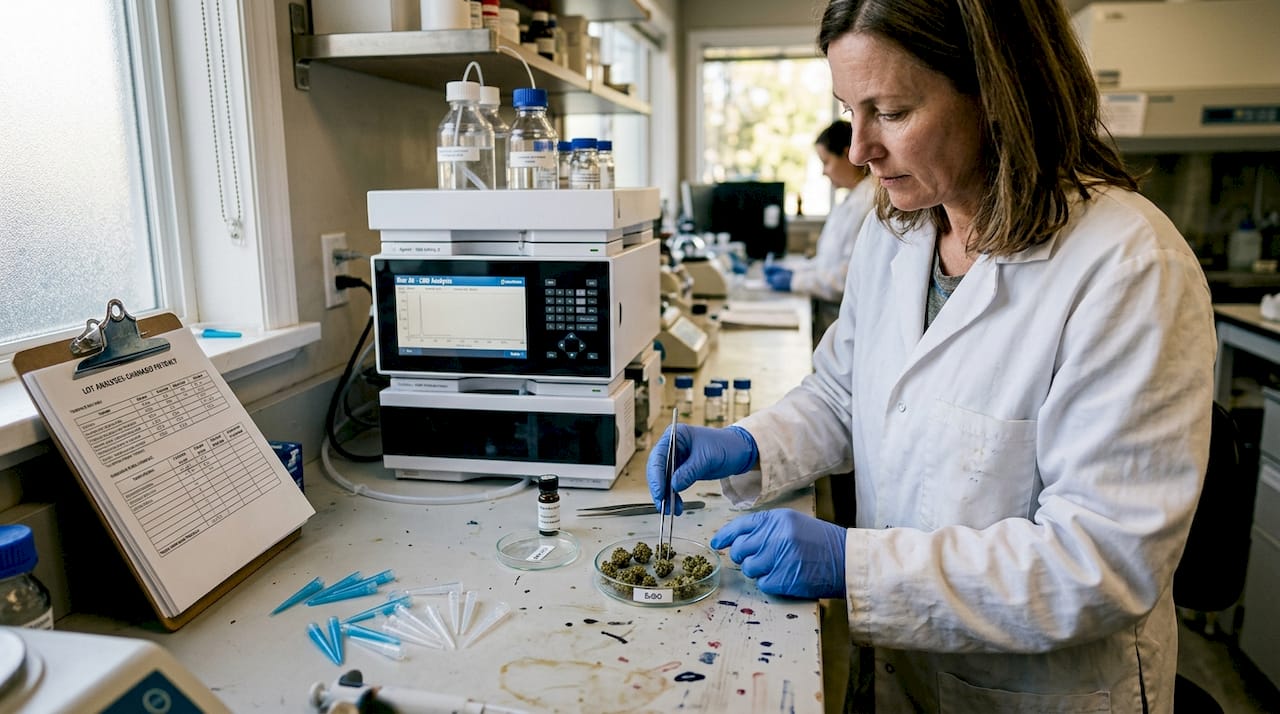
Gas chromatography (GC) requires heating samples, which converts THCA to THC through decarboxylation. This inflates THC readings and makes results less accurate for raw flower. That’s why HPLC remains the preferred choice for reliable potency data.
| Testing method | Accuracy | Decarboxylation | Best for |
|---|---|---|---|
| HPLC/LC-PDA | High | No | Flower, concentrates, edibles |
| GC | Moderate | Yes (inflates THC) | Research, not consumer testing |
| UV spectroscopy | Low | Varies | Quick screening only |
Lab variability creates challenges for consumers. Different facilities may report different results for the same batch. Sampling techniques, equipment calibration, and reporting standards all introduce inconsistencies. Understanding cannabis lab testing helps you recognise these limitations.
Pro Tip: Always check if a product’s COA (certificate of analysis) lists the testing method. HPLC or LC-PDA results are more trustworthy than GC for flower products.
Knowing how to read potency results puts you in control. Look for batch-specific reports rather than generic product claims. Third-party testing adds another layer of verification, especially for flower where over-labelling is common.
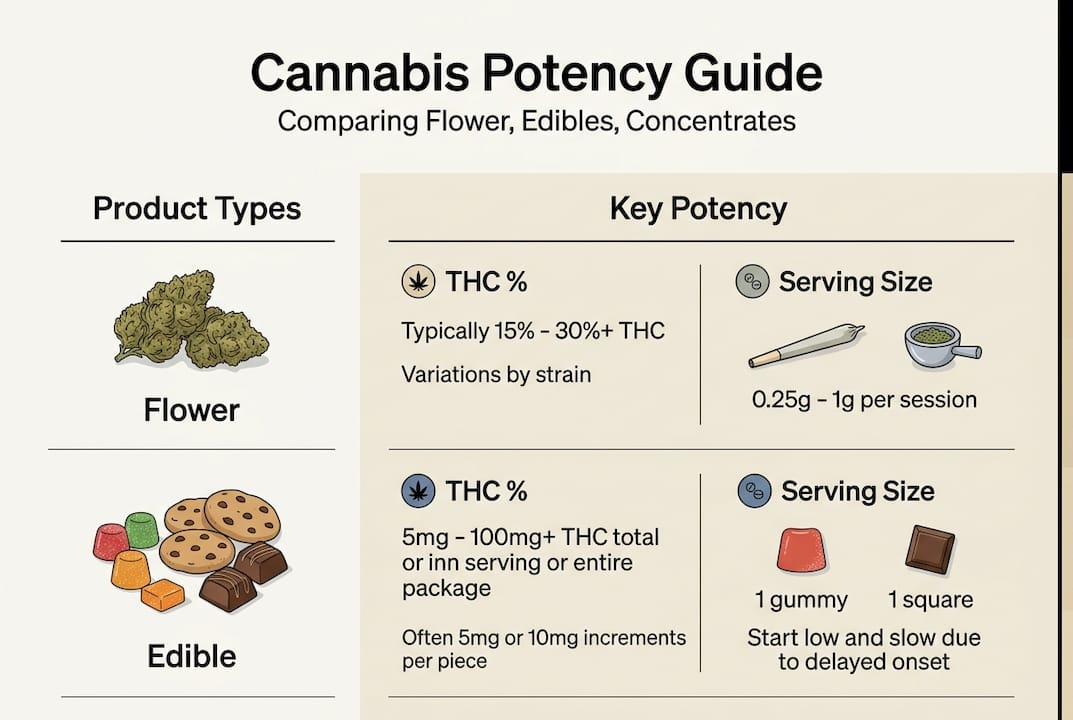
Each product category has distinct potency ranges. Flower typically contains 15-35% THC, making it the mildest option. Concentrates jump to 60-95% THC, delivering intense effects in small doses. Edibles list 5-10mg THC per serving, with total package amounts ranging from 25-100mg.
Typical potency by product type:
Edible dosing confuses many buyers. A package might contain 100mg total THC but be divided into 10 servings of 10mg each. Always check both the per-serving and total amounts. Starting with 2.5-5mg is wise for beginners.
| Product | Typical THC % | Serving size | Onset time |
|---|---|---|---|
| Flower | 15-35% | 0.25-0.5g | 2-10 minutes |
| Concentrates | 60-95% | 0.05-0.1g | 1-5 minutes |
| Edibles | N/A | 5-10mg | 30-120 minutes |
| Tinctures | N/A | 10-30mg | 15-45 minutes |
Real-world shopping example: A 25% THC flower contains 250mg THC per gram. A 0.5g joint delivers roughly 125mg, though combustion reduces actual intake. A 75% concentrate needs only 0.17g to match that dose.
Understanding THC label reading prevents dosing mistakes. Compare products within the same category first. A 20% flower isn’t necessarily weaker than a 30% option if terpenes and minor cannabinoids enhance effects. Check hash potency comparisons to see how traditional concentrates stack up against modern extracts.
56.7% of flower labels are accurate within ±15%, while 96% of concentrate labels meet this standard. This massive difference means you can trust concentrate potency more than flower claims.
Flower labels frequently overstate THC content. Research shows 30% of flower products are over-labelled, while concentrates prove far more reliable. Only 56.7% of flower labels fall within acceptable accuracy ranges, compared to 96% for concentrates.
Why the discrepancy? Flower testing faces unique challenges. Samples may come from premium buds while the product contains mixed quality. Storage degrades cannabinoids over time. Some producers shop for favourable lab results, a practice called “lab shopping.”
Factors affecting label accuracy:
Lab inconsistencies create 5-10% variance even for identical samples. THCA versus THC reporting adds confusion. Minor cannabinoids like CBG often exceed CBD levels but go unreported. Synthetic delta-8-THC can interfere with standard tests.
COA QR codes offer verification. Scan them to access batch-specific lab reports. Cross-reference the batch number on your product with the report date. Fresh results matter more than old data.
Pro Tip: If a flower product claims over 30% THC, approach with scepticism. While possible, it’s rare and often indicates over-labelling.
“Trust concentrates for accurate potency. Verify flower claims with third-party reports whenever possible.”
Steps to verify product potency:
Understanding third-party testing helps you spot reliable products. Independent labs have no incentive to inflate numbers. Recognising lab testing importance transforms you from a passive buyer into an informed consumer.
Potency labels focus on THC and CBD, but minor cannabinoids and terpenes shape your actual experience. CBG, CBN, THCV, and dozens of terpenes work together to create effects that pure THC percentages can’t predict. This synergy, called the entourage effect, explains why a 20% strain might feel stronger than a 28% option.
Minor cannabinoids appear in smaller amounts but pack meaningful impact. CBG may enhance focus. CBN promotes relaxation. THCV can suppress appetite. Canadian products increasingly highlight these compounds, though testing often overlooks them.
Key minor cannabinoids:
Terpenes contribute aroma and effects. Myrcene promotes relaxation. Limonene elevates mood. Pinene enhances alertness. A product with balanced terpenes and moderate THC often outperforms high-THC options with poor terpene profiles.
Pro Tip: Start with lower THC products when terpene and minor cannabinoid levels are unknown. You can always increase your dose, but you can’t undo overconsumption.
Exploring cannabis terpenes reveals why two 25% THC strains feel completely different. Learning what terpenes are helps you predict effects beyond simple potency numbers. Look for full-spectrum products that preserve these compounds rather than isolates that strip them away.
Applying potency knowledge transforms your shopping experience. Follow these steps to make informed decisions and avoid common pitfalls.
1. Verify batch-specific data
Scan COA QR codes or request batch reports. Match the batch number on your product to the lab results. Fresh test dates matter because cannabinoids degrade over time.
2. Start low with new products
Begin with 5-10mg for edibles, 0.25g for flower, and tiny dabs for concentrates. Wait at least two hours before increasing edible doses. Effects vary based on tolerance, metabolism, and product composition.
3. Cross-reference third-party tests
Independent lab verification adds credibility. If a product claims exceptional potency, look for multiple test results from different facilities. Consistency across tests indicates accuracy.
4. Consider the full cannabinoid profile
High THC with balanced terpenes and minor cannabinoids often delivers better experiences than pure THC isolates. Check for CBG, CBN, and terpene percentages when available.
5. Account for product type differences
Concentrate labels prove more reliable than flower. Edibles require different dosing calculations. Understanding these distinctions prevents dosing errors and disappointment.
Mastering reading lab results gives you confidence at checkout. You’ll spot over-labelled products, identify quality options, and dose accurately for your needs.
Now that you understand potency, finding quality products becomes straightforward. Green Society offers batch-tested options across all categories, giving you the reliability you need for informed choices.
Looking for balanced flower? Explore indica strains with verified potency ranges and rich terpene profiles. These products come with detailed lab reports so you know exactly what you’re getting. Whether you prefer mild relaxation or stronger effects, transparent testing helps you match products to your tolerance.
Concentrate enthusiasts benefit from the superior label accuracy this category offers. Discover cannabis concentrates with 60-95% THC, backed by HPLC testing for precise cannabinoid measurements. From shatter to live resin, you’ll find options that deliver consistent potency every time.
Edible users need reliable dosing information more than anyone. Browse edibles on the market with clear per-serving and total package amounts. Start with lower doses and work up as you learn your ideal range. Batch-specific testing ensures you get the potency listed on the label.
Green Society prioritises quality and transparency. Every product includes access to lab reports, batch numbers, and detailed cannabinoid profiles. You’re not guessing about potency anymore. You’re making informed decisions based on verified data.
Look for COA QR codes or third-party lab reports. Flower labels prove less reliable than concentrates, so verify batch numbers and test dates before trusting claims.
Flower usually contains 15-35% THC, while concentrates range from 60-95% THC. These ranges help you gauge product strength before purchase.
Not always. Higher THC increases effects and risks, but terpenes and minor cannabinoids also shape your experience. Balanced profiles often outperform pure potency.
HPLC is preferred because it measures cannabinoids accurately without heating them. GC methods inflate THC readings through decarboxylation.
Edibles show per-serving THC and total package THC. A 100mg package might contain 10 servings of 10mg each. Always check both numbers to dose correctly.