Free Shipping
on orders over $150.00
$26.00
$150.00
Add $124.00 more for free shipping!


Finding the perfect cannabis strain can feel confusing with so many names, categories, and conflicting information. This matters because your choice shapes not just the effects, but your health, safety, and buying satisfaction. By learning how strains are defined, what their chemical profiles reveal, and separating popular myths from evidence, you will be able to make smarter decisions that match your goals. Discover the truth about cannabis strain categories, key compounds, and the reality behind common misconceptions.
| Point | Details |
|---|---|
| Understanding Strains | Cannabis strains are defined by cannabinoid content, terpene profiles, and physical traits. This knowledge aids in making informed purchasing decisions. |
| Cannabinoids and Terpenes Matter | The effects of cannabis depend more on specific cannabinoid and terpene profiles than on classification labels like Indica or Sativa. |
| Myths vs. Reality | Many common myths about cannabis strains are misleading; individual experiences vary greatly due to unique chemical compositions. |
| Legal and Health Considerations | It’s crucial to understand local laws regarding cannabis and be aware of potential health risks associated with its use. |
Cannabis strains are cultivated varieties of the cannabis plant bred over generations to express specific characteristics. Each strain develops its own chemical profile, appearance, and growth patterns based on selective breeding and growing conditions. Understanding what defines a strain helps you make informed purchasing decisions.
At the core, a strain is identified by three main factors:
Think of strains like grape varieties. A Pinot Noir differs from a Cabernet in chemistry, taste, and characteristics—cannabis works similarly.
Most dispensaries organise strains into three traditional categories, though this system oversimplifies things:
The reality is that cannabis contains many chemical compounds beyond THC, and these compounds work together to produce effects. Relying solely on Indica/Sativa labels can be misleading.
Popular misconceptions persist about cannabis strains. Here’s what the evidence actually shows:
Myth 1: All strains with high THC are equally potent and produce identical effects.
Reality: THC concentration matters, but terpenes, CBD, and minor cannabinoids significantly influence your experience. Two strains with identical THC percentages can feel completely different.
Myth 2: Cannabis is completely harmless and non-addictive.
Reality: Government research debunks harmful myths, showing that regular cannabis use carries real health, behavioural, and economic consequences. Dependence can develop, especially with frequent use.
Myth 3: Indica always relaxes; Sativa always energises.
Reality: Strain effects depend on complete cannabinoid and terpene profiles, not just the plant type. A “Sativa” strain might feel calming due to its terpene makeup, while an “Indica” could feel uplifting.
Strain names are marketing labels, not scientific classifications. Your actual experience depends on the full chemical composition and your individual biology.
When browsing strains online, look beyond the name and category. Check the cannabinoid analysis, terpene profile, and user reviews to understand what you’re actually purchasing.
Pro tip: Start with strains showing complete lab results displaying THC, CBD, and major terpenes—this data matters far more than whether the name sounds “Indica” or “Sativa.”
Cannabis divides into three broad categories based on plant origin, appearance, and chemical composition. Each type carries distinct characteristics that influence how they grow, what they contain, and how they affect you. Understanding these differences helps you select strains aligned with your preferences.
Indica varieties originated in the Hindu Kush mountain region and adapted to harsh, short growing seasons. These plants developed specific traits to survive challenging environments.
Indica characteristics:
Many users report Indica strains help with pain management, insomnia, and muscle tension. The relaxation profile makes them popular among those seeking wind-down effects.

Sativa varieties originated near the equator in regions like Central America, Africa, and Southeast Asia. These plants evolved in warm climates with longer growing seasons.
Sativa characteristics:
Users typically describe Sativa strains as uplifting and creative-enhancing. Many choose these for activities requiring focus or social engagement.
Hybrid strains combine genetics from both Indica and Sativa parents. Breeders develop hybrids intentionally to create specific effect profiles or enhance desirable traits.
Hybrid characteristics:
Hybrids offer flexibility for users seeking customised experiences. A hybrid might provide gentle relaxation with mild mental clarity, or strong euphoria with physical calm.
Here’s the critical truth: cannabis strain classifications are helpful starting points, but they’re not perfect predictors of effects. Two Indica strains can feel dramatically different based on their unique terpene and cannabinoid profiles.
The actual chemical composition—THC levels, CBD levels, and terpene profiles—determines your experience far more than whether a strain is labelled Indica, Sativa, or Hybrid.
When shopping online, look past the category label. Check the specific cannabinoid percentages and terpene lists to understand what you’re actually purchasing.
To help you select the right cannabis strain, here is a comparison of Indica, Sativa, and Hybrid varieties based on their key features:
| Type | Typical Origin | Chemical Balance | Common Effects |
|---|---|---|---|
| Indica | Hindu Kush mountains | Higher CBD, moderate THC | Physical relaxation |
| Sativa | Equatorial regions | Higher THC, low CBD | Mental stimulation |
| Hybrid | Mixed parentage | Balanced THC/CBD | Versatile outcomes |
Pro tip: Compare strains within the same category by their cannabinoid and terpene data rather than just the name—two “Indicas” with different terpene profiles will feel completely different.
The effects you experience from cannabis depend entirely on its chemical composition. Two strains can look identical but feel completely different because of what’s inside them. Understanding cannabinoids and terpenes transforms how you shop and what results you get.
Cannabinoids are the chemical compounds responsible for cannabis effects. Your body has receptors that interact with these molecules, triggering various responses.
The two most important cannabinoids:
These aren’t the only cannabinoids in cannabis. Minor compounds like CBN, CBG, and THCV also contribute to effects, though THC and CBD dominate most strains.
When you see a lab result showing “18% THC,” that tells you the strain’s potency level. A strain with 8% THC will feel noticeably different from one with 22% THC. CBD percentages matter equally—higher CBD strains feel less intoxicating regardless of THC content.
Terpenes are aromatic compounds that give cannabis its distinctive smells and flavours. They’re also present in lemons, pine trees, and lavender. In cannabis, they work synergistically with cannabinoids to shape your overall experience.
Common terpenes you’ll encounter:
Terpene profiles vary dramatically between strains. A strain high in myrcene will feel noticeably more sedating than one dominated by limonene, even if THC percentages match.
Here’s where it gets interesting: cannabinoids and terpenes don’t work in isolation. They interact together in what researchers call the entourage effect. This means the combination of all compounds produces effects greater than any single compound could achieve alone.
Cannabis chemical complexity explains why strain selection matters more than just checking THC levels. A 20% THC strain with specific terpenes might feel completely different from another 20% THC strain with different terpenes.
The complete chemical profile—THC, CBD, and all terpenes combined—determines your experience far more than any single number on a lab report.
When browsing strains online, look for products listing both cannabinoid percentages and terpene profiles. This data lets you predict effects accurately instead of guessing based on names.
Pro tip: Screenshot the full lab results showing cannabinoids and terpenes before purchasing, then compare profiles across multiple strains to find patterns that match your preferred effects.
For quick reference, here are major cannabinoids and terpenes that shape cannabis effects:
| Compound | Category | Primary Role | Typical Sensation |
|---|---|---|---|
| THC | Cannabinoid | Euphoria, altered perception | Intoxication, uplift |
| CBD | Cannabinoid | Anxiety and pain reduction | Calm, clear-headed |
| Myrcene | Terpene | Relaxation, sedation | Earthy, soothing |
| Limonene | Terpene | Mood elevation | Citrus, energising |
| Pinene | Terpene | Focus enhancement | Pine scent, alertness |
| Linalool | Terpene | Calmness, anti-anxiety | Floral, relaxing |
Strain differences matter because they directly determine what cannabis will do for you. The chemical profile of each strain creates specific effects that guide both recreational enjoyment and therapeutic applications. Understanding these connections helps you choose strategically instead of randomly.
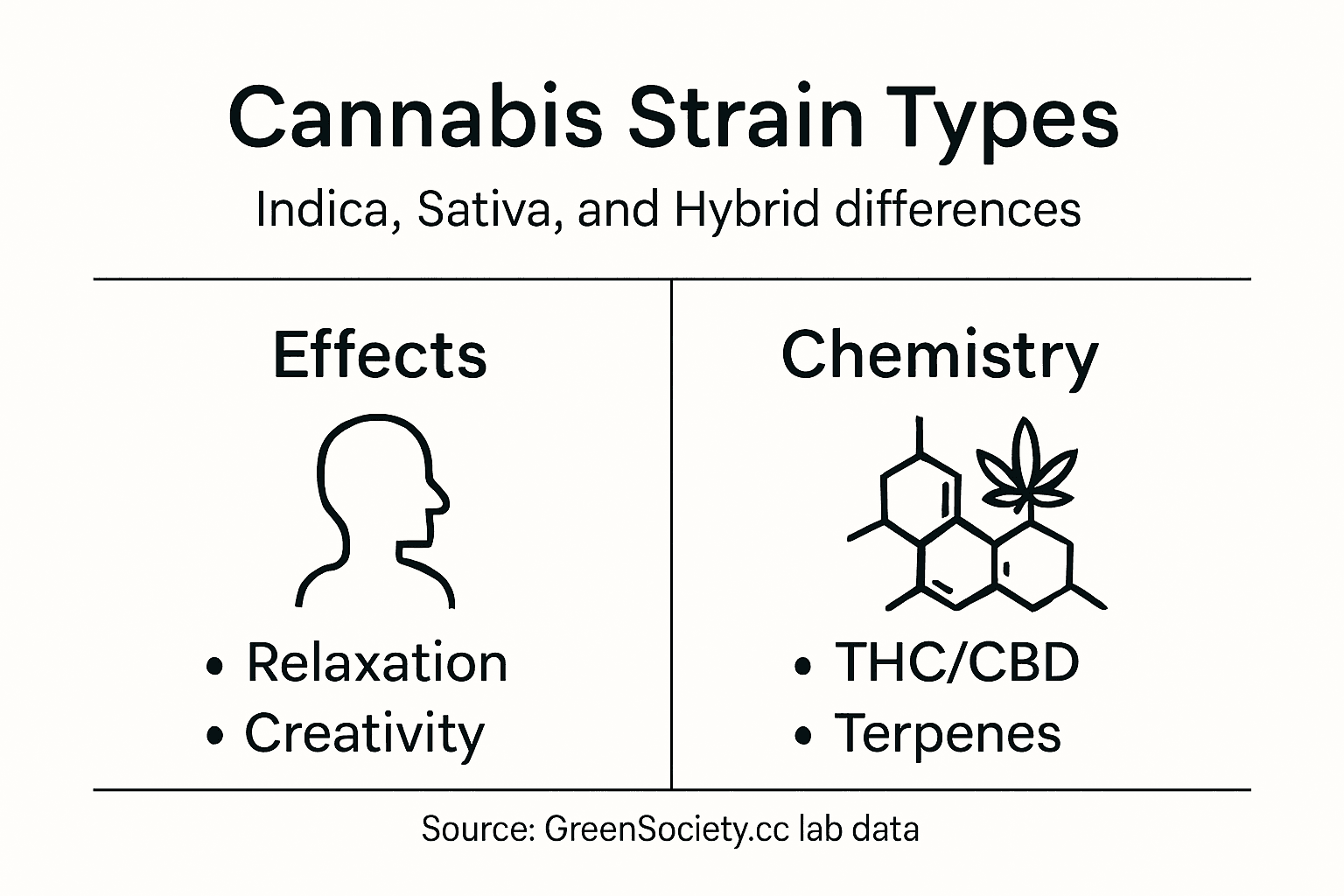
Strains with higher CBD and specific terpene combinations typically produce relaxing, sedative effects. These work well for evening use, winding down after work, or managing physical discomfort.
Common uses for relaxation-focused strains:
Indica-dominant strains historically fill this category, though the chemical profile matters more than the label. A hybrid with high myrcene and CBD might relax you better than a pure Indica with different terpenes.
Strains emphasising higher THC with energising terpenes like limonene and pinene tend to enhance mental clarity and creativity. These suit daytime use when you need to accomplish tasks or engage socially.
Common uses for uplifting strains:
Sativa-dominant strains traditionally occupy this space, though again chemistry beats classification. A strain high in limonene will feel more stimulating regardless of whether it’s technically Sativa or Hybrid.
Hybrid strains offer customisation opportunities. Some lean relaxing, others lean energising, and many provide genuine balance.
Why hybrids matter:
Most commercially available strains today are hybrids, giving you unprecedented flexibility in tailoring your experience.
Cannabis effects depend on chemical composition, making specific strains useful for targeted conditions. A patient managing anxiety needs different cannabinoid ratios than someone addressing appetite loss.
Example applications:
Your desired effect or therapeutic goal should drive strain selection, not the strain name or marketing description.
When shopping at online dispensaries like GreenSociety.cc, use lab data to match strains to your specific needs. A strain targeting anxiety should show cannabinoid and terpene profiles aligned with that goal.
Pro tip: Keep a simple journal tracking which strains produce your desired effects—over time, you’ll identify terpene and cannabinoid patterns that work best for your body and goals.
Cannabis comes with real responsibilities. Before purchasing online, you need to understand the legal landscape, potential health risks, and how to verify product quality. Making informed choices protects both your safety and your compliance with local regulations.
Cannabis legality varies dramatically by jurisdiction. Some regions permit recreational use, others allow only medical cannabis, and many prohibit it entirely. You must know your local laws before purchasing.
Legal status considerations:
Canadian consumers have legal access to regulated cannabis through licensed retailers. If you’re purchasing online, ensure the retailer is licensed and operates within Canadian regulations.
Cannabis use carries real health risks that vary based on frequency, dosage, and individual factors. Understanding these helps you consume responsibly.
Common risks include:
These risks increase with higher THC concentrations and frequent consumption. Starting low with unfamiliar strains gives your body time to adjust.
When shopping at online dispensaries, several practices protect your purchase quality and legality.
Verification checklist:
Legitimate dispensaries like GreenSociety.cc provide transparent product information and verified lab results. Avoid sellers hiding cannabinoid data or refusing to show testing documentation.
Your first purchase should include strains with complete lab results and clear cannabinoid percentages so you understand exactly what you’re consuming.
New users often consume too much, leading to uncomfortable experiences. Start with low THC percentages and small quantities until you understand how cannabis affects you personally.
Pro tip: Create a personal cannabis log documenting strain names, THC/CBD percentages, effects experienced, and duration—this reference guide helps you replicate positive experiences and avoid strains that don’t work for you.
Navigating the complex world of cannabis strains can feel overwhelming, especially when terms like Indica, Sativa, and Hybrid only tell part of the story. This article highlights the importance of looking beyond names and categories to understand the full chemical profile including cannabinoids and terpenes. If your goal is to find strains that truly match your desired effects such as relaxation, creativity, or pain relief, you must have access to detailed lab data and trusted products.

At GreenSociety.cc, we simplify your search by offering a wide selection of cannabis products with complete lab results and terpene profiles available for every strain. Our platform is designed for both casual users and experts who want to make informed choices based on chemical composition, not just marketing labels. Explore our easy-to-navigate online store to discover flowers, edibles, concentrates, and more—all backed by quality assurance and fast, discreet delivery. Start your journey today and experience cannabis as it is meant to be enjoyed with confidence and clarity. Browse our offerings now at GreenSociety.cc and make your next purchase with certainty.
Indica strains are typically associated with relaxing effects and a higher CBD content, Sativa strains are linked to energising effects with higher THC levels, and Hybrid strains combine traits from both, offering a mix of relaxation and energy based on their specific lineage.
Cannabinoids like THC and CBD determine the primary effects, while terpenes contribute to the aroma and can modulate those effects. The combination of both creates a unique experience for each strain, making it important to consider the full chemical profile rather than just THC levels.
Yes, two strains can have the same THC concentration but different terpene profiles, which can lead to dramatically different experiences. It’s essential to look beyond just THC levels and consider the complete chemical composition to understand potential effects.
When selecting a cannabis strain online, check the complete lab results, including cannabinoid and terpene percentages. Additionally, read user reviews and consider the strain’s intended effects to ensure it aligns with your needs.
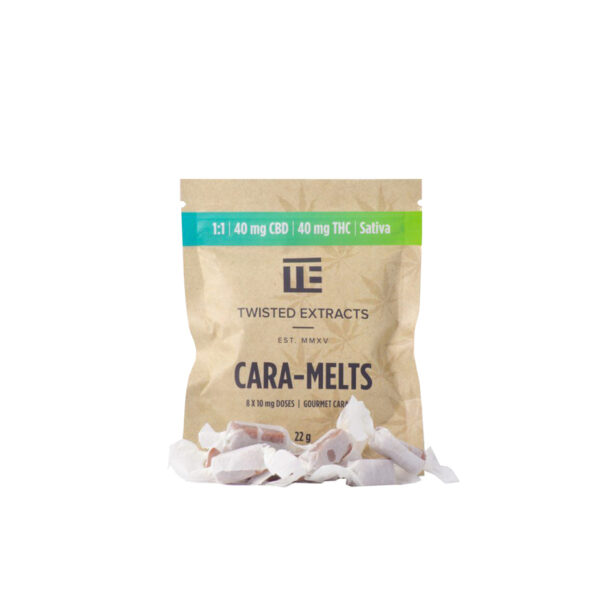 Twisted Extracts 1:1 Sativa Cara-Melts