Free Shipping
on orders over $150.00
$0.00
$150.00
Add $150.00 more for free shipping!


Navigating medical cannabis can feel overwhelming when terms like cannabinoids, terpenes, and entourage effect flood product descriptions and patient guides. Many adults assume this specialised vocabulary requires a science degree to understand, but grasping these core concepts is simpler than you think. This guide breaks down essential medical cannabis terminology into clear, practical explanations that empower you to select products confidently, communicate effectively with healthcare providers, and make informed decisions about your health and wellness journey with cannabis.
| Point | Details |
|---|---|
| Cannabis vocabulary includes cannabinoids, terpenes, and receptors | Understanding these foundational terms helps you navigate product labels and make informed purchasing decisions. |
| THC produces psychoactive effects while CBD offers therapeutic benefits | Knowing the difference allows you to choose products that match your desired experience and health goals. |
| The entourage effect shows compounds work better together | Combined cannabinoids and terpenes deliver enhanced therapeutic outcomes compared to isolated components. |
| Product terminology clarifies delivery methods and safety standards | Familiarity with terms like certificate of analysis and carrier oil ensures you select quality, safe products. |
| Mastering terminology empowers confident medical cannabis use | Clear understanding of cannabis language supports better communication with providers and smarter product choices. |
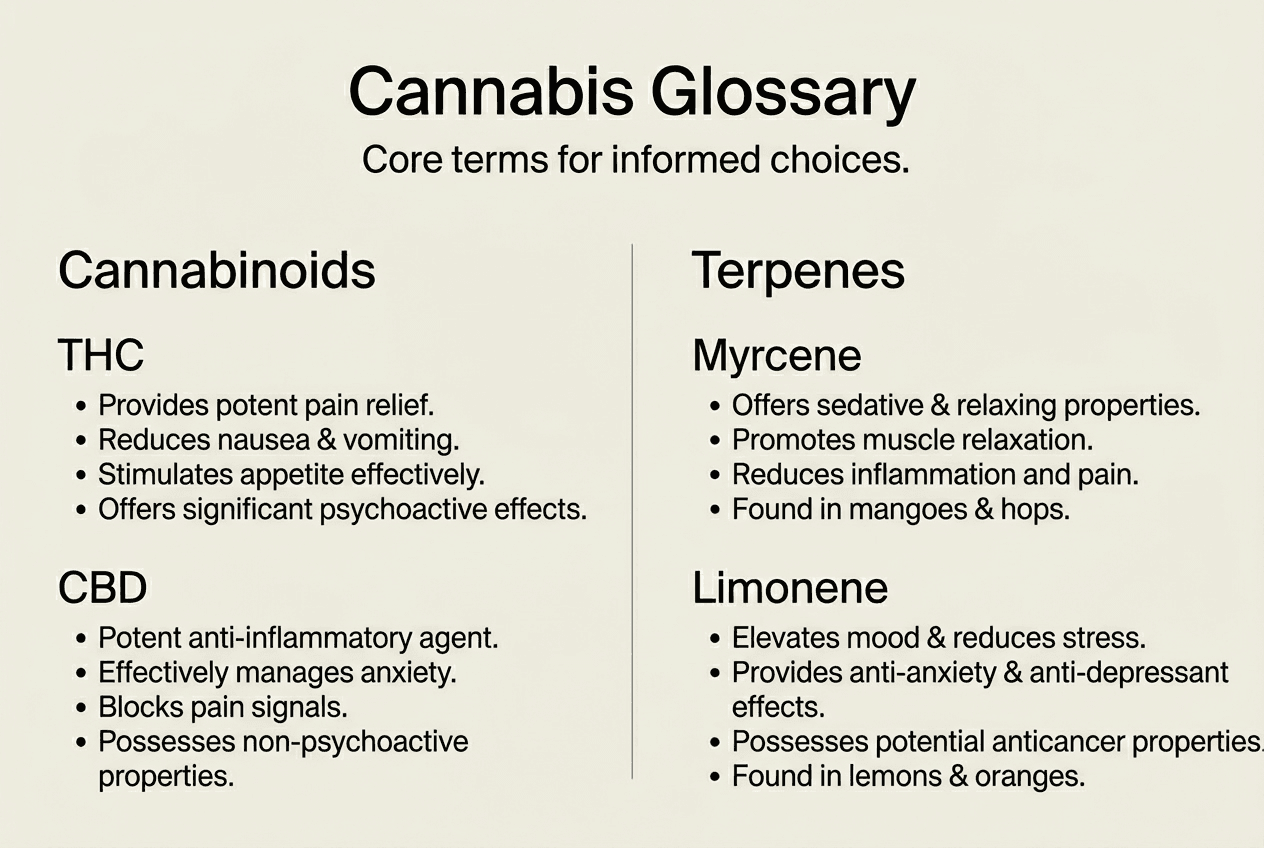
Building a solid foundation in cannabis vocabulary starts with recognising the main categories of terms you will encounter. Cannabinoids are chemical compounds found in cannabis plants that interact with your body’s endocannabinoid system to produce various effects. The most well known cannabinoids include THC, which creates psychoactive sensations, and CBD, which provides therapeutic benefits without intoxication. CBG, another emerging cannabinoid, shows promise for inflammation and bacterial infections.
Terpenes are aromatic compounds that give cannabis strains their distinctive scents and flavours whilst also influencing therapeutic effects. These organic molecules work alongside cannabinoids to shape your overall experience. Common terpenes include myrcene, which promotes relaxation, limonene for mood elevation, and caryophyllene for pain relief. Your body processes these compounds through cannabinoid receptors, specifically CB1 receptors in the brain and nervous system and CB2 receptors in immune cells and peripheral tissues.
Consumption methods introduce another layer of terminology. A dispensary is a licensed retail location or online platform where you purchase cannabis products. Carrier oil refers to the base oil, such as coconut or hemp seed oil, used to dilute cannabis extracts in tinctures and oils. Understanding these foundational terms creates a framework for exploring more complex concepts.
Here are five essential terms every medical cannabis user should know:
The glossary defines over 120 essential cannabis terms, simplifying cannabis vocabulary for patients who need reliable reference materials. Mastering this core vocabulary positions you to navigate product descriptions, understand dosing recommendations, and communicate your needs effectively.
Tetrahydrocannabinol, commonly called THC, stands as the primary psychoactive cannabinoid responsible for the cannabis high that many users seek or wish to avoid. THC binds directly to CB1 receptors in your brain, triggering the euphoric, relaxed, or altered perception states associated with cannabis use. Medical applications include pain management, appetite stimulation, and nausea reduction, though psychoactive effects may not suit every patient or situation.
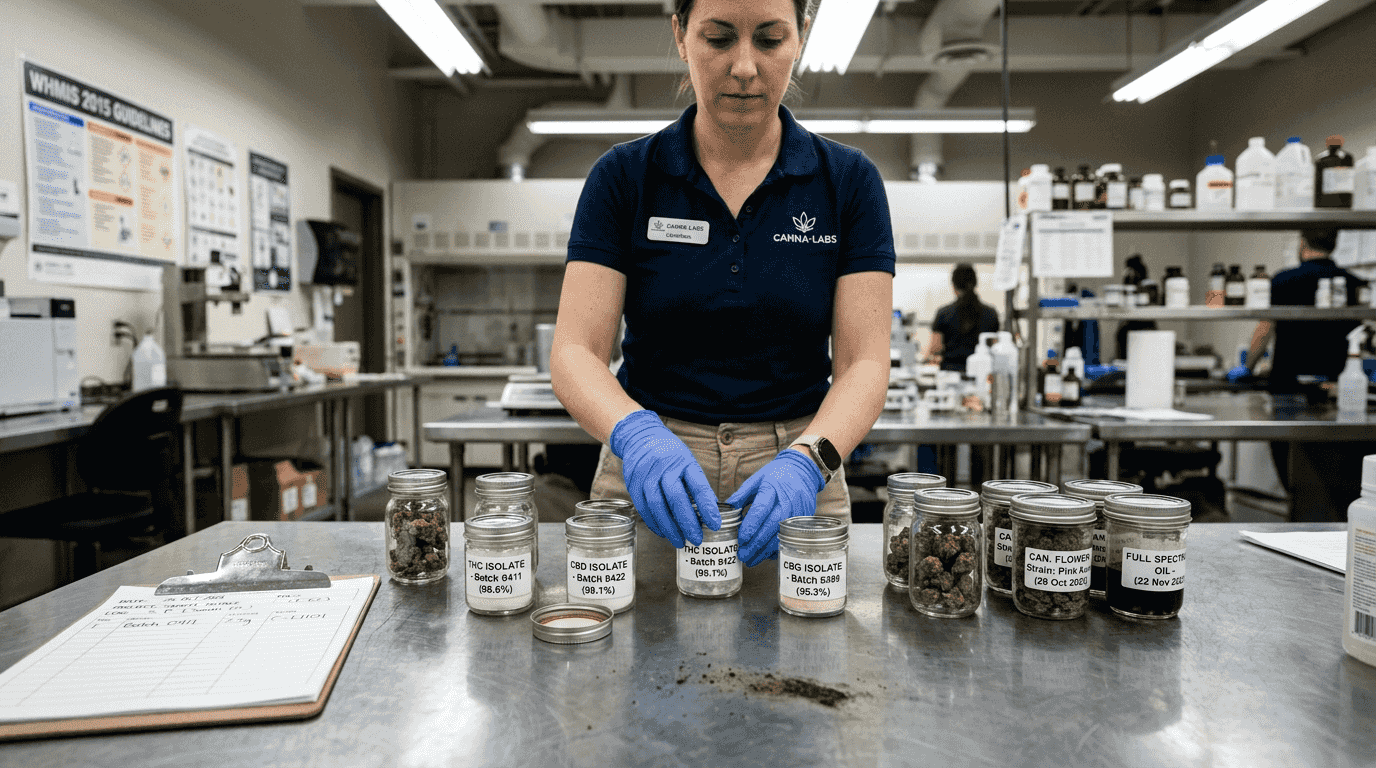
Cannabidiol, known as CBD, offers non-intoxicating therapeutic benefits including anxiety relief, inflammation reduction, and pain management without producing a high. CBD interacts with your endocannabinoid system differently than THC, modulating receptor activity rather than binding directly. This makes CBD appealing for patients seeking symptom relief whilst maintaining mental clarity for work, driving, or daily responsibilities.
Other cannabinoids expand your treatment options beyond the THC and CBD binary. Cannabigerol (CBG) acts as a precursor to other cannabinoids and shows potential for digestive issues and glaucoma. Cannabinol (CBN) develops as THC ages and may support sleep. Cannabichromene (CBC) contributes to pain relief and mood regulation. Understanding THC vs CBD differences helps you select ratios that match your therapeutic goals.
Why does cannabinoid knowledge matter for your treatment? Different conditions respond better to specific cannabinoid profiles. Chronic pain might benefit from balanced THC ratios, whilst anxiety often improves with CBD dominant products. Epilepsy patients may need high CBD with minimal THC. Your ideal cannabinoid combination depends on your symptoms, tolerance, and lifestyle requirements.
Key cannabinoid considerations include:
Pro Tip: Combining cannabinoids often balances effects and reduces unwanted side effects, as CBD can moderate THC’s psychoactive intensity whilst THC may enhance CBD’s therapeutic benefits for certain conditions.
The entourage effect describes how cannabinoids, terpenes, and other compounds work together for greater therapeutic effect than isolated components alone. This synergistic relationship means whole plant extracts often outperform single molecule products, even at lower doses. Scientists first proposed this concept in 1998, and recent research continues validating how cannabis compounds enhance each other’s benefits whilst minimising adverse reactions.
Terpenes play a starring role in this botanical symphony. Myrcene, the most abundant terpene in many cannabis strains, promotes sedation and muscle relaxation whilst potentially increasing cannabinoid absorption across cell membranes. Limonene elevates mood, reduces stress, and may enhance immune function. Beta caryophyllene uniquely activates endocannabinoid receptors directly, contributing anti-inflammatory effects without psychoactivity.
Understanding terpene profiles matters more than traditional indica versus sativa classifications for predicting effects. A high myrcene strain labelled sativa might produce relaxing effects typically associated with indicas. Conversely, a limonene rich indica could feel energising. Smart consumers examine terpene content rather than relying solely on botanical categories that oversimplify cannabis diversity.
| Terpene | Primary Effects | Cannabinoid Interaction |
|---|---|---|
| Myrcene | Sedation, muscle relaxation, pain relief | Enhances THC absorption and potency |
| Limonene | Mood elevation, stress reduction, focus | Increases CBD anti-anxiety effects |
| Caryophyllene | Anti-inflammatory, pain management | Activates CB2 receptors independently |
| Pinene | Mental clarity, memory retention, alertness | Counteracts THC-induced memory impairment |
| Linalool | Calming, sleep support, anxiety relief | Amplifies CBD’s relaxation properties |
Common terpenes and their therapeutic contributions include:
Pro Tip: Choosing full spectrum products can mean better relief at lower doses, reducing costs whilst minimising tolerance development and side effects compared to isolated cannabinoid formulations.
Medical cannabis products come in diverse forms, each with specific terminology. Flower refers to the dried cannabis buds you smoke or vaporise, offering immediate effects and full terpene profiles. Oils are concentrated extracts suspended in carrier oils for sublingual or oral consumption. Edibles include foods and beverages infused with cannabis, producing delayed but longer lasting effects. Tinctures are alcohol or glycerin based liquid extracts taken sublingually for faster absorption than edibles. Topicals are creams, balms, and patches applied to skin for localised relief without psychoactive effects.
A certificate of analysis verifies product quality through independent laboratory testing that confirms cannabinoid potency, terpene content, and absence of contaminants like pesticides, heavy metals, and moulds. Reputable producers provide these certificates, often accessible via QR codes on packaging. Never purchase products without verified lab testing, as unregulated items may contain harmful substances or inaccurate potency claims.
Safety terminology protects your wellbeing. Controlled drug indicates cannabis remains regulated under federal and provincial laws despite medical or recreational legalisation. Adverse events are negative reactions ranging from mild discomfort to serious medical complications requiring professional attention. Black market cannabis refers to unregulated products sold outside legal channels, which lack quality controls and safety testing. Stick to licensed cannabis delivery methods and authorised retailers.
Delivery methods shape your cannabis experience:
Five essential safety tips for medical cannabis patients:
Understanding product and safety terminology ensures you select appropriate formats whilst avoiding contaminated or mislabelled items that could compromise your health or treatment outcomes.
Now that you understand essential medical cannabis terminology, applying this knowledge becomes the natural next step. Green Society offers comprehensive guides that build on these foundations, helping you select quality products and use them effectively. Explore cannabis in the kitchen with delicious edible recipes and tips to create personalised treatments that suit your preferences and dosing needs.
Our cannabis flower checklist covers 6 essential steps for evaluating quality, potency, and freshness before purchase. These practical resources translate terminology into actionable decisions, whether you are comparing terpene profiles, calculating appropriate doses, or understanding product labels. Visit our cannabis terminology guide for deeper dives into specific concepts and ongoing education that keeps pace with evolving research and product innovations.
THC causes a psychoactive high by binding to CB1 receptors in your brain, whilst CBD provides therapeutic effects without intoxication by modulating receptor activity differently. Understanding their distinct properties helps you choose products that match your desired experience and medical needs. Learn more about THC vs CBD differences to select optimal ratios for your condition.
The entourage effect describes how cannabinoids, terpenes, and other plant compounds work together synergistically to enhance therapeutic benefits beyond what isolated components achieve alone. Choosing full spectrum products leverages this synergy, often improving effectiveness whilst reducing side effects and required doses. Explore the entourage effect explained for detailed mechanisms and practical applications.
Always look for a certificate of analysis confirming independent lab testing for potency, purity, and contaminants before purchasing any cannabis product. Avoid black market items that lack regulatory oversight and quality controls. Purchase exclusively from licensed dispensaries and review cannabis delivery methods to understand safe consumption practices.
Terpenes are aromatic compounds that create cannabis scents and flavours whilst significantly influencing therapeutic effects through interaction with cannabinoids. Different terpene profiles produce varying experiences, from energising to sedating, making them more reliable indicators of effects than indica or sativa classifications. Understanding terpene content helps you select strains that deliver your desired outcomes.
Start by identifying your primary symptoms and desired effects, then match them to appropriate cannabinoid ratios and terpene profiles. Consider your lifestyle requirements, such as whether you need non-intoxicating relief for daytime use or stronger effects for evening symptom management. Consult with healthcare providers or knowledgeable dispensary staff who can recommend products based on your specific medical history and treatment goals.