Free Shipping
on orders over $150.00
$0.00
$150.00
Add $150.00 more for free shipping!

TL;DR:
- The shelf life of cannabis products depends on proper storage and environmental factors that affect potency, flavor, and safety. Heat, oxygen, light, and humidity accelerate degradation, with storage methods like airtight containers, humidity control, and refrigeration extending freshness. Properly stored, products like flower, tinctures, and concentrates can last from several months to years, often outlasting regulatory expiry dates that are based on stability testing.
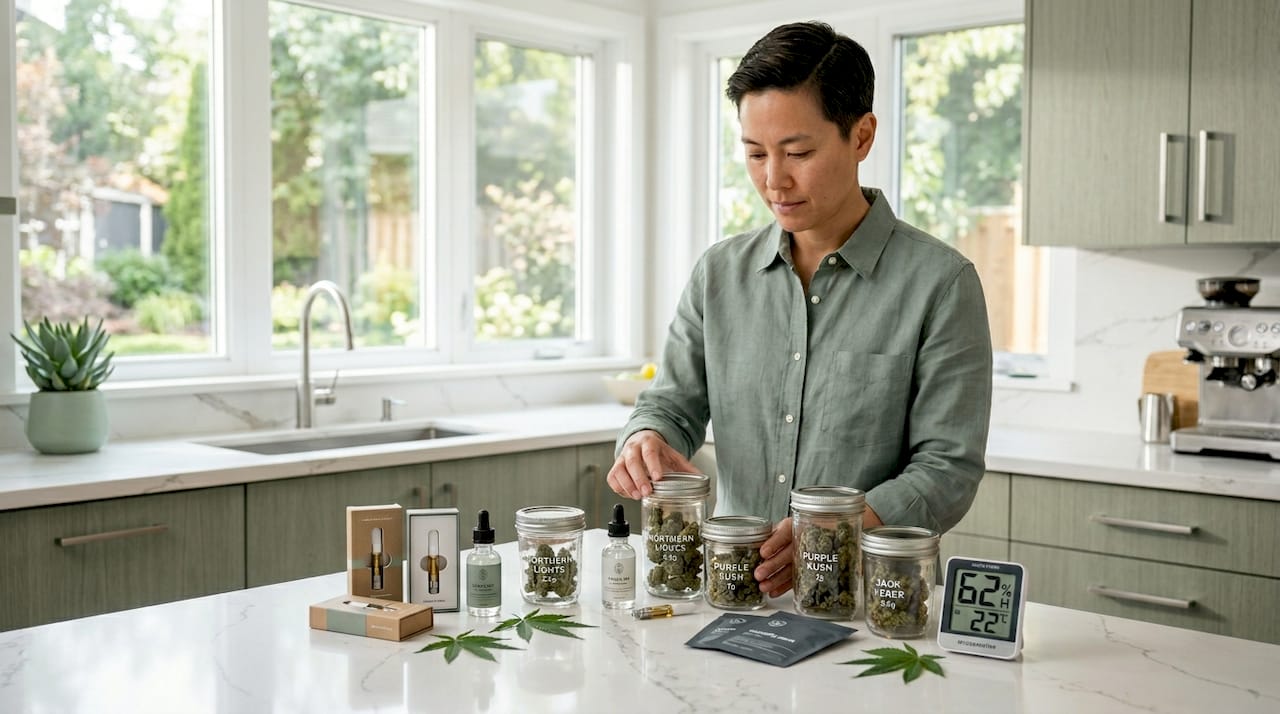
The shelf life of cannabis products is the period during which they maintain their potency, flavour, and safety before noticeable degradation sets in. Flower typically lasts 6 to 12 months, edibles anywhere from two weeks to a year, and tinctures up to five years depending on their base. Concentrates like shatter and wax hold up for 6 to 12 months, while live resin and rosin are more fragile and need refrigeration. Every product category degrades differently, and knowing the difference between them changes how you store, buy, and use what you have.
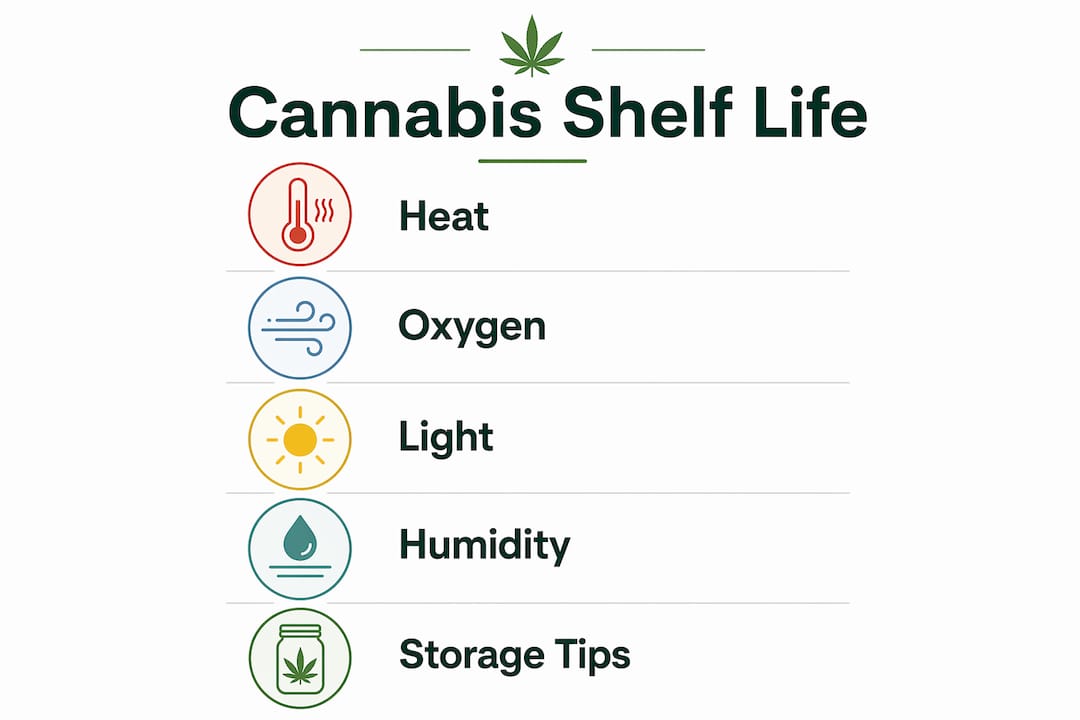
Four environmental variables drive cannabis degradation faster than anything else: heat, oxygen, light, and humidity. Understanding how each one works gives you direct control over how long your products stay fresh and potent.
Heat accelerates the breakdown of cannabinoids and terpenes through a process governed by Arrhenius kinetics, meaning degradation rate roughly doubles with every 10°C rise in temperature. Storing flower in a warm kitchen drawer or on a sunny shelf is one of the fastest ways to destroy what you paid for. The optimal storage temperature sits between 15 and 21°C.
Oxygen is the second major culprit. When THC is exposed to oxygen over time, it converts to CBN, a mildly sedating cannabinoid with far less psychoactive effect. This oxidative conversion happens faster when containers have excess headspace or are opened frequently. A long-term stability study published in 2026 found that dry medical cannabis flower stored in a nitrogen atmosphere with controlled humidity showed CBN levels below 1% after 12 months, confirming that oxygen minimisation is the single most effective preservation strategy.
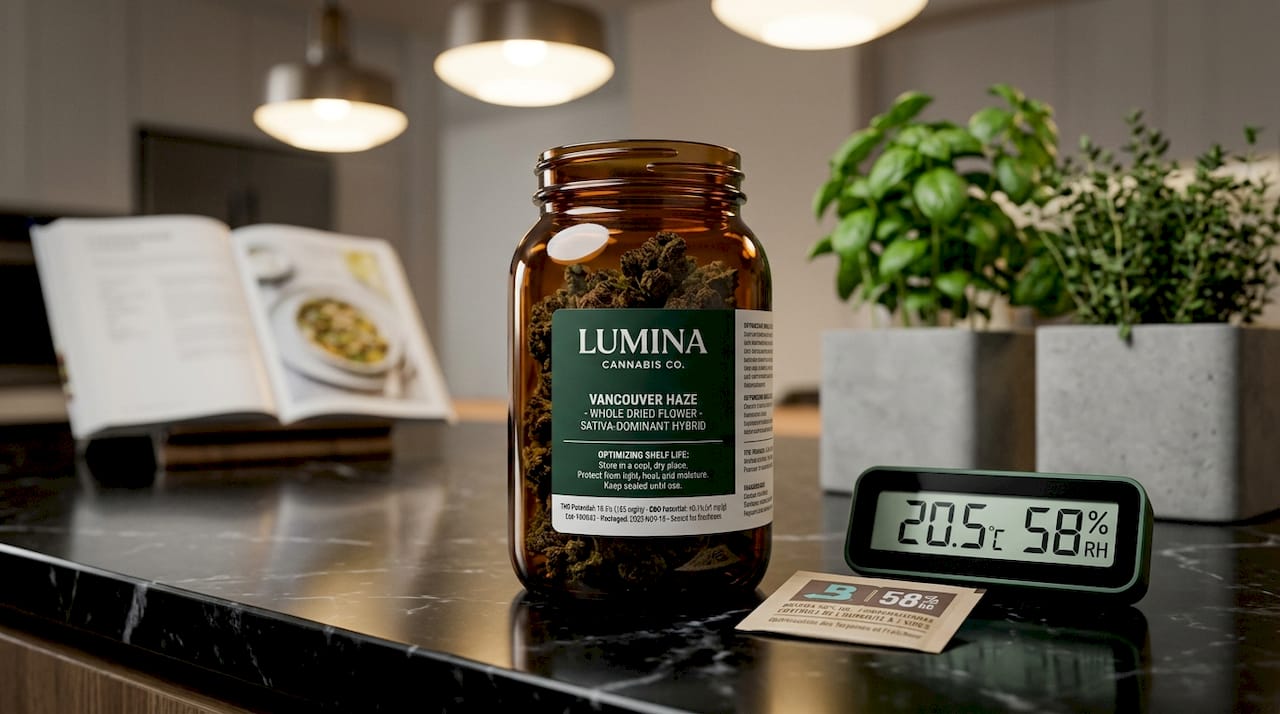
Light causes photodegradation. Direct sunlight can reduce THC content by over 2% per week, which means a product left on a windowsill loses meaningful potency within days. Amber glass jars and opaque containers block the UV wavelengths responsible for this breakdown.
Humidity works in two directions. Too much moisture above 65% relative humidity (RH) encourages mould and bacterial growth. Too little below 55% RH dries out trichomes, causing terpene loss and a harsh, brittle texture. The sweet spot for flower is 59 to 63% RH.
Key degradation factors at a glance:
Pro Tip: Buy products in smaller quantities if you open your container more than three times per week. Smaller containers mean less headspace and less oxygen exposure with every opening.
Not all cannabis products age the same way. The base ingredients, processing method, and packaging all determine how quickly a product degrades. The table below gives you a practical reference for what to expect.
| Product type | Typical shelf life | Maximum with ideal storage | Primary degradation risk |
|---|---|---|---|
| Dry flower | 6 to 12 months | 24+ months (frozen, vacuum sealed) | Oxidation, terpene loss, mould |
| Gummies and candies | 6 to 12 months | Up to 12 months refrigerated | Sugar crystallisation, moisture |
| Baked edibles | 1 to 2 weeks | 3 to 6 months frozen | Mould, staleness, fat rancidity |
| Vape cartridges | 6 to 12 months | 12 months (cool, upright storage) | Oil oxidation, hardware leaching |
| Shatter and wax | 6 to 12 months | 12 months (cool, dark, sealed) | Moisture, terpene evaporation |
| Live resin and rosin | 3 to 6 months | 12 months refrigerated | Terpene loss, oxidation |
| Alcohol tinctures | 2 to 5 years | 5 years (cool, dark storage) | Light exposure, evaporation |
| Oil-based tinctures | 1 to 2 years | 2 years refrigerated | Oxidation, fat rancidity |
Dry flower is the most studied product category. Validated stability data confirms at least 12 months of shelf life under controlled conditions, with THC degradation of only 7 to 9% after three months at 25°C and 60% RH. That is a reassuringly slow rate of decline when storage is done correctly.
Vape cartridges degrade through a different mechanism. Oil darkening and flavour flattening are the first signs of oxidation in the oil, and heat exposure accelerates hardware leaching from the metal components into the oil itself. Keeping cartridges upright, away from heat, and capped when not in use extends their usable life considerably.
Live resin and rosin are the most perishable concentrates because they retain a high volume of volatile terpenes. These terpenes evaporate quickly at room temperature, which is why refrigeration is not optional for these products. It is the difference between a product that tastes extraordinary at three months and one that tastes flat at six weeks.
Pro Tip: Alcohol-based tinctures are the longest-lasting cannabis product you can buy. If you want a product that stays potent for years with minimal storage effort, a well-sealed alcohol tincture stored in a cool, dark cupboard is your best option.
Good storage does not require expensive equipment. A few consistent habits and inexpensive tools will keep your products at their best for as long as possible.
Use airtight glass containers sized to your quantity. Glass does not leach chemicals into your product the way plastic does, and an airtight seal prevents oxygen exchange. Choose a jar that fits your product with minimal headspace. A half-empty jar holds more air than product, which accelerates oxidation.
Control humidity with Boveda packs. For flower storage, Boveda 62% packs inside an airtight amber glass jar maintain the 59 to 63% RH range that preserves trichomes and prevents mould. One pack per jar is sufficient. Replace packs when they feel fully rigid, which signals they are spent.
Store in a cool, dark location. A cupboard away from the stove, a drawer in a cool room, or a dedicated storage box all work well. Avoid the refrigerator for flower unless you are using a humidity-controlled container, as standard fridge humidity fluctuates and can cause condensation on trichomes.
Minimise how often you open your container. Every opening introduces fresh oxygen and allows terpenes to escape. If you use cannabis daily, consider dividing your supply into a small daily-use container and a larger sealed storage container. This limits exposure for the bulk of your supply.
Freeze flower only when it is fully cured and vacuum sealed. Frozen cannabis can maintain quality beyond two years, but the method matters. Trichomes become brittle when frozen and will break off if you handle the flower while it is cold. Always let frozen flower return to room temperature before opening the bag, and never freeze uncured or moist flower.
Refrigerate live resin, rosin, and oil-based tinctures. These products benefit from the consistent cool temperature a fridge provides. Store them in small, sealed glass containers and keep them away from the door where temperature fluctuates most.
Keep vape cartridges upright and away from heat. Horizontal storage causes oil to pool against the mouthpiece or hardware, increasing contact with metal components. Heat above 25°C accelerates oxidation of the oil and can cause leaking.
Combining these habits, cool dark storage with airtight containers and humidity control, gives you the best chance of maintaining 90% or more of cannabinoid content for six months or longer.
Expiration dates on cannabis packaging in regulated markets like Canada are not always a direct reflection of when a product becomes unsafe or ineffective. The regulatory reality is more nuanced than most consumers realise.
Key points about cannabis expiration labelling:
Understanding that short default expiration dates reflect a lack of stability data rather than immediate degradation helps you interpret labels with more confidence. A product stored correctly in your home may outlast its label date without meaningful quality loss.
Proper storage conditions, not the product type alone, determine how long cannabis products retain their potency, flavour, and safety.
| Point | Details |
|---|---|
| Shelf life varies by product | Flower lasts 6 to 12 months; tinctures last up to 5 years; live resin degrades fastest at 3 to 6 months. |
| Four variables drive degradation | Heat, oxygen, light, and humidity each accelerate cannabinoid and terpene breakdown independently. |
| Airtight glass and humidity packs work | Boveda 62% packs in amber glass jars maintain the 59 to 63% RH range that preserves flower quality. |
| Freezing extends flower beyond two years | Vacuum-sealed, fully cured flower frozen correctly retains quality for 24 or more months. |
| Label dates reflect testing, not just time | Regulatory expiry dates are tied to stability data completion, not harvest dates, so conservative labels are common. |
Most people treat cannabis storage as an afterthought. They leave flower in the bag it came in, toss a vape cart in a warm car, or store edibles next to the stove. Then they wonder why the product tastes flat or hits differently after a month.
I have seen the difference that proper storage makes firsthand. Flower kept in a Boveda-controlled amber jar in a cool cupboard at three months tastes and performs nearly identically to the day it was purchased. The same flower left in a plastic bag on a shelf for three months is noticeably harsher, less aromatic, and weaker. The science explains why, but you do not need a lab to feel the difference.
The most common mistake I see is using containers that are too large. People buy a large jar thinking it is convenient, but a half-empty jar is full of oxygen. Divide your supply. Use a small daily container and keep the rest sealed. It takes thirty seconds and it genuinely extends freshness.
Freezing is the most underused preservation method in casual cannabis use. Most people either do not know it works or are afraid of damaging their product. Done correctly, with fully cured flower in a vacuum-sealed bag, it is the closest thing to a pause button for cannabis quality. The key is patience: let it come fully to room temperature before you open it.
Regulatory expiry dates are a useful starting point, but they are not the final word. A product stored correctly in your home can outlast its label date without meaningful quality loss. Trust the label as a guide, then use your senses. If it smells right and looks right, it almost certainly is right.
— Juiced
Greensociety’s blog covers everything from selecting cannabis flower with confidence to understanding the differences between concentrate types. If you want to go deeper on storage, the cannabis storage tips guide covers humidity control, container selection, and product-specific advice in detail. For concentrate buyers, the weed concentrates storage guide explains exactly how to handle live resin, rosin, and shatter to get the most out of every gram. Whether you are stocking up or buying for the first time, Greensociety has the resources to help you buy smarter and store better.
Opened flower stored in an airtight container with a Boveda humidity pack at 15 to 21°C typically lasts 6 to 12 months with minimal potency loss. Without humidity control, quality degrades noticeably within 4 to 6 weeks.
Cannabis does not become toxic as it ages, but mould can develop on flower stored above 65% RH, which is unsafe to inhale. Degraded cannabinoids lose potency rather than becoming harmful, so the primary risk is quality loss, not toxicity.
Gummies and hard candies last 6 to 12 months in a sealed container away from heat and light. Baked goods last only 1 to 2 weeks at room temperature and should be frozen for longer storage.
Vape cartridges have a typical shelf life of 6 to 12 months. Darkening oil colour and a flat or chemical flavour indicate oxidation and hardware degradation, which are signs the cartridge is past its best.
Short default expiry dates in regulated markets often reflect the absence of completed stability testing rather than actual rapid degradation. Once producers submit stability data, expiry dates on subsequent batches are typically extended.