Free Shipping
on orders over $150.00
$25.00
$150.00
Add $125.00 more for free shipping!

TL;DR:
- Vape concentrates are highly potent cannabis extracts containing 60 to 99 percent THC, making them several times stronger than flower. They preserve terpene profiles better when made with solventless methods like live rosin, which offers richer flavor and aroma. Proper device use, temperature control, and storage are essential for safe, effective consumption and maintaining quality.
Vape concentrates are defined as highly potent cannabis extracts processed specifically for vaporization, delivering THC levels between 60% and 99% compared to the 15–30% found in traditional flower. That gap is not trivial. It means a single small draw from a concentrate can equal several puffs from a joint. The two primary categories are solvent-based extracts (made with butane, propane, or CO2) and solventless extracts (made with heat, pressure, or water). Greensociety carries a wide selection of both, making it a reliable starting point for anyone learning to navigate this category.
Vape concentrates are cannabis extracts stripped down to their most active compounds: cannabinoids and terpenes. Flower retains plant matter, chlorophyll, and waxes that dilute the final experience. Concentrates remove all of that, leaving behind a product that hits faster, harder, and with more flavour precision.
The potency gap is the most important distinction. Cannabis concentrates range from 60–99% THC, while dried flower typically sits between 15–30%. That means concentrates can be three to six times stronger per unit weight. For adults who want faster onset, smaller doses, or a more controlled experience, concentrates offer a clear advantage over flower.
Terpenes are the second major distinction. Flower contains terpenes naturally, but combustion destroys many of them. Vaporizing concentrates at lower temperatures preserves those aromatic compounds, producing a cleaner, more flavourful draw. The role of terpenes in shaping both aroma and effect is one reason experienced users often prefer concentrates over smoking.
The extraction method determines everything: flavour, potency, texture, and price. Two main approaches exist, and each produces a distinct class of products.
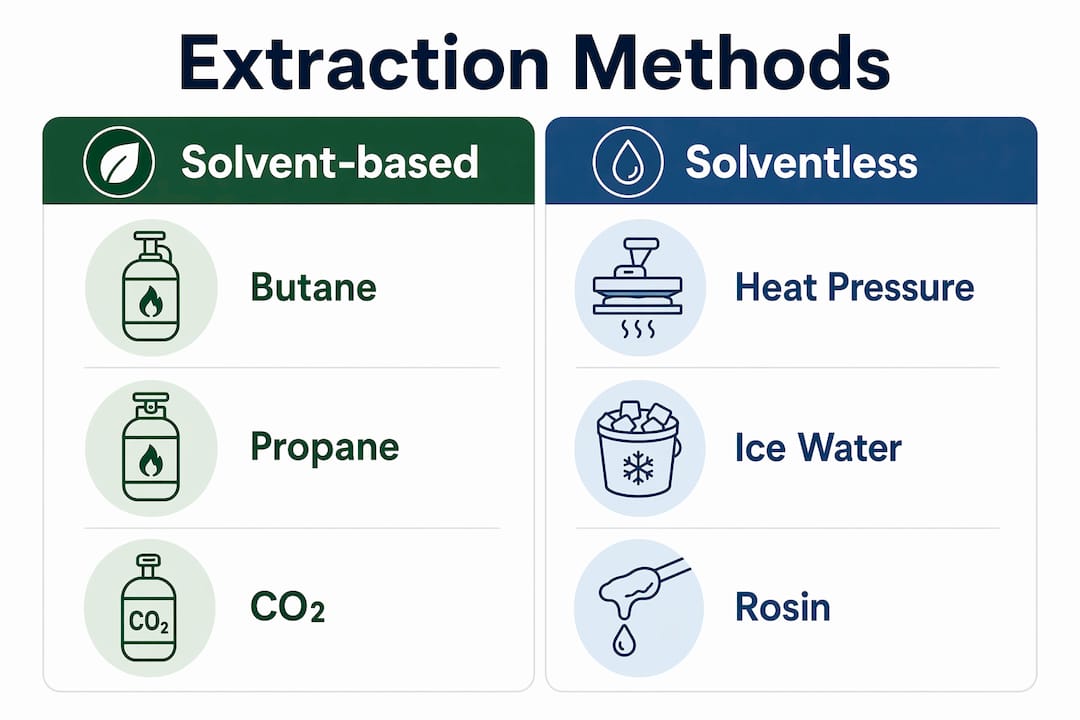
Solvent-based methods use chemical agents like butane, propane, or CO2 to strip cannabinoids and terpenes from the plant. Butane hash oil (BHO) is the most common result, and it forms the base for products like live resin, shatter, and wax. CO2 extraction runs at lower temperatures and tends to preserve more terpenes than butane. Solvent-based and solventless extraction methods each carry different implications for terpene quality and final price.
Distillate is the most refined solvent-based product. It reaches 90–99% THC purity but loses its natural terpene profile entirely during processing. Manufacturers then add terpenes back artificially to simulate strain characteristics. The result is high potency with engineered flavour rather than the authentic profile found in less-processed extracts.
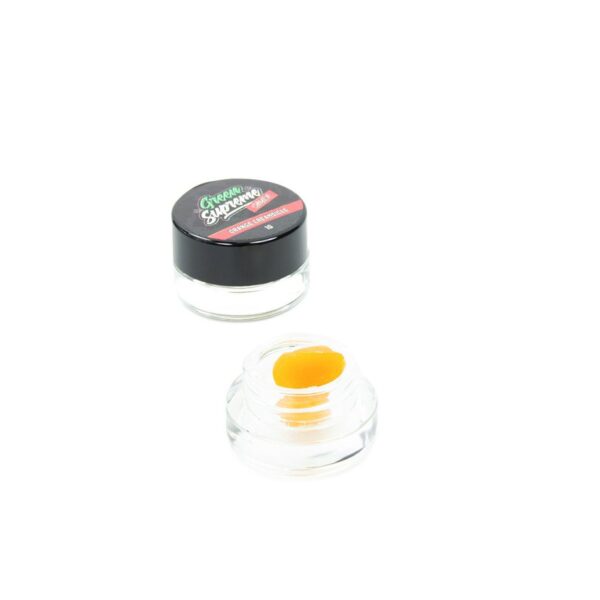
Solventless methods use only heat, pressure, or ice water. Rosin is pressed directly from flower or hash using heat and pressure. Live rosin uses fresh-frozen plant material as its starting point, preserving the full terpene profile before any degradation occurs. Solventless concentrate production is more craft-driven and labour-intensive, which is why live rosin typically costs more than distillate or BHO products.
The live designation refers specifically to the use of fresh-frozen plant material. Freezing the plant immediately after harvest locks in volatile terpenes that would otherwise evaporate during the drying and curing process. This is the single biggest factor separating premium concentrates from standard ones.
Pro Tip: When choosing between solvent-based and solventless, ask yourself whether you prioritise potency or flavour. Distillate wins on raw THC. Live rosin wins on taste and terpene complexity.
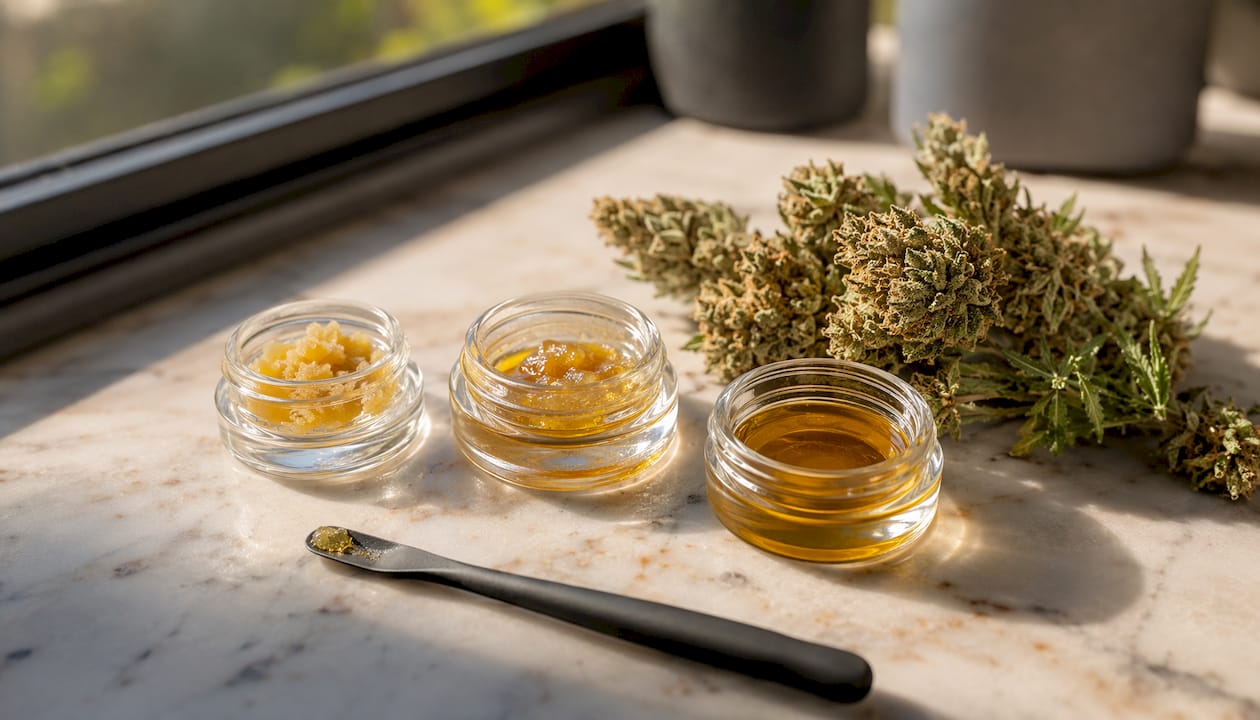
Each concentrate type has a distinct texture, potency range, and ideal use case. Understanding these differences makes it much easier to choose the right product.
| Type | Extraction method | Typical THC range | Texture and notes |
|---|---|---|---|
| Distillate | Solvent-based, highly refined | 90–99% | Thin oil, terpenes added back artificially |
| Live resin | Solvent-based, fresh-frozen | 65–90% | Sauce-like, rich terpene profile |
| Cured resin | Solvent-based, dried flower | 60–80% | Similar to live resin, less terpene complexity |
| Shatter | Solvent-based (BHO) | 70–90% | Brittle, glass-like, clean burn |
| Wax / budder | Solvent-based (BHO) | 60–85% | Soft, creamy, easy to handle |
| Rosin | Solventless, heat and pressure | 60–80% | Sticky, full-spectrum, no residual solvents |
| Live rosin | Solventless, fresh-frozen | 65–85% | Premium flavour, craft-produced |
| THCA diamonds | Solvent-based, crystalline | Up to 99% | Near-pure THCA crystals, often paired with sauce |
Distillate is the most widely available concentrate and the easiest to find in pre-filled vape cartridges. Its thin consistency works well in cartridge hardware, and its neutral base makes it predictable for dosing. The trade-off is that the flavour comes from added terpenes rather than the plant itself.
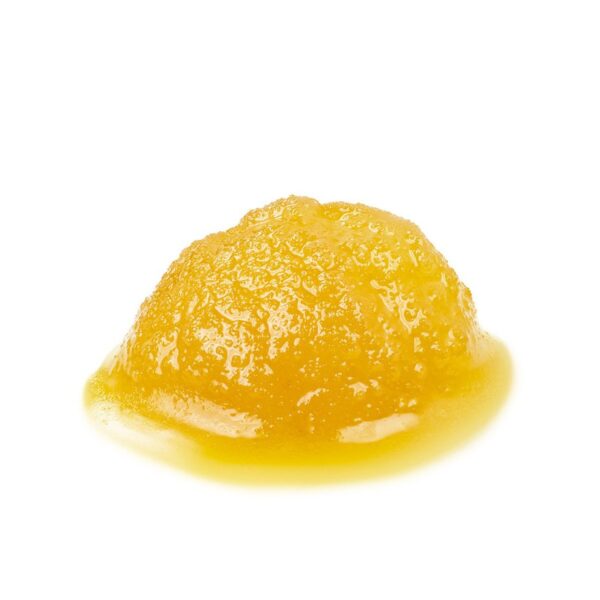
Live resin sits in the middle ground. It retains a genuine terpene profile because it starts with fresh-frozen material, and it vaporizes at a slightly lower temperature than distillate. Experienced users often describe live resin as the most “complete” experience because the cannabinoids and terpenes work together rather than being assembled separately.
THCA diamonds are the most potent option on the market. They are nearly pure THCA crystals that convert to THC upon heating. They are typically consumed with a terpene-rich sauce to balance the experience. Beginners should approach diamonds with significant caution.
Pro Tip: If you are new to concentrates, start with a distillate cartridge or a low-potency live resin. Both are forgiving in terms of dosing and widely available.
Using concentrates effectively comes down to three things: the right device, the right temperature, and the right dose.
Choose the correct device. Distillate works in standard 510-thread vape pens. Wax, rosin, and live resin require a dab pen or a concentrate-specific vaporizer with a ceramic or quartz atomiser. Using the wrong device degrades flavour and wastes product. Greensociety’s guide to cannabis vapes covers device compatibility in detail.
Set the right temperature. Lower temperatures (around 157–185°C) preserve terpenes and produce smoother, more flavourful vapour. Higher temperatures (above 200°C) increase vapour volume but burn off terpenes and can feel harsh. Start low and increase gradually until you find your preferred balance.
Dose conservatively. Micro-dosing with concentrates typically falls in the 1–5 mg THC range per serving. Because concentrates are so potent, a dose that looks small can be significantly stronger than a full bowl of flower. Wait at least 10–15 minutes between draws to assess the effect before taking more.
Clean your device regularly. Concentrate devices require more frequent maintenance than standard vape pens. Residue builds up quickly on heating elements and coils, degrading flavour and eventually damaging the hardware. A quick isopropyl alcohol wipe after each session extends device life considerably. Frequent cleaning of concentrate vaporizers prevents residue buildup that impairs flavour and damages heating elements within weeks.
Follow safe usage practices. Review a vape safety checklist before using any new device. Avoid using concentrates in enclosed spaces without ventilation, and never purchase products without a Certificate of Analysis (COA) from a licensed lab.
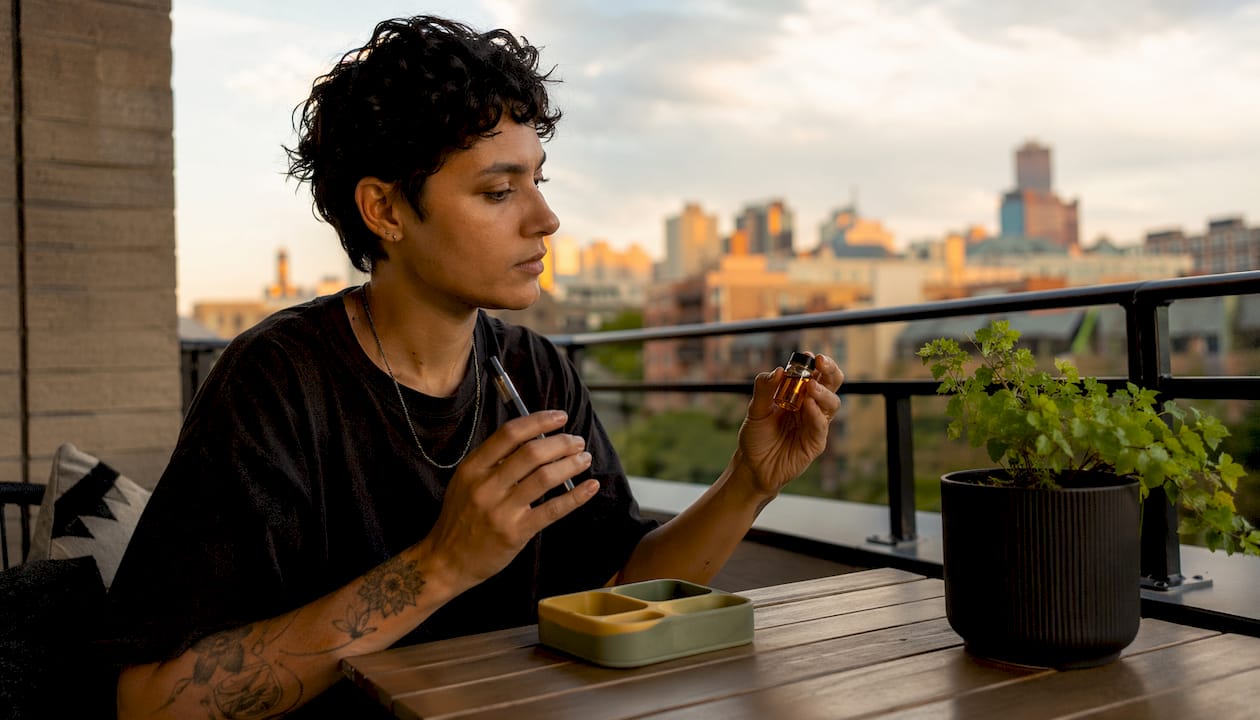
Pro Tip: Keep a small silicone container and a dab tool in your kit. Handling wax or rosin with your fingers introduces heat and contaminants that degrade the product faster.
Vaping concentrates offers several real advantages over smoking flower, though it also comes with trade-offs worth understanding.
Proper storage is the single biggest factor in maintaining concentrate quality after purchase. Proper storage in airtight, cool, dark conditions extends shelf life and preserves both potency and flavour. Exposure to heat, light, or air degrades terpenes and causes cannabinoids to break down.
Vape concentrates deliver significantly higher potency than flower and preserve terpene profiles best when stored correctly, used at low temperatures, and sourced from lab-tested producers.
| Point | Details |
|---|---|
| Potency is dramatically higher | Concentrates contain 60–99% THC versus 15–30% in flower, so dose conservatively. |
| Extraction method shapes quality | Solventless extracts like live rosin preserve terpenes better but cost more than solvent-based options. |
| Terpenes matter more than THC alone | A 70% THC live rosin often delivers a richer experience than a 99% THC distillate. |
| Device and temperature are critical | Use the correct device for your concentrate type and keep temperatures below 200°C to protect flavour. |
| Storage determines shelf life | Airtight, cool, dark storage extends potency and flavour, especially for volatile live products. |
Most adults shopping for concentrates ask the same first question: “What’s the THC percentage?” I understand the instinct. Higher numbers feel like a guarantee of quality. They are not.
The most memorable concentrate experiences I have had came from products sitting at 70–75% THC with exceptional terpene profiles, not from near-pure distillate at 95%. Terpenes like myrcene, limonene, and caryophyllene interact with cannabinoids in ways that shape the entire experience. Strip those out and you are left with raw potency and not much else.
My honest advice for beginners: start with a live resin cartridge rather than a distillate. Yes, it costs a bit more. But the flavour is authentic, the experience is more balanced, and you will learn what a quality concentrate actually tastes like. That reference point is worth the extra few dollars.
On the solvent question, I lean toward solventless for personal use when budget allows. The craft and care that goes into pressing live rosin shows up in the final product. That said, a well-made CO2 distillate from a reputable producer with a clean COA is a perfectly fine choice, especially for everyday use.
Clean your device. Seriously. I have seen adults blame a concentrate for tasting off when the real culprit was a coil they had not cleaned in three weeks. A clean device is the cheapest upgrade you can make.
— Juiced
Greensociety carries a curated selection of cannabis concentrates, from distillate cartridges to premium live rosin, all sourced from producers who provide lab testing documentation. Whether you are buying your first concentrate or refining your collection, the product pages include potency data, terpene information, and extraction details so you can make an informed choice.
If you are still building your broader cannabis knowledge, the cannabis flower buying guide is a practical companion to this article. Understanding flower helps you appreciate what concentrates preserve and what they leave behind. Greensociety ships discreetly across Canada, with fast delivery and a product range that covers every experience level.
Vape concentrates are highly potent cannabis extracts designed for vaporization, containing 60–99% THC compared to 15–30% in dried flower. They are available in forms including distillate, live resin, rosin, wax, and shatter.
Distillate cartridges are the most beginner-friendly option because they are pre-filled, easy to dose, and compatible with standard 510-thread vape pens. A low-potency live resin cartridge is a good second choice for those who want authentic flavour.
Concentrates remove plant matter and isolate cannabinoids and terpenes, producing a product that is three to six times more potent than flower and delivers faster onset when vaporized at the correct temperature.
Experienced users value terpene richness over raw THC percentage. Live resin preserves the plant’s natural terpene profile through fresh-frozen processing, producing a more complete and flavourful experience than distillate, which has terpenes added back artificially.
Store concentrates in airtight, non-stick containers in a cool, dark location. Live resin and live rosin are more volatile and best used within a few months. Distillate and shatter are more stable and last longer under proper conditions.
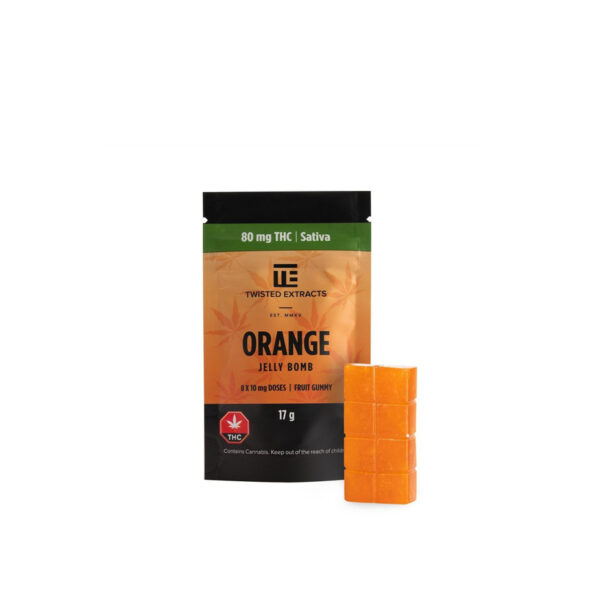 Twisted Extracts Orange Jelly Bomb
 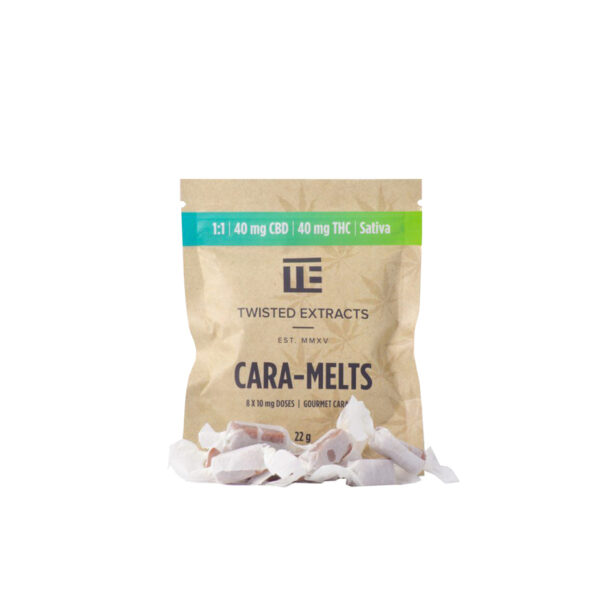 Twisted Extracts 1:1 Sativa Cara-Melts