Free Shipping
on orders over $150.00
$0.00
$150.00
Add $150.00 more for free shipping!


Choosing the right cannabis strain can feel like solving a complex puzzle, especially with so many flavours, effects, and names on the Canadian market. The reason each strain has a unique impact goes beyond its name—the distinct chemical fingerprint produced by varying cannabinoids and terpenes is what truly sets one apart from another. Understanding these critical differences helps you discover products that align with your preferences, whether you seek relaxation, creativity, or specific therapeutic benefits.
| Point | Details |
|---|---|
| Strain Uniqueness | Cannabis strains vary significantly due to their unique chemical profiles influenced by genetics and growing conditions. |
| Importance of Terpenes | Terpenes are crucial in modulating effects and offering distinct flavours, impacting overall user experience. |
| Understanding Classifications | Indica, Sativa, and Hybrid labels provide a general idea of effects, but individual chemistry and specific cannabinoid ratios matter more. |
| Safe Selection Practices | Focus on detailed strain information like THC/CBD ratios and lab-testing results when selecting products. |
Every cannabis strain carries its own chemical fingerprint that determines how it affects you. This uniqueness comes from the specific combination of compounds present in each plant, shaped by both genetics and growing conditions.
The primary driver of strain differences is the plant’s chemical makeup. Cannabinoids like THC and CBD are the most well-known compounds, but they’re only part of the story. Your experience with a strain depends on the precise amounts of these chemicals and how they interact with your body.
Terpenes are the secondary compounds that deserve your attention. These aromatic molecules give strains their distinctive flavours and scents, ranging from citrus and pine to earthy or spicy notes. Terpenes also influence the overall effect profile—they’re not just about taste.
Beyond cannabinoids and terpenes, cannabis contains:
Here’s how main cannabis compound groups contribute to strain uniqueness:
| Compound Group | Role in Cannabis Strain | Example Impact on Experience |
|---|---|---|
| Major Cannabinoids | Primary effect drivers | Euphoria, relaxation, medical relief |
| Terpenes | Modulate effects, aroma | Flavour, mood, sensory perception |
| Flavonoids | Add colour, antioxidants | May support anti-inflammatory effects |
| Minor Cannabinoids | Support main effects | Subtle changes in pain or sleep |
| Phenolic Compounds | Enhance therapeutic value | Possible antioxidant, anti-microbial |
Genetic differences between strains create dramatically different chemical profiles. A high-THC Sativa strain grown in British Columbia will have a completely different composition than a balanced hybrid cultivated in Ontario. Environmental factors—light, temperature, soil, and nutrients—further shape what the plant produces.
The unique combination of compounds determines your strain’s potency, therapeutic effects, and the overall experience you’ll have.
This is why strain names matter for Canadian consumers. Two strains with similar names might produce vastly different results depending on which licensed producer grew them. You’re not just buying a name; you’re buying a specific chemical profile.
Understanding strain uniqueness helps you predict effects and find products that genuinely work for your needs. Whether you’re seeking relaxation, creativity, pain relief, or focus, the strain’s chemical composition is what makes the difference. Your individual body chemistry also plays a role—what works perfectly for your friend might feel different for you, even with identical strains.
For a deeper understanding of how strains differ beyond chemistry, check out information on strain differences to see practical selection strategies.
Pro tip: Start by noting which specific strains produce your desired effects, then look for those same chemical profiles—higher terpene content or specific cannabinoid ratios—when trying new products.
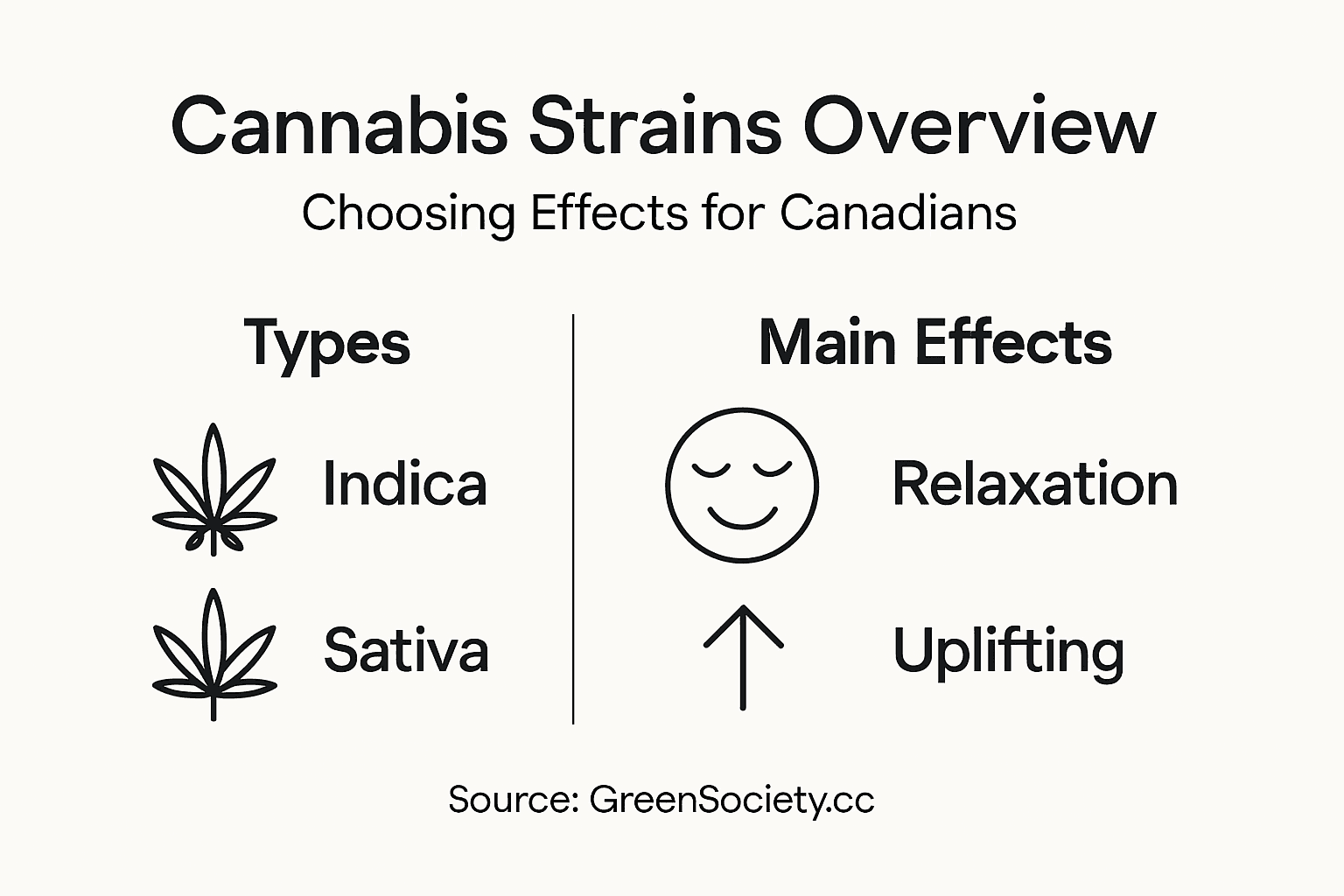
Cannabis classification starts with three main plant types: Indica, Sativa, and Ruderalis. Most strains you’ll encounter fall into the first two categories or combine them as hybrids. Understanding these classifications helps you predict effects, though the chemistry behind each strain matters more than the label alone.
Indica strains typically produce relaxing, sedative effects. These plants grow shorter and bushier with wider leaves. Indica-dominant strains work well for evening use, pain management, or when you want deep relaxation. Many Canadian consumers choose Indica varieties for unwinding after work or improving sleep quality.

Sativa strains deliver energising and uplifting effects. They grow taller with narrower leaves and longer flowering times. Sativas suit daytime use when you need focus, creativity, or motivation. If you’re planning an active day or creative project, Sativa strains often provide the mental clarity you’re seeking.
Hybrid strains blend characteristics from both Indica and Sativa parents. They offer the most variety in effects and growth patterns. A hybrid might lean Indica-dominant for relaxation with a creative boost, or Sativa-dominant for energy with calming undertones.
Common strain type classifications include:
This table compares key distinctions between Indica, Sativa, and Hybrid strains:
| Strain Type | Typical Effects | Physical Traits | Best Use Case |
|---|---|---|---|
| Indica | Sedative, relaxing | Short, broad leaves | Evening, pain, sleep support |
| Sativa | Uplifting, energising | Tall, narrow leaves | Daytime, focus, creativity |
| Hybrid | Mixed, varies by genetics | Blend of parent traits | Versatile, tailored needs |
The ratio of THC to CBD often influences effects more than the Indica-Sativa classification alone.
This distinction matters for Canadian shoppers. A high-CBD Sativa might feel more relaxing than a THC-heavy Indica, depending on individual sensitivity. Plant morphology—height, leaf shape, growth pattern—differs between types, but these physical traits don’t directly determine your experience.
Ruderalis is the third cannabis type, rarely seen in legal markets. It autoflowers (blooms without light changes) and contains lower cannabinoid levels. Most commercial products skip Ruderalis entirely in favour of Indica, Sativa, or hybrids.
When selecting strains, consider how Indica and Sativa differ beyond basic categories. Your desired effect profile, time of day, and personal cannabinoid tolerance should guide your choice more than the classification label.
Pro tip: Check the THC/CBD ratio and terpene profile alongside the Indica-Sativa classification to get a clearer picture of how a specific strain will actually affect you.
Terpenes are the aromatic compounds that give each cannabis strain its distinctive smell and flavour profile. Beyond sensory appeal, these molecules significantly influence how a strain affects your mind and body. Think of them as modifiers that enhance or adjust the effects produced by THC and CBD.
Every strain contains a unique terpene profile. Limonene creates citrus notes and uplifting sensations. Myrcene produces earthy or herbal aromas and promotes relaxation. Pinene delivers pine scents and may enhance focus. These compounds work together with cannabinoids to shape your overall experience.
Terpenes modulate effects produced by cannabinoids like THC and CBD through synergistic interaction. A high-THC strain with calming terpenes might feel more balanced than the same THC level with energising terpenes. Your desired effect profile should guide terpene selection as much as cannabinoid ratios.
Common therapeutic terpenes include:
Environmental factors shape terpene content significantly. Temperature, light exposure, soil quality, and harvest timing all affect which terpenes develop and in what quantities. Two genetically identical plants grown in different conditions produce different terpene profiles and effects.
Different terpenes produce varied sensory experiences and therapeutic effects such as anti-inflammatory, anxiolytic, or energising properties.
When shopping at Canadian dispensaries, check the terpene list on product labels. This information helps you make precise strain selections based on your needs. A strain high in myrcene suits evening relaxation, while one rich in pinene works better for daytime focus.
The “entourage effect” describes how cannabinoids, terpenes, and other plant compounds work together. No single component determines your experience alone. Understanding terpene profiles gives you real predictive power when choosing strains tailored to your goals.
Pro tip: Take notes on which terpene profiles produce your ideal effects, then search for new strains with similar terpene compositions rather than relying solely on strain name or classification.
Choosing a cannabis strain requires thoughtful consideration of your personal goals, tolerance level, and health circumstances. Safe selection means moving beyond hype and marketing to focus on concrete information about cannabinoid content, terpene profiles, and source quality.
Start by defining your desired outcome. Are you seeking relaxation, pain relief, creative focus, or sleep support? Different strains excel at different effects. Your primary goal narrows the selection dramatically and helps you avoid trial-and-error frustration.
Next, assess your experience level honestly. Inexperienced users benefit from starting low and going slow. Safe selection depends on recognising variation in THC and CBD content, usage methods, and individual biological factors. A strain with 20% THC hits differently than one with 5% THC, regardless of classification.
Key factors to evaluate before purchasing:
Source matters tremendously for safety. Purchase only from licensed Canadian dispensaries that provide third-party lab testing results. These tests verify cannabinoid content, terpene profiles, and absence of contaminants like pesticides or mould.
Choosing the right strain safely involves understanding your desired effects, medical conditions, and tolerance levels.
Consider your consumption method carefully. Smoking delivers effects within minutes but with intense onset. Edibles take 1-2 hours but produce longer-lasting effects. Vaping offers middle ground between the two. Each method affects safety differently—inexperienced users often underestimate edible potency.
Consult a healthcare provider if you take other medications or have existing health conditions. Cannabis interactions with pharmaceuticals are real, and professional guidance prevents complications. Your doctor understands your medical profile better than any budtender.
Document your experiences with specific strains. Note the dose, consumption method, onset time, peak effects, and overall experience. This personal data guides future selections far better than anyone else’s recommendations.
Pro tip: Request product information sheets from your dispensary before purchasing, comparing THC/CBD ratios and terpene profiles side-by-side to match your specific needs.
Most Canadian cannabis users make predictable mistakes when selecting strains, often learning through expensive trial and error. Understanding these pitfalls helps you make smarter choices and avoid wasting money on products that won’t work for your needs.
The biggest mistake is trusting strain names alone. “Blue Dream” from one producer differs dramatically from “Blue Dream” grown by another. Names carry zero standardisation—two plants with identical names can have completely different cannabinoid and terpene profiles. The name is marketing; the chemistry is what matters.
Relying solely on strain names without understanding cannabinoid composition leads to disappointment and poor experiences. Lab test results, not anecdotes from friends, reveal what you’re actually purchasing.
Common selection errors include:
Underestimating risks represents another critical error. Cannabis can cause dependency, impair cognition, and interact with medications. Believing that cannabis is entirely risk-free prevents you from taking necessary precautions with dosing, frequency, and professional consultation.
Mistakes in choosing strains often stem from misconceptions about Indica and Sativa effects and ignoring individual body chemistry and tolerance.
Many users skip consulting healthcare providers despite taking medications. Cannabis interactions with pharmaceuticals are real and potentially serious. A quick conversation with your doctor or pharmacist prevents serious complications. They understand your health profile in ways budtenders simply cannot.
Another frequent error: not accounting for body chemistry variation. What produces relaxation for your friend might cause anxiety for you. Cannabinoid sensitivity differs significantly between individuals due to genetics, metabolism, and tolerance levels. Your personal response is the only data that matters.
Failing to document your experiences with specific strains leaves you repeating mistakes. Without notes on dose, method, and effects, you can’t identify patterns or make informed comparisons.
Pro tip: Keep a simple spreadsheet tracking strain name, THC/CBD percentages, terpene profile, consumption method, dose, and effects experienced—this becomes invaluable for refining future selections.
Choosing the right cannabis strain to match your unique needs can be overwhelming, especially when THC, CBD levels, and terpene profiles all influence your experience. Many Canadian consumers face challenges like unpredictable effects, confusing strain names, and safety concerns. Understanding how a strain’s chemical makeup impacts relaxation, focus, or pain relief is key to a satisfying experience.

Take control of your cannabis journey today by exploring trusted products on GreenSociety.cc where we bring clarity to strain selection. Benefit from detailed cannabinoid and terpene information to match your desired effects, and shop securely from the comfort of home. Visit our site now to access expert guidance, promotional deals, and swift delivery designed to suit both beginners and connoisseurs alike.
Start discovering strains tailored to your lifestyle and feel the difference precise information makes with GreenSociety.cc. Learn more about choosing effects and shop with confidence on Canada’s convenient online cannabis platform.
The effects of cannabis strains are influenced by their unique chemical makeup, including the ratios of cannabinoids (like THC and CBD) and terpenes. Environmental factors such as light, temperature, and soil can also affect the strain’s chemical profile, impacting overall experience.
To choose a strain that meets your needs, define your desired outcome (e.g., relaxation, pain relief, creativity) and assess the strain’s cannabinoid ratios and terpene profiles. Consider your experience level with cannabis and how different consumption methods may influence the effects.
Indica strains are typically relaxing and sedative, suitable for evening use. Sativa strains are energizing and uplifting, ideal for daytime activities. Hybrid strains combine qualities of both, offering varied effects that cater to individual preferences.
Terpenes are aromatic compounds that contribute to the smell and flavor of cannabis strains and significantly influence their effects. For example, limonene can promote mood elevation, while myrcene may enhance relaxation. The combination of cannabinoids and terpenes creates an ‘entourage effect’ that modifies overall experience.