Free Shipping
on orders over $150.00
$0.00
$150.00
Add $150.00 more for free shipping!

TL;DR:
- Broad-spectrum CBD is a hemp extract that retains minor cannabinoids and terpenes but removes THC, providing a partial entourage effect without psychoactivity. Consumers should verify product quality through batch-specific third-party lab results, as labels alone cannot confirm cannabinoid content or THC levels. This extract type suits drug-tested users and those seeking synergistic benefits without THC exposure, emphasizing the importance of transparent, verified testing.
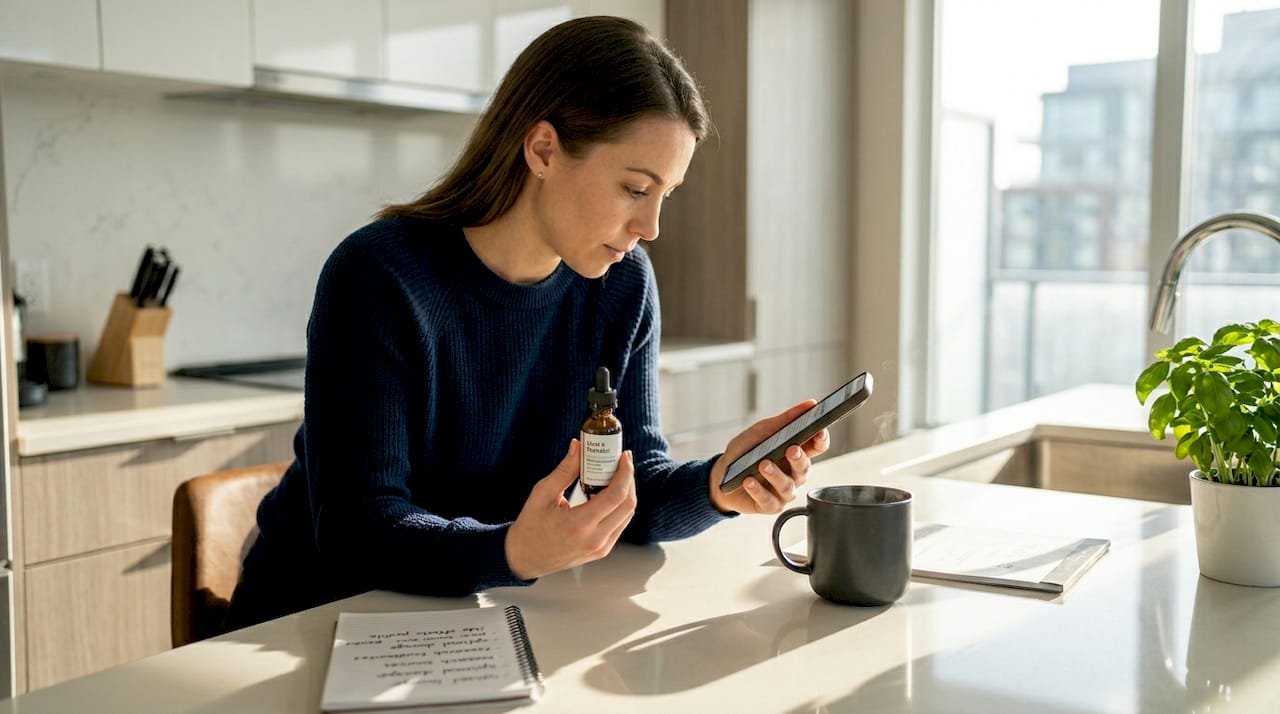
Broad-spectrum CBD is a hemp-derived extract that contains multiple cannabinoids, terpenes, and flavonoids with THC removed or reduced to undetectable levels. This makes it the middle-ground option between full-spectrum CBD and CBD isolate, offering what researchers call a partial entourage effect without the psychoactive compound most consumers want to avoid. For Canadians navigating the CBD market, understanding what broad-spectrum actually contains, how it compares to other extract types, and how to verify product quality is the difference between a purchase that works and one that disappoints.
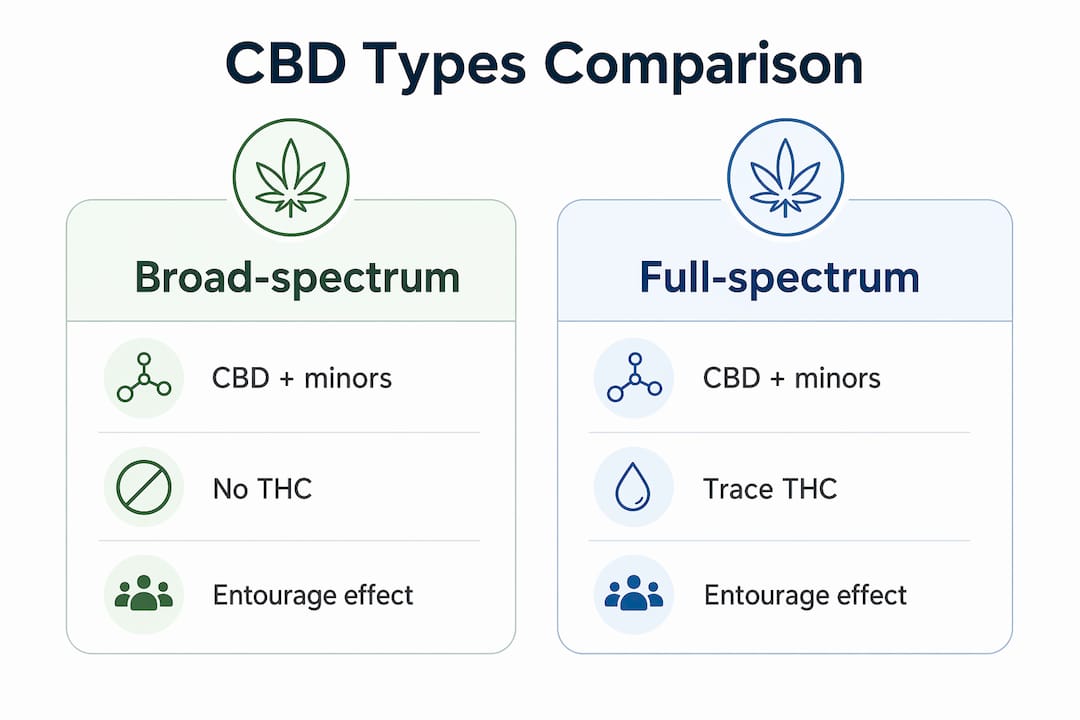
Broad-spectrum CBD is defined by what it keeps and what it removes. It retains the full range of minor cannabinoids found in hemp, including cannabigerol (CBG), cannabinol (CBN), and cannabichromene (CBC), along with aromatic terpenes like myrcene, linalool, and beta-caryophyllene, and flavonoids that contribute to the plant’s overall chemical profile. The one compound it removes is delta-9-tetrahydrocannabinol (THC). Full-spectrum CBD typically contains up to 0.03% THC by legal limits, while broad-spectrum removes THC while keeping other compounds intact.
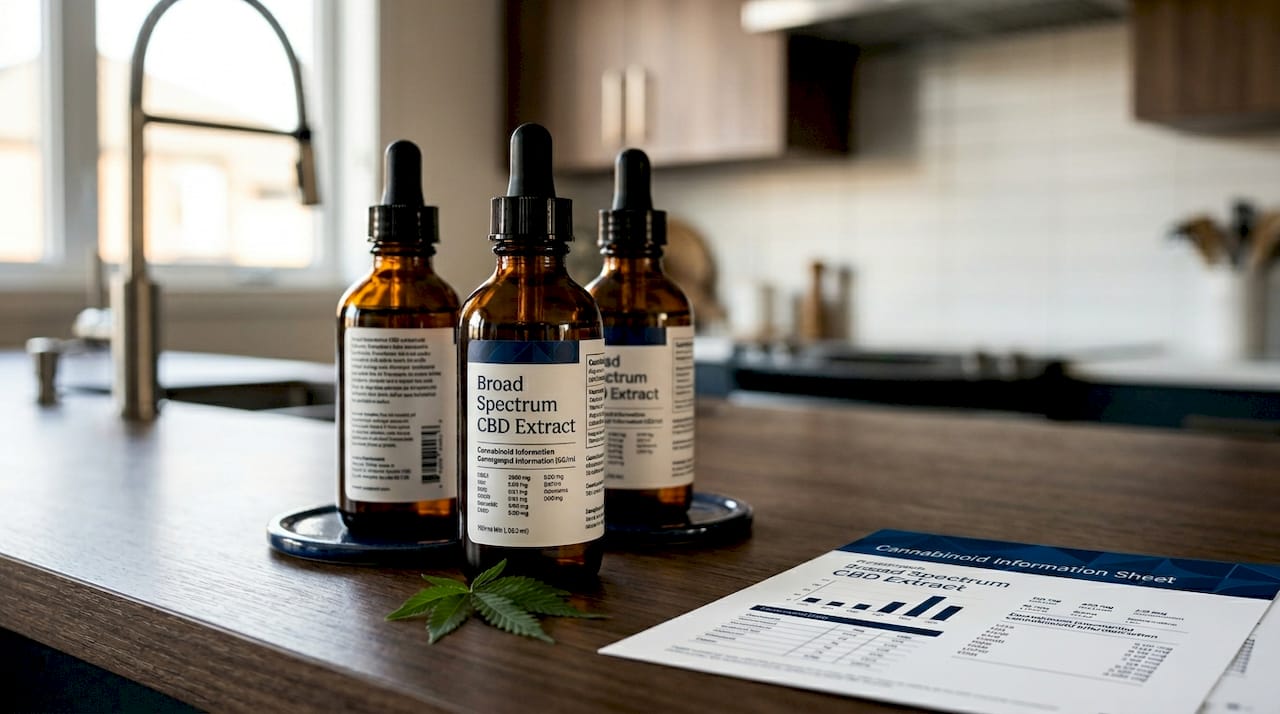
CBD isolate, by contrast, strips everything except pure CBD. That means no terpenes, no minor cannabinoids, no flavonoids. Isolate is the simplest form of CBD and the one with the least potential for compound synergy. Broad-spectrum sits between these two: more complex than isolate, less complete than full-spectrum.
The entourage effect is the theory that cannabinoids and terpenes work better together than any single compound does alone. Broad-spectrum retains some entourage effect components despite lacking THC, which means it may offer more nuanced effects than isolate without exposing you to THC’s psychoactive properties.
| Type | Cannabinoids | Terpenes | THC |
|---|---|---|---|
| Full-spectrum | CBD + minors | Yes | Up to 0.03% |
| Broad-spectrum | CBD + minors | Yes | Removed or undetectable |
| Isolate | CBD only | No | None |
Pro Tip: If you see “hemp extract” on a label without further specification, ask the brand for a Certificate of Analysis (COA) before assuming it is broad-spectrum. The term alone tells you nothing about the cannabinoid profile.
Broad-spectrum CBD appeals to athletes and drug-tested individuals who want compound synergy without THC exposure. This is not a niche concern. Many Canadians in regulated workplaces, competitive sports, or safety-sensitive roles cannot risk any THC in their system, yet still want more than what a single-compound isolate offers.
Reported benefits of broad-spectrum CBD include:
The clinical evidence for these benefits is still developing. Current research is largely observational or preclinical, and bioavailability of orally ingested CBD varies significantly by formulation. Two broad-spectrum products with identical CBD milligram counts can perform differently because of how the cannabinoid and terpene profiles interact with your body’s absorption mechanisms.
Pro Tip: Start with a low dose and track your response over two weeks before adjusting. Because broad-spectrum products vary in compound ratios, your experience with one brand may not predict your experience with another.
The limitation worth stating plainly: no broad-spectrum CBD product is approved by Health Canada to treat, cure, or prevent any disease. The FDA’s 2026 enforcement discretion applies narrowly and does not validate disease-specific marketing claims. Treat reported benefits as wellness support, not medical treatment.
The most important skill you can develop as a CBD buyer is reading a Certificate of Analysis. A COA is a third-party lab document that shows the exact cannabinoid content of a specific product batch. Without it, you are trusting marketing copy over chemistry.
Here is how to verify a broad-spectrum CBD product step by step:
A 2026 HPTLC study found CBD over and underlabeling and tentative delta-9-THC presence in commercial oils. This means the label on a bottle is not a reliable indicator of what is inside. Third-party verification is the only way to confirm what you are actually consuming.
Common labelling terms and what they actually mean:
You can learn more about interpreting these documents through Greensociety’s guide on reading cannabis lab results, which walks through each section of a COA in plain language.
The right CBD type depends on your specific situation, not a universal ranking of quality. Each extract type serves a different consumer profile.
Choose broad-spectrum if you want compound synergy without THC, you are subject to drug testing, or you are sensitive to THC’s psychoactive effects. Broad-spectrum is the preferred choice for THC-sensitive consumers but requires lab verification to confirm actual THC status.
Choose full-spectrum if you are not subject to drug testing, you want the complete plant profile including trace THC, and you are comfortable with the legal 0.03% THC threshold. Full-spectrum is often cited as the most complete expression of the hemp plant’s chemistry.
Choose isolate if you need absolute certainty about THC absence, you are highly sensitive to other cannabinoids or terpenes, or you want to add CBD to food or beverages without altering flavour.
| Type | Best for | THC risk | Entourage effect |
|---|---|---|---|
| Broad-spectrum | Drug-tested users, THC-sensitive | Low (verify COA) | Partial |
| Full-spectrum | General wellness, no testing | Present | Full |
| Isolate | Maximum purity, flavour-neutral | None | None |
One common misconception is that broad-spectrum is automatically THC-free. No processing method guarantees perfect THC removal. Trace amounts can remain depending on the extraction process and batch. Treat broad-spectrum as THC-minimised, not universally THC-free, and always review the COA for the specific batch you are purchasing.
Pro Tip: If you face regular drug testing, ask the brand for the assay LOQ on their COA. A result of “ND” is only meaningful if the detection threshold is stated. An LOQ of 0.01% is far more reassuring than a vague “not detected” with no threshold listed.
Broad-spectrum CBD is the most practical choice for Canadians who want multi-compound hemp benefits without THC, provided they verify every batch with a third-party COA.
| Point | Details |
|---|---|
| Broad-spectrum defined | Contains CBD, minor cannabinoids, and terpenes with THC removed or undetectable. |
| Partial entourage effect | Retains compound synergy from cannabinoids and terpenes, unlike CBD isolate. |
| COA verification is non-negotiable | Labelling alone cannot confirm THC status; only batch-specific lab results can. |
| THC-minimised, not THC-free | No extraction method guarantees zero THC; review LOD and LOQ data on every COA. |
| Product choice depends on context | Drug-tested individuals suit broad-spectrum; general wellness users may prefer full-spectrum. |
The CBD industry has a credibility problem that broad-spectrum products sit right at the centre of. I have seen brands confidently label products “THC-free” while their own COAs show detection thresholds so high that trace THC would never register. That is not transparency. That is a gap in consumer knowledge being exploited.
The most reliable brands I have encountered do three things consistently: they post batch-specific COAs, they state the assay LOQ clearly, and they do not make disease claims. Those three signals tell you more about a brand’s integrity than any marketing language on the bottle.
My honest view on the entourage effect debate is this: the science is real but overstated in marketing. Broad-spectrum likely performs better than isolate for most people, but the difference is not dramatic enough to justify paying a significant premium for a product with no COA. A verified isolate from a transparent brand beats an unverified broad-spectrum product every time.
The labelling inconsistencies documented in 2026 research confirm what experienced buyers already knew: the label is a starting point, not a conclusion. If you are new to CBD, the single best habit you can build is requesting the COA before you buy, not after. And if a brand makes that difficult, that tells you everything you need to know.
— Juiced
Greensociety carries a curated selection of CBD products with a focus on quality and transparency. Whether you are exploring broad-spectrum oils, edibles, or other formats, the Greensociety catalogue makes it straightforward to compare options and find what suits your needs. For those new to CBD formats, the CBD product guide covers six different ways to ingest CBD, from tinctures to capsules to edibles, with clear explanations of onset times and dosing considerations. If you are working with CBD edibles specifically, the edibles dosing guide helps you find your ideal dose safely. Greensociety also publishes educational content on third-party testing to help you shop with confidence.
Broad-spectrum CBD is a hemp extract containing CBD, minor cannabinoids like CBG and CBN, and terpenes, with THC removed or reduced to undetectable levels. It offers a partial entourage effect without the psychoactive properties of THC.
No extraction method guarantees complete THC removal, so broad-spectrum should be treated as THC-minimised rather than absolutely THC-free. Always review the batch COA for LOD and LOQ data before use.
It is unlikely but not impossible. Trace THC can remain in broad-spectrum products, and some drug tests are sensitive enough to detect very low levels. Verify your product’s COA and confirm the THC result shows “not detected” at a stated detection threshold.
CBD isolate contains only pure CBD with no other cannabinoids or terpenes, while broad-spectrum retains the full minor cannabinoid and terpene profile minus THC. This means broad-spectrum may offer more compound synergy than isolate.
There is no universal starting dose, as absorption varies by formulation and individual metabolism. Most practitioners suggest starting at 10 to 20 mg of CBD per day and adjusting gradually based on your response over one to two weeks.