Free Shipping
on orders over $150.00
$0.00
$150.00
Add $150.00 more for free shipping!

TL;DR:
- Choosing CBD involves evaluating product type, format, quality, and wellness goals to ensure effective and safe use. Third-party lab testing and proper sourcing are crucial for verifying product quality, while starting with low doses and tracking responses optimize results. Broad spectrum formulations offer flexibility and risk mitigation for those concerned about drug testing or THC sensitivity.
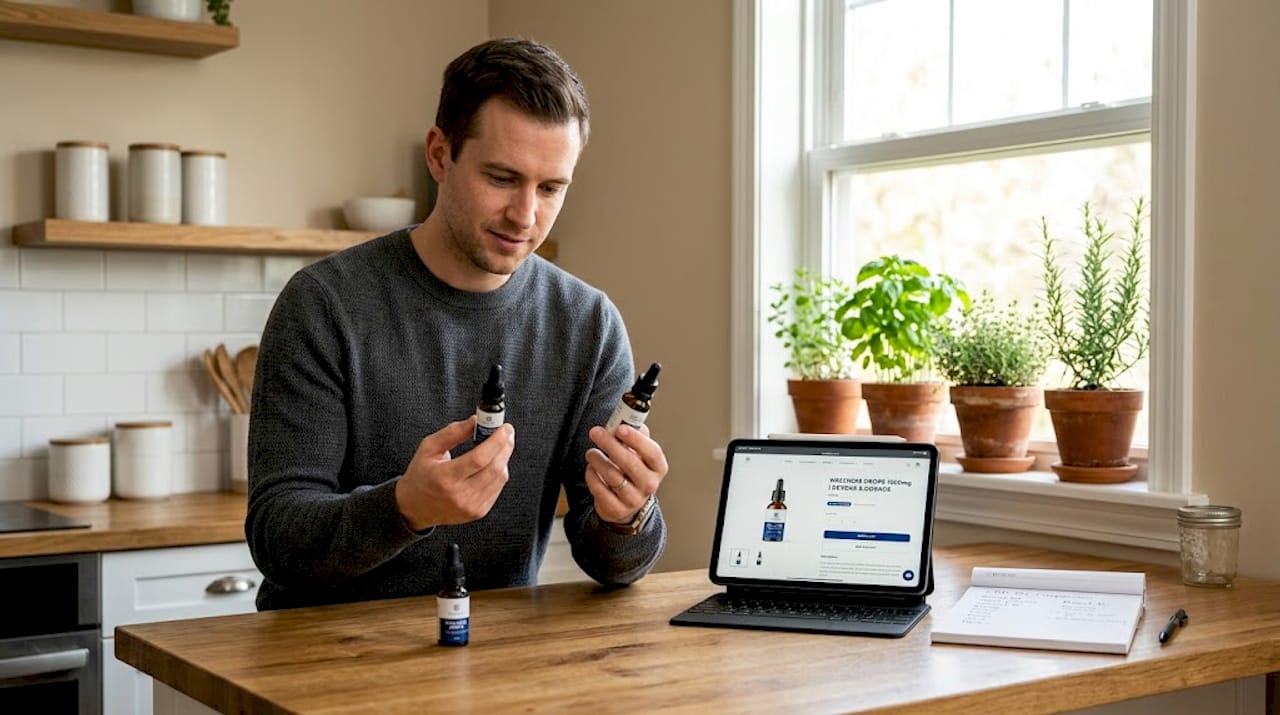
Shopping for CBD feels manageable until you are standing in front of dozens of products with conflicting claims, unfamiliar terminology, and no clear way to know what is actually good. Knowing how to select CBD products means looking past the marketing and focusing on a few concrete criteria: product type, delivery format, quality verification, and your personal wellness goal. This guide breaks down exactly what to evaluate so you can make a confident, informed purchase rather than an expensive guess.
| Point | Details |
|---|---|
| Match type to your needs | Full spectrum, broad spectrum, and isolate each suit different goals and sensitivities. |
| Format affects onset and effect | Sublingual oils absorb in 15–30 minutes; edibles take up to two hours. |
| COAs are non-negotiable | Always verify a current, third-party Certificate of Analysis before buying. |
| Start with a low dose | Begin at 2.5–5 mg and increase gradually after observing your body’s response. |
| Sourcing transparency matters | Hemp grown in regulated regions with disclosed extraction methods signals a trustworthy brand. |
The three main CBD formulations are full spectrum, broad spectrum, and isolate. Understanding what each contains is the single most clarifying step you can take before any purchase.
Full spectrum CBD contains all the naturally occurring cannabinoids, terpenes, and flavonoids from the hemp plant, including trace amounts of THC (typically under 0.3%). Full-spectrum CBD is considered most effective because of the entourage effect, a term describing how cannabinoids and terpenes work synergistically to amplify each other’s benefits. If you want the most complete wellness experience and drug testing is not a concern, full spectrum is worth considering.
Broad spectrum CBD contains most of the same cannabinoids and terpenes as full spectrum but with THC removed. Broad spectrum is a safer introduction for new users who want the entourage effect without any THC exposure. It is also the practical choice for people who are subject to workplace drug testing or who have a sensitivity to THC.
CBD isolate is pure CBD with everything else removed. There are no other cannabinoids, no terpenes, and no THC whatsoever. The tradeoff is potency per effect: isolate may require narrower dosing to achieve a therapeutic result compared to full spectrum. Isolate suits people who want total certainty about what they are consuming or who react poorly to other cannabis compounds.
One common misconception worth addressing: product names are not always reliable guides to what is inside. A label that says “hemp extract” might be any one of these three types. Always check the cannabinoid profile on the Certificate of Analysis rather than relying on the front of the packaging. For a deeper breakdown, the Greensociety resource on full spectrum vs isolate is an excellent starting point.
Pro Tip: If you are comparing CBD products and unsure which formulation is right for you, broad spectrum gives you the most flexibility. You get the entourage benefits without the THC variable.
Once you know your preferred formulation, the next decision is delivery format. This matters because the way CBD enters your body directly determines how quickly you feel it and how long it lasts.
Here is a practical overview of the most common formats:
Sublingual oils and tinctures. You place drops under the tongue and hold them for 60 to 90 seconds before swallowing. Sublingual CBD absorbs in 15–30 minutes, making this format one of the fastest-acting options outside of vaping. The dosing is also easy to adjust. Worth noting: many products labelled as “tinctures” are actually oil-based, not alcohol-based. Focus on the cannabinoid profile and carrier oil rather than the product name.
Edibles and capsules. Gummies, chocolates, and capsules pass through the digestive system, so edibles require 30 minutes to 2 hours for onset. Effects tend to last longer compared to sublingual methods. This format is ideal for sleep support or sustained relief throughout the day. The trade-off is that you lose some CBD to the digestive process, which reduces bioavailability. For more on timing, the Greensociety article on edibles onset time covers this thoroughly.
Topicals. Creams, balms, and lotions are applied directly to skin. They do not enter the bloodstream, so they address localised discomfort rather than systemic concerns. If you are dealing with muscle soreness or joint pain in a specific area, topicals are the most targeted option available.
Vapes. Inhalation delivers CBD to the bloodstream almost immediately, with onset under five minutes. This is the highest-bioavailability format. However, vaping carries its own respiratory considerations and is generally not recommended as a first choice for wellness-focused users who are new to CBD.
Pro Tip: For anxiety or acute stress, sublingual oil gives you the fastest relief with the most dosing control. For sleep, try an edible or capsule taken 90 minutes before bed so the slower onset works in your favour.
Greensociety’s guide on different CBD products and methods offers a clear side-by-side look at all six major consumption formats if you want to go deeper.
This is where most consumers go wrong. Quality cannot be judged from a bottle’s design or a brand’s Instagram presence. The single most reliable indicator of a safe CBD product is a third-party Certificate of Analysis.
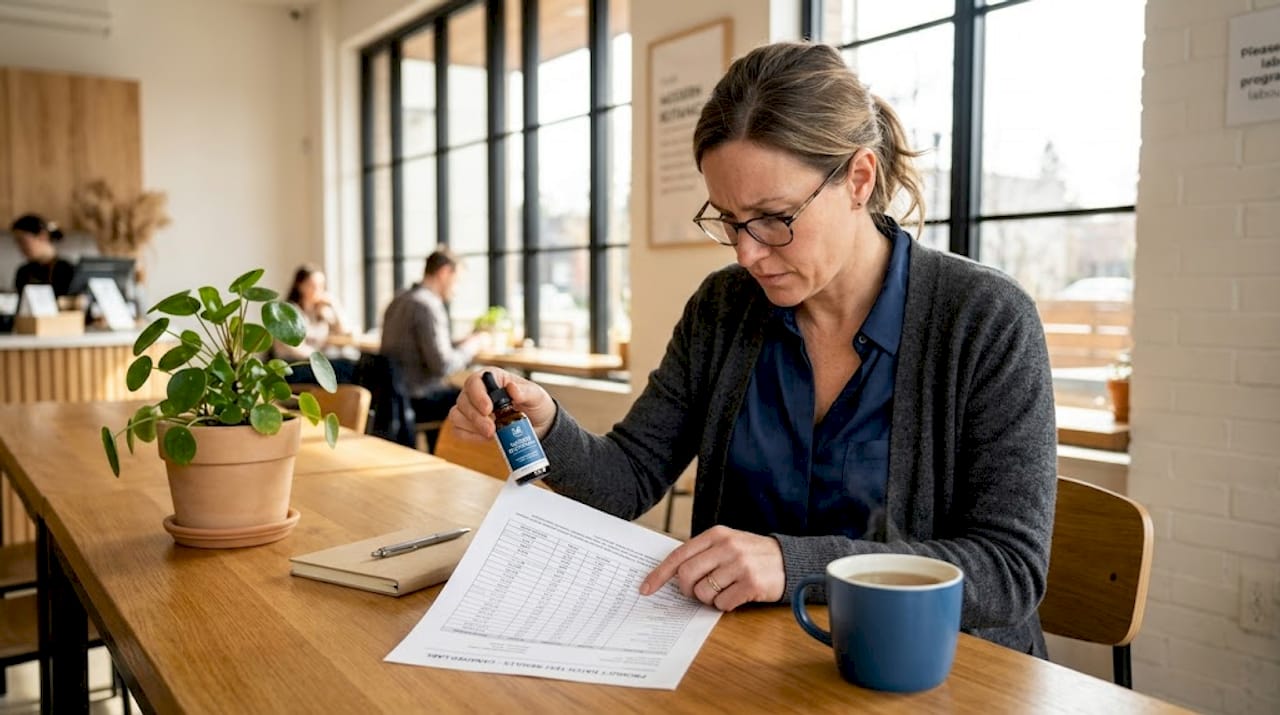
A COA is a lab report that an independent, accredited laboratory produces after testing the product. Reliable COAs test for cannabinoid potency, pesticides, heavy metals, solvents, and microbes. When you are choosing CBD oil or any other format, this document tells you whether the product contains what the label claims and whether it is free from harmful contaminants.
Here is what to check on any COA:
Beyond lab reports, extraction method matters. CO2 extraction is the cleanest method available; solvent-based methods can leave residue if not carefully verified. Hemp sourcing is equally telling. Hemp is a bioaccumulator, meaning it absorbs whatever is in the soil it grows in. Brands that disclose their hemp origins and grow in regulated regions demonstrate a higher level of accountability.
| Quality indicator | What to look for | Red flag |
|---|---|---|
| Certificate of Analysis | Current, batch-specific, from accredited lab | Missing, outdated, or brand-produced |
| Hemp sourcing | Disclosed region, regulated growing standards | Vague origin, no sourcing information |
| Extraction method | CO2 preferred | Unspecified or solvent-based without verification |
| Potency accuracy | Within 10% of label claim | More than 20% deviation from stated amount |
| Contaminant testing | Full panel including heavy metals and pesticides | Potency-only testing |
For more detail on interpreting these reports, Greensociety has a dedicated resource on why third-party testing matters that walks through the process step by step.
Knowing the formulations and formats is useful. Translating that knowledge into a specific product choice requires one more step: being honest about your primary wellness goal.
| Wellness goal | Recommended type | Suggested format | Starting potency |
|---|---|---|---|
| General wellness | Broad spectrum | Oil or capsule | Low (10–15 mg per serving) |
| Anxiety or stress | Full spectrum or broad spectrum | Sublingual oil | Low to medium (15–25 mg) |
| Sleep support | Full spectrum | Edible or capsule | Medium (20–40 mg) |
| Localised pain or inflammation | Full spectrum or isolate | Topical or oil | Medium to high (25–50 mg) |
| Avoiding THC entirely | Isolate | Capsule or oil | Low (10–20 mg) |
Once you have identified the right category, dosing is the next critical variable. New users should start at 2.5–5 mg and increase in 2.5–5 mg increments after giving the body time to respond. Do not judge CBD based on one or two doses at an amount that may be too low. Most people find their effective range after one to two weeks of consistent, incremental adjustment.
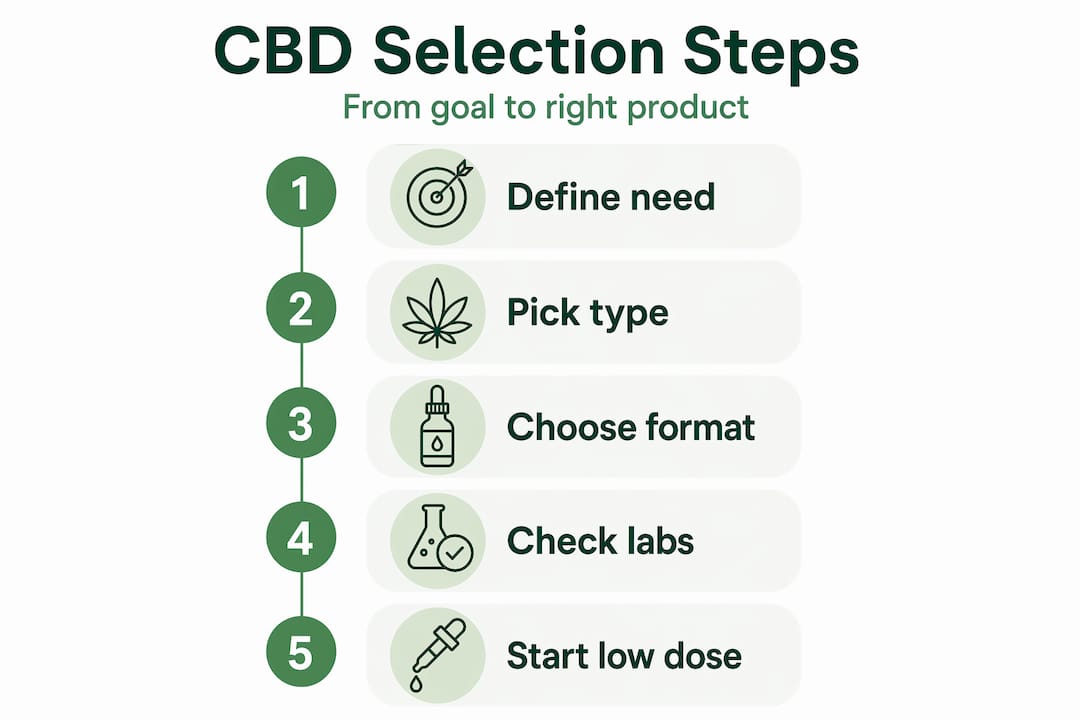
Common mistakes to avoid when buying CBD include choosing a product based on price alone, ignoring the cannabinoid panel on the COA, and assuming that higher potency always means better results. A well-labelled 25 mg broad spectrum oil with a verified COA will outperform a 75 mg product with no lab transparency every single time.
Pro Tip: Keep a simple log for your first two weeks. Note the product, dose, time taken, and how you felt two hours later. This gives you real data to work with instead of relying on memory.
I have watched people spend good money on CBD and get nothing from it. Not because CBD does not work for them, but because they picked a product based on packaging, chose a dose that was far too low, and gave up after a week.
The truth I have come to is that the quality of the COA tells you more about a brand than anything else they publish. Brands that welcome scrutiny, publish batch-specific reports, and disclose their hemp sourcing are the ones worth your trust. Brands that make big claims without any documentation are selling you a story.
I have also learned to be sceptical of very high potency as a selling point. Consistent, moderate dosing with a quality product does more for wellness than chasing the highest milligram count on the shelf. Your endocannabinoid system responds to regularity more than to occasional high doses.
One thing I encourage anyone new to CBD to do: speak with a healthcare professional before starting, particularly if you take any prescription medications. CBD interacts with certain drugs through liver enzyme pathways, and that conversation is worth having before you begin.
— Juiced
Greensociety makes it genuinely easier to move from confusion to confidence. Their Canadian CBD product categories cover oils, edibles, topicals, and capsules with clear product details so you can compare formulations side by side without guesswork. For those who want a structured approach before purchasing, the cannabis wellness checklist is a practical tool that walks you through safety and suitability factors in plain language. Greensociety’s commitment to product transparency and quality-focused sourcing makes it a solid starting point for anyone serious about finding the right CBD product for their health goals.
Full spectrum contains all hemp cannabinoids and terpenes including trace THC, providing the entourage effect. Isolate is pure CBD with all other compounds removed, suiting those who need to avoid THC entirely.
Look for a current, batch-specific Certificate of Analysis from an accredited independent lab. It should confirm cannabinoid potency and test for pesticides, heavy metals, solvents, and microbial contamination.
Sublingual oils typically absorb in 15 to 30 minutes. Edibles and capsules can take 30 minutes to two hours depending on digestion and individual metabolism.
Start at 2.5 to 5 mg and increase in small increments every few days after observing your response. Most people find their effective range after one to two weeks of consistent use.
Yes. Broad spectrum CBD has THC removed while retaining other cannabinoids and terpenes, making it a practical choice for those subject to workplace testing who still want broader wellness benefits.