Free Shipping
on orders over $150.00
$0.00
$150.00
Add $150.00 more for free shipping!

TL;DR:
- Age requirements for cannabis vary internationally, with most U.S. states establishing a minimum of 21 for recreational use. In Canada, provinces typically set the limit at 19, but Alberta allows 18, and Quebec has increased it to 21, reflecting different policy choices. Medical cannabis access generally begins at 18, with caregiver protocols for minors, highlighting distinctions based on purpose and regulation.
Age requirements for cannabis are defined as the minimum legal age at which a person may purchase, possess, or consume cannabis products, and these thresholds differ significantly depending on your location and whether you are seeking recreational or medical access. In Canada, the minimum age is either 18 or 19 depending on the province. In every U.S. state where recreational cannabis is legal, the minimum is 21. Understanding these distinctions is not optional for any adult consumer. Getting it wrong carries real legal consequences, and the rules are more nuanced than most people realise.
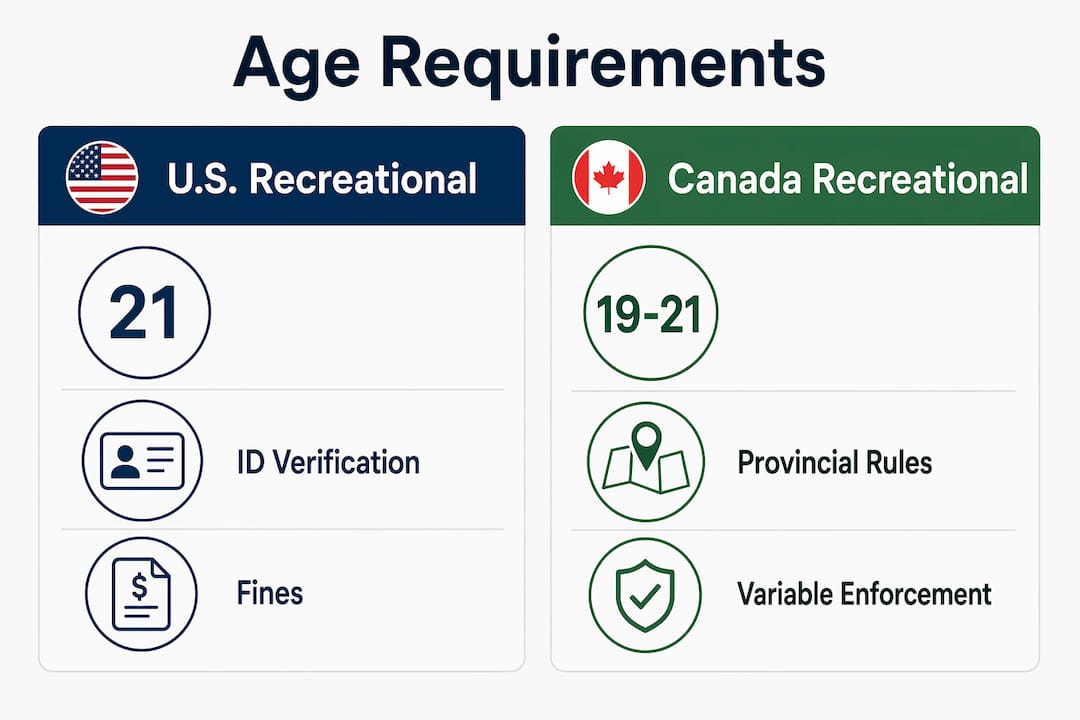
All 24 U.S. states and Washington D.C. that have legalised recreational cannabis set the minimum purchase age at 21, without exception. This uniformity reflects a deliberate policy alignment with the federal minimum drinking age rather than any state-by-state debate. If you are 20 years old and standing in a Colorado or California dispensary, you will be turned away regardless of how close you are to your birthday.
Canada takes a different approach. Most provinces, including British Columbia, Ontario, and Alberta, set the cannabis use age limit at 19, which matches the legal drinking age in those provinces. Alberta and Quebec are the notable outliers. Alberta permits purchase at 18, while Quebec raised its minimum from 18 to 21 in 2020, making it the most restrictive province in the country. This means a 19-year-old can legally buy cannabis in Toronto but cannot do so in Montréal.
Germany, which legalised recreational cannabis in 2024, set its minimum at 18 for personal possession and consumption. Canada and Germany both legalised at 18 or 19 with reported safe adult outcomes, demonstrating that the 21 threshold is a policy choice, not a universal standard.
| Jurisdiction | Minimum age for recreational cannabis |
|---|---|
| All U.S. legal states and D.C. | 21 |
| British Columbia, Ontario, Manitoba | 19 |
| Alberta | 18 |
| Quebec | 21 |
| Germany | 18 |
Dispensaries in the U.S. are required by law to verify government-issued photo ID at the door, not just at the point of sale. Accepted forms of identification include a driver’s licence, passport, or government-issued ID card. Attempting to enter a dispensary while underage, even without making a purchase, can result in fines and legal penalties in states like Nevada.
Pro Tip: If you are travelling between Canadian provinces, always check the local age requirement before visiting a dispensary. Your Ontario purchase rights do not transfer to Quebec.
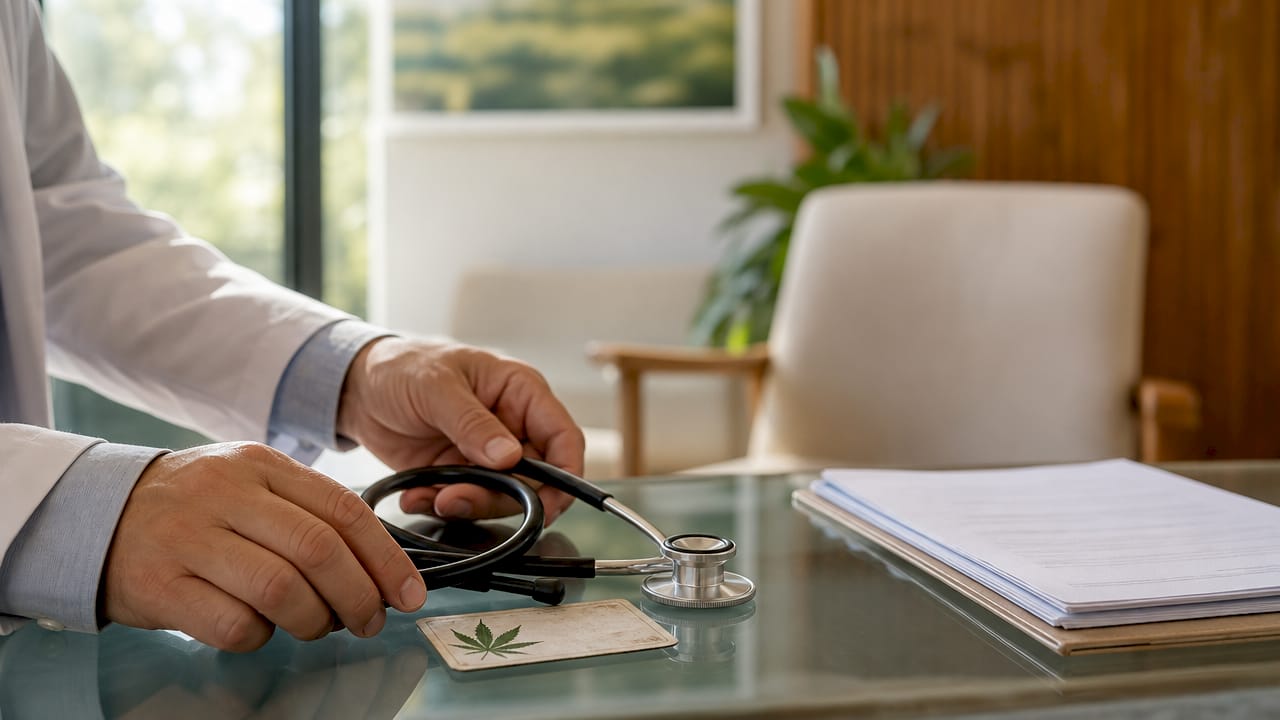
Medical cannabis programmes generally permit access at 18 rather than 21, creating a meaningful distinction for young adults who qualify for a medical programme. This lower threshold exists because the therapeutic need is considered to outweigh the age-based restriction applied to recreational use. The gap matters most in U.S. states where recreational cannabis is only available at 21.
Some states apply stricter rules even within medical programmes. Alabama, for example, requires patients to be 19 or older to access medical cannabis independently. This is the exception rather than the rule, but it illustrates that medical minimums are not universally set at 18.
For patients under the applicable medical age, access is not automatically blocked. Most programmes allow a registered caregiver, typically a parent or legal guardian, to handle all dispensary transactions on behalf of the minor patient. The caregiver must be formally registered with the state or provincial medical programme, and the minor cannot enter the dispensary themselves. Medical programmes also commonly provide tax exemptions and access to higher-potency cannabis for registered patients, which recreational buyers cannot obtain regardless of age.
Key differences between medical and recreational access for adults aged 18 to 20:
Pro Tip: If you are 18 to 20 and living in a U.S. state with legal cannabis, check whether your condition qualifies for the medical programme. It may be your only legal path to access until you turn 21.
The science behind age limits is less settled than most people assume. Brain development continues until approximately age 25, with health experts warning of long-term impacts on memory, learning, and decision-making from cannabis use before that point. This finding is frequently cited in public health discussions, but it has not translated into a universal legal threshold of 25 anywhere in the world.
The reason is straightforward. Age 21 for recreational purchase was set primarily to align with alcohol laws rather than neurodevelopmental science. Legal experts widely view this as a pragmatic policy choice, not a scientifically derived number. The Minnesota Department of Health’s position reflects the broader expert consensus: because cannabis use under 25 carries elevated cognitive risk, caution is warranted even for adults who are legally permitted to purchase.
“No single physiological age fits all cannabis legalisation decisions. Policymakers weigh social, legal, and health factors when setting age limits.” — Barney’s Farm Cannabis Research
The legal consequences for violating age restrictions are real and worth knowing. In Nevada, fines up to $500 apply for underage individuals loitering in cannabis establishments. Providing cannabis to a minor is treated as a misdemeanour or gross misdemeanour in most jurisdictions, carrying potential jail time in addition to fines. These penalties apply to the adult who provides the cannabis, not just the minor who receives it.
For adults over the legal age, understanding the health rationale also informs smarter consumption choices. Knowing that the legal threshold is a policy floor, not a health ceiling, is useful context. You can learn more about cannabis side effects for adults to make decisions grounded in both legal compliance and personal wellbeing.
Knowing the rules in your jurisdiction is the starting point, but applying them correctly in practice requires a few specific habits. Here is what every adult cannabis consumer should have in place before making a purchase.
For a detailed breakdown of how cannabis age laws in Canada work province by province, including how CBD products are treated differently from THC products, Greensociety’s resource library covers the specifics clearly. The rules around CBD age eligibility are often misunderstood, and the distinctions matter for anyone purchasing online.
Age requirements for cannabis are jurisdiction-specific, and the 21 threshold in U.S. states is a policy alignment with alcohol law, not a universal scientific standard.
| Point | Details |
|---|---|
| U.S. recreational minimum | All legal U.S. states and D.C. require age 21 for recreational cannabis purchase. |
| Canadian provincial variation | Most provinces set the minimum at 19, but Alberta allows 18 and Quebec requires 21. |
| Medical vs recreational access | Medical programmes typically allow access at 18, with caregiver protocols for younger patients. |
| Health rationale | Brain development continues until 25, but legal thresholds are policy decisions, not neuroscience. |
| Legal penalties | Providing cannabis to minors or misrepresenting age carries fines and misdemeanour charges. |
Most adults who are new to legal cannabis assume the rules are simple: you either are or are not old enough. What I have found is that the variation across jurisdictions creates real confusion, and that confusion leads to avoidable legal problems.
The most common mistake I see is adults assuming that because they can legally buy cannabis at home, they can do the same anywhere they travel. A 19-year-old from British Columbia visiting Montréal is technically breaking the law if they walk into a dispensary, even though they are fully legal at home. That is not a technicality. It is a real enforcement risk.
The medical versus recreational distinction is equally misunderstood. Many adults between 18 and 20 in U.S. states do not realise they may have legal access through a medical programme, while assuming they have no options until they turn 21. The caregiver system for minors is also far more structured than most people realise. It is not informal. It requires formal registration, physician documentation, and strict adherence to dispensary protocols.
My honest view is that the 21 threshold in the U.S. is a pragmatic political choice that borrowed from alcohol policy without a strong scientific basis specific to cannabis. That does not make it less enforceable. It means adults should understand the rule for what it is: a legal boundary to respect, not a health verdict. The recreational cannabis facts for 2025 are worth reviewing if you want a fuller picture of what legalisation actually looks like in practice across North America.
— Juiced
Once you know you meet the cannabis age eligibility requirements in your province, the next step is finding quality products from a source you can trust. Greensociety is an online cannabis dispensary built for adults who want variety, transparency, and fast delivery without the guesswork.
Whether you are exploring cannabis flower for the first time or looking to try edibles, Greensociety’s product catalogue covers flowers, concentrates, vapes, and CBD products with clear descriptions and verified quality. The platform also offers educational guides so you can make informed decisions that align with both your preferences and your local regulations. For adults who are legally eligible and ready to shop, Greensociety makes the process straightforward. Visit greensociety.cc to browse current products and promotions.
The minimum age for cannabis purchase in Canada is 19 in most provinces, including British Columbia, Ontario, and Manitoba. Alberta sets the minimum at 18, while Quebec requires consumers to be 21.
No. All U.S. states and Washington D.C. that have legalised recreational cannabis require purchasers to be at least 21. An 18-year-old may qualify for a state medical programme with a physician’s recommendation, depending on the state.
Dispensaries accept government-issued photo identification, including a driver’s licence, passport, or provincial or state ID card. Expired documents are not accepted, and ID is checked at the entrance, not just at the point of purchase.
Providing cannabis to a person under the legal age is a criminal offence in both Canada and the U.S. Penalties include fines, misdemeanour charges, and potential jail time depending on the jurisdiction and circumstances.
Yes. Medical cannabis programmes in most U.S. states allow access at 18, compared to the recreational minimum of 21. Patients under the applicable medical age must use a registered adult caregiver to access cannabis through the programme.