Free Shipping
on orders over $150.00
$0.00
$150.00
Add $150.00 more for free shipping!

TL;DR:
- Cannabis side effects include physical, cognitive, and psychological reactions primarily caused by THC interacting with the body’s endocannabinoid system. Higher THC levels and edibles increase the risk of adverse effects, which vary based on consumption method, potency, and individual vulnerability. Most effects are temporary and manageable with proper dosing, awareness, and cautious use.
Common cannabis side effects are physiological, cognitive, and psychological reactions triggered by cannabinoids, primarily tetrahydrocannabinol (THC), interacting with the body’s endocannabinoid system. These reactions range from mild and expected, such as dry mouth and relaxation, to more disruptive effects like anxiety, impaired coordination, and elevated heart rate. Health Canada confirms that higher THC content directly increases the risk of adverse effects, particularly for inexperienced users. Understanding what to expect, and why, is the foundation of safer, more informed cannabis consumption.
The most frequently reported cannabis adverse reactions fall into three categories: physical, cognitive, and psychological. Knowing which category an effect belongs to helps you assess whether what you are experiencing is typical or worth monitoring closely.
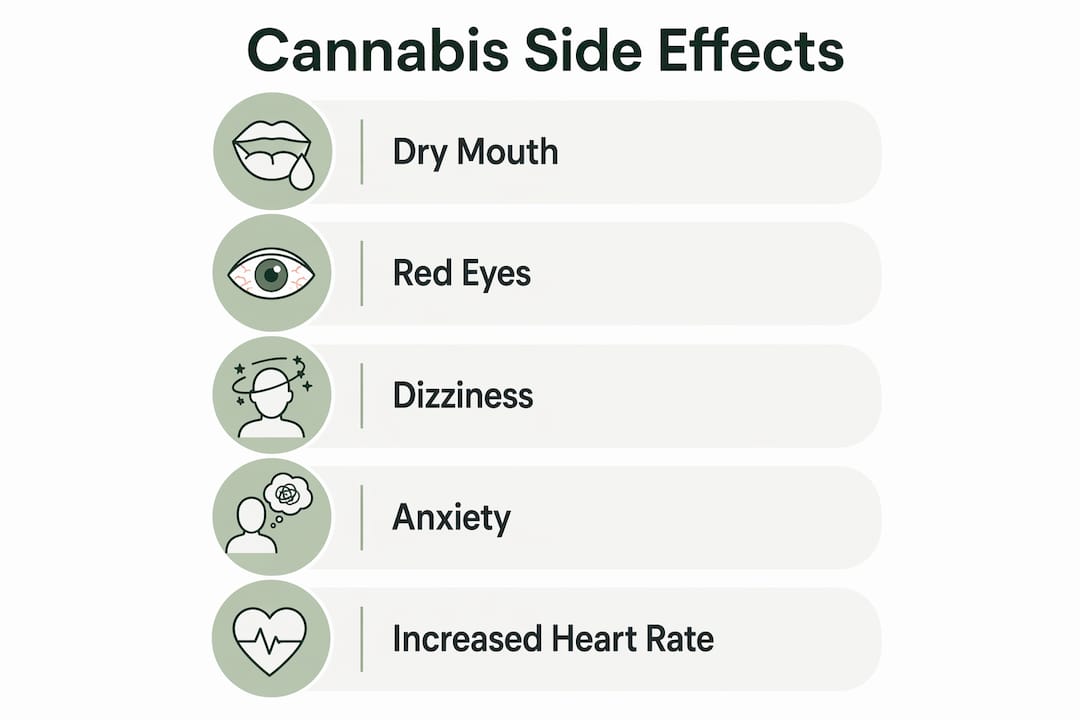
Physical side effects are the most immediately noticeable. According to the Alcohol and Drug Foundation, short-term THC effects include:
Cognitive and psychological side effects are equally common and often catch new users off guard:
Euphoria and anxiety can co-occur during the same session, which surprises many users. The “high” is not a single, predictable state. It shifts based on dose, product potency, your own biology, and even your mood before consuming.
CBD-dominant products carry a notably different profile. CBD does not produce intoxication and is associated with far fewer adverse reactions than THC. For a clear breakdown of how these two cannabinoids differ in their effects, the THC vs CBD comparison on the Greensociety blog is a useful starting point.

Pro Tip: If you are new to cannabis or trying a new product, start with the lowest available dose and wait at least two hours before considering more. This single habit prevents the majority of unpleasant experiences.
The route you choose to consume cannabis is one of the most clinically significant factors in how side effects unfold. Pharmacokinetics explain why the same product can feel completely different depending on whether you smoke, vape, or eat it.
Here is how the two primary routes compare:
Inhalation (smoking or vaping): THC enters the bloodstream through the lungs within seconds. Peak effects arrive within 30 minutes and typically last 2 to 6 hours. The rapid onset gives users clear feedback, making it easier to gauge how much is enough.
Oral ingestion (edibles, capsules, oils): THC is metabolised through the digestive system and liver before reaching the bloodstream. Peak effects arrive in 2 to 4 hours and can last 8 to 12 hours. This extended timeline is the primary reason edibles carry a higher risk of accidental overconsumption.
The table below summarises the key differences:
| Consumption method | Onset time | Peak effects | Duration |
|---|---|---|---|
| Inhalation (smoking/vaping) | Seconds to 5 minutes | 15 to 30 minutes | 2 to 6 hours |
| Oral ingestion (edibles) | 30 minutes to 2 hours | 2 to 4 hours | 8 to 12 hours |
The delayed onset of edibles is where most overconsumption incidents originate. A user eats a gummy, feels nothing after 45 minutes, and takes a second dose. By hour three, both doses peak simultaneously. For a deeper look at the specific side effects tied to edible products, Greensociety’s guide on edible cannabis side effects covers the subject thoroughly.
Pro Tip: With edibles, the standard waiting rule is two hours minimum before redosing. Write the time you consumed on a piece of paper if needed. The delay feels longer than it is.
Potency is not just a number on a label. High-THC products at 15 to 20% THC or above produce faster and stronger activation of CB1 receptors in the brain, which directly amplifies both the desired effects and the adverse ones. Concentrates such as dabs and oils can reach 60 to 80% THC, placing them in a different risk category entirely.
The side effects most associated with high-potency products include:
One condition worth knowing about is cannabinoid hyperemesis syndrome (CHS). Long-term heavy THC use can cause CHS, a cyclic vomiting disorder that is paradoxically relieved by hot showers and resolves only with cannabis cessation. It is rare but frequently misdiagnosed because patients and clinicians alike do not connect the vomiting to cannabis use.
Important: Synthetic cannabinoids, sometimes sold under names like “spice” or “K2,” carry far more severe toxicities than natural cannabis, including seizures, acute psychosis, and in some cases death. These are not cannabis products. They are unregulated chemical compounds and should be avoided entirely.
High-potency THC products increase dependence risk in ways that lower-potency flower does not. Choosing products with known, moderate THC levels and understanding what you are consuming before you consume it is the most direct form of harm reduction available.
Most cannabis side effects resolve on their own without medical intervention. The key skill is distinguishing between an uncomfortable experience and a genuine emergency.
Signs of overintoxication that are unpleasant but not typically dangerous include:
Signs that warrant calling for medical help include chest pain, rapid heartbeat, severe panic, psychotic episode, respiratory distress, or loss of consciousness. Children and pets face particular risk from accidental ingestion of edibles, and any such incident should be treated as a medical emergency immediately.
For managing a difficult experience at home:
Mixing cannabis with alcohol, opioids, or benzodiazepines significantly increases sedation, adverse effects, and overall risk. This combination is one of the most preventable causes of cannabis-related emergency visits. The relationship between cannabis and anxiety is more nuanced than most users realise. Greensociety’s article on cannabis and anxiety explains when cannabis may help and when it is more likely to worsen symptoms.
Pro Tip: Keep a small amount of black pepper nearby. Chewing two or three peppercorns is a widely reported folk remedy for cannabis-induced anxiety. The terpene beta-caryophyllene in black pepper may interact with cannabinoid receptors to reduce acute anxiety, though formal clinical evidence remains limited.
Cannabis withdrawal is real, though it is less physically severe than withdrawal from alcohol or opioids. Withdrawal symptoms begin within 24 hours after stopping heavy use, peak around day three, and typically resolve within two weeks.
The most common withdrawal symptoms, in order of typical onset, are:
Recognising withdrawal symptoms helps users and clinicians manage cessation without unnecessary alarm. Many people mistake withdrawal irritability for a pre-existing mood disorder, which can complicate treatment decisions.
Long-term frequent use carries additional risks beyond withdrawal. Persistent impairments to memory, attention, and processing speed are documented in heavy users, particularly those who began using in adolescence. The developing brain is significantly more vulnerable to THC’s effects than the adult brain, and adolescents face a higher risk of lasting cognitive impact and cannabis use disorder. Treatment options include cognitive behavioural therapy (CBT), motivational interviewing, and in some cases, pharmacological support through a physician.
Cannabis side effects are predictable, manageable, and directly tied to THC content, consumption method, and individual vulnerability. Knowing these variables before you consume is the most effective harm reduction strategy available.
| Point | Details |
|---|---|
| THC drives most adverse effects | Higher THC content increases the risk of anxiety, paranoia, and cardiovascular strain. |
| Edibles carry the highest overdose risk | Delayed onset of 2 to 4 hours leads users to redose before the first dose peaks. |
| Consumption method changes duration | Inhalation lasts 2 to 6 hours; oral ingestion can last 8 to 12 hours. |
| Withdrawal is real but short-lived | Symptoms peak around day 3 and resolve within approximately 2 weeks for most users. |
| Mixing substances multiplies risk | Combining cannabis with alcohol or sedatives significantly increases adverse outcomes. |
The most common mistake I see is not recklessness. It is impatience. Someone tries an edible for the first time, waits 45 minutes, decides it is not working, and takes a second dose. Two hours later, they are convinced they are having a medical emergency. This scenario is entirely avoidable, and it happens constantly because the delay between ingestion and effect is genuinely counterintuitive.
The second thing I have noticed is that people treat “getting too high” as a personal failure rather than a pharmacological event. It is not. The body’s response to THC is dose-dependent and largely predictable once you understand the variables. Product potency, your body weight, whether you have eaten, your stress levels on that particular day, all of these shift the outcome. The same product can feel completely different on two different occasions.
What I find most valuable in conversations about cannabis side effects is the distinction between effects that are uncomfortable and effects that are dangerous. Feeling anxious, dizzy, or disoriented after consuming too much cannabis is unpleasant. It is not, in most cases, a medical emergency. Knowing that difference, and being able to communicate it clearly, reduces panic and helps people make better decisions in the moment.
The users who have the best experiences are the ones who treat cannabis like any other substance that affects the brain. They read the label, they start low, they wait, and they pay attention to how their body responds. That is not overcaution. That is just good sense.
— Juiced
Greensociety carries a wide selection of cannabis flower, edibles, concentrates, and vapes, all with clear potency information so you can make informed choices before you buy. If you are new to edibles or want to understand what you are working with before you consume, the Greensociety guide on selecting cannabis flower online walks you through potency labels, strain types, and what to look for in a quality product. For those who prefer edibles, the cannabis kitchen guide covers dosing, preparation, and how to get consistent results. Browse the full catalogue at Greensociety and shop with confidence.
The most common side effects of cannabis include dry mouth, red eyes, dizziness, increased heart rate, impaired memory, slowed reaction time, and anxiety. These effects are primarily driven by THC and vary in intensity based on dose and product potency.
Cannabis can cause anxiety, particularly at higher doses or with high-THC products. Health Canada confirms that euphoria and anxiety can occur simultaneously, and users with a predisposition to anxiety face a higher risk of adverse psychological reactions.
Side effects from inhaled cannabis typically last 2 to 6 hours, while effects from edibles can last 8 to 12 hours due to slower metabolisation through the digestive system. Individual factors such as body weight, tolerance, and dose also influence duration.
Signs of overconsumption include severe anxiety or panic, chest discomfort, rapid heartbeat, nausea, psychotic symptoms, and significant disorientation. Symptoms that involve chest pain, respiratory distress, or loss of consciousness require immediate medical attention.
Yes, cannabis use disorder is a recognised condition. Withdrawal symptoms including irritability, insomnia, and anxiety begin within 24 hours of stopping heavy use, peak around day three, and resolve within approximately two weeks for most adults.