Free Shipping
on orders over $150.00
$0.00
$150.00
Add $150.00 more for free shipping!

TL;DR:
- The method of cannabis consumption significantly influences how long effects last, with inhalation lasting 1 to 4 hours and edibles up to 8 hours or more. Personal factors like tolerance, metabolism, and dose size also shape individual experiences and detection times. Understanding these timelines helps users manage expectations and make safer, more informed choices.
Cannabis effects duration is defined as the total time a person experiences psychoactive effects after consuming cannabis, and it varies significantly based on how the product is consumed. Inhaled cannabis typically produces effects within 1–5 minutes, lasting 1–4 hours. Edibles take 30–120 minutes to kick in but can last 4–8 hours or longer. Health Canada advises adults to understand these timelines before consuming, particularly with edibles. Knowing what shapes your experience puts you in control of it.
The delivery method is the single biggest factor in how long cannabis effects last. Inhalation, edibles, tinctures, and concentrates each follow a different timeline because they enter the bloodstream through different pathways.
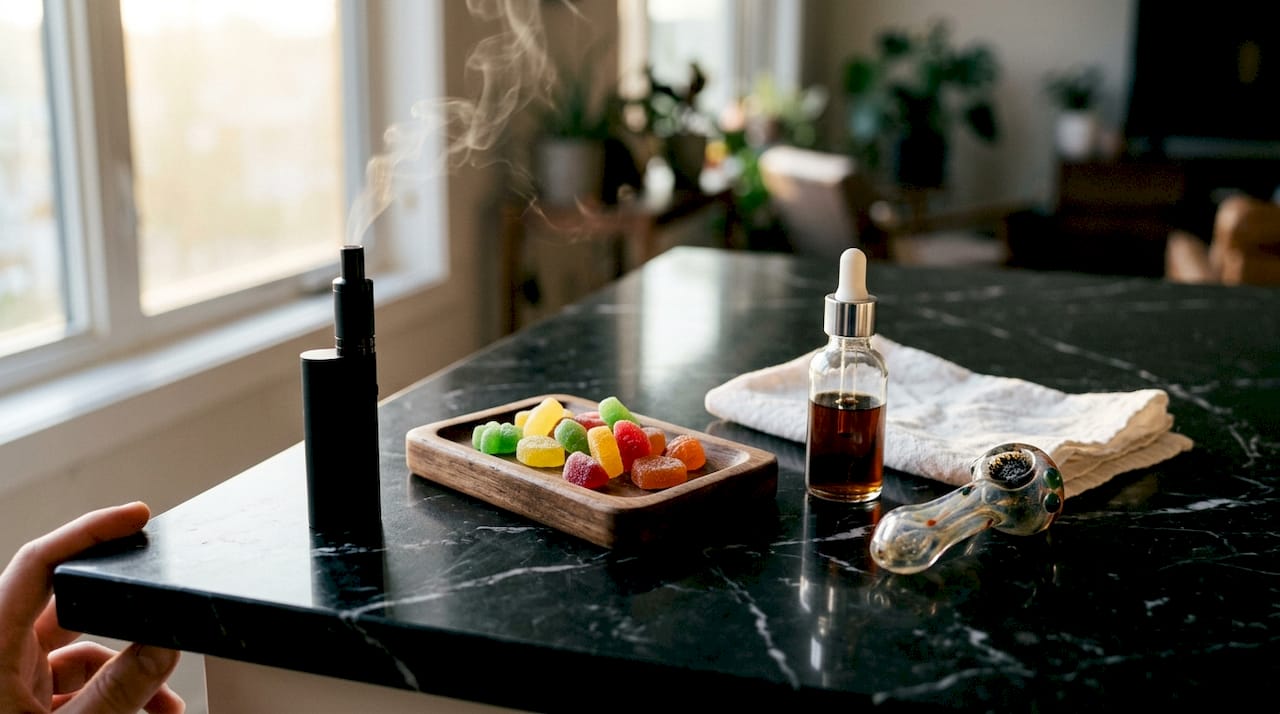
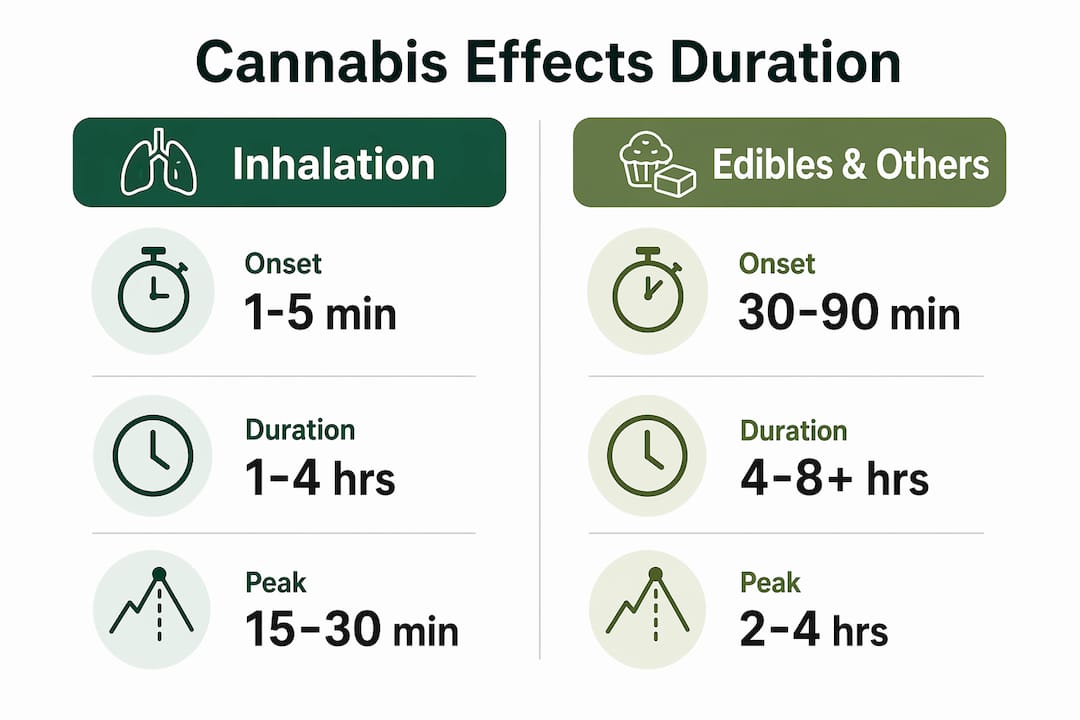
Inhaled cannabis, whether smoked or vaped, reaches the bloodstream through the lungs almost immediately. Onset occurs within 1–5 minutes, with peak effects arriving around 15–30 minutes after the first puff. The total duration of a marijuana high from inhalation sits between 1 and 4 hours for most adults. This shorter window makes inhalation the easiest method for real-time dose control.
Edibles work very differently. The liver processes THC before it enters the bloodstream, converting it into 11-hydroxy-THC, a metabolite that crosses the blood-brain barrier more efficiently than inhaled THC. That biochemical difference is why edible effects feel stronger and last considerably longer. Onset ranges from 30 minutes to 2 hours, and the total experience can run 4–8 hours, sometimes beyond that with higher doses.
Tinctures held under the tongue absorb sublingually, bypassing first-pass liver metabolism. Onset is typically 15–45 minutes, with effects lasting 2–4 hours. Concentrates, consumed through a dab rig or vaporiser, behave similarly to inhalation but with higher potency, producing a faster and more intense peak that still resolves within 1–4 hours.
| Method | Onset | Peak | Duration | Key note |
|---|---|---|---|---|
| Inhalation | 1–5 min | 15–30 min | 1–4 hrs | Best for dose control |
| Edibles | 30–120 min | 2–3 hrs | 4–8+ hrs | Longest lasting effects |
| Tinctures | 15–45 min | 45–90 min | 2–4 hrs | Moderate and predictable |
| Concentrates | 1–5 min | 10–20 min | 1–4 hrs | High potency, short window |
Pro Tip: If you are new to edibles, start with a 2.5 mg to 5 mg dose and wait the full 2 hours before deciding whether to take more. Jumping in early is the most common cause of an unexpectedly long and uncomfortable experience.
Two people can consume the same product at the same dose and have completely different experiences. Personal biology shapes cannabis effects duration as much as the product itself does.
Tolerance is one of the most significant variables. Regular consumers experience shorter and less intense highs than occasional users given the same dose. The body adapts to frequent THC exposure by reducing receptor sensitivity. Taking a break of several weeks resets tolerance and restores the original response.
Metabolism also plays a direct role. Adults with faster metabolic rates process THC more quickly, which shortens the experience. Body composition matters too, since THC is fat-soluble and accumulates in fatty tissue, which can extend the presence of the compound in the body even after acute effects have passed.
Dose size is the most controllable factor. A 5 mg edible may produce effects lasting around 4 hours, while a 50 mg edible can extend that to 8 hours or more. Stomach contents at the time of consumption also shift the timeline. Eating a fatty meal before an edible accelerates THC absorption and can intensify effects. Consuming alcohol alongside cannabis compounds both substances’ effects and makes duration harder to predict.
Key individual factors that shape the length of cannabis effects:
Pro Tip: Track your sessions in a simple notes app. Record the product, dose, method, and how long effects lasted. After a few entries, patterns emerge that make your next experience far more predictable.
Many adults confuse how long they feel the effects of cannabis with how long it stays in their system. These are two completely separate things, and mixing them up causes unnecessary anxiety.
Psychoactive effects end within hours of consumption for most adults. THC metabolites, however, accumulate in fat tissue and remain detectable in biological samples long after any impairment has passed. Users commonly confuse high duration with detection time, which leads to worry about drug tests despite being fully functional and unimpaired.
Detection windows vary significantly by test type:
| Test type | Occasional use | Regular use | Chronic use |
|---|---|---|---|
| Urine | Up to 3 days | Up to 10 days | 30+ days |
| Blood | Up to 12 hours | Up to 24 hours | Up to 7 days |
| Hair | Up to 90 days | Up to 90 days | Up to 90 days |
THC metabolites remain in urine for 3 days after a single use and can persist for 30 days or more in chronic consumers. Hair follicle tests can detect use for up to 90 days. None of these windows reflect ongoing impairment. A person can test positive for THC metabolites days after their last use while being completely clear-headed and unaffected. Canadian workplace drug policies and legal frameworks distinguish between presence and impairment, though the specifics vary by province and employer.
Predicting the length of cannabis effects gets easier with experience and a few practical habits. The goal is to match the duration to your schedule and comfort level.
Read the label before you consume. Licensed cannabis products in Canada list THC content per serving. Knowing the milligrams in what you are about to consume is the starting point for any duration estimate.
Choose your method based on your available time. If you have 2 hours before a commitment, inhalation is the appropriate choice. If you have a full evening free and want sustained relief, an edible fits better. Matching method to schedule prevents the most common timing mistakes.
Wait the full onset window before redosing. Delayed onset is the leading cause of negative edible experiences. The 2-hour wait is not a suggestion. Taking a second dose at the 45-minute mark because “nothing is happening” is how a manageable experience becomes an overwhelming one.
Use Greensociety’s cannabis dosage guidelines as a reference. Clear, evidence-informed dosing frameworks help you build a baseline before experimenting with higher amounts.
Adjust for tolerance changes. If you have taken a break from cannabis, treat yourself as a new consumer. Your previous dose may now produce effects that last significantly longer and feel more intense.
Plan for the full duration, not just the peak. Edible effects do not end at the 4-hour mark for everyone. Build in buffer time, especially if driving or operating equipment is part of your day.
Know your exit options. If effects last longer than expected, CBD, hydration, food, and rest can help reduce discomfort. Greensociety’s guide on getting unhigh quickly covers practical steps for those moments.
Pro Tip: Avoid consuming cannabis on an empty stomach if you want a predictable experience. A light meal beforehand slows absorption slightly and smooths out the onset curve, making the timeline easier to anticipate.
Cannabis effects duration is determined primarily by consumption method, with edibles lasting significantly longer than inhaled cannabis due to liver metabolism producing 11-hydroxy-THC, a more potent compound than inhaled THC.
| Point | Details |
|---|---|
| Inhalation is the shortest method | Effects from smoking or vaping last 1–4 hours, with onset in under 5 minutes. |
| Edibles last the longest | Liver metabolism creates 11-hydroxy-THC, extending effects to 4–8+ hours. |
| Dose size controls duration | A 5 mg edible lasts roughly 4 hours; a 50 mg dose can extend to 8 hours or more. |
| Detection outlasts impairment | THC metabolites stay in urine for up to 30+ days, long after effects have ended. |
| Tolerance shortens the experience | Regular consumers feel shorter, less intense effects than occasional users at the same dose. |
The most consistent mistake I see is impatience with edibles. Adults who are perfectly comfortable with inhalation try an edible, feel nothing at the 45-minute mark, and take a second dose. Two hours later, they are far beyond where they wanted to be, and the experience lasts well into the next morning. This is not a rare edge case. It is the norm for first-time edible consumers, and it happens because the cannabis effects timeline for oral consumption is genuinely counterintuitive.
What I have come to believe is that most negative cannabis experiences are not about the product. They are about the mismatch between expectation and reality. Someone who understands that an edible takes up to 2 hours to fully set in, and that the effects can run 6 to 8 hours, makes completely different decisions than someone who does not. Education changes behaviour more reliably than any warning label.
The other thing worth saying plainly: tolerance is not a badge of honour. Regular consumers who have shortened their experience through frequent use are not getting more value. They are often consuming more to feel the same effect, which increases cost, consumption, and the time needed to reset. An occasional break does more for the quality of your experience than any product upgrade.
For medical consumers especially, understanding your personal cannabis effects timeline is not optional. It is the foundation of consistent, reliable symptom management. Knowing that your 10 mg dose reliably produces 5 hours of relief means you can plan your day around it. That kind of predictability only comes from paying attention.
— Juiced
Choosing the right product for your schedule starts with understanding what you are buying and how it will behave in your body.
Greensociety’s cannabis flower buying guide walks you through selecting strains and formats based on the kind of experience you want, including how long you want it to last. For those drawn to edibles, the benefits of edibles guide covers dosing, onset expectations, and how to read product labels with confidence. Both resources are built for Canadian adults who want to make informed choices rather than guessing. Greensociety carries a wide range of products across every consumption method, so you can match what you buy to what you now know about duration and timing.
Inhaled cannabis produces effects lasting 1–4 hours, while edibles typically last 4–8 hours or more. The exact duration depends on dose, tolerance, and individual metabolism.
The liver converts THC into 11-hydroxy-THC during digestion, a metabolite that crosses the blood-brain barrier more efficiently than inhaled THC. This produces stronger and longer-lasting effects.
Yes. THC metabolites remain detectable in urine for up to 3 days after a single use and 30 or more days for chronic consumers, even though psychoactive effects end within hours.
Inhalation produces the shortest duration of effects, typically 1–4 hours, with onset in 1–5 minutes. This makes it the easiest method for managing timing and dose.
Start with a low dose, choose inhalation if you need a predictable short window, and always wait the full 2 hours before redosing edibles. Tracking your sessions over time gives you the most reliable personal baseline.