Free Shipping
on orders over $150.00
$0.00
$150.00
Add $150.00 more for free shipping!


TL;DR:
- Cannabis limits are based on THC units and legal possession caps, both essential for safety and legality. Adults should stay below 8 THC units per week, as overconsumption raises the risk of Cannabis Use Disorder. Regulations vary by region, and proper dosing depends on your method, with careful wait times and secure storage being crucial.
Cannabis consumption limits are defined by two distinct frameworks: standardised THC units that reflect health-based thresholds, and legal possession caps set by provincial or state regulators. Both matter. Ignoring either one puts your health or your legal standing at risk. The Canadian Centre on Substance Use and Addiction and Health Canada have each published guidance that gives adults in legal markets a clear starting point. Cannabis Use Disorder affects approximately 22% of regular users, and frequency of use is the primary driver. Knowing your limits is the first step toward avoiding that outcome.
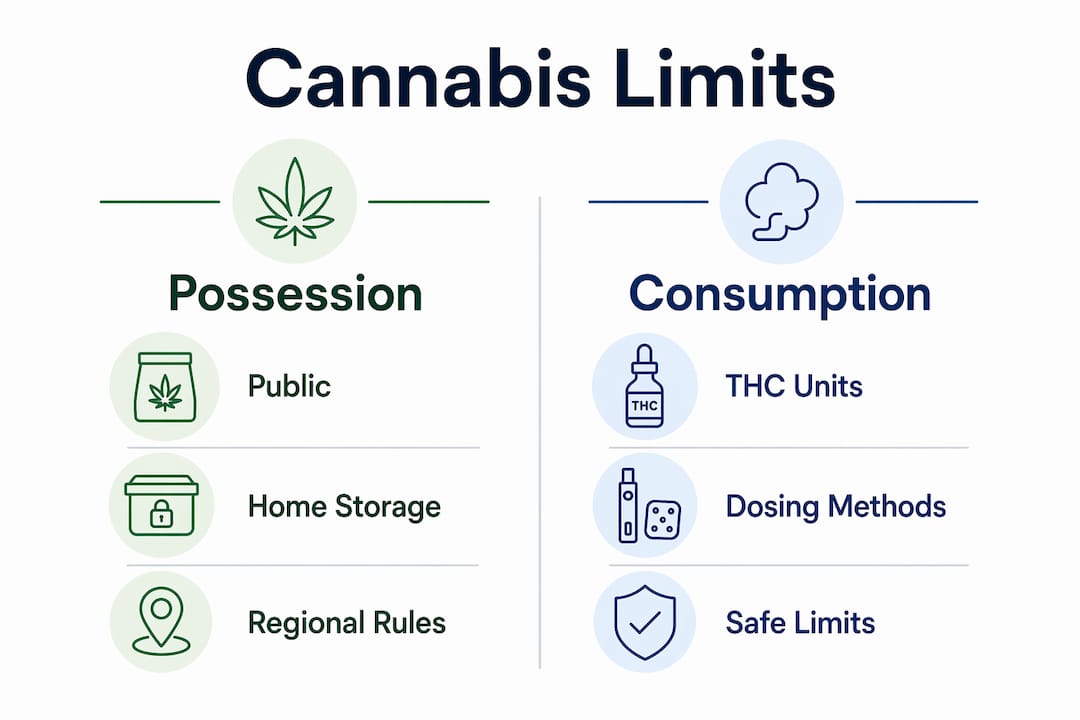
Cannabis consumption limits are best understood through the concept of the THC unit, a standardised measure that works much like an alcohol unit. One THC unit equals 5 mg of THC. That single number gives consumers and clinicians a shared language for tracking intake across very different products.
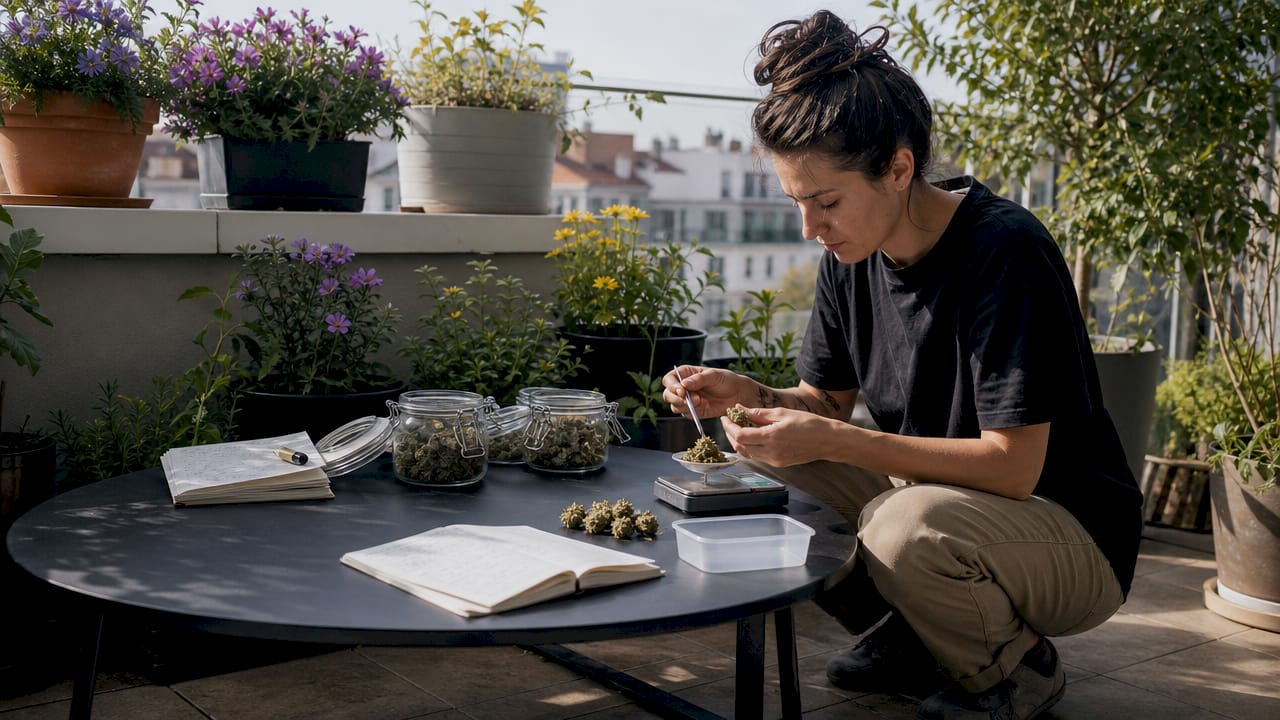
Researchers recommend that adults stay at or below 8 THC units, which equals 40 mg of THC, per week to meaningfully reduce the risk of Cannabis Use Disorder. That threshold sounds generous until you realise a single high-potency edible can contain 100 mg of THC. One product can blow past a week’s recommended limit in one sitting.
The alcohol unit analogy is deliberate. Decades of public health messaging around alcohol units shifted drinking behaviour at a population level. Researchers are applying the same logic to cannabis, and for good reason. Product potency has climbed sharply over the past decade, making informal self-regulation far less reliable than it once was.
Pro Tip: Check the THC milligram content on the product label, not just the percentage. A 25% THC flower and a 10 mg edible require completely different mental accounting.
Standardising THC units also helps when you speak with a clinician. Many clinicians cannot formally prescribe cannabis due to legal constraints, but they use harm reduction guidelines based on research to guide patients. Having a unit-based number to report makes those conversations far more useful. You can read more about understanding THC percentages to sharpen your label-reading skills before you shop.
Legal cannabis intake guidelines differ significantly depending on where you live. There is no single national standard across North America, which means adults who travel between provinces or states need to know the local rules before they arrive.
The table below summarises key possession and consumption limits across several legal jurisdictions.
| Jurisdiction | Public possession limit | Home storage limit | Consumption notes |
|---|---|---|---|
| Canada (federal baseline) | 30 grams dried | No federal cap if legal age | Provincial rules may be stricter |
| Quebec | 30 grams in public | 150 grams dried at home | Minimum age 21; stricter than federal |
| Michigan | 2.5 ounces (approx. 70 g) | 10 ounces in a locked container | Home storage must be secured |
| Nevada (lounges) | Per-session limit applies | N/A for lounges | 50 mg THC per session, 10 mg per serving |
Nevada’s consumption lounge model is worth examining closely. Point-of-sale technology actively prevents patrons from exceeding the 50 mg per-session cap. That is cannabis consumption regulation built directly into the retail experience, not just printed on a sign.
Public consumption laws extend further than most people expect. Private sidewalks and vehicles parked on public roads fall under public consumption rules in many jurisdictions. A fine issued in a parked car is still a valid fine. Federal lands, including national parks and military bases, remain completely off-limits regardless of state or provincial legalisation. Penalties on federal property are enforceable under federal law, not local ordinances.
Secure home storage is not optional in many jurisdictions. Michigan’s 10-ounce home limit only applies when cannabis is kept in a locked container. Failing to meet storage requirements can convert a legal quantity into a legal violation. Quebec’s 150-gram home possession allowance similarly assumes responsible storage, particularly in households with minors.
Safe cannabis dosage recommendations vary sharply by method. Inhalation, edibles, and tinctures each deliver THC through different biological pathways, and that changes everything about how you should dose.
Inhalation is the fastest-acting method. Effects typically begin within minutes and peak within 30 minutes. For beginners, one or two inhalations from a low-THC product is a reasonable starting point. Experienced consumers can self-titrate more easily because the feedback loop is quick. Health Canada’s medical guidelines suggest a typical daily range of 1–3 grams dried cannabis, with consumption above 10 grams per day considered highly unusual.
Edibles are where most overconsumption incidents occur. The liver metabolises THC differently than the lungs do, producing a more potent compound called 11-hydroxy-THC. Onset can take anywhere from 30 minutes to 2 hours. The two-hour rule is non-negotiable: wait a full two hours before considering an additional dose. Eating more because you “don’t feel anything yet” is the most common mistake new consumers make.
Beginners should start at 2.5–5 mg THC for edibles. That is half of one standard 10 mg edible in many markets. Experienced consumers may be comfortable at 10–20 mg, but even seasoned users can be caught off guard by a new product or a meal that changes absorption speed.
Pro Tip: Eating a fatty meal before consuming an edible speeds up THC absorption significantly. If you usually dose on an empty stomach, adjust downward when eating beforehand.
Tinctures offer a middle ground. Sublingual absorption is faster than edibles but slower than inhalation. Microdosing, typically 1–2.5 mg THC per dose, is gaining traction for therapeutic use because it delivers functional relief without significant psychoactive effects. Consistent low doses avoid the tolerance spikes that come with heavier use.
Tolerance also resets when you switch consumption methods. If you normally vape and try edibles for the first time in months, treat your dose as near-beginner level. The liver processes THC in edibles differently than the lungs do, and your previous tolerance offers little protection. Greensociety’s guide on cannabis dosage guidelines covers this method-by-method breakdown in practical detail.
The numbered steps below summarise the core dosing approach:
Harm reduction and legal compliance work together. The goal is not abstinence. The goal is informed, controlled use that keeps health risks low and keeps you on the right side of the law.
Greensociety’s cannabis wellness checklist is a practical resource for building these habits into your routine. For medical consumers specifically, the tips for medical cannabis use guide covers Health Canada-aligned guidance in accessible language.
Staying within cannabis consumption limits requires tracking THC milligrams, knowing your jurisdiction’s possession rules, and matching your dose to your consumption method.
| Point | Details |
|---|---|
| THC unit standard | One THC unit equals 5 mg; stay at or below 8 units (40 mg) per week to reduce CUD risk. |
| Regional limits vary | Possession caps differ by province and state; always verify local rules before travelling with cannabis. |
| Method changes everything | Edibles require a two-hour wait; switching methods means resetting your dose to near-beginner level. |
| Frequency drives risk | Daily or near-daily use is the strongest predictor of Cannabis Use Disorder, regardless of quantity. |
| Storage is a legal requirement | Locked home storage is mandatory in several jurisdictions; failing to comply turns a legal amount into a violation. |
Most people who get into trouble with cannabis do not ignore the rules. They simply underestimate how fast the rules change depending on where they are and what they are consuming. A dose that works perfectly at home can feel overwhelming in a different setting, with a different product, after a different meal.
The “start low, go slow” principle sounds obvious until you are standing in a lounge in Nevada with a 50 mg session cap and no idea how potent the product you just purchased actually is. That is when the THC unit framework earns its keep. Knowing that 10 mg is one unit, and that your weekly budget is 40 mg, gives you a number to work with instead of a vague sense of caution.
Tolerance breaks are underrated. Two days off per week is not a sacrifice. It is maintenance. People who take regular breaks report that the same dose delivers more consistent effects over time, which means less product, less cost, and less risk. That is a straightforward trade.
The legal side matters just as much as the health side. Federal land restrictions catch people off guard constantly. A national park campsite is not the same as your backyard, even if you live in a fully legalised province. Knowing that distinction before you pack for a trip is worth five minutes of research.
— Juiced
Knowing your limits is only half the equation. Choosing the right product for your experience level and consumption method is the other half.
Greensociety has built a library of practical guides to help you shop with confidence and consume responsibly. The cannabis flower buying guide walks you through selecting flower by THC content, strain type, and intended effect, so you are not guessing at the dispensary. For consumers who prefer edibles, the kitchen edibles guide covers dosing within recipes so you can control your milligrams precisely. Every guide is written to support the kind of informed, measured consumption that keeps the experience enjoyable and the risks low.
One THC unit equals 5 mg of THC. Researchers recommend staying at or below 8 units, which is 40 mg of THC, per week to reduce the risk of Cannabis Use Disorder.
The federal baseline allows 30 grams of dried cannabis in public. Provincial rules may be stricter, so always check your specific province before carrying cannabis outside your home.
Edibles take 30 minutes to 2 hours to produce effects because the liver metabolises THC differently than the lungs do. Waiting the full two hours before taking more prevents accidental overconsumption.
No. Federal lands, including national parks and military bases, remain off-limits for cannabis consumption regardless of provincial or state legalisation. Penalties are enforced under federal law.
Tolerance built through one method, such as vaping, does not carry over reliably to another method, such as edibles. When switching methods, treat your dose as near-beginner level to avoid overconsumption.