Free Shipping
on orders over $150.00
$68.00
$150.00
Add $82.00 more for free shipping!

TL;DR:
- CBD supports sleep by regulating the body’s systems rather than acting as a sedative. Taking 50 to 300 mg of CBD sublingually 30 to 60 minutes before bed improves sleep quality without causing drowsiness. Consistent use of the appropriate product and dose over two weeks enhances sleep support.
CBD for sleep is defined as the use of cannabidiol, a non-psychoactive compound derived from cannabis, to improve sleep quality by modulating the body’s regulatory systems rather than acting as a direct sedative. Clinical reviews confirm that CBD doses of 50–300 mg are effective and safe for adults with insomnia, making it one of the most studied natural sleep aids available today. Greensociety carries a range of CBD products suited to this purpose, from oils to gummies, all available through secure online ordering. If you’ve been lying awake wondering whether a plant-based option could finally help, the evidence says it’s worth a serious look.

CBD’s effectiveness for sleep is supported by systematic reviews and meta-analyses, not just anecdotal reports. A 2026 meta-analysis found that CBD at 50–300 mg produced meaningful improvements in sleep outcomes for adults with insomnia. That range is wide by design: individual responses vary, and the right dose depends on body weight, metabolism, and the severity of sleep disruption.
One important nuance involves lower doses. CBD below 50 mg requires the addition of cannabinol (CBN) at 20–100 mg to produce reliable sleep benefits. CBN is a mildly sedating cannabinoid that works alongside CBD to fill the gap that low-dose CBD alone cannot close.
Dosage also interacts with the type of sleep problem. Research shows that 300 mg CBD produced greater improvement in sleep disturbances among people who are high-anxiety or prone to worry, compared to 50 mg, though the difference was not always statistically significant over placebo. The takeaway: higher doses appear more useful for anxiety-driven insomnia, while lower doses combined with CBN suit milder cases.
Critically, formulations containing THC did not show significant sleep improvement and were associated with higher rates of adverse effects. This matters because many cannabis sleep products on the market contain THC. The evidence points clearly toward CBD and CBN formulations without THC as the safer and more effective choice.
| Study focus | Dose range | Key outcome |
|---|---|---|
| CBD alone for insomnia | 50–300 mg | Improved sleep quality; no sedation or cognitive impairment |
| CBD + CBN combination | CBD <50 mg + CBN 20–100 mg | Effective when CBD dose is low |
| High-anxiety sleepers | 300 mg CBD | Greater improvement in sleep disturbances vs. 50 mg |
| THC-containing formulations | Variable | No significant sleep improvement; higher adverse effects |
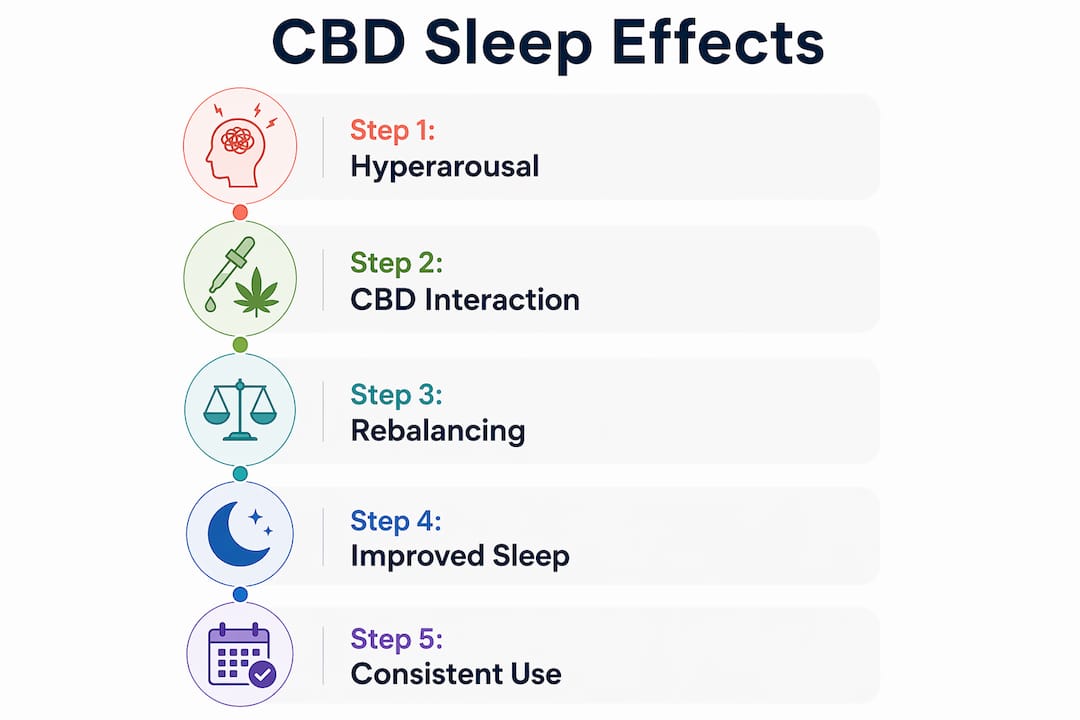
Insomnia is best understood as a state of multisystem dysregulation driven by sustained physiological hyperarousal, not simply a bad habit or a behavioural problem. This distinction changes everything about how you approach treatment. A sedative forces sleep by suppressing the nervous system. CBD takes a different route entirely.
CBD modulates the endocannabinoid and serotonergic systems, both of which regulate sleep-wake stability. When these systems are out of balance, the body stays in a heightened alert state that makes falling and staying asleep difficult. CBD helps recalibrate that balance upstream, before the sleeplessness even begins.
The biological actions linked to improved sleep quality include:
CBD does not induce classic hypnotic effects. It does not knock you out. What it does is address the underlying dysregulation that prevents sleep from happening naturally.
Pro Tip: If you feel no drowsiness after taking CBD, that is not a sign it is not working. CBD’s mechanism is systemic regulation, not sedation. Give it several consistent nights before drawing conclusions.
Effective use of CBD as a sleep aid depends on timing, consistency, and administration method. Getting these right separates people who see results from those who give up after a week.
Take CBD 30–60 minutes before bed. This gives the compound time to absorb and begin modulating the systems involved in sleep onset. Timing before bedtime is one of the most consistent recommendations across clinical guidance.
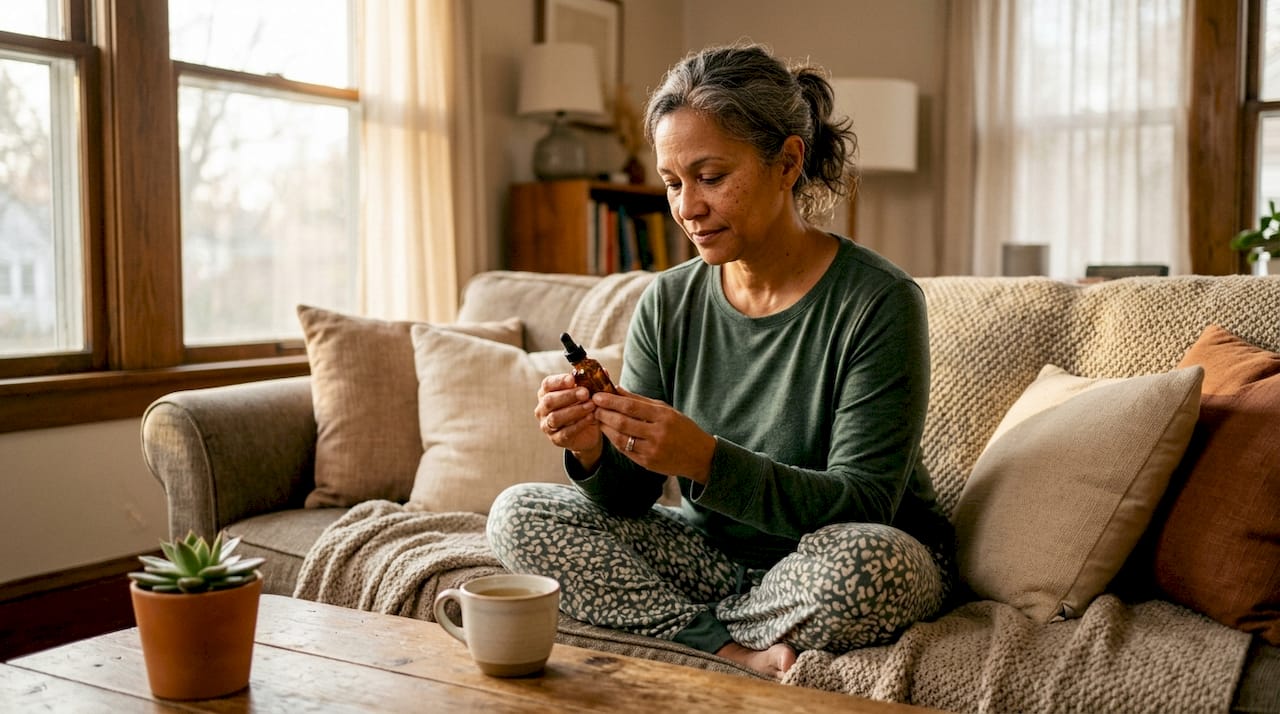
Use sublingual administration for oils. Hold the oil under your tongue for 60–90 seconds before swallowing. This bypasses first-pass liver metabolism and delivers CBD into the bloodstream faster and more efficiently than swallowing it directly.
Start low and adjust gradually. Begin at 25–50 mg and increase by 25 mg every three to five days if needed. Starting low and adjusting reduces the risk of side effects and helps you find your personal effective dose without overshooting it.
Dose at the same time each night. Consistency matters more than most people realise. The endocannabinoid system responds better to regular input than to sporadic use. Treat it like a supplement routine, not a rescue remedy.
Track your results over several days. Use a simple sleep diary to note time to fall asleep, number of wake-ups, and how rested you feel. One ml of CBD oil is roughly 20 drops, so tracking volume alongside outcomes helps you dial in the right amount.
Avoid alcohol and sedatives concurrently. Combining CBD with alcohol or prescription sedatives can alter sleep architecture in unpredictable ways. If you take any medications, consult a healthcare provider before starting CBD.
Assess after two weeks, not two nights. CBD’s effects on the endocannabinoid system build over time. Short trials produce misleading results.
Pro Tip: Pair your CBD routine with basic sleep hygiene: a consistent bedtime, a dark and cool room, and no screens for 30 minutes before bed. CBD works best when the environment supports sleep, not fights it. Read more about using CBD for wellness to build a fuller routine.
The format of your CBD product affects how quickly it works, how long the effects last, and how easy it is to dose accurately. Choosing the right format is as important as choosing the right dose.
Oils and tinctures are the most flexible option. Sublingual delivery produces effects within 15–45 minutes and lasts 4–6 hours. Dose control is precise because you measure by drops or millilitres. This makes oils the preferred format for people who are still finding their effective dose. You can read a detailed breakdown of CBD product formats to compare options side by side.
Gummies and capsules offer convenience and consistent dosing, but onset is slower at 45–90 minutes because the product must pass through the digestive system. The effects last longer, often 6–8 hours, which suits people who wake in the middle of the night rather than those who struggle to fall asleep initially.
Topical CBD does not cross the blood-brain barrier in meaningful amounts. It is not a reliable sleep aid on its own, though it may help with pain-related sleep disruption when applied to sore muscles or joints before bed.
| Product type | Onset time | Duration | Best for |
|---|---|---|---|
| Oil / tincture | 15–45 minutes | 4–6 hours | Dose flexibility, sleep onset issues |
| Gummy / capsule | 45–90 minutes | 6–8 hours | Sustained sleep, night waking |
| Topical | Localised only | Variable | Pain-related sleep disruption |
Full-spectrum CBD contains trace cannabinoids that may enhance effects through what researchers call the entourage effect, but it can contain trace THC. Broad-spectrum CBD removes THC while retaining other cannabinoids. Given that THC formulations showed no sleep benefit and higher adverse effects in clinical reviews, broad-spectrum is the safer choice for sleep-focused use. When selecting any product, look for third-party lab testing, clear cannabinoid content labelling, and a known source. Greensociety’s product selection guide walks through exactly what to check before buying.
CBD improves sleep by recalibrating the body’s regulatory systems, not by sedating you, and works best at consistent doses of 50–300 mg taken sublingually 30–60 minutes before bed.
| Point | Details |
|---|---|
| Effective dose range | CBD at 50–300 mg is clinically supported; below 50 mg requires CBN addition. |
| Avoid THC formulations | THC-containing products showed no sleep benefit and more adverse effects in meta-analyses. |
| Sublingual is best | Hold oil under the tongue for 60–90 seconds to maximise absorption and onset speed. |
| Consistency over intensity | Daily use at the same time produces better results than occasional high doses. |
| Match product to sleep problem | Oils suit sleep onset issues; gummies and capsules suit night waking due to longer duration. |
Most people approach CBD for sleep the same way they approach a sleeping pill: take it, wait for drowsiness, judge it by whether they feel knocked out. That framework sets them up to quit too early. CBD does not work that way, and expecting it to is the single biggest reason people dismiss it after a few nights.
What I’ve seen work consistently is the combination of a correct dose, a reliable format, and a two-week commitment before drawing any conclusions. The people who stick with 100–200 mg of a broad-spectrum oil, taken sublingually at the same time each night, are the ones who report meaningful changes in how quickly they fall asleep and how rested they feel in the morning. The people who try 25 mg of a gummy once and declare it useless are missing the point entirely.
The other thing worth saying plainly: CBD is not a cure for chronic insomnia driven by untreated anxiety, sleep apnea, or a chaotic schedule. It is a supportive tool. It works best when you are also doing the basics: consistent sleep times, a dark room, and less screen time before bed. CBD lowers the biological noise that keeps you awake. You still have to give your body the conditions it needs to sleep. For a deeper look at how cannabis and CBD interact with insomnia, the Greensociety resource on insomnia and cannabis is worth reading alongside this guide.
— Juiced
Greensociety carries a curated range of CBD products suited to sleep support, including oils, gummies, and capsules from verified sources with clear cannabinoid labelling.

Every product ships discreetly with fast delivery across Canada, and the site’s educational resources help you choose the right format and dose before you buy. If you are new to CBD and unsure where to start, the Greensociety guide to selecting CBD products covers exactly what to look for. For those curious about edible formats as a sleep aid option, the breakdown of CBD edibles is a practical next step.
Clinical evidence supports doses of 50–300 mg for adults with insomnia. Start at 25–50 mg and increase gradually until you find your effective dose.
CBD does not cause classic drowsiness. It modulates the biological systems linked to hyperarousal and sleep-wake regulation, which supports natural sleep without sedation or cognitive impairment.
Take CBD 30–60 minutes before bedtime. Sublingual oils absorb fastest; gummies and capsules need 45–90 minutes and suit people who wake during the night.
Broad-spectrum CBD is the safer choice for sleep. THC-containing formulations showed no significant sleep improvement and higher adverse effects in systematic reviews.
CBD can interact with sedatives and other medications. Consult a healthcare provider before combining CBD with any prescription sleep aids or other drugs.

 Green Society Herb Grinder