Free Shipping
on orders over $150.00
$0.00
$150.00
Add $150.00 more for free shipping!


TL;DR:
- Cannabis edibles include foods and drinks infused with THC or CBD, affecting onset, potency, and experience. Gummies are popular for consistent dosing, while infused beverages offer faster effects due to nanoemulsion technology. Choosing the right format and dosing carefully helps ensure a safe, predictable experience.
Cannabis edibles are food and beverage products infused with cannabinoids such as THC and CBD, and the most common examples of edibles include gummies, baked goods, chocolates, mints, and infused drinks. What sets edibles apart from other consumption methods is how your body processes them. Oral consumption converts THC into 11-hydroxy-THC, a compound that binds more strongly to CB1 receptors and produces a longer, more intense effect than inhaled cannabis. Understanding the format differences between cannabis edibles is the first step to choosing the right product for your goals.
The cannabis edible market covers a wide range of formats, each with distinct characteristics that affect flavour, dosing, and onset. Gummies, chocolates, and baked goods remain the most recognisable categories, but infused beverages and mints have grown significantly in popularity.
Here is a breakdown of the main types:
Pro Tip: If you are new to cannabis edibles, gummies are the best starting point. The dosing is consistent, the effects are predictable, and you can easily split a piece to start with a lower amount.
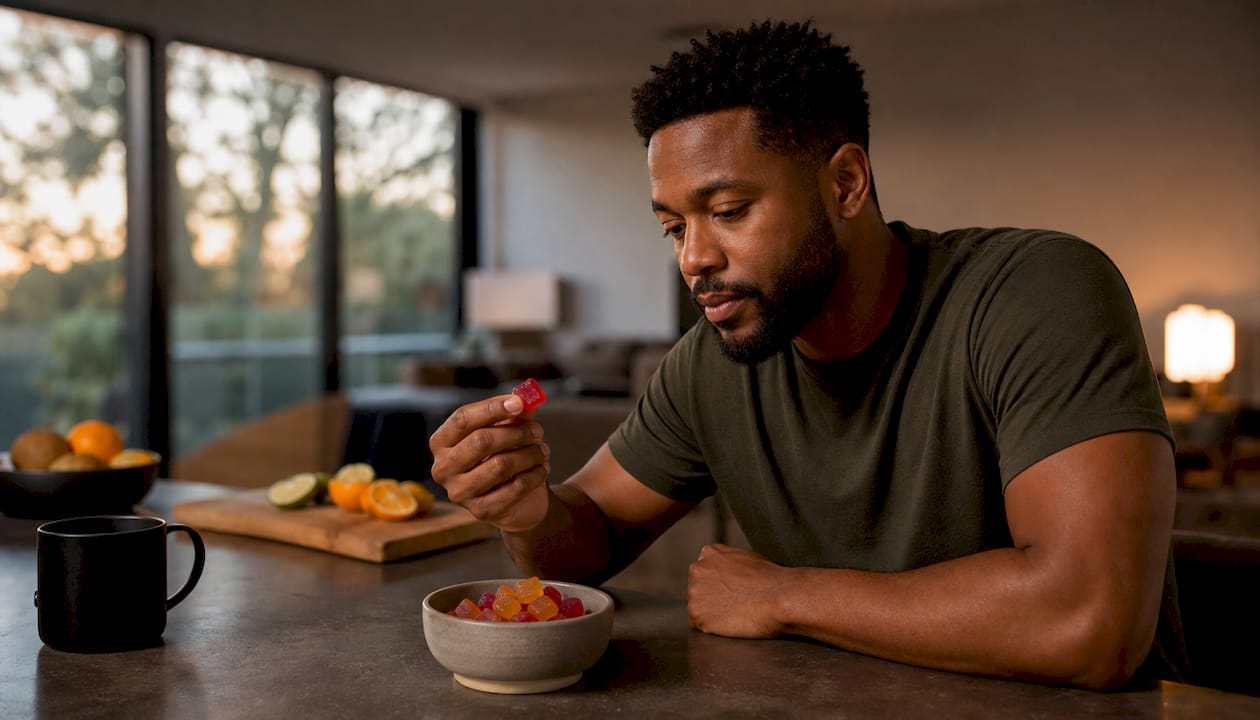
The format of a cannabis edible directly controls how quickly and how strongly you feel its effects. This is not just a matter of preference. It is pharmacokinetics, the science of how substances move through your body.
| Edible type | Typical onset | Duration | Key factor |
|---|---|---|---|
| Gummies | 45–90 minutes | 4–8 hours | Consistent THC distribution |
| Baked goods | 60–120 minutes | 4–8 hours | Fat content and heat cycles |
| Chocolates | 45–90 minutes | 4–8 hours | Fat solubility aids absorption |
| Mints and lozenges | 30–60 minutes | 2–5 hours | Partial sublingual absorption |
| Infused beverages | 15–30 minutes | 2–4 hours | Nanoemulsion technology |
When you eat a gummy or brownie, your liver metabolises the THC and converts it into 11-hydroxy-THC. This compound crosses the blood-brain barrier more efficiently than inhaled delta-9-THC, which is why edibles feel stronger and last longer. Eating on a full stomach slows gastric emptying, which can delay onset beyond two hours. That delay is the most common reason people take a second dose too soon and end up consuming far more than intended.
Baked goods carry an additional complication. Heat and fat binding during baking alter how THC is activated and absorbed, making effects less predictable than with manufactured gummies or chocolates. Infused beverages sit at the opposite end of the spectrum. Nanoemulsion breaks cannabinoids into microscopic particles that absorb through the gut wall quickly, cutting onset to as little as 15 minutes.
Pro Tip: Always wait at least 90 minutes before considering a second dose. If you ate a full meal beforehand, wait two full hours. Patience is the most effective dosing strategy with edibles.
Not all cannabis edibles are made the same way. The extraction method behind the infusion shapes the potency, flavour, and overall experience of the product.
Distillate-based edibles use a solvent-based extraction process that strips cannabis down to a highly purified THC oil. Distillate typically contains over 90% pure THC, which means consistent, potent effects. The trade-off is that the process removes most minor cannabinoids and terpenes, leaving a product that delivers a straightforward high without much complexity or flavour nuance. These are the most common edibles on the market and suit people who want reliable, predictable dosing.
Rosin-based edibles use a solventless process that applies heat and pressure to cannabis flower or hash to extract a full-spectrum oil. This preserves cannabinoids, terpenes, and other plant compounds that distillate loses. Rosin edibles deliver an entourage effect, meaning the combined action of multiple cannabis compounds creates a richer, more nuanced experience than isolated THC alone. Many experienced consumers describe rosin edibles as feeling more balanced and less one-dimensional.
| Feature | Distillate edibles | Rosin edibles |
|---|---|---|
| Extraction method | Solvent-based | Solventless |
| THC purity | Over 90% | Variable, full-spectrum |
| Flavour | Neutral | Complex, plant-forward |
| Entourage effect | Minimal | Strong |
| Best for | Consistent dosing | Nuanced experience |
The right choice depends on your goals. If you want a predictable, potent effect with no surprises, distillate edibles are the practical option. If you want a fuller cannabis experience with more depth, rosin edibles are worth the typically higher price point. You can explore the differences between edible types in more detail on the Greensociety blog.
Choosing the right edible is only half the equation. How you use it determines whether the experience is enjoyable or overwhelming.
Start with a low dose. For THC edibles, 2.5–5 mg is the standard starting point for adults with low or no tolerance. Most commercially produced edibles label doses in milligrams, so read the packaging carefully before consuming. Greensociety’s guide to reading edible labels explains exactly what to look for on the package.
Wait before redosing. The most common mistake with edibles is taking more before the first dose kicks in. Onset can take 45–120 minutes depending on your metabolism, the format, and whether you have eaten recently. Commit to waiting the full window.
Consider your setting. Edibles produce longer-lasting effects than inhaled cannabis, often lasting 4–8 hours. Plan your session for a time when you have no obligations and are in a comfortable, familiar environment, especially if you are trying a new product or a higher dose.
Account for your metabolism. Body weight, liver function, and individual cannabinoid sensitivity all affect how strongly you feel edibles. Two people can eat the same gummy and have very different experiences. Treat your first session with any new product as a test run.
Store edibles securely. Cannabis edibles often look identical to regular food products. Keep them in their original labelled packaging, stored in a locked or high cabinet, well away from children and pets.
Choose the format that matches your goal. If you want fast relief, an infused beverage or mint is more practical than a brownie. If you want long-lasting effects for sleep or pain management, a chocolate or gummy taken an hour before bed may serve you better. The benefits of edibles for Canadians vary meaningfully by format and cannabinoid profile.
The format of a cannabis edible controls its onset speed, intensity, and duration, making format selection the most important decision for any consumer.
| Point | Details |
|---|---|
| Format determines onset | Beverages act in 15–30 minutes; baked goods can take up to two hours. |
| Liver metabolism intensifies effects | THC converts to 11-hydroxy-THC, producing a stronger, longer high than inhaled cannabis. |
| Distillate vs. rosin matters | Distillate gives consistent potency; rosin delivers a fuller, more complex experience. |
| Baked goods are less predictable | Uneven THC distribution makes dosing harder than with gummies or chocolates. |
| Start low, wait long | A 2.5–5 mg starting dose and a 90-minute wait prevents the most common edible mistakes. |
The single biggest pattern I have observed is that adults who struggle with edibles almost always made the same mistake: they chose the wrong format for their situation and then did not wait long enough. Someone grabs a brownie at a social event, feels nothing after 45 minutes, eats another half, and then gets hit hard two hours later. It is not a willpower failure. It is a pharmacokinetics problem that better information would have prevented.
Gummies have become dominant for a good reason. They are manufactured to a consistent standard, the dose is printed clearly on the package, and you can split them. That predictability matters enormously when you are new to edibles or returning after a long break. I have seen experienced consumers switch entirely to gummies simply because the consistency makes planning easier.
Rosin edibles are genuinely different and worth trying if you have some experience under your belt. The entourage effect is not marketing language. The experience feels more rounded and less clinical than distillate products. That said, rosin edibles are not the right starting point for a newcomer. Get comfortable with dosing first, then experiment with format.
The rise of infused beverages is the most exciting development in the edible space right now. A cannabis drink that kicks in within 20 minutes changes how and when people use edibles. It makes the format practical for social settings where you want a predictable, time-limited experience rather than a six-hour commitment.
— Juiced
Greensociety brings together a broad selection of cannabis edibles alongside practical resources to help you make informed choices.
Whether you are looking for gummies, chocolates, or infused products, Greensociety’s catalogue covers a wide range of formats and cannabinoid profiles. The edible recipes and tips section is a strong starting point if you want to understand how different products are made and how to use them at home. For a broader look at what is available, the incredible edibles guide covers standout products worth knowing about. Greensociety ships discreetly across Canada, with a focus on product quality and customer support for both new and experienced consumers.
Cannabis edibles are food and beverage products infused with cannabinoids, most commonly THC or CBD. Common formats include gummies, chocolates, baked goods, mints, and infused drinks.
Most edibles take 45–120 minutes to produce effects, depending on the format and whether you have eaten recently. Nanoemulsion beverages are the exception, with onset as fast as 15–30 minutes.
Oral consumption converts THC into 11-hydroxy-THC through liver metabolism. This compound binds more strongly to CB1 receptors than inhaled delta-9-THC, producing more intense and longer-lasting effects.
Distillate edibles use highly purified THC oil and deliver consistent, potent effects. Rosin edibles use a solventless extraction that preserves the full spectrum of cannabinoids and terpenes, creating a richer, more complex experience.
Start with 2.5–5 mg of THC and wait at least 90 minutes before considering more. Eating on a full stomach can delay onset significantly, so factor that into your timing.