Free Shipping
on orders over $150.00
$0.00
$150.00
Add $150.00 more for free shipping!


TL;DR:
- Medical cannabis includes plant-based and pharmaceutical preparations used under healthcare supervision to manage symptoms of specific medical conditions. It primarily targets symptom relief rather than curing diseases, with THC and CBD as the key active compounds that interact with the body’s endocannabinoid system. In Canada, patients access medical cannabis through a healthcare provider’s certification, registering with licensed producers, and follow-up monitoring to ensure safe and effective use.
Medical cannabis is defined as cannabis-derived plant or pharmaceutical preparations used under healthcare supervision to relieve symptoms of specific medical conditions. Unlike recreational cannabis, which people use for its psychoactive effects, medical cannabis targets symptom management for conditions like chronic pain, nausea, and muscle spasticity. In Canada, adults are increasingly asking about medical cannabis as a legitimate treatment option, and the answers matter. This guide covers the medical cannabis definition, how it works, why it is prescribed, its legal status, and what patients need to know before pursuing access.
Medical cannabis includes plant-based and pharmaceutical preparations intended to relieve symptoms of medical conditions. This distinguishes it clearly from recreational cannabis, which people use primarily for its psychoactive effects.
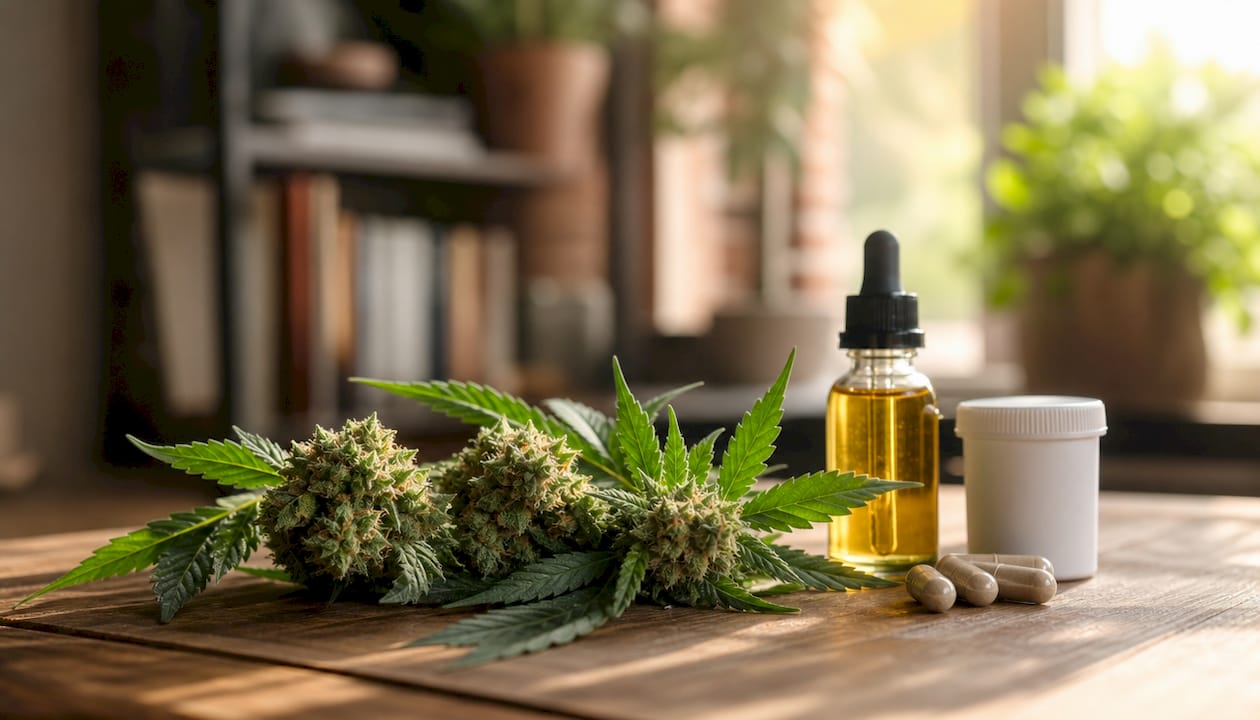
The two main active compounds are THC (tetrahydrocannabinol) and CBD (cannabidiol). THC activates CB1 receptors in the brain and body, producing the well-known “high” alongside pain relief and appetite stimulation. CBD does not produce a high. Instead, it may moderate THC’s psychoactive effects and reduce associated anxiety. Understanding the role of THC in medicine is central to understanding why different patients receive different product formulations.
Medical cannabis works through the body’s endocannabinoid system, a network of receptors that regulates pain, mood, appetite, and inflammation. When cannabinoids bind to these receptors, they can alter how the body processes pain signals and manages nausea. The therapeutic effect depends heavily on the ratio of THC to CBD, the delivery method, and the patient’s individual biology.
Pro Tip: If you are new to cannabinoid therapy, ask your healthcare provider specifically about the THC:CBD ratio in any product they recommend. A higher CBD ratio generally means fewer psychoactive effects, which suits patients who need to remain functional during the day.
Medical cannabis is commonly used to manage symptoms such as chronic non-cancer pain, nausea, vomiting, muscle spasticity, appetite loss, and end-of-life palliation. Clinical use focuses on symptom management, not disease modification. This is a critical distinction: medical cannabis does not cure conditions. It reduces the burden of symptoms when other treatments have not worked well enough.
The most frequently treated conditions include:
Medical cannabis is typically considered only after conventional medicines have failed to manage symptoms effectively. Clinicians expect patients to have a documented treatment history before recommending cannabis. This positions medical cannabis as a secondary option, not a first-line therapy. Patients should not view it as a cure-all but as a targeted tool for symptom relief. You can read more about CBD vs THC for pain to understand which cannabinoid profile may suit your specific condition.
The legal pathway to medical cannabis in Canada differs from a standard prescription. Clinicians recommend or certify medical cannabis use rather than prescribe it in the traditional sense. This distinction exists because of how cannabis is scheduled under federal drug law. A certification allows a licensed producer to dispense cannabis to a patient with a healthcare provider’s approval.
The access process in Canada generally follows these steps:
Recent regulatory developments have eased some scheduling restrictions, enabling more flexible dispensing with medical provider approval. Provincial rules vary, so patients should confirm local regulations. For a clear overview of how cannabis legality by region affects access, Greensociety has a dedicated resource covering the key differences across Canada.
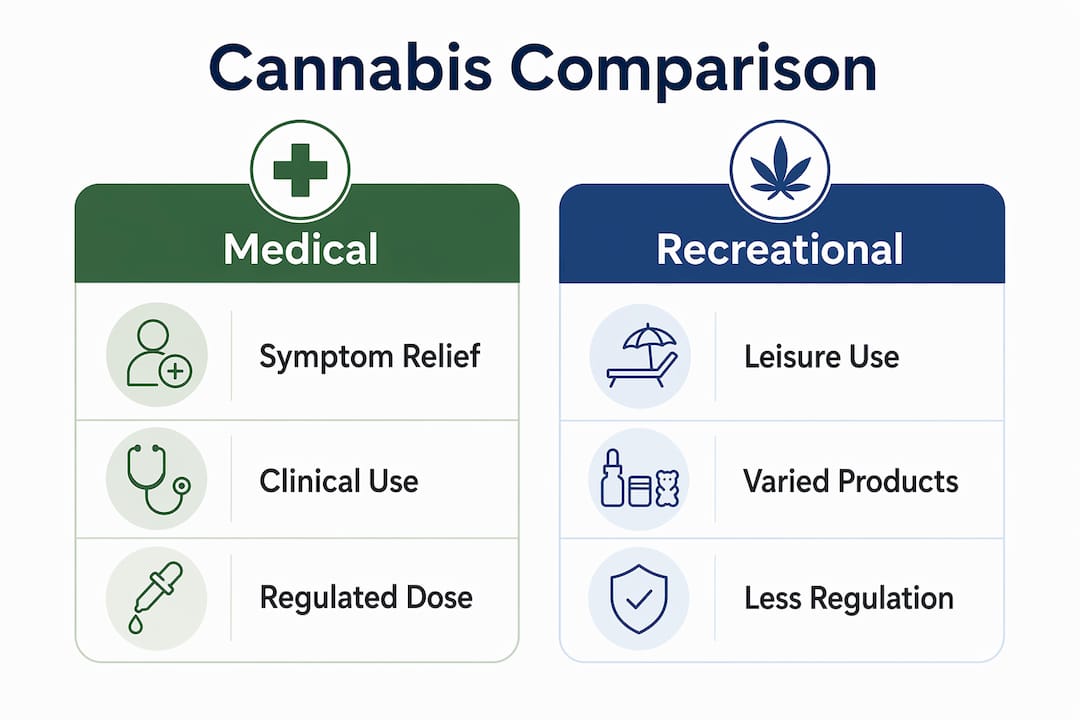
Medical cannabis and recreational cannabis come from the same plant, but they differ significantly in purpose, product quality, and regulatory oversight.
| Feature | Medical cannabis | Recreational cannabis |
|---|---|---|
| Purpose | Symptom management under clinical supervision | Personal use for psychoactive effects |
| THC concentration | Varies; often formulated for therapeutic ratios | Generally higher THC for stronger effects |
| Product consistency | Varies; pharmaceutical forms are standardised | Less consistent; depends on producer |
| Access pathway | Healthcare provider certification required | Legal retail purchase (age-restricted) |
| Regulatory oversight | Health Canada licensed producers; clinical monitoring | Provincial retail regulation |
| Pharmaceutical options | Nabiximols, nabilone, Epidiolex (CBD) | Not applicable |
Pharmaceutical cannabinoid drugs like dronabinol, nabilone, and Epidiolex have lot-to-lot consistency and regulatory approval for specific indications. Plant-based medical cannabis products vary widely in cannabinoid content and quality. This inconsistency is one of the biggest challenges in medical cannabis practice. A patient who switches producers or product batches may experience a different therapeutic effect, which complicates dosing. Product inconsistency and lack of standardisation remain major barriers to predictable outcomes with plant-based medical cannabis.
The therapeutic benefits of medical cannabis are real, but they come with trade-offs that every patient should understand before starting treatment.
Documented therapeutic benefits include:
Common side effects include dizziness, drowsiness, impaired memory, and difficulty concentrating. These effects overlap with other medications and require monitoring under healthcare supervision. Side effects are more pronounced with higher-THC products and in patients who are new to cannabinoids. Starting with a low dose and increasing gradually reduces the risk of adverse effects.
Pro Tip: Take your first dose in the evening at home. This way, any drowsiness or dizziness occurs when you are not driving or working, and you can gauge your personal response safely.
The clinical adoption of medical cannabis is limited by variable product compositions, a lack of high-quality randomised controlled trial data, and clinician knowledge gaps about cannabinoid pharmacology. This does not mean medical cannabis is ineffective. It means patients and providers need to approach it with realistic expectations and careful monitoring. Greensociety’s guide to common cannabis side effects offers practical context for adults managing these effects day to day.
Medical cannabis is a clinically supervised symptom management tool, not a cure, and its effectiveness depends on the right cannabinoid profile, legal access pathway, and ongoing provider monitoring.
| Point | Details |
|---|---|
| Medical cannabis definition | Cannabis preparations used under healthcare supervision to relieve specific medical symptoms. |
| Primary uses | Chronic pain, nausea, spasticity, appetite loss, and end-of-life care are the most common applications. |
| Legal access in Canada | Patients receive a medical document from a provider, then register with a licensed producer. |
| Medical vs recreational | Medical products are clinically monitored; pharmaceutical forms offer greater consistency than plant-based options. |
| Side effects require monitoring | Dizziness, drowsiness, and cognitive effects are common and need professional oversight to manage safely. |
Most patients arrive with two misconceptions. The first is that medical cannabis will eliminate their pain entirely. The second is that it is essentially the same as what they might buy recreationally. Both assumptions lead to disappointment or misuse.
What I have observed is that the patients who do best are the ones who treat medical cannabis the way they treat any other medication: with a clear therapeutic goal, a starting dose, and a follow-up plan. The certification process exists for a reason. A provider who knows your history can steer you toward the right THC:CBD ratio and delivery method, which makes an enormous difference in outcomes.
The legal framework is still catching up to clinical reality. Scheduling complexities mean that even well-informed providers sometimes lack confidence in recommending cannabis. That gap is closing, but slowly. In the meantime, patients who do their own research, ask specific questions, and keep records of their responses tend to get better results from the system.
Medical cannabis is not magic. It is a tool with a specific job. When used correctly, for the right conditions, with proper monitoring, it delivers genuine relief for people who have run out of other options. That is worth taking seriously.
— Juiced
Choosing the right cannabis product for medical use starts with understanding what you are buying. Greensociety brings together educational content and a curated product selection to help Canadian adults make confident, informed decisions.

Whether you are exploring flower for the first time or looking to refine your approach, Greensociety’s cannabis flower buying guide walks you through every step of the purchasing process, from reading product labels to selecting the right potency for your needs. For patients who want to understand product formats before committing, the guide on how to select cannabis flower online covers quality indicators, cannabinoid ratios, and what to look for from a licensed producer. Greensociety’s content is built for adults who want clear answers, not guesswork.
Medical cannabis is defined as plant-based or pharmaceutical cannabis preparations used under healthcare supervision to manage symptoms of specific medical conditions. It is distinct from recreational cannabis, which is used for psychoactive effects rather than therapeutic purposes.
Canadian physicians do not prescribe medical cannabis in the traditional sense. They issue a medical document or certification that allows patients to purchase from a federally licensed producer, reflecting the scheduling complexities of cannabis under Canadian law.
Chronic non-cancer pain, nausea, muscle spasticity, appetite loss, and end-of-life symptoms are the most commonly treated conditions. Medical cannabis is generally considered after conventional treatments have not provided adequate relief.
No. Medical cannabis is clinically supervised, often formulated for specific THC:CBD ratios, and accessed through a healthcare provider. Recreational cannabis is purchased through retail channels without clinical oversight or therapeutic intent.
Dizziness, drowsiness, impaired memory, and difficulty concentrating are the most frequently reported side effects. These are manageable with low starting doses and regular monitoring by a healthcare provider.