Free Shipping
on orders over $150.00
$0.00
$150.00
Add $150.00 more for free shipping!


Microdosing cannabis offers a pathway to enhanced wellness and creativity without the intense intoxication many associate with cannabis use. As research expands in 2026, adults in legal regions are discovering how strategic low-dose consumption can support mood regulation, sharpen focus, and provide gentle pain relief. This guide explores the science-backed benefits of cannabis microdosing, practical dosing strategies, consumption methods, and actionable tips to integrate this approach into your daily wellness routine safely and effectively.
| Point | Details |
|——-|———||
| Microdosing definition | Uses 1–5 mg THC or CBD to enhance mood, creativity, and pain relief without significant intoxication. |
| Mental health benefits | Low-dose THC supports focus and creative flow whilst CBD regulates stress without cognitive impairment. |
| Dosing principle | Start with ultra-low doses (≤2.5 mg) and increase gradually based on personal response and goals. |
| Consumption methods | Edibles offer stable, long-lasting effects whilst vaping may cause stronger cognitive impacts requiring caution. |
| Personalisation required | Experimentation is essential as individual responses vary; track effects to optimise your microdosing routine. |
Microdosing cannabis centres on consuming sub-intoxicating doses to influence mood and cognition positively whilst avoiding the cognitive fog associated with higher doses. Research demonstrates that low-dose THC enhances focus and creative thinking without impairing memory or task performance. This sweet spot allows you to maintain productivity whilst experiencing subtle mood elevation and reduced anxiety.
CBD operates differently, supporting emotional regulation and physical balance without any psychoactive effects. When combined with ultra-low THC, CBD can buffer potential anxiety whilst amplifying anti-inflammatory and pain-relieving properties. Studies show these effects occur through interactions with your endocannabinoid system, which regulates stress response, pain perception, and cognitive flexibility.
Physical benefits extend beyond mental clarity. Ultra-low doses provide meaningful pain relief that can last up to 150 minutes, making microdosing attractive for managing chronic discomfort without sedation. Many users report improved sleep quality, reduced muscle tension, and enhanced recovery from physical activity.

Pro Tip: Track your response in a journal noting dose, time, method, and effects for two weeks to identify your optimal microdosing range and timing.
Key mental and physical benefits include:
For comprehensive background on microdosing cannabis fundamentals, explore detailed protocols that align with your wellness goals.
Understanding proper dosing forms the foundation of successful microdosing. Anything under 5 mg qualifies as low-dose, with 2.5 mg and below considered ultra-low. Most newcomers find their ideal range between 1–3 mg THC, though individual sensitivity varies widely based on metabolism, body weight, and prior cannabis exposure.
Strain selection profoundly impacts your experience. Balanced THC:CBD strains reduce memory impairments associated with THC alone, making 1:1 or 2:1 CBD:THC ratios ideal for daytime microdosing. CBD acts as a safety net, modulating THC’s psychoactive effects whilst contributing its own anti-anxiety and anti-inflammatory benefits.
Consumption method affects onset, duration, and intensity. Edibles metabolise through your liver, converting THC into a more potent form that produces longer-lasting effects. Inhalation delivers faster onset but shorter duration. Vaping concentrates may produce more pronounced cognitive effects even at low doses, requiring extra caution.
Pro Tip: Begin your microdosing journey on a free day when you can observe effects without performance pressure, then gradually integrate into your regular routine.
Safety considerations for responsible microdosing:
Legal status varies by region, so confirm your local regulations before purchasing or consuming cannabis products. Even in legal markets, workplace policies may restrict use. For personalised cannabis dosing strategies, comprehensive guides help you navigate these nuances safely.
Consumption route dramatically alters how cannabis affects your body and mind. Research reveals marked differences in blood THC levels between oral and inhaled routes, influencing both therapeutic effects and cognitive impact. Understanding these distinctions helps you select methods aligned with your functional goals.
Vaping and dabbing concentrates produce rapid THC absorption but may result in more cognitive deficits compared to other methods, even at equivalent doses. The intense delivery overwhelms cannabinoid receptors, potentially compromising working memory and reaction time. For microdosing focused on maintaining clarity, gentler methods prove more suitable.
Edibles offer the most stable microdosing platform despite slower onset. Effects emerge 45–90 minutes after consumption and persist 4–8 hours, providing sustained benefits for workplace productivity or creative projects. Precise dosing becomes easier with commercially produced edibles labelled with exact cannabinoid content.
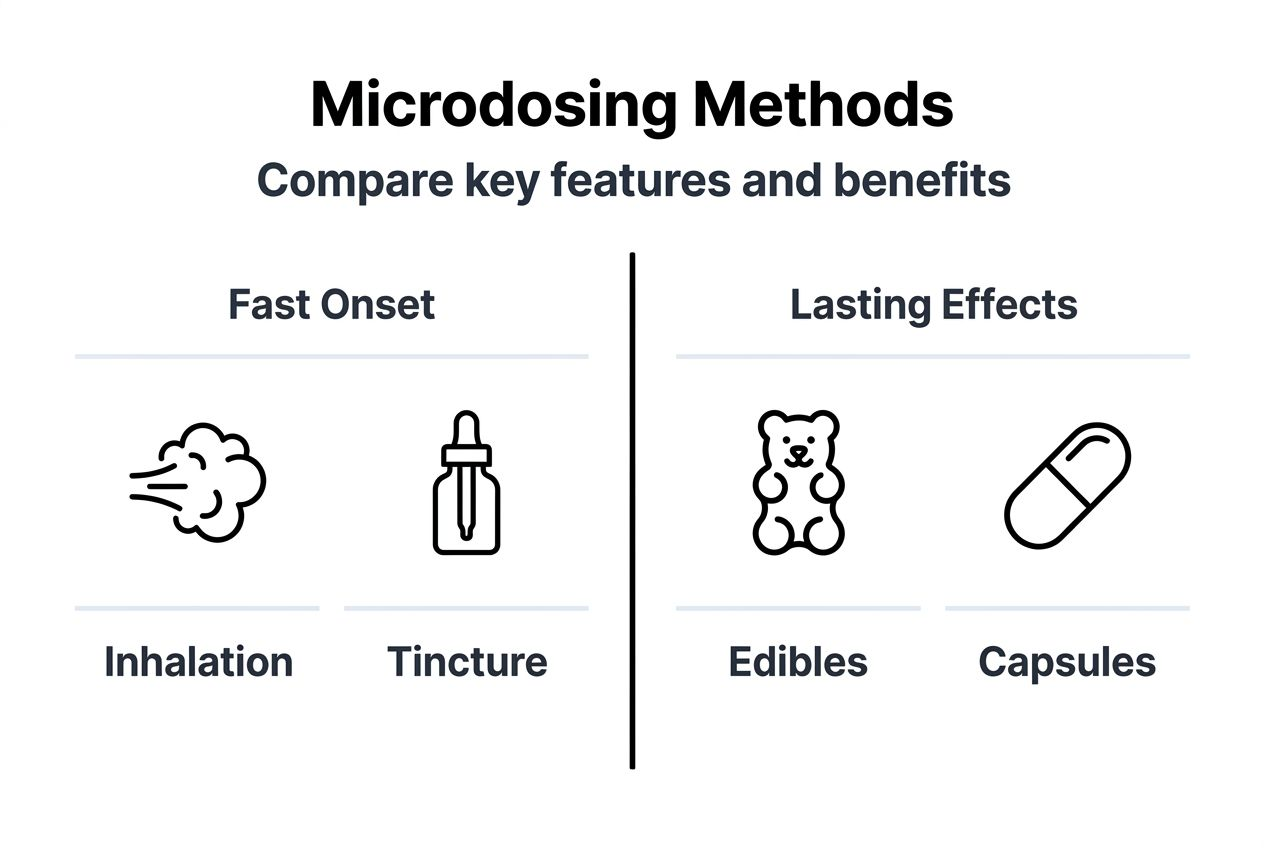
Inhalation through smoking or dry herb vaping provides middle-ground onset (5–15 minutes) and duration (2–4 hours). This method suits situational use when you need quick relief but face challenges with dose consistency. Each inhalation delivers variable amounts depending on depth and duration.
| Method | Onset Time | Duration | Cognitive Impact | Best For |
|---|---|---|---|---|
| Edibles | 45–90 min | 4–8 hours | Moderate, sustained | Daily wellness routines |
| Smoking/Vaping Flower | 5–15 min | 2–4 hours | Lower than concentrates | Flexible, as-needed use |
| Vaping Concentrates | 2–5 min | 1–3 hours | Higher risk of impairment | Experienced users only |
| Tinctures (Sublingual) | 15–30 min | 3–6 hours | Moderate, controllable | Precise dose titration |
Tinctures placed under your tongue combine moderate onset with good dose control. Starting with a single drop allows precise titration upwards. This method bypasses first-pass liver metabolism, producing effects closer to inhalation than traditional edibles.
Pro Tip: For workplace microdosing, use precisely dosed edibles or tinctures consumed 60–90 minutes before arriving to achieve steady effects throughout your shift.
Explore safe cannabis dosing methods for step-by-step guidance on implementing each consumption route effectively.
Successful microdosing requires systematic experimentation within a framework of safety. Start low and go slow remains the foundational principle, protecting you from overconsumption whilst identifying your therapeutic threshold. Begin with 1–2 mg THC and maintain that dose for three days before considering adjustments.
Consistency amplifies benefits and reveals patterns. Consume your microdose at the same time daily, whether morning for focus or evening for relaxation. This regularity helps your endocannabinoid system adapt, potentially enhancing effects whilst minimising tolerance development. Many users rotate between CBD-dominant and balanced THC:CBD products to maintain sensitivity.
Tracking transforms guesswork into data-driven optimisation. Record dose, product, time, and subjective effects including mood, energy, creativity, pain levels, and any unwanted symptoms. After two weeks, patterns emerge showing which doses and products deliver your desired outcomes. Microdosing is personal, and systematic tracking accelerates your learning curve.
“The goal isn’t intoxication but subtle enhancement. When done correctly, others shouldn’t notice you’ve consumed cannabis, only that you seem more focused and engaged.”
Pro Tip: Schedule a monthly review of your tracking notes to identify tolerance patterns and adjust your protocol before benefits diminish.
Implementation checklist for daily integration:
Avoid combining microdosing with activities requiring peak cognitive performance until you understand your personal response. Driving, operating machinery, or high-stakes decision-making deserve full mental clarity. For comprehensive frameworks, review the microdosing cannabis canada guide tailored to 2026 regulations and best practices.
Your microdosing journey benefits from reliable resources and precisely formulated products. Green Society offers comprehensive guides covering everything from strain selection to advanced protocols, helping you navigate the learning curve with confidence. The microdosing cannabis complete guide provides detailed frameworks for different wellness goals.
Creating your own edibles enables ultimate dose control. The cannabis in the kitchen guide shares recipes for precisely dosed treats matching your preferred consumption routine. From infused honey to savoury snacks, homemade edibles ensure consistency.
For those seeking systematic dosing strategies, the cannabis dosing guide explores advanced techniques including cycling protocols and cannabinoid ratios. These resources help you refine your approach as you gain experience and confidence in your microdosing practice.
The ideal microdose typically ranges between 1–5 mg THC, with most people finding their sweet spot at 2–3 mg. Start with an ultra-low dose of 2.5 mg or less and adjust slowly based on your personal response. Individual factors like metabolism and sensitivity mean your ideal dose may differ from others, so systematic experimentation remains essential. For detailed ideal cannabis microdose guidelines, explore personalised protocols.
Yes, CBD can significantly mitigate cognitive impairments linked to THC, particularly memory issues. Research shows participants using 1:1 THC:CBD strains had no significant recognition memory impairment compared to THC-only consumption. Balanced THC:CBD ratios between 1:1 and 2:1 are recommended for safer microdosing experiences that maintain mental clarity whilst delivering therapeutic benefits.
Edibles offer the most consistent microdosing platform with long-lasting effects and stable dosing, though onset takes 45–90 minutes. Inhalation provides quicker effects within 5–15 minutes but may vary in consistency between sessions. Vaping concentrates delivers rapid onset but may cause more pronounced cognitive effects even at low doses, making it less suitable for functional microdosing. Choose based on your schedule and tolerance for onset variability.
Start low and go slow by beginning with 1–2 mg THC and maintaining that dose for several days before adjusting. Establish consistent dosing times and track your effects systematically to identify patterns. Avoid mixing cannabis with alcohol or medications without professional guidance, and schedule regular tolerance breaks to preserve sensitivity. Planning and patience ensure you optimise benefits whilst minimising unwanted effects.