Free Shipping
on orders over $150.00
$0.00
$150.00
Add $150.00 more for free shipping!


As 92% of consumers prioritise sustainability when choosing brands today, cannabis packaging has become a critical decision point for eco-conscious shoppers. Yet confusion persists about what truly qualifies as sustainable packaging versus greenwashing claims. This guide clarifies your options, from post-consumer recycled materials to compostable solutions, helping you support responsible cannabis industry practices while maintaining product quality and legal compliance.
| Point | Details |
|---|---|
| Environmental impact reduction | Sustainable packaging minimises waste and supports responsible cannabis industry practices through lifecycle thinking. |
| Hybrid packaging solutions | High post-consumer recycled content with clear recycling labels offers the most pragmatic 2026 approach. |
| Reusable systems | Refillable packaging eliminates single-use waste but faces logistical and regulatory hurdles. |
| Compostable considerations | Benefits depend entirely on access to proper industrial composting facilities. |
| Lifecycle assessments | True environmental impact requires evaluating emissions from sourcing through disposal, not just materials. |
Sustainable cannabis packaging balances environmental responsibility with product protection and regulatory compliance. It means choosing materials that minimise harm throughout their entire lifecycle, from raw material extraction through manufacturing, use, and disposal. The goal extends beyond simply selecting recyclable materials to reducing overall resource consumption and environmental footprint.
Using recycled materials reduces landfill waste, conserves natural resources, saves energy, and lowers greenhouse gas emissions. Post-consumer recycled (PCR) content diverts plastic from landfills whilst reducing demand for virgin petroleum-based materials. Plant-based alternatives like hemp fibres or cornstarch polymers offer renewable sourcing but require careful evaluation of agricultural impacts and end-of-life disposal options.
The distinction between compostable and biodegradable matters significantly. Compostable packaging breaks down completely into organic matter, water, and CO₂ in controlled industrial facilities within specific timeframes. Biodegradable simply means eventual breakdown without guaranteeing safe decomposition or preventing microplastic pollution. Many biodegradable claims lack certification standards, making them unreliable indicators of sustainability.
“Full lifecycle thinking evaluates every stage from material sourcing through disposal, revealing hidden environmental costs like transportation emissions or energy-intensive recycling processes.”
You face practical challenges with cannabis packaging recycling due to contamination concerns and limited local infrastructure. Many facilities refuse cannabis-related materials despite technical recyclability. Check your municipality’s specific guidelines and consider participating in specialised recycling programmes designed for cannabis packaging materials.
Key sustainability principles include:
The hybrid approach offers pragmatic solutions by combining high percentages of post-consumer recycled content with standardised recycling labels. These pouches reduce virgin plastic consumption whilst maintaining child-resistant compliance and product freshness. Clear labelling helps you participate effectively in recycling programmes, addressing the critical challenge of consumer confusion about disposal.
This table compares primary sustainable packaging approaches available today:
| Packaging type | Materials | Recyclability | Key benefits | Main challenges |
|---|---|---|---|---|
| Hybrid PCR pouches | 50-80% post-consumer recycled plastics | High with proper labelling | Reduces virgin material use, proven infrastructure | Still contains some virgin plastic |
| Mono-material designs | Single polymer types | Theoretically high | Simplifies recycling sorting | Limited facility acceptance for cannabis materials |
| Reusable containers | Durable glass or metal | N/A (reused) | Eliminates single-use waste | Logistics, sanitation, regulatory barriers |
| Ocean-bound plastics | Reclaimed coastal waste | Varies | Prevents water pollution | Limited supply, verification challenges |
| Compostable bioplastics | Plant-based polymers | Not recyclable | Renewable sourcing | Requires industrial composting access |
Mono-material pouches designed for recyclability use single polymer types like polyethylene or polypropylene instead of multi-layer laminates. This simplification theoretically improves sorting and processing efficiency. However, contamination concerns and limited infrastructure still restrict practical recyclability for cannabis packaging in many regions.
Reusable and refillable systems represent the ultimate waste reduction strategy by eliminating single-use packaging entirely. You return empty containers to dispensaries for cleaning, sterilisation, and refilling. Whilst this circular model shows promise, logistical complexities around collection, sanitation standards, and regulatory approval slow widespread adoption. Some premium brands pilot these programmes with deposit incentives.

Ocean-bound plastic reclaims waste collected within 50 kilometres of coastlines before it reaches waterways. This material prevents marine pollution whilst providing recycled content for new packaging. Certification programmes verify proper sourcing, though supply limitations restrict scalability. Supporting brands using ocean-bound plastics directly funds coastal waste recovery efforts.
Reducing overall material use delivers immediate sustainability gains regardless of material type. Lightweighting containers, eliminating unnecessary secondary packaging, and rightsizing pouches to product volumes all decrease resource consumption and transportation emissions.
Pro Tip: Look for packaging marked with specific PCR percentages rather than vague “eco-friendly” claims, and verify recyclability through your local facility’s acceptance list before assuming curbside disposal works.
Explore optimal storage solutions that balance sustainability with product preservation requirements.
Lifecycle assessments (LCAs) measure total environmental impact by quantifying carbon dioxide equivalent emissions (CO₂eq) and global warming potential (GWP) across every stage. These comprehensive evaluations reveal hidden costs like energy-intensive recycling processes or transportation emissions that simple material comparisons miss. You should prioritise products with published LCA data demonstrating reduced overall footprint rather than focusing solely on recyclability claims.
Calyx 7mL concentrate packaging reduces emissions by up to 46% compared to competitors through optimised design and material selection. This example demonstrates how innovation in packaging engineering delivers measurable environmental improvements. The assessment accounts for manufacturing energy, transportation distances, and end-of-life processing to calculate true impact reduction.
This data illustrates emission comparisons for common packaging types:
| Packaging solution | CO₂eq per unit | GWP reduction vs standard | Key factors |
|---|---|---|---|
| Standard rigid plastic | 85g | Baseline | Virgin petroleum materials |
| 50% PCR hybrid pouch | 55g | 35% | Reduced virgin material demand |
| Optimised concentrate container | 46g | 46% | Lightweighting plus material efficiency |
| Glass jar (single-use) | 120g | -41% worse | Energy-intensive production |
Proposed regulations include sustainability programmes mandating minimum post-consumer recycled content in plastic packaging. New York’s Cannabis Control Board leads with requirements that set precedents for other jurisdictions. These rules create market demand for recycled materials whilst establishing accountability for packaging waste.
Child-resistant and tamper-evident requirements significantly influence material choices and design complexity. You need packaging that meets safety standards whilst remaining recyclable or compostable. This constraint often necessitates multi-material constructions that complicate end-of-life processing. Innovative solutions balance these competing demands through clever mechanical designs using mono-materials.
Clear labelling empowers your participation in sustainability efforts. Standardised symbols indicating recycling instructions, compostability certifications, and PCR content percentages help you make informed disposal decisions. Without this transparency, even technically recyclable packaging ends up in landfills due to consumer uncertainty.
Key regulatory trends shaping 2026 packaging:
Understanding these frameworks helps you evaluate brand commitments and advocate for stronger policies. Review detailed recycling steps specific to cannabis packaging materials in your area.
Examine comprehensive LCA methodology examples to understand how rigorous environmental assessments work in practice.
Evaluate sustainability claims by checking for specific certifications rather than marketing language. Look for third-party verified labels like How2Recycle, BPI compostability certification, or specific PCR content percentages. Vague terms like “eco-friendly” or “green” without supporting documentation often indicate greenwashing rather than genuine environmental commitment.
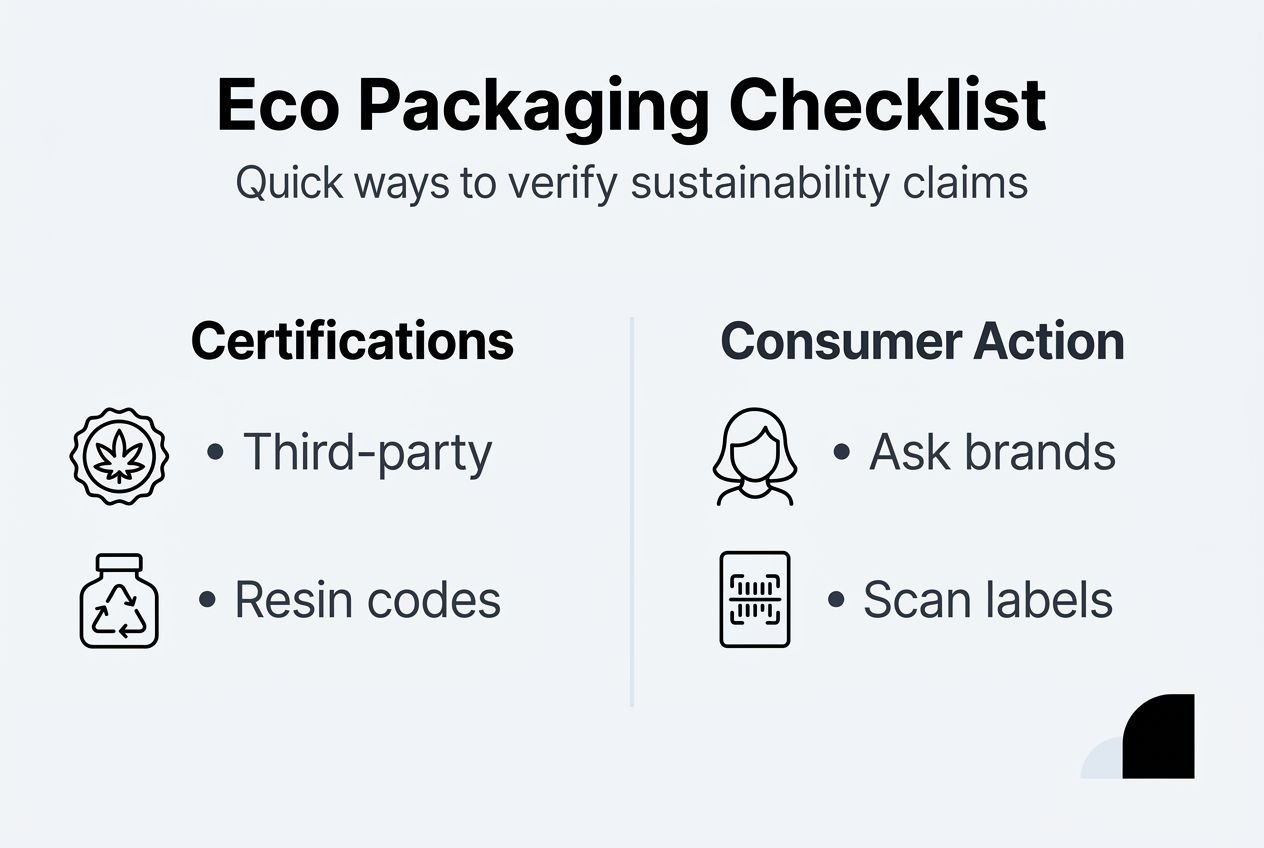
Recyclable symbols vary by region and material type. The chasing arrows triangle with a number indicates resin type, not automatic recyclability. Check your municipal recycling programme’s accepted materials list specifically. Compostable certifications from organisations like BPI (Biodegradable Products Institute) verify industrial composting compatibility, whilst “home compostable” claims require separate validation.
Consumer demand drives sourcing decisions as cannabis brands respond to market pressure for plant-based and recycled materials. Your purchasing choices directly influence industry practices. Supporting brands using ocean-bound plastics or high PCR content creates market incentives for sustainable innovation whilst funding waste recovery infrastructure.
Advocate for extended producer responsibility (EPR) policies requiring brands to fund recycling programmes and take-back systems. Contact local representatives supporting legislation that mandates packaging sustainability standards. Participate in public comment periods for proposed cannabis regulations addressing environmental impacts.
Balance sustainability with product protection requirements. Cannabis degrades rapidly when exposed to light, air, and moisture. Choose packaging that maintains freshness through proper sealing and light-blocking properties whilst using sustainable materials. This ensures you don’t waste the product itself through premature degradation, which negates packaging sustainability gains.
Follow these steps to maximise your sustainable packaging impact:
Pro Tip: Photograph packaging with unclear recycling symbols and contact the brand directly for disposal guidance, creating accountability whilst obtaining accurate information for proper handling.
Discover comprehensive storage guidance maintaining product quality whilst supporting sustainability goals.
Green Society offers practical resources supporting your sustainable cannabis lifestyle beyond just packaging considerations. Our kitchen-tested recipes help you maximise product value whilst minimising waste through efficient consumption methods.
Find essential guidance through our comprehensive flower selection checklist ensuring you choose quality products worth protecting with sustainable packaging. We curate educational resources specifically for Canadian consumers prioritising environmental responsibility alongside cannabis enjoyment. Explore our storage container recommendations combining preservation effectiveness with eco-conscious material choices for long-term use beyond initial packaging.
Sustainability requires evaluating the complete lifecycle from raw material sourcing through manufacturing, transportation, use, and disposal. Materials alone don’t determine environmental impact without considering energy consumption, emissions, and end-of-life processing. True sustainability balances minimising environmental harm with maintaining product safety, freshness, and regulatory compliance throughout the entire system.
Compostable packaging decomposes into organic matter, CO₂, and water in controlled industrial facilities meeting specific timeframes and standards. Biodegradable lacks standardised definitions and can contribute to greenwashing whilst potentially creating microplastic pollution. You should seek BPI or similar certification labels indicating verified compostability rather than vague biodegradable claims. Industrial composting access determines whether compostable packaging delivers actual environmental benefits.
Consumer demand influences brand sourcing towards sustainable materials and design innovations. Look for verified recycled content percentages, clear recyclability labels, and compostability certifications when purchasing. Support brands transparently using ocean-bound plastics or piloting reusable packaging systems. Advocate for extended producer responsibility legislation and improved municipal recycling infrastructure accepting cannabis packaging materials.
New York mandates minimum 25% post-consumer recycled content in plastic cannabis packaging, setting precedents other jurisdictions follow. Proposed rules restrict packaging elements appealing to individuals under 21 and establish size limitations on product signage. All packaging must maintain child-resistant and tamper-evident features whilst meeting sustainability standards. Extended producer responsibility programmes increasingly require brands funding recycling infrastructure and take-back systems.