Free Shipping
on orders over $150.00
$0.00
$150.00
Add $150.00 more for free shipping!


Used well, cannabis can genuinely improve a social gathering. It can lower inhibitions, spark conversation, and create the kind of easy group warmth that takes a party from polite to memorable. The catch is that the same substance, at a higher dose or in the wrong setting, can just as easily send someone spiralling into quiet anxiety while everyone else laughs around them. Cannabis and social gatherings work best when the people involved understand the basics: what they are consuming, how much, and what to expect.
A few things shape the experience more than anything else:
Health Canada permits adult cannabis use in Canada with clear restrictions, including a firm prohibition on impaired driving. The legal framework supports responsible use; it does not guarantee a good time. That part is on the host and the guests.
Pro Tip: Set the tone before anyone arrives. A quick message to guests explaining what products will be available, approximate THC levels, and that non-infused options will be on hand removes awkwardness and lets people make informed choices before they walk through the door.
Cannabis does not affect everyone the same way in a group, and the science behind that variability is worth understanding before you plan any smoke-friendly gathering.
THC, the primary psychoactive compound, modulates dopamine and serotonin pathways. At low doses, this can produce genuine social rewards: heightened appreciation for humour, reduced self-consciousness, and a sense of group warmth. At higher doses, the same pathways can tip into overstimulation, producing anxiety and social withdrawal rather than connection.
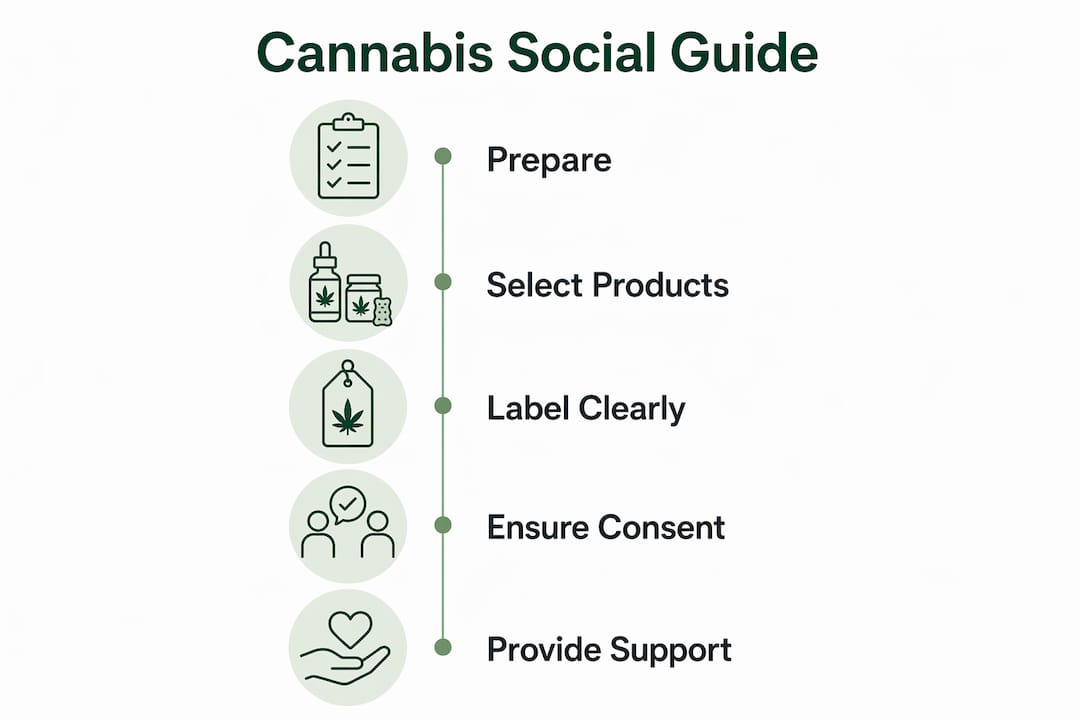
This is the biphasic dose-response curve in action. A 2017 double-blind trial at the University of Chicago found that 7.5mg THC reduced social stress in participants, while 12.5mg increased negative mood. The gap between those two doses is smaller than most people assume.
Setting matters just as much as dose. The amygdala, which processes social threat, responds differently depending on context. In a familiar, comfortable environment, THC tends to reduce amygdala activation, making conversation feel easier. In an unfamiliar or stressful environment, the same dose can flip to social hypervigilance, making the person feel watched or judged. This is why the same person can feel gregarious at a close friend’s dinner and deeply uncomfortable at a crowded party, even with identical consumption.
There is also a longer-term consideration. Cannabis social dependency can develop when someone consistently uses cannabis as a crutch for social anxiety. Over time, sober social skills erode and the person becomes reliant on cannabis to feel comfortable in groups at all. Social-only use, where cannabis is a complement to socialising rather than a prerequisite, tends to carry far less risk of this pattern developing.
| Dose (THC) | Likely social effect | Risk level |
|---|---|---|
| 2.5–5mg | Mild relaxation, reduced inhibition | Low |
| 7.5mg | Reduced social stress, increased warmth | Low–moderate |
| 12.5mg+ | Elevated negative mood, possible anxiety | Moderate–high |
| Very high doses | Social withdrawal, paranoia | High |
Product selection is where most hosts make their biggest mistakes. Choosing something purely by potency or personal preference, without thinking about how it will behave in a group context, is how you end up with guests who are either underwhelmed or far more intoxicated than they planned to be.
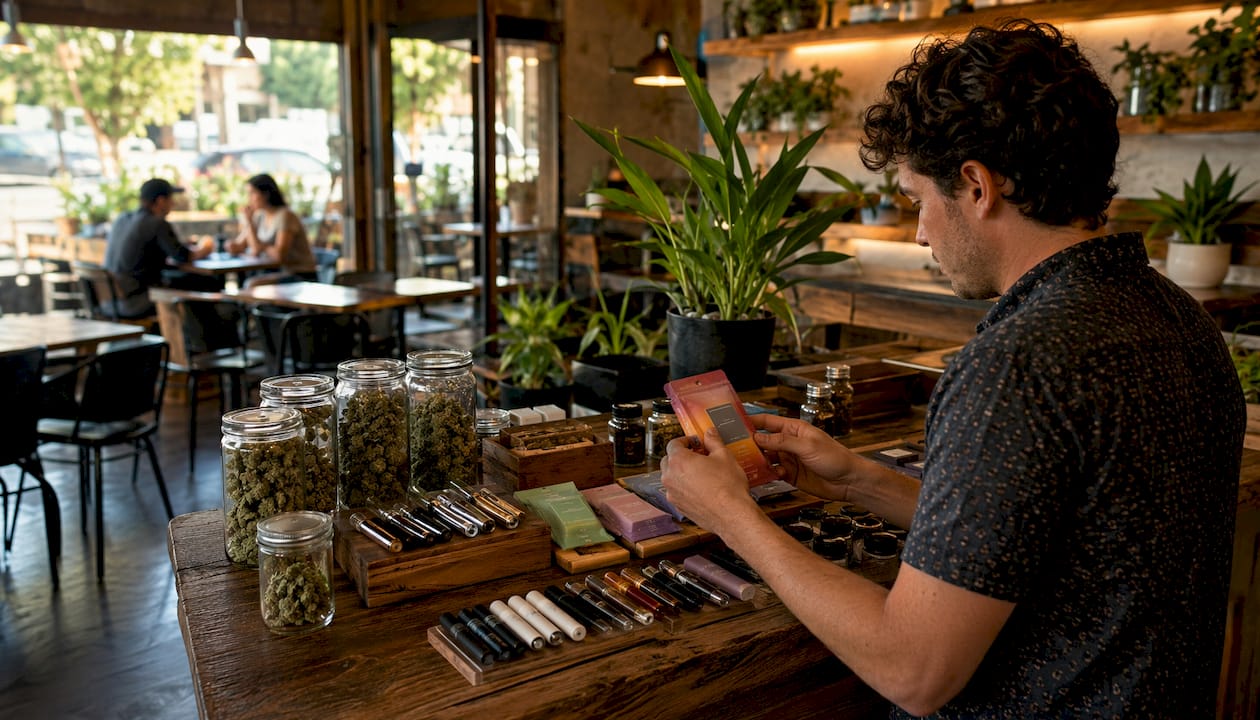
For social settings, moderate THC levels in the 5–15% range with a balanced THC:CBD ratio tend to work best. CBD does not cancel out THC, but it does take the edge off the anxiety that higher-THC products can produce. If you are sourcing flower, Stok’d and Greensociety both carry labelled products with clear cannabinoid breakdowns, which makes informed selection much easier than guessing at a dispensary counter.
Terpenes deserve more attention than they usually get. Limonene, found in citrus-forward strains, has documented mood-lifting and anxiolytic properties. Pinene, common in piney or herbal strains, tends to support alertness and clear-headedness. For a social setting where you want people talking and laughing rather than sinking into the couch, these terpenes are worth seeking out specifically.
The format question is equally important, and it comes down to onset time and dosing control:
For a deeper look at how different CBD product formats compare for social use, Greensociety’s guide covers the practical differences clearly.
| Format | Onset time | Dosing control | Social suitability |
|---|---|---|---|
| Flower | 2–10 min | High | High — easy to pace |
| Vape | 2–5 min | High | High — discreet, consistent |
| Edibles | 30–90 min | Low–moderate | Moderate — requires clear labelling |
| Cannabis beverages (nano) | 10–15 min | Moderate–high | High — predictable onset |
| Concentrates | 2–5 min | Low for novices | Low — potency too variable for mixed groups |
Pro Tip: Label every product at your gathering with its format, THC content per serving, and CBD content if applicable. A small card next to each item takes two minutes to prepare and prevents a lot of uncomfortable surprises.
First-timers at cannabis-friendly gatherings face a specific challenge: they have no personal reference point for how cannabis affects them, and they are in a social environment where they may feel pressure to keep up with more experienced users. That combination is exactly how a fun evening becomes an anxious one.
The single most important rule is to start with 2.5–5mg THC and wait. For flower or vapes, that means one or two small puffs, then a genuine pause of at least 15–20 minutes before considering more. For edibles, the wait needs to be at least 90 minutes. The low and slow principle is not overcautious; it reflects the reality that THC’s effects build gradually and are much easier to add to than to subtract from.
Format matters for first-timers specifically. Vapes and nano-emulsified beverages offer faster, more predictable onset than traditional edibles, which makes it easier to find a comfortable level without accidentally overshooting it. Concentrates and high-potency edibles are genuinely not appropriate for someone’s first experience in a social setting.
If a first-timer does feel uncomfortable, a few practical options can help:
Hosts carry real responsibility here. Labelling products clearly, mentioning doses when offering anything, and having a designated quiet room available are not optional extras for a cannabis-friendly event. They are the baseline.
Pro Tip: Tell first-time guests privately before the event that it is completely fine to consume nothing, try a very small amount, or stop at any point. Saying it out loud removes the social pressure that makes people push past their comfort zone.
Good cannabis etiquette is mostly just good hosting applied to a specific context. The principles are not complicated, but they do require some deliberate thought before the event.
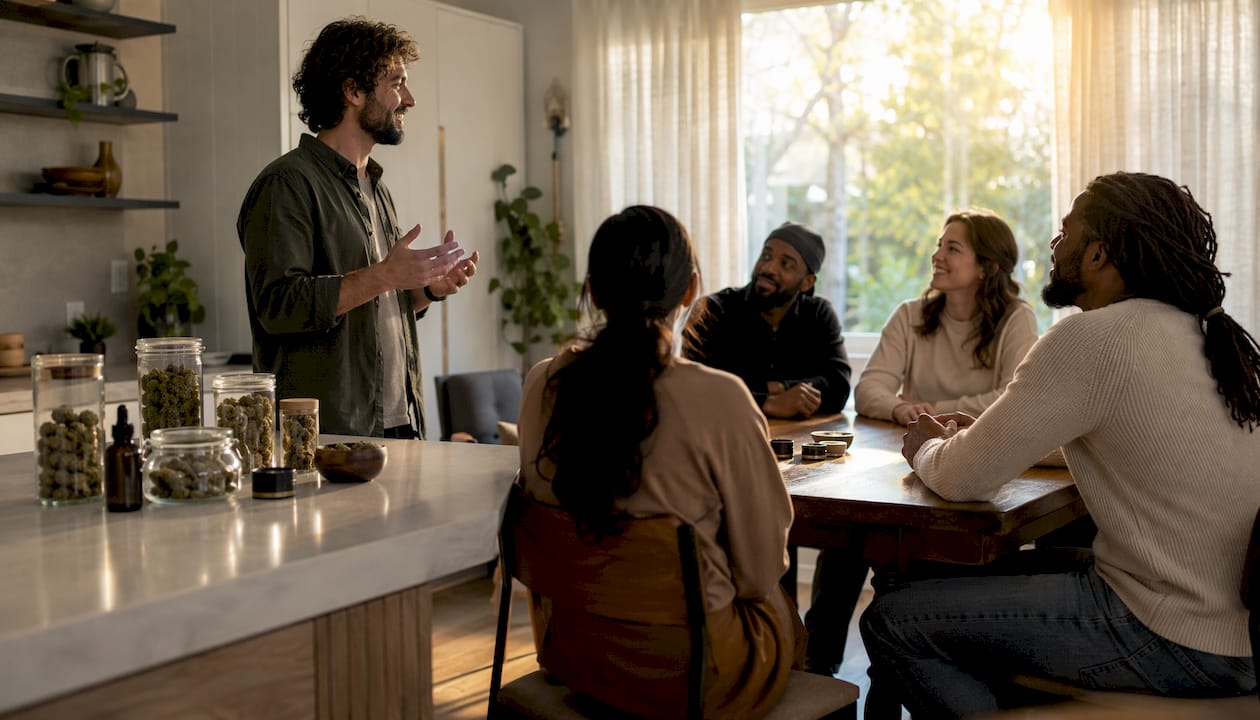
Consent comes first. No guest should feel that consuming cannabis is the price of admission to a social event. This means communicating clearly in advance that the gathering will involve cannabis, that non-infused food and drinks will be available throughout, and that opting out carries no social cost. Guests who do not consume cannabis should feel as included as those who do.
Transparency about products is non-negotiable. If you are serving cannabis-infused food or drinks, every item needs a label with its THC content per serving. Guests cannot make informed decisions without that information, and serving unlabelled infused products to people who may not realise what they are consuming is both unsafe and, in many contexts, legally problematic.
Transportation planning belongs in the pre-event conversation. Impaired driving is illegal under Canadian law and genuinely dangerous. Hosts should actively encourage guests to arrange rides in advance, offer a space to stay if needed, or at minimum make it easy to call a ride-share without embarrassment.
Managing a mixed group, where some guests consume and others do not, requires a bit of spatial thinking. Designated consumption areas keep smoke and vapour away from non-consumers and give everyone a clear choice about their proximity to cannabis use. This is not just courtesy; in many Canadian municipalities, smoking and vaping restrictions apply even on private property in certain configurations.
When someone has an uncomfortable experience, the response should be calm and private. Move them to a quieter space, offer water and something to eat, and stay with them. Most cannabis anxiety resolves within 30–60 minutes with grounding and reassurance. Avoid making it a group event; the attention tends to amplify the anxiety rather than reduce it.
The difference between a cannabis gathering that people remember fondly and one that ends awkwardly usually comes down to how much thought the host put in before anyone arrived.
Set expectations in advance. A message before the event covering what products will be available, approximate THC levels, and the fact that non-infused options will be present lets guests make decisions before they are in the social moment. People are much better at setting their own limits when they are not already in a room full of people.
The physical environment shapes the experience more than most hosts realise. Comfortable seating, warm lighting, and at least one quieter space away from the main gathering actively reduce social threat perception and support relaxation. Cannabis amplifies the environment it is consumed in; a well-designed space produces better outcomes than the same products in a chaotic one.
Labelling and variety are the two most practical hosting tools. Offering a range from low-THC flower to CBD-dominant options to non-infused snacks and drinks means every guest can find something that works for them. Greensociety carries a wide selection of clearly labelled products across formats, which makes building a varied hosting spread straightforward. Their cannabis etiquette guide is also worth reading before you plan your first cannabis-friendly event.
Plan activities that complement cannabis use without depending on it. Collaborative games, music, cooking together, or creative activities give people something to engage with that does not require being high to enjoy. This also makes non-consumers feel genuinely included rather than just tolerated.
Pro Tip: Keep a small “comfort kit” somewhere accessible: citrus fruit, pine nuts, water, a light snack, and a note with the THC content of everything being served. It takes five minutes to assemble and covers most situations where a guest needs to recalibrate.
Traditional remedies like citrus and pine nuts are worth keeping on hand specifically because they address the most common negative outcome at cannabis gatherings: someone consuming more than they intended and feeling anxious. The terpene-based mechanisms behind these remedies align with modern research on limonene and pinene, even if the science is still developing.
Finally, normalise opting out at every stage of the event, not just in the pre-event message. Offering non-infused options alongside infused ones without comment, not tracking who consumes what, and treating cannabis as one element of the gathering rather than its entire purpose all contribute to an environment where people feel genuinely comfortable making their own choices.
Hosting a cannabis-friendly event well requires having the right products on hand, and that means knowing what you are buying before it arrives. Greensociety is an online cannabis dispensary built for exactly this kind of considered purchasing: clear product labelling, a broad selection across formats (flower, edibles, vapes, concentrates, CBD options), and delivery that gets to you before your guests do.
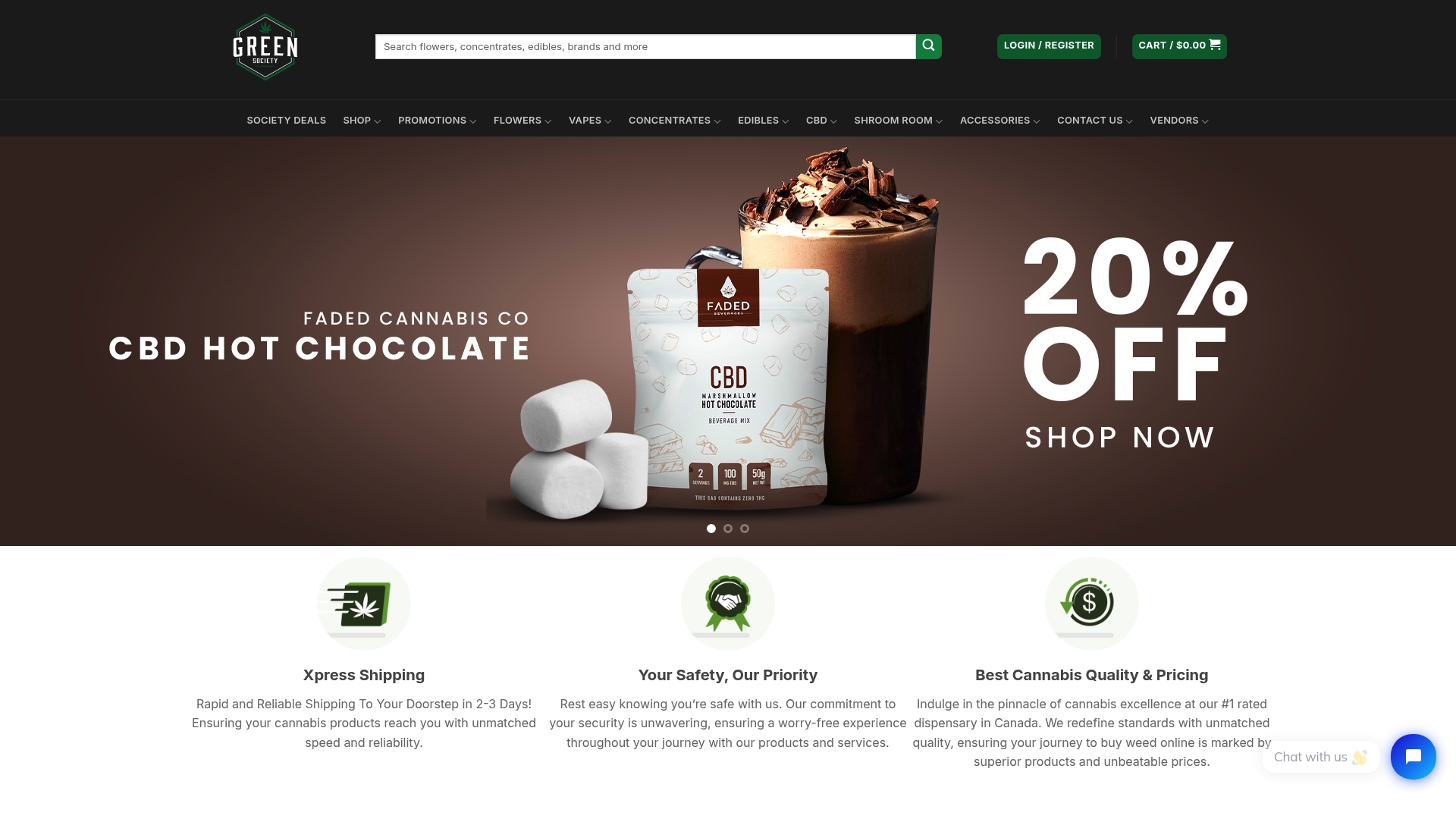
Where Greensociety stands out for social hosting is the combination of product variety and accessible information. You can browse cannabis flower options by THC percentage and terpene profile, which makes it practical to build a hosting spread that covers different tolerance levels. If edibles are part of your plan, their edibles guide covers dosing and format differences in plain language. Everything ships discreetly across Canada. Head to Greensociety.cc to browse the full selection and put together a gathering your guests will actually want to come back for.
Cannabis enhances social gatherings when hosts prioritise low doses, clear product labelling, and voluntary consumption, with setting and individual tolerance shaping outcomes as much as the product itself.
| Point | Details |
|---|---|
| Dose determines outcome | A 2017 University of Chicago trial found 7.5mg THC reduced social stress; 12.5mg increased negative mood. |
| Format affects control | Vapes and nano-beverages offer faster, more predictable onset than edibles, making them better suited to mixed-experience groups. |
| Setting shapes the experience | Familiar, comfortable environments reduce social threat perception and consistently produce better cannabis social outcomes. |
| First-timers need specific support | Starting at 2.5–5mg THC, choosing fast-onset formats, and having a quiet space available prevents most negative first experiences. |
| Greensociety for hosting | Greensociety offers clearly labelled flower, edibles, and vapes across THC levels, making it practical to build a varied, well-informed hosting spread. |