Free Shipping
on orders over $150.00
$0.00
$150.00
Add $150.00 more for free shipping!


TL;DR:
- Cannabis offers a promising, biologically reasoned option for managing fibromyalgia symptoms by addressing endocannabinoid deficiencies.
- Research indicates that balanced THC and CBD products improve pain, sleep, and mood, with personalized dosing and delivery methods enhancing outcomes.
If you have fibromyalgia, you already know that standard treatments often fall painfully short. Prescription medications help some people but leave many others cycling through side effects with limited relief. Cannabis for fibromyalgia is gaining serious attention not as a fringe remedy but as a biologically logical option: fibromyalgia may involve a dysfunction in the body’s own pain-regulation chemistry, and cannabinoids from cannabis plants can directly address that gap. This guide covers how it works, what the research actually shows, which products perform best, and how to dose safely.
To understand why cannabis holds such promise, you need to know about the endocannabinoid system (ECS). The ECS is a network of receptors, signalling molecules, and enzymes that regulates pain, mood, sleep, and immune response throughout your body. Think of it as a volume knob for how loudly your nervous system broadcasts pain signals.
Fibromyalgia may involve clinical endocannabinoid deficiency, a state where your body does not produce enough of its own cannabinoids to keep pain signals properly modulated. This explains why fibromyalgia pain feels amplified and why standard painkillers, which target different pathways, often fail to provide lasting relief.
Plant-derived cannabinoids, called phytocannabinoids, can step in where your body’s own supply falls short. Here is how the two primary ones work:
The fibromyalgia brain is already hypersensitive. Introducing cannabinoids that directly engage the ECS is not a workaround. It is addressing the system that may be at the root of your symptoms.
What the research reveals is more encouraging than most people realise, and more nuanced than cannabis advocates often admit.
A large UK registry study found that cannabis-based medicinal products improve pain, sleep, and quality of life with mostly mild-to-moderate adverse events over 18 months of follow-up. This is not a small preliminary study. It tracked real patients over a meaningful period, which makes the findings considerably more credible than short-term lab trials.

A separate 2026 prospective cohort study found that pain reductions are partly mediated by concurrent improvements in sleep and mood. This is a crucial insight. Cannabis is not simply numbing your pain receptors. It is improving the interconnected web of symptoms, including disrupted sleep and anxiety, that make fibromyalgia so debilitating. Treat the whole pattern and the pain score drops.
Here is a summary of the key outcomes documented across major fibromyalgia cannabis research:
| Outcome measure | Direction of change | Notes |
|---|---|---|
| Pain intensity | Significant reduction | Consistent across registry and cohort data |
| Sleep quality | Meaningful improvement | Mediates pain reduction outcomes |
| Anxiety and depression | Reduced | Particularly with higher CBD doses |
| Quality of life | Statistically significant gains | 18-month UK registry follow-up |
| Adverse events | 45.67% reported mild events | Fatigue and dry mouth most common |
Key takeaways from the evidence:
Here is where most people get it wrong, and it can make the difference between meaningful relief and wasted money.
CBD alone is not enough. A rigorous Dutch randomised controlled trial found 90% of patients achieved significant pain reduction with balanced THC/CBD cannabis, while CBD-only preparations showed no measurable benefit. More bluntly, a 2026 Danish RCT confirmed CBD alone was inferior to placebo for fibromyalgia pain. If you have been relying on CBD oil and wondering why it is not working, this is likely why.
THC is where the direct analgesic action lives. It relaxes muscles, interrupts pain signal transmission, and for many fibromyalgia patients, provides the relief that nothing else has. CBD plays a supporting role: it reduces inflammation, eases anxiety, and critically, softens the psychoactive intensity of THC so you can function.
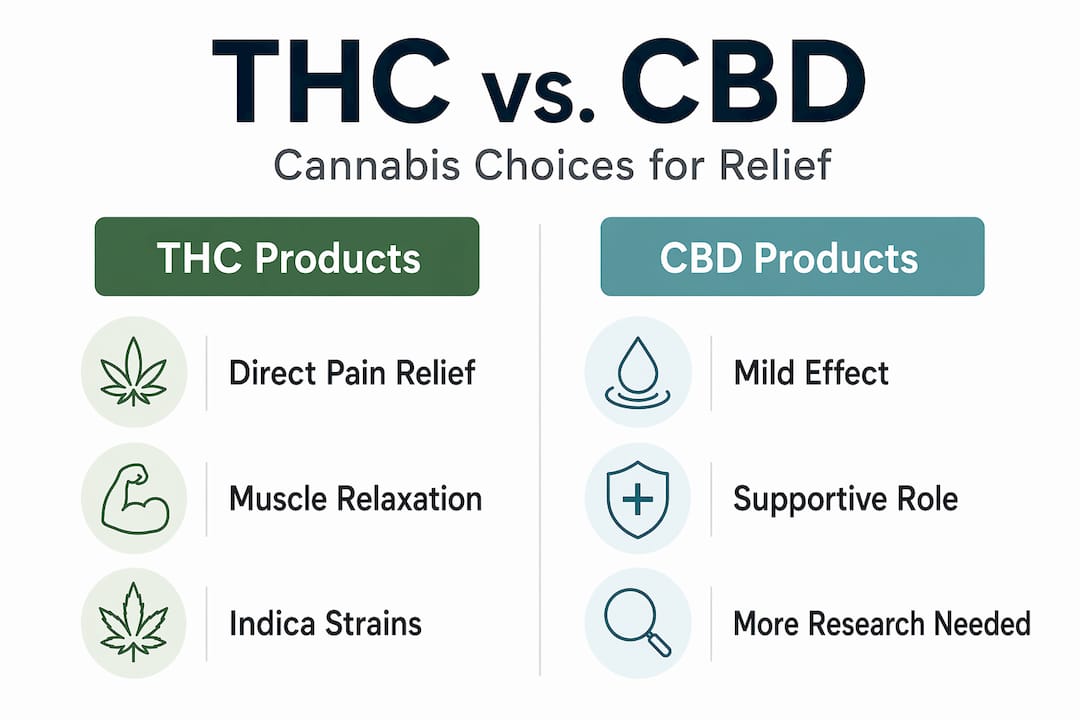
| Product type | THC level | CBD level | Best for |
|---|---|---|---|
| CBD-dominant (20:1) | Very low | High | Anxiety, inflammation, beginners |
| Balanced (1:1) | Moderate | Moderate | Broad symptom relief, most patients |
| THC-dominant | High | Low | Severe pain, muscle spasms, sleep |
| Full-spectrum CBD oil | Trace THC | High | Mild symptoms, daytime use |
Practical guidance on selecting products:
Pro Tip: Indica-leaning cannabis strains, which tend to be sedating and body-focused, are often preferred among fibromyalgia patients for evening use because they address the muscle tension and sleep disruption that define the condition. Sativa-dominant strains can worsen anxiety and hyperarousal in sensitive individuals.
Dosing cannabis for fibromyalgia is not like dosing ibuprofen. Your nervous system’s heightened sensitivity means what works brilliantly for someone else may be overwhelming for you. The goal is to find the minimum effective dose that provides relief without impairing your day.
Follow this titration approach, which mirrors the guidance from medical cannabis dosing specialists:
Tracking symptoms daily in a journal is genuinely one of the most effective tools available for personalising your cannabis regimen. Record pain levels, sleep quality, mood, and any side effects. Patterns emerge quickly, usually within two to three weeks, and give you real data to guide adjustments.
Pro Tip: Magnesium glycinate supplementation pairs well with cannabis for fibromyalgia. Magnesium supports muscle relaxation and sleep quality, two areas where fibromyalgia most disrupts daily life, and it can reduce the sedation some patients experience in early cannabis use.
Cannabis is not risk-free, and fibromyalgia patients face some specific vulnerabilities worth knowing upfront.
According to the UK Medical Cannabis Registry, 45.67% of fibromyalgia patients reported adverse events during cannabis treatment, but the vast majority were mild to moderate. The most common issues were fatigue, dry mouth, and concentration difficulties. These are manageable, particularly with the right approach to dosing and hydration.
What makes fibromyalgia patients different from other cannabis users is central sensitisation. This is the neurological process where your brain and spinal cord become hypersensitive to stimuli, amplifying signals that should feel normal. The same central sensitisation that intensifies pain also heightens your sensitivity to cannabis’s side effects, which is precisely why the “start low, go slow” rule is not just a suggestion here. It is essential.
Key strategies for safe long-term use:
The patients who get the most from medical cannabis for fibromyalgia are not those who take the most. They are the ones who take the least amount that reliably moves their symptoms in the right direction.
Here is what the standard cannabis-for-pain articles consistently miss.
Most people enter the fibromyalgia marijuana treatment conversation focused on CBD because it feels safer or less stigmatised. The clinical data is now clear that this approach, while understandable, undercuts your potential for relief. THC is not a concession you make reluctantly. It is likely the primary therapeutic mechanism, and treating it as something to minimise from the start means many patients never find their true therapeutic window.
Neurologist Dr. Ethan Russo’s work on clinical endocannabinoid deficiency provides a compelling framework: if fibromyalgia partly reflects a depleted endocannabinoid system, then supplementing it with phytocannabinoids is not recreational use with a medical justification. It is targeted supplementation of a depleted biological system. That reframe matters for how you approach dosing, consistency, and long-term commitment to the therapy.
The second overlooked insight is that personalized ratios and delivery methods are what separate patients who thrive on cannabis therapy from those who abandon it. Vaporised flower provides rapid onset for acute pain spikes. Edibles offer prolonged overnight relief for sleep disruption. Sublingual oils give precise dosing control for daytime management. Using only one delivery method limits your toolkit unnecessarily.
Finally, gentle movement therapy, whether yoga, swimming, or even daily walking, combined with cannabis works better than cannabis alone. Movement promotes neuroplasticity, the brain’s ability to form new, less pain-amplified neural pathways. Cannabis reduces the pain barrier to movement. Together they address chronic pain cannabis insights at a systems level that medication alone simply cannot reach.
Applying what you have learned here starts with choosing the right products, and that is where we come in. Green Society offers a curated selection of cannabis flowers, CBD oils, edibles, and accessories specifically suited to managing conditions like fibromyalgia.
Start by learning how to confidently navigate selecting cannabis flower online so you can identify balanced or indica-leaning strains that match your symptom profile. Pair that with our detailed medical cannabis dosing guide to build a titration plan that keeps you in control. If you are exploring different consumption methods, our cannabis accessories guide will help you find vaporisers, tincture droppers, and other tools that make dosing precise and consistent. Every product we carry is vetted for quality, and our discreet delivery brings it directly to your door.
Cannabis cannot cure fibromyalgia, but it can meaningfully reduce symptoms like pain, poor sleep, and anxiety. Registry data confirms improvement in quality of life but not remission of the condition.
CBD alone has not proven effective in rigorous trials. Clinical evidence shows CBD alone did not outperform placebo for fibromyalgia pain, while balanced THC/CBD products produced significant results.
The most common side effects are mild fatigue, dry mouth, and concentration difficulties. 45.67% of patients reported adverse events, most of which were mild to moderate and manageable with adjusted dosing.
Begin with a CBD-dominant product at a low dose and titrate THC slowly upward by 2.5 mg every three to five days, starting in the evening and tracking symptoms in a daily journal.