Free Shipping
on orders over $150.00
$40.00
$150.00
Add $110.00 more for free shipping!
-
×
 Green Society Herb Grinder
$40.00
Green Society Herb Grinder
$40.00


TL;DR:
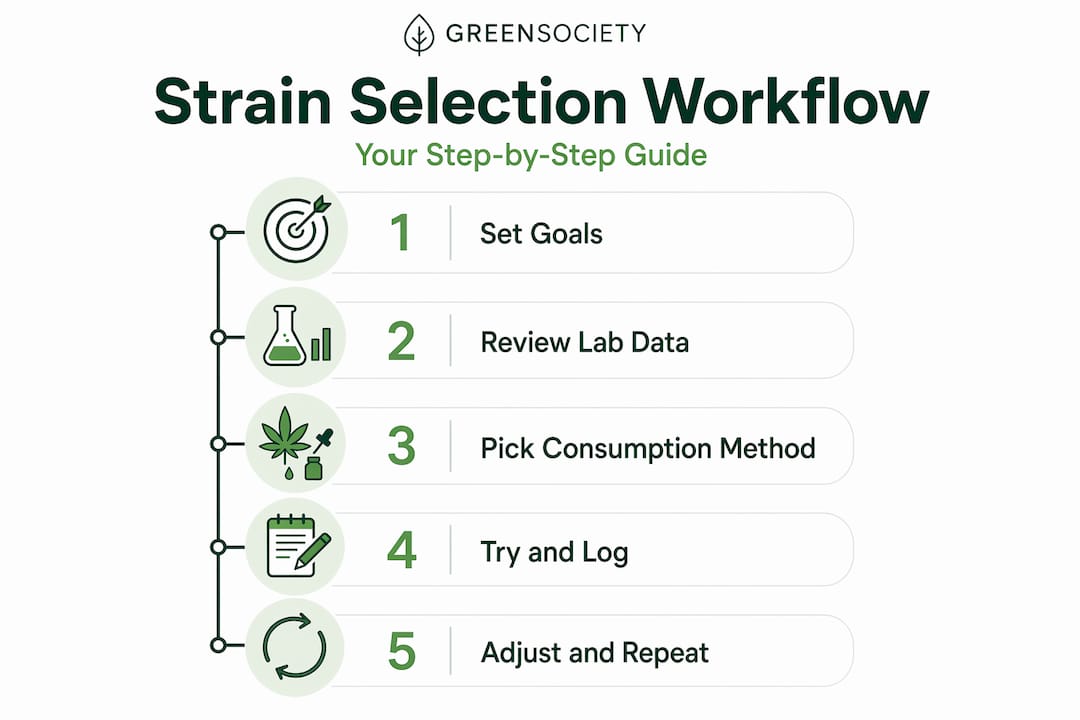
- Choosing the right cannabis strain starts with clear goals focused on desired effects, chemistry, and individual response.
- Reading lab-tested chemical profiles, including cannabinoids and terpenes, offers more reliable guidance than labels or strain names.
- Structured experimentation, careful dosing, and session logging are essential for personalized, safe, and effective cannabis use.
Walking into a dispensary or browsing an online catalogue can feel genuinely overwhelming. Dozens of strain names, conflicting descriptions, and colour-coded labels that don’t actually tell you how you’ll feel. A clear cannabis strain selection workflow cuts through that noise by giving you a repeatable process: clarify your goals, check the chemistry, test cautiously, and adjust. Whether you’re managing a health condition or simply want a better recreational experience, this guide gives you the tools to choose with confidence rather than guesswork.
| Point | Details |
|---|---|
| Goals before labels | Define your desired effects first before looking at strain names or indica/sativa categories. |
| Chemistry over categories | Focus on THC:CBD ratios and terpene profiles rather than traditional labels, which are often unreliable. |
| Start low, adjust slowly | Begin with small doses and log every session to build a personalised picture of what works for you. |
| Method shapes experience | The way you consume cannabis changes onset time, intensity, and duration as much as the strain itself. |
| Record and refine | Systematic session logging is the most underused tool in building a strain selection process that actually improves over time. |
Before you look at a single product page or strain description, you need to get specific about what you want. Vague intentions like “something relaxing” produce vague results. When you describe your desired outcomes precisely, you give yourself and any budtender something concrete to work with.
Think in terms of function. Are you trying to reduce chronic pain, ease anxiety before a social event, improve sleep quality, or simply unwind on a Friday evening? Each of these calls for a meaningfully different chemical profile. Desired effects matched to cannabinoid and terpene profiles are far more predictive of outcome than relying on whether something is labelled indica or sativa.
Here is a simple framework to map your goals to relevant compounds:
| Goal | Target cannabinoids | Key terpenes to look for |
|---|---|---|
| Sleep | Moderate THC + low CBD | Myrcene, linalool |
| Pain relief | Balanced THC:CBD | Caryophyllene, myrcene |
| Focus and creativity | Low THC + CBD | Limonene, pinene |
| Anxiety relief | Low THC or CBD-dominant | Linalool, limonene |
| Social relaxation | Moderate THC | Limonene, terpinolene |
Your tolerance level matters here too. If you are new to cannabis or returning after a long break, prioritise lower THC options regardless of your goal. Newer consumers often underestimate how much experience level shapes the entire process.
Pro Tip: Write down your three most important goals and one effect you absolutely want to avoid before you start shopping. This short list becomes your filter for everything else in your strain selection process.
Once you know what you want, the next step in your strain selection process is learning to read what is actually in the product. The indica/sativa distinction is a plant taxonomy category, not a pharmacological promise. Terpenes may be more predictive than those labels when it comes to actual effects.
Here is what to look at when reviewing a strain’s chemical profile:
Ask your dispensary for lab-tested results. If you are buying online, look for COA (Certificate of Analysis) documents. Many products at quality retailers list full terpene breakdowns alongside cannabinoid percentages. Learning to read product labels properly is one of the fastest ways to stop feeling lost in a product catalogue.
Pro Tip: If smell sampling is available at your dispensary, trust your nose. You are naturally drawn to terpenes your body responds well to. A scent that feels appealing to you often correlates with terpenes aligned to your goals.
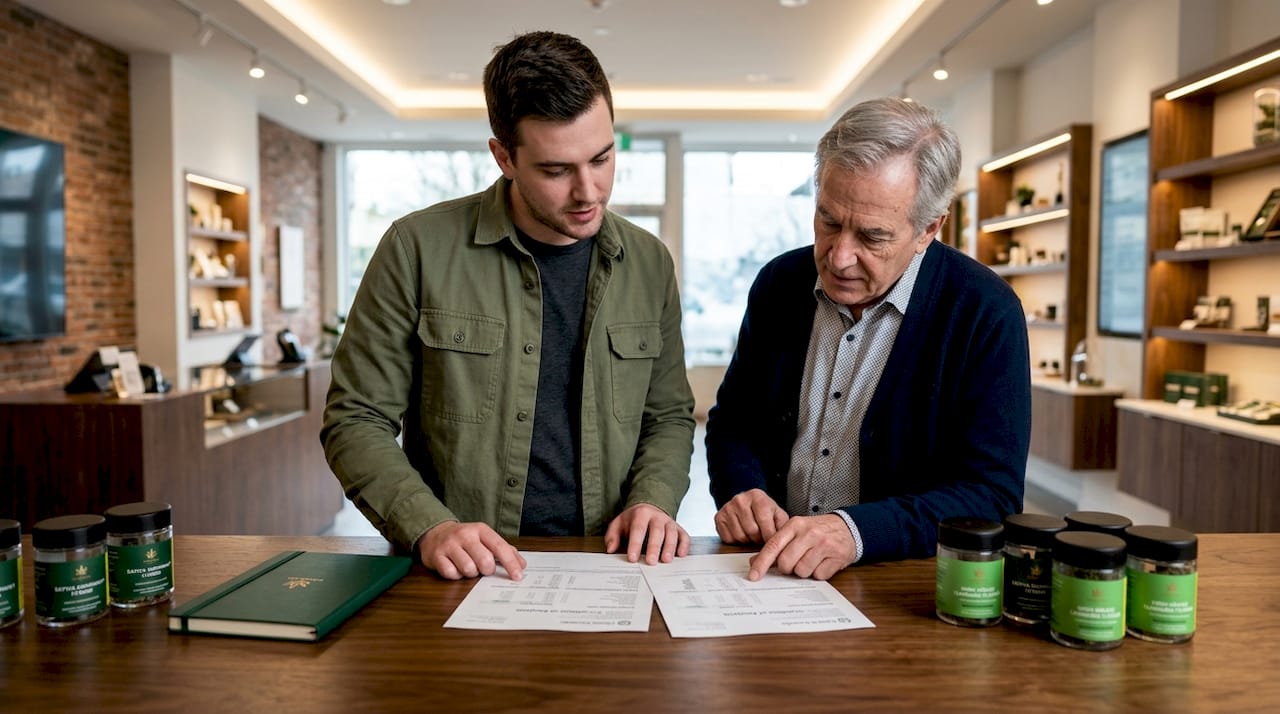
When researching online, look for resources that share actual lab data rather than just strain descriptions. The strain chemical profile research process works best when you narrow your list to three or four candidates before purchasing anything.
This is where the strain selection process shifts from research to real-world data. No amount of reading will tell you exactly how your body responds to a specific strain. That takes structured, careful experimentation.
Follow these steps to build a safe and personalised trial process:
Systematic session logging genuinely improves personalised cannabis selection over time. It transforms subjective experience into useful information.
There is no universally perfect strain. Personal biology and dose response vary significantly between individuals. What works well for a friend may not work for you, and that is completely normal.
Safety monitoring is not optional. CBD can interact with CNS-active medicines, causing dizziness or drowsiness. If you are on any prescription medications, consult your doctor before adding cannabis to your routine. Mixing with alcohol or sedatives adds unpredictable risk, particularly for new users.
Pro Tip: Use a simple notes app to keep your consumption log. A three-sentence entry per session is enough: what you used, how you felt at 30 minutes, and how you felt at two hours. Consistency beats detail.
The same strain consumed in two different ways can feel like two completely different products. Understanding this is a critical part of any step by step strain selection approach.
Here is a comparison of the most common consumption methods:
| Method | Onset time | Duration | Key considerations |
|---|---|---|---|
| Smoking (flower) | 2 to 10 minutes | 1 to 3 hours | Fast feedback loop; easier to titrate dose |
| Vaping | 5 to 15 minutes | 1 to 3 hours | Smoother than smoking; terpene preservation varies |
| Edibles | 30 to 120 minutes | 4 to 8 hours | Highly variable; easy to overconsume accidentally |
| Oils and tinctures | 15 to 45 minutes (sublingual) | 2 to 6 hours | Good for precise dosing; discreet |
| Capsules | 30 to 90 minutes | 4 to 8 hours | Most consistent dosing; slowest onset |
Cannabis consumption routes affect onset and duration in ways that meaningfully change how the same strain is experienced. A strain excellent for evening relaxation when smoked may feel overwhelming as an edible due to the extended duration and delayed onset.
For strain pairing, consider matching the method to the goal. High-terpene, moderate-THC flower is well suited for social occasions because the fast feedback allows you to stop before overconsumption. Oils and capsules suit medical users managing chronic conditions because they offer consistent dosing.
One additional consideration: low-THC hemp products can produce positive urine THC results. If you are subject to workplace drug testing, factor this into your selection regardless of the product’s stated potency.
Even well-researched consumers fall into patterns that undermine their experience. A good cannabis strain selection workflow includes knowing what not to do.
Pro Tip: If you have a negative experience with a high-THC strain, do not write off cannabis entirely. Switch to a CBD-dominant option, reduce your dose, and try a different terpene profile. One bad experience usually reflects a mismatch in chemistry, not an incompatibility with cannabis overall.
I’ve watched the conversation around cannabis shift considerably over the past several years, and the biggest improvement has been the move away from indica versus sativa as the primary sorting mechanism. It never made pharmacological sense, and I’ve seen too many people have poor experiences because they trusted a label over the actual chemistry.
What I’ve found to be genuinely useful is treating strain selection the way you’d treat any other personal health decision. You gather information, you test carefully, and you adjust based on what actually happens in your body. The outcome-first approach where you tell a budtender what you want to feel rather than asking what’s popular, consistently produces better results.
The area I think most consumers still undervalue is session logging. I know it sounds tedious, but even a brief note after each session accelerates the learning curve dramatically. People who do it find their ideal strain profile within a few weeks. People who skip it often spend months frustrated.
The future of strain selection is moving toward personalised recommendations based on individual cannabinoid response data. We are not fully there yet, but the tools available today, meaning lab results, terpene panels, and honest self-observation, already give you more precision than most consumers realise they have access to.
Be patient. Be methodical. Your best strain is out there, and it is findable.
— Juiced
Greensociety makes it straightforward to put this workflow into practice. The platform’s cannabis product categories are organised by effect type, cannabinoid profile, and consumption method, so you can filter based on the goals you have already defined rather than browsing blind. Whether you are looking for a high-CBD option for daytime use, a balanced flower for evening relaxation, or an edible for long-lasting relief, the catalogue is built around real needs.
For consumers who want to build their selection process step by step, the confident product selection workflow on the Greensociety blog walks through exactly how to apply chemical profile research to actual purchasing decisions. Quality indicators, lab results, and product descriptions are available for every listing. Fast, discreet delivery across Canada means you can sample, log, and refine your preferences without leaving home.
A cannabis strain selection workflow is a repeatable process for choosing cannabis products based on your desired effects, chemical profiles, consumption method, and personal response. It replaces guesswork with structured decision-making.
Indica and sativa are botanical classifications that do not reliably predict effects. Cannabinoid ratios and terpene profiles are far more consistent predictors of how a strain will make you feel.
Medical guidance suggests starting at around 2.5 mg THC and waiting at least two hours before considering more, particularly with edibles or oils where onset is delayed.
Yes. Oral CBD can interact with CNS medications and alcohol, potentially causing dizziness or sedation. Always consult a doctor if you are on prescription drugs before adding cannabis to your routine.
Keep a session log recording dose, onset time, peak effects, duration, and any side effects. After three to five sessions with the same product, you will have enough data to make an informed judgement about whether that strain fits your goals.