Free Shipping
on orders over $150.00
$0.00
$150.00
Add $150.00 more for free shipping!


TL;DR:
- Cannabis topicals work locally on skin receptors without producing a psychoactive effect.
- Research shows they can effectively reduce localized pain, inflammation, and skin irritation.
- They are a safe, non-intoxicating option for managing skin conditions and targeted pain relief.
Most people assume that cannabis means getting high. That assumption stops a lot of curious Canadians from exploring one of the most practical wellness tools available today. Cannabis topicals, including creams, balms, salves, and lotions infused with CBD or THC, work directly on the skin without entering your bloodstream in any meaningful amount. That means no psychoactive effect, no impairment, and no reason to feel nervous about trying them. Whether you’re managing chronic joint pain, dealing with stubborn skin irritation, or simply looking to add something effective to your wellness routine, the science behind cannabis topicals is genuinely worth understanding.
| Point | Details |
|---|---|
| Local relief, no high | Cannabis topicals act on your skin, providing targeted benefits without psychoactive effects. |
| Pain and itch benefits | Clinical studies support topicals for chronic pain and itch, making them useful for daily comfort. |
| Skin care potential | Evidence suggests cannabis topicals may help acne, eczema, and add antioxidant support to routines. |
| Safe and well tolerated | Properly formulated cannabis topicals are generally safe, with rare mild skin irritation. |
| Limitations remain | Not all products are equal; research and regulatory approval are still in progress. |
Cannabis topicals are not like edibles or vape products. When you apply a balm or cream to your skin, the active compounds, primarily CBD (cannabidiol) or THC (tetrahydrocannabinol), interact with receptors located right in the skin tissue itself. They don’t travel to your brain. That’s the key difference that makes topicals so appealing for everyday use.
Your skin contains a dense network of CB1 and CB2 receptors, which are part of the broader endocannabinoid system. These receptors regulate local inflammation, pain signals, and even skin barrier function. When cannabis compounds bind to these receptors, they can reduce inflammatory cytokines, modulate pain perception in the area, and support the skin’s natural defences. As research in dermatology confirms, cannabis topicals interact with the endocannabinoid system, modulating inflammation, pain, and barrier function at the site of application.
Here’s a quick look at the main types of cannabis topicals and what sets them apart:
| Type | Key ingredients | Best for |
|---|---|---|
| CBD-only cream | Cannabidiol, carrier oils | Sensitive skin, beginners |
| Full-spectrum balm | CBD, THC, terpenes | Broad anti-inflammatory effect |
| THC topical | Tetrahydrocannabinol | Localised pain, muscle tension |
| Nano-enhanced formula | Nano CBD/THC particles | Deeper skin penetration |
Nanoformulation is worth paying attention to. Standard topicals often struggle to penetrate beyond the outer skin layer (the epidermis). Nano-enhanced products use microscopic particles to push active compounds deeper into tissue, which can improve results for pain relief and inflammation. If you’re interested in making your own, this DIY cannabis topical recipe walks you through a straightforward process.
Key ingredients to look for in a quality topical include:
Pro Tip: Before buying, check the CBD topicals buying guide and always look for products with verified third-party lab results. Without that, you have no way of knowing what’s actually in the formula.
With a basic understanding of how cannabis topicals interact with your skin, it’s important to look at what clinical studies actually reveal about their pain-relieving effects.
The evidence is building steadily. While large-scale randomised controlled trials are still limited, observational data and smaller clinical studies are pointing in a consistent direction: topicals can meaningfully reduce localised pain, particularly for people dealing with chronic conditions.
One of the most striking findings comes from a UCHealth study involving 75 chronic pain patients. Adding topicals to their care routine contributed to a 74% reduction in opioid use among many participants. That’s not a minor footnote. For anyone trying to reduce dependence on pharmaceutical pain medications, that number deserves serious attention.
Here’s how topical cannabis compares to other delivery methods for pain:
| Delivery method | Onset time | Systemic effect | Best pain type |
|---|---|---|---|
| Topical cream/balm | 30 to 60 min | Localised only | Arthritis, neuropathy, muscle pain |
| Oral (capsule/oil) | 1 to 2 hours | Systemic | Widespread chronic pain |
| Inhaled (vape/flower) | Minutes | Systemic | Acute, widespread pain |
| Transdermal patch | 1 to 4 hours | Systemic (slow) | Sustained chronic pain |
Topicals perform best for pain that has a clear physical location. The meta-analysis on topicals for pain highlights neuropathic pain, arthritis, and localised inflammation as the strongest candidates for topical treatment. If your pain is diffuse or internal, oral or inhaled cannabis may be a better fit.
Practical steps to try topicals for pain:
For deeper reading on this topic, the CBD for chronic pain resource and the broader cannabis for pain guide are both worth bookmarking. And if you’re curious about which cannabis varieties are associated with pain relief, the best cannabis strains for pain guide covers that ground thoroughly.
Beyond pain, many Canadians are turning to cannabis topicals for daily skin maintenance and relief from specific dermatologic issues.
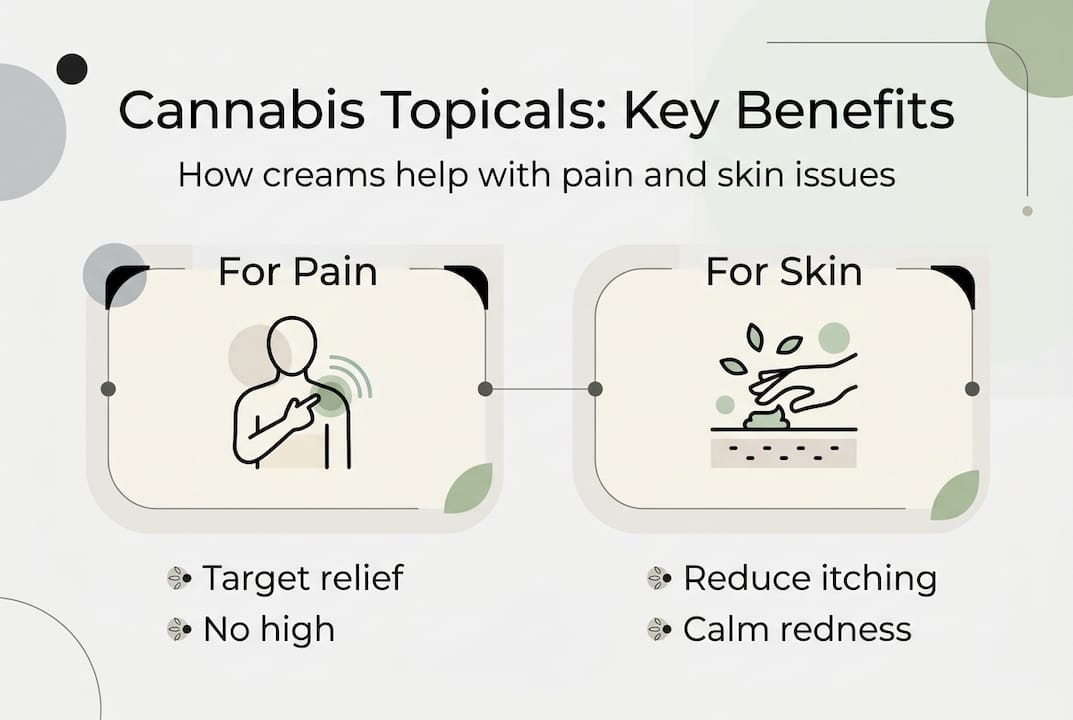
The skin is an active immunological organ. It responds to inflammation, oxidative stress, and microbial imbalance constantly. Cannabis compounds, particularly CBD, interact with the skin’s own regulatory systems in ways that can calm overactive responses without the side effects of corticosteroids or harsh synthetic ingredients.
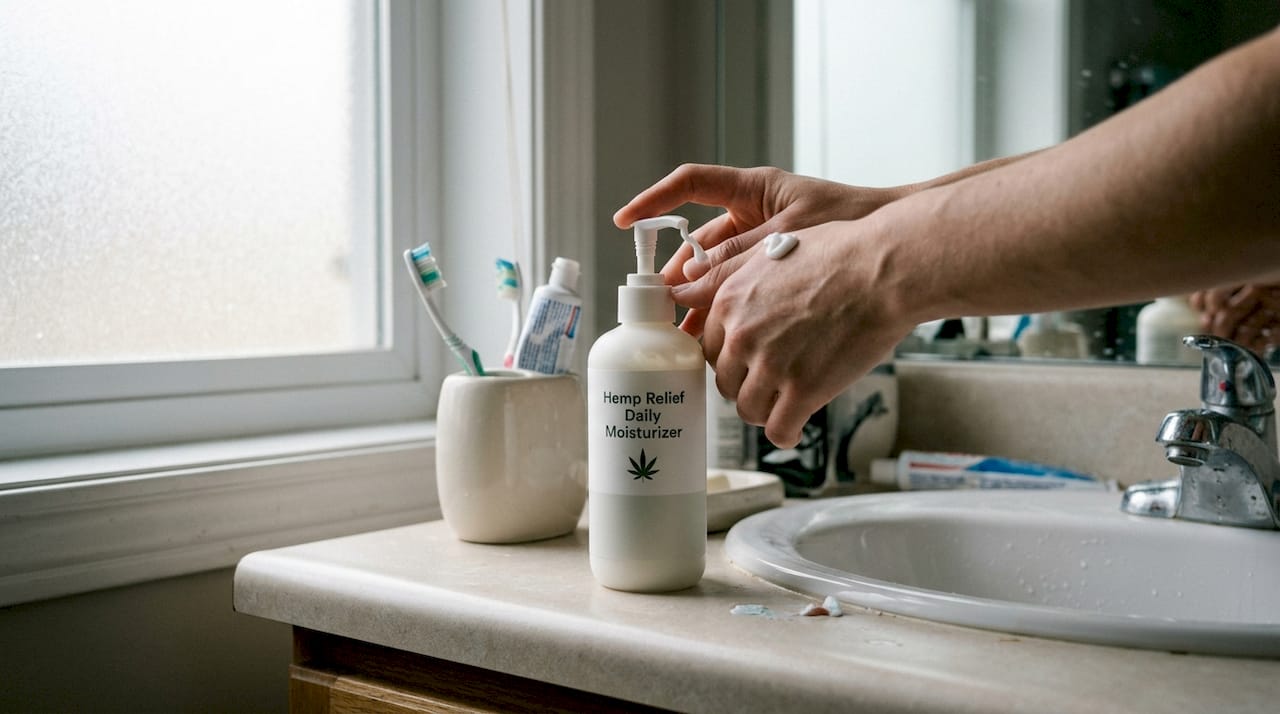
A systematic review and meta-analysis of 11 randomised controlled trials found statistically significant pruritus reduction with topical cannabinoids, though evidence for other dermatological outcomes remains mixed. In plain terms: if you’re dealing with chronic itch from eczema, psoriasis, or atopic dermatitis, topicals have the strongest evidence base.
Here’s a summary of skin conditions and current evidence strength:
| Skin condition | Evidence level | Notes |
|---|---|---|
| Pruritus (itch) | Strong | Statistically significant in RCTs |
| Acne | Moderate | CBD reduces sebum and inflammation |
| Atopic dermatitis | Moderate | Barrier support and anti-itch effects |
| Psoriasis | Emerging | Anti-inflammatory, needs more trials |
| General dryness | Practical | Moisturising carrier oils help significantly |
Beyond itch relief, cannabis topicals offer several additional skin benefits:
For a broader look at how CBD fits into a skin care review, the research is increasingly favourable, especially for sensitive and reactive skin types. If you want practical guidance on incorporating these products into your daily routine, the CBD in your skin care routine article is a solid starting point, and the CBD beauty benefits resource covers the broader cosmetic applications in detail.
“Cannabis topicals represent a genuinely interesting frontier in preventive skin care. The appeal isn’t just therapeutic. It’s about giving your skin a daily tool that works with its own biology rather than against it.”
Despite promising benefits, it’s important to understand the real-world limitations and safety profile of cannabis topicals, especially as demand increases.
The good news is that topicals are among the safest ways to use cannabis. Because they don’t enter the bloodstream in significant quantities, the systemic risks associated with oral or inhaled cannabis simply don’t apply here. Topicals are generally well-tolerated with rare irritation, minimal systemic absorption, and virtually no intoxication risk, though regulatory approval and long-term safety data are still pending.
Common side effects, when they do occur, include:
The topical cannabinoid challenges facing the industry right now are less about safety and more about consistency. Without standardised regulation, product quality varies enormously. One brand’s “500mg CBD cream” may deliver very different results than another’s, depending on formulation, bioavailability, and ingredient quality.
“The biggest risk with cannabis topicals isn’t a side effect. It’s buying a poorly formulated product and concluding that topicals don’t work when the real problem was the product itself.”
For guidance on evaluating products safely, the cannabis and CBD safety resource covers what to look for and what to avoid.
Pro Tip: Always patch-test a new topical on a small area of skin for 24 hours before applying it broadly. Look for nano-enhanced, full-spectrum formulas with third-party certificates of analysis. Avoid products with long lists of synthetic fragrances or preservatives, especially if your skin is sensitive.
Most articles on cannabis topicals either oversell the benefits or dismiss them entirely. Neither approach is useful. The honest picture sits somewhere in the middle, and it’s actually more interesting than either extreme.
The biggest overlooked factor is formulation variability. Two products with identical CBD concentrations can produce completely different results based on carrier oils, emulsification method, and whether terpenes are present. This is why CBD wellness insights consistently emphasise starting simple and being methodical.
Your skin physiology also matters more than most people realise. Skin thickness, hydration levels, and even the microbiome on your skin affect how well a topical absorbs and performs. What works brilliantly for one person may underwhelm another, and that’s not a failure of the product category. It’s just biology.
Set realistic expectations. Topicals are not cures. They are tools. Used consistently as part of a layered approach to pain management or skin care, they can make a genuine difference. Used once and judged immediately, they’ll often disappoint. Transparency matters too. Prioritise brands with real consumer reviews, clear ingredient lists, and verifiable lab results.
If you’ve made it this far, you already have a stronger understanding of cannabis topicals than most people walking into a dispensary. The next step is finding products that actually live up to the science.
At GreenSociety.cc, we’ve done the legwork of curating quality options so you don’t have to sort through the noise. The best CBD topical options guide is a great place to start if you’re new to topicals or looking to upgrade your current product. For those interested in the broader wellness and beauty angle, the more beauty and health benefits resource covers everything from skin care to self-care. And if you want to see what’s performing best across Canada right now, Canada’s top CBD products gives you a clear, current snapshot.
No, cannabis topicals are non-intoxicating because they act locally on the skin and don’t enter the bloodstream in significant amounts, so there is no psychoactive effect.
Most users notice effects within 30 to 60 minutes, though onset depends on skin type, product formulation, and how well the topical absorbs into the application area.
Evidence is strongest for itch (pruritus), with a statistically significant reduction confirmed in multiple randomised controlled trials, and promising results for acne, eczema, and psoriasis.
Side effects are rare but can include mild irritation or redness at the application site. Topicals are generally safe with minimal systemic absorption and virtually no risk of intoxication.
Topicals are generally considered safe alongside other medications since systemic absorption is minimal, but it’s always wise to consult a health professional if you have skin allergies or use prescription topical treatments.