Free Shipping
on orders over $150.00
$0.00
$150.00
Add $150.00 more for free shipping!


TL;DR:
- Different vape pen types suit varying cannabis products and user preferences, influencing your overall experience.
- Inhalation style—MTL or DTL—significantly impacts the draw, vapour temperature, and potency for the user.
Not all vape pens are built the same, and that confusion costs people money and enjoyment every single day. The differences in vape pens go far beyond size or brand. Device type, inhalation style, heating mechanism, and maintenance load all shape your actual experience. Whether you’re new to cannabis vaping or trying to upgrade from a basic pen, understanding what separates one device from another helps you avoid buying the wrong one. This guide breaks it all down clearly.
| Point | Details |
|---|---|
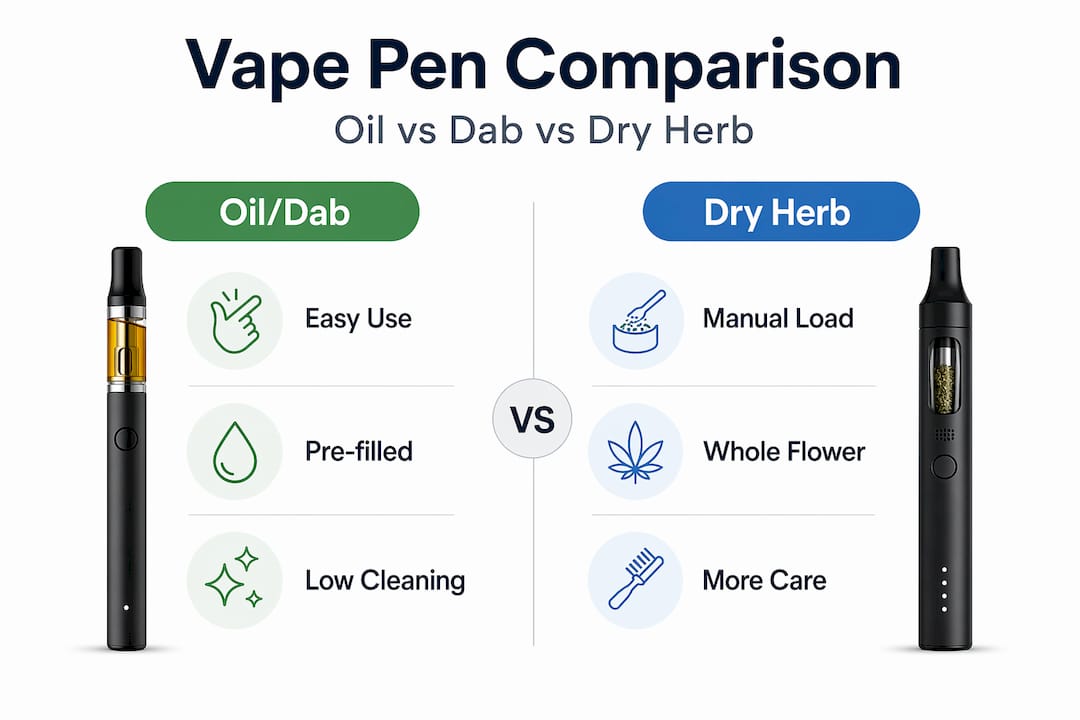
| Device type determines use case | Oil cartridge pens, dab pens, and dry herb pens each serve different cannabis products and preferences. |
| Inhalation style changes everything | MTL offers a tighter, cooler draw; DTL delivers bigger, warmer vapour clouds for a different sensation entirely. |
| Maintenance varies widely | Dab pens require frequent residue cleaning; oil cartridge pens are straightforward swaps with minimal upkeep. |
| Coil resistance shapes your hit | Sub-ohm coils suit DTL vapers; higher resistance coils suit MTL users and beginners. |
| Match the device to your lifestyle | Convenience seekers do better with disposables; customisation-focused users benefit from refillable, adjustable pens. |
Most people walk into the vape category expecting one device to cover all ground. That assumption leads to frustration fast. Understanding the vape types available helps you pick a device that actually fits how you consume cannabis.
Here are the four main categories worth knowing:
| Pen type | Cannabis product | Maintenance level | Best for |
|---|---|---|---|
| Oil cartridge pen | Pre-filled oil carts | Low | Beginners, daily users |
| Dab pen | Wax, shatter, concentrate | High | Experienced concentrate users |
| Dry herb pen | Ground cannabis flower | Medium | Flower enthusiasts |
| Disposable pen | Pre-filled oil | None | Casual or on-the-go use |
Form factor matters too. Most vape pens are slim and pocket-sized, but dab pens sometimes have a wider chamber body. Dry herb pens tend to be slightly bulkier to house the heating chamber. If portability ranks high on your list, oil cartridge pens and disposables win that comparison clearly.
This is where many vape pen comparisons fall short. The draw style built into a device shapes the experience more than almost any other factor. There are two styles: mouth-to-lung (MTL) and direct-to-lung (DTL).
MTL vaping means you pull vapour into your mouth first, hold briefly, then inhale to the lungs. It mimics the motion of smoking a cigarette. The draw is tighter, the vapour is cooler, and the device typically runs at lower power. MTL pens pair well with higher-concentration cannabis oils because the smaller hit delivers the effect efficiently.
DTL vaping means you pull vapour directly into your lungs in one smooth motion. It uses higher power, wider airflow, and produces larger, warmer vapour clouds. DTL devices favour lower-strength formulations because each draw delivers more material per inhale.
For cannabis users specifically, MTL tends to feel more discreet and controlled. DTL is a fuller, more immediate sensation.

Pro Tip: If you’re transitioning from smoking cannabis, start with an MTL device. The draw feels familiar, the vapour is easier to manage, and you’re less likely to overconsume while you adjust to vaping.
A few things influenced by this inhalation style difference:
Once you move past the basics, device mechanics start to matter. Here is a practical breakdown of what to understand before buying.
Coil resistance: Sub-ohm coils under 1.0 ohm produce larger vapour clouds and suit DTL users. Coils above 1.0 ohm create a tighter draw suited for MTL use. Most oil cartridge pens use fixed coils, so you cannot swap them. Dab pens often let you choose your coil type.
Heating mechanisms: Oil cartridge pens typically use a wick-based heating system that draws liquid up to the coil. Dab pens use coil or ceramic bowl heating elements designed to melt solid concentrates. Ceramic heating tends to produce cleaner flavour with less risk of burning.
Battery capacity: Measured in milliampere-hours (mAh), a higher number means more sessions before recharging. But battery life depends on usage intensity, not just capacity. A high-power DTL device drains a large battery faster than a low-power MTL pen drains a smaller one.
Cleaning needs: Dab pens require regular cleaning after every few sessions to prevent concentrate residue from building up in the chamber and on the coil. Skipping cleaning affects flavour and device lifespan noticeably. Oil cartridge pens are simpler since the cartridge contains the mess. When it’s done, you replace it rather than clean it.
Liquid compatibility: Using the wrong viscosity oil in a device not designed for it causes flooding, clogging, and coil burnout. Always match the oil or concentrate to the device specifications before buying.
Pro Tip: For dab pens, use a cotton swab dipped in isopropyl alcohol to wipe the chamber after every two or three sessions. It takes thirty seconds and extends coil life considerably.
| Feature | Dab pen | Oil cartridge pen | Disposable pen |
|---|---|---|---|
| Heating element | Coil or ceramic bowl | Wick system | Fixed coil |
| Cleaning frequency | High | Very low | None |
| Battery type | Rechargeable | Rechargeable | Non-rechargeable |
| Concentrate type | Wax, shatter, budder | Pre-filled oil | Pre-filled oil |
Knowing the differences in vape pens only helps if you apply them to your situation. Here is how to think through the decision:
There is a widely held belief that all vape pens deliver a roughly similar experience and that the differences are mostly cosmetic. That is not accurate.
“The experience of vaping is influenced more by device delivery design, including airflow and power adjustability, than by brand alone.”
A $30 oil pen and a $30 dab pen are fundamentally different tools. Dab pens are not simply stronger versions of oil pens. They handle a completely different form of cannabis, require different handling skills, and demand more ongoing care. Treating them as interchangeable leads to poor results.
Another common misconception is that a bigger battery always means a better device. Battery capacity affects session length, but not quality. A well-designed low-power pen often outperforms a poorly designed high-capacity one in terms of flavour and consistency.
For beginners specifically, the learning curve on button-activated and wattage-adjustable devices is real. Starting with a draw-activated, fixed-voltage pen removes most variables while you figure out what kind of cannabis vaping suits you. Once you know your preferences, stepping up to a more customisable device makes a lot more sense.
I have tried a fair number of devices over the years, and the single biggest mistake I see people make is buying a dab pen because they think it’s just a more powerful vape pen. It is not. It is a different tool entirely. The learning curve, the cleaning routine, and the material handling are all genuinely different.
My experience with MTL vs DTL was similar. I started with a draw-activated MTL pen and thought I was getting the full picture. When I finally tried a DTL device with adjustable airflow, the experience was so different I almost felt like I had been using a toy before. Neither is better objectively. They are just different. The DTL experience felt more intense but less precise. MTL felt cleaner and easier to moderate.
Where I land now is this: the device you buy should match your actual habits, not your aspirations. If you rarely clean your accessories and you want to grab and go, a disposable or a simple cartridge pen fits your lifestyle. If you like tinkering, adjusting, and getting the most out of your concentrates, a dab pen with a ceramic bowl and adjustable wattage will reward that investment.
The market is noisy. Every brand claims to be the best. What actually matters is airflow design, coil match to inhalation style, and whether your maintenance habits align with the device you choose. Prioritise those three factors over everything else and you’ll make a much better decision.
— Juiced
Greensociety has put together several guides specifically for Canadian cannabis consumers who want to make informed vape decisions. If you’re still sorting out which device suits your routine, the cannabis vape comparison guide breaks down popular options side by side. For those weighing the long-term economics, the disposable vs rechargeable breakdown is worth a read before you commit to a format. And if you’re curious about broader cannabis consumption beyond vaping, Greensociety’s piece on selecting cannabis flower online is a helpful next step. All the information you need to shop with confidence is right there, written for Canadians.
The four main types are oil cartridge pens, dab pens, dry herb pens, and disposable pens. Each is designed for a different form of cannabis and offers a different level of maintenance and customisation.
MTL draws vapour into the mouth first before inhaling to the lungs, producing a tighter, cooler draw. DTL draws vapour directly into the lungs for larger, warmer clouds at higher power.
No. Dab pens are designed for solid concentrates like wax or shatter and require manual loading and frequent cleaning. Oil vape pens use pre-filled cartridges and need very little upkeep.
Match your device to your cannabis product, maintenance willingness, and inhalation style preference. Beginners typically do best with draw-activated oil cartridge pens or disposables before exploring more complex options.
Not directly. Battery capacity affects how many sessions you get between charges, but high-power devices drain batteries faster regardless of size. Device design and coil quality affect experience more than battery capacity alone.