TL;DR:
- True rare cannabis strains are defined by unique genetics, historical significance, and challenging cultivation requirements.
- Market prices for elite cuttings reflect genetic stability, breeder exclusivity, and the limited availability of verified lineage.
If you’ve ever found yourself bored by the same commercial cultivars lining every menu, this rare cannabis strains guide was written for you. True rarity in cannabis isn’t just about limited supply. It’s about genetic singularity, historical lineage, and sensory profiles that standard dispensary shelves simply cannot replicate. Some of the rarest strains alive today test above 33% THC, express phenotypes in shades of indigo, or require 120 days to flower properly. This guide covers exactly what separates elite genetics from the everyday, which specific strains deserve your attention, and how the market for these varieties actually works.
Table of Contents
Key takeaways
| Point |
Details |
| Rarity goes beyond scarcity |
True rare strains are defined by unique genetics, historical lineage, and sensory complexity, not just low availability. |
| Potency and terpenes differ wildly |
Elite cultivars like Indigo Sapphire regularly test above 33% THC with terpene profiles not found in commercial hybrids. |
| Cultivation demands patience |
Authentic heirloom sativas can require up to 120 days of flowering to fully express their cannabinoid and terpene layers. |
| Genetics shape the experience |
Landrace lineage, not just terpenes, primarily determines the quality and consistency of the effect you feel. |
| Clone prices signal collector value |
Single cuttings of elite genetics sell for over $1,500, reflecting the real economic weight of genetic exclusivity. |
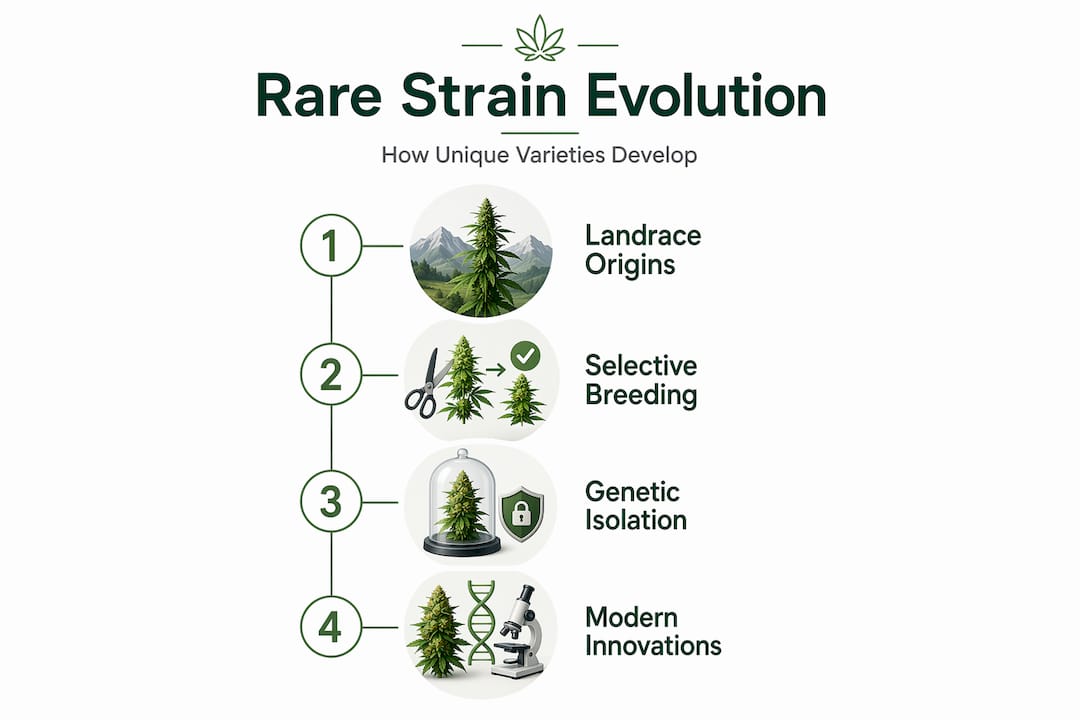
What makes a rare cannabis strain
Not every hard-to-find strain is genuinely rare. That distinction matters. A strain can be scarce because it was never commercially viable, because it was replaced by faster-flowering hybrids, or because it exists only as a clone in a handful of private collections. Genuine rarity, though, involves at least one of three things: limited or no commercial availability, historically significant genetics, or a growing profile so demanding that most cultivators simply won’t attempt it.
Landrace strains form the foundation of this conversation. These are cannabis varieties that developed in geographic isolation over generations, adapting to specific climates and producing terpene and cannabinoid profiles that modern hybrids rarely replicate. Panama Red, for example, is a pure sativa landrace that practically vanished from the market once faster-flowering indica hybrids became profitable. Strains disappear not because they were inferior, but because they didn’t fit commercial cultivation economics.
Understanding how genetics shape effects helps explain why collectors pursue these varieties so obsessively. A strain’s lineage determines far more than its THC percentage. It shapes the entire experience, from the onset pattern to the duration and the quality of the high itself. Heirloom genetics offer a consistency that stabilised commercial hybrids often can’t match.
Legalization has had a complicated effect on genetic preservation. It opened markets but pushed breeders toward faster, heavier-yielding cultivars. The commercial incentive to shorten flowering cycles and maximise yield has quietly pushed some of the most complex genetics to the margins.
Notable rare strains worth seeking
Indigo Sapphire
This is one of the most striking rare cultivars currently circulating. An indica-dominant hybrid, Indigo Sapphire earns its name from a visually distinctive phenotype that expresses deep blue and purple colouration in the buds under proper conditions. What makes it exceptional isn’t just aesthetics. It regularly tests at 33.8% THC with a berry and mint terpene profile that is genuinely unlike anything in mainstream genetics. Its flowering window runs 60 to 65 days, which is manageable for a strain of this calibre.

GMO Chemdawg
The name doesn’t refer to genetic modification. GMO here stands for Garlic, Mushroom, and Onion, a nod to its extremely pungent, savoury terpene profile. THC levels land between 28 and 32%, and the effect is as bold as the flavour. This is a strain that polarises people precisely because of how unconventional it tastes, which is exactly why connoisseurs seek it out.
Rainbow Drip
Rainbow Drip is 60% indica dominant with THC ranging from 24 to 29% and an indoor flowering time of 8 to 9 weeks. Its terpene complexity and hybrid balance make it a practical entry point for growers curious about rare genetics who aren’t ready to commit to a 120-day sativa.
Here’s a quick comparison of these three standout cultivars:
| Strain |
THC range |
Flowering time |
Dominant profile |
| Indigo Sapphire |
~33.8% |
60-65 days |
Berry, mint, indica-leaning |
| GMO Chemdawg |
28-32% |
9-10 weeks |
Garlic, earth, heavy indica |
| Rainbow Drip |
24-29% |
8-9 weeks |
Fruity, balanced hybrid |
Other cultivars worth researching include Hawaiian Snow, a pure sativa with uplifting, energetic effects; Bubba OG, a sedative indica with dense, resinous structure; and Sweet Tooth, a balanced hybrid with exceptional flavour complexity and award-winning genetics. Each of these represents a different reason why rare strains are collected, whether for potency, terpene depth, or historical significance.
Pro Tip: When evaluating exotic weed strains for the first time, ask for a Certificate of Analysis from the dispensary. Cannabinoid and terpene data will tell you far more than a label ever will.
Breeding innovations shaping rare strains
Modern genetics have expanded what’s possible in rare strain development, and one of the most significant developments is triploid cannabis. Standard cannabis is diploid, meaning it carries two sets of chromosomes. Triploid cannabis carries three, which makes plants mostly sterile and introduces several cultivation advantages.
Triploid plants are created through classical agricultural methods, specifically by crossing diploid and tetraploid plants, without any direct genetic engineering. The results are meaningful for outdoor growers in particular:
- Reduced seed production, since the plant’s energy goes into resin and flower development instead
- Increased plant vigour across a broader range of growing conditions
- Faster flowering cycles compared to the parent diploid strains
- Greater resilience against accidental pollination in outdoor environments
On the other end of the spectrum, tetraploidy (four chromosome sets) has been explored as a way to boost yield and potency. Tetraploidy can increase THC concentration by roughly 9%, but environmental variables often neutralise those gains in practice. The gains are real but frequently overstated by breeders marketing novel genetics.
Triploid cannabis development represents a meaningful shift for outdoor cultivation. It doesn’t replace the need for careful genetic selection, but it does change what’s achievable for rare strain breeders working in open environments.
The tension between commercial viability and genetic preservation is where things get complicated. Breeding for speed and yield often means diluting the very traits that made a landrace strain worth preserving. Some breeders are making a deliberate choice to maintain those long, complex genetic lines even when it costs them commercially.
Pro Tip: When sourcing rare cannabis seeds, look for breeders who document their genetic lineage transparently and can explain the crossing history of their stock. Vague ancestry claims are a red flag in elite genetics circles.
Growing rare strains: what you need to know
Cultivating rare and heirloom cannabis is not like growing standard commercial cultivars. The trade-off is straightforward: more complexity in the growing process, but a final product that is genuinely irreplaceable.
-
Plan for long flowering cycles. True sativa landraces and heirloom haze lines can require up to 120 days of flowering to fully develop their cannabinoid and terpene expression. That timeline is not a flaw. It’s a feature, and rushing it produces a diluted version of the experience you’re after.
-
Manage your environment precisely. Strains like Indigo Sapphire develop their distinctive blue and purple colouration in response to cooler temperatures during the late flowering stage. Without that environmental cue, you get the genetics but not the phenotypic expression.
-
Control pollination outdoors. If you’re growing triploid or other sterile genetics alongside standard plants, cross-pollination risk is lower but not zero. Keeping grow spaces clean and separate is non-negotiable.
-
Use low-stress training. Techniques like LST (low-stress training) and canopy management help rare strains with unusual structures develop better light exposure across the whole plant, which directly affects resin production and flavour concentration.
-
Cure properly and patiently. Authentic haze sativas need up to 16 weeks of curing to reveal their full cannabinoid and terpene complexity. Cutting that process short is one of the most common mistakes enthusiasts make when growing must-try cannabis strains for the first time.
Pro Tip: Keep a detailed grow journal for rare strains. Phenotypic expression varies between grows, and your own notes from previous cycles are genuinely more useful than generic grow guides.
The marketplace for elite genetics
The economics of rare cannabis genetics are unlike anything else in the plant world. Single cuttings of elite genetics have sold for up to $1,566 per clone at California release events. That’s not a typo. For context, those prices reflect genetic stability, breeder exclusivity, and the commercial potential of the genetics in a competitive cultivation market.
How to find rare strains in this climate involves understanding a few key dynamics:
- Clone release events in legal markets, particularly in California, function almost like limited product drops. Lines form early, supply is intentionally limited, and prices are set by the breeder.
- “Cutfishing” refers to the practice of selling fake or mislabelled clones as elite genetics. It’s common enough that authenticity verification has become its own conversation in collector communities.
- Genetics validation through third-party lab testing is the only reliable way to confirm that what you’re buying is what it claims to be. Terpene and cannabinoid data can indicate, though not definitively prove, genetic authenticity.
- Price versus commercial popularity don’t always correlate. Some of the most valuable rare marijuana types are virtually unknown to casual consumers, which is part of what keeps their value intact.
Genetic lineage ultimately shapes the experience more than any marketing claim. Terpenes are useful indicators of flavour and effect tendencies, but they don’t tell the whole story. Landrace varieties with documented genetic histories provide the most consistent and reliable experiences for collectors who have explored a lot of ground in this space.
My honest take on rare strains
I’ve spent enough time with rare and exotic genetics to say with confidence that the most common mistake enthusiasts make is treating rarity as the point. It isn’t. Rarity is a byproduct of something else, usually patience, specific environmental requirements, or the simple fact that commercial markets don’t have room for plants that take five months to flower.
What I find genuinely undervalued is the experience of a true heirloom sativa compared to anything fast-bred for yield. The cerebral clarity and sustained effect of an authentic Haze line, grown correctly and cured properly, sits in a completely different category than anything produced in an eight-week cycle. Most cannabis consumers have never experienced it.
I’m also concerned about the direction commercial pressure is taking genetic preservation. The incentive to hybridise rare landraces for faster, heavier crops is real, and it’s quiet. Some of the most historically significant genetics in cannabis history are being diluted or lost without much public acknowledgment. The collectors and small breeders doing preservation work are, in my view, performing a genuine service.
My advice to anyone using this guide to explore uncommon cannabis strains is straightforward. Prioritise genetics over hype. Learn about the lineage before you buy the clone or the seeds. And if you’re growing rare strains for the first time, give them the time they ask for. The results are worth it every single time.
— Juiced
Explore rare cannabis with Greensociety
If this guide has sharpened your curiosity about what’s possible beyond standard cultivars, Greensociety has resources to help you make smarter, more informed choices at every step of your exploration.
Whether you’re sourcing flower for the first time or expanding your palate into new territory, the Greensociety blog offers a guide to selecting cannabis flower with confidence, covering what to look for in quality and provenance before you commit to a purchase. If you’re interested in the broader picture of what’s trending in cultivar selection right now, the best flower varieties for 2025 piece gives useful context on where rare genetics are showing up in the broader market. And if you want to extend your rare strain experience beyond smoking, the cannabis in the kitchen guide walks through edible applications that let complex terpene profiles shine in a completely different format.
FAQ
What qualifies a cannabis strain as truly rare?
A strain is considered truly rare when it combines limited commercial availability with unique genetics, historical significance, or growing requirements that make mass cultivation impractical. Being hard to find at a dispensary alone doesn’t make a strain rare.
How do I find rare cannabis strains in Canada?
Clone release events, reputable seed banks with documented lineage, and online communities dedicated to preservation genetics are the most reliable ways to access uncommon cannabis strains. Always verify genetic claims through lab testing where possible.
Why do elite cannabis clone cuts cost so much?
Single elite clone cuts have sold for over $1,500 because their value lies in genetic stability, breeder exclusivity, and commercial cultivation potential. Scarcity of verified genetics drives prices well beyond what most people expect.
Are terpenes enough to identify a rare strain’s effects?
Terpenes indicate flavour tendencies and can suggest effect profiles, but genetic lineage primarily determines the actual experience. Landrace varieties with well-documented ancestry provide the most consistent and predictable effects for connoisseurs.
What is triploid cannabis and why does it matter for rare strains?
Triploid cannabis carries three chromosome sets instead of two, making plants mostly sterile and more vigorous. For rare strain breeders, triploid genetics reduce seed contamination risk outdoors and concentrate plant energy into resin and flower development.
Recommended

 $45.00
 MasterMind Variety Gummy Hearts
$40.00
MasterMind Variety Gummy Hearts
$40.00
 MasterMind Variety Gummy Hearts
  Faded Cannabis Co. Sour Suckers
  Green Society Herb Grinder