Free Shipping
on orders over $150.00
$0.00
$150.00
Add $150.00 more for free shipping!


Navigating cannabis laws in Canada can feel overwhelming, especially with provincial differences affecting online purchasing, possession limits, and usage rights. While cannabis is federally legal, each province sets its own rules on age, home cultivation, and where you can consume. Whether you’re a recreational user or hold medical authorisation, understanding these regulations ensures you stay compliant and avoid costly penalties. This guide clarifies the 2025 legal landscape, helping you purchase and use cannabis safely across Canada.
| Point | Details |
|---|---|
| Federal and provincial rules | The Cannabis Act provides baseline federal rules while provinces set age requirements, home cultivation allowances and where cannabis may be used. |
| Online purchase rules | Online cannabis must be bought from licensed retailers with age verification at checkout and at delivery. |
| Medical cannabis rules | Medical users obtain authorization from a practitioner and possession limits are based on daily amounts rather than recreational caps. |
| Provincial variability and 2025 focus | Regulations vary by province for consumption locations and home growth, and the 2025 updates focus on streamlining producer rules rather than consumer limits. |
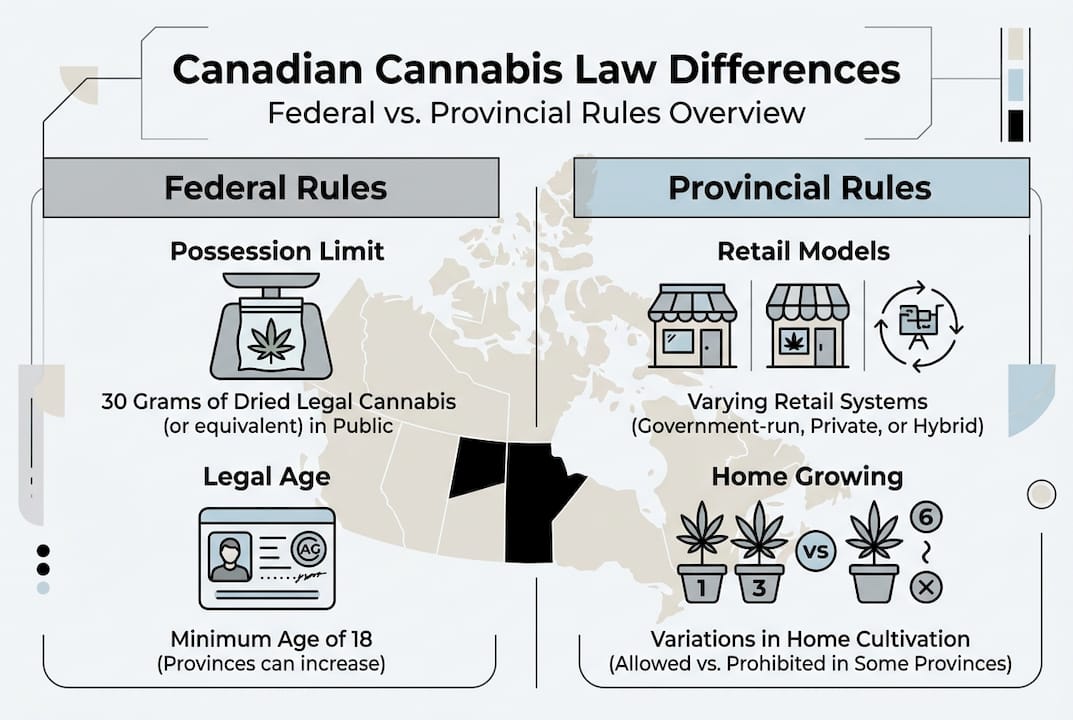
The Cannabis Act legalised recreational cannabis federally in 2018, establishing baseline rules for possession, cultivation, and distribution. Adults aged 18 and older can legally possess up to 30 grams of dried cannabis or its equivalent in public spaces. However, most provinces raised the minimum age to 19, with Alberta allowing purchase at 18 and Quebec requiring users to be 21.
Medical cannabis operates under separate regulations requiring healthcare practitioner authorisation. Patients receive documentation specifying their daily authorised quantity, which determines possession limits that often exceed recreational thresholds. This distinction matters because medical users access different purchase channels and legal protections.
Key federal rules include:
Provinces retain authority over retail models, consumption locations, and additional restrictions. This creates a patchwork of regulations that vary significantly depending on where you live or travel. Understanding both federal baselines and provincial variations prevents unintentional violations and ensures safe, legal use.
Purchasing cannabis online requires navigating provincial regulations that govern licensed retailers, age verification, and delivery protocols. Only government-operated stores or provincially licensed private retailers can legally sell recreational cannabis online. Unlicensed sellers operate illegally, putting buyers at risk of purchasing contaminated or mislabelled products.
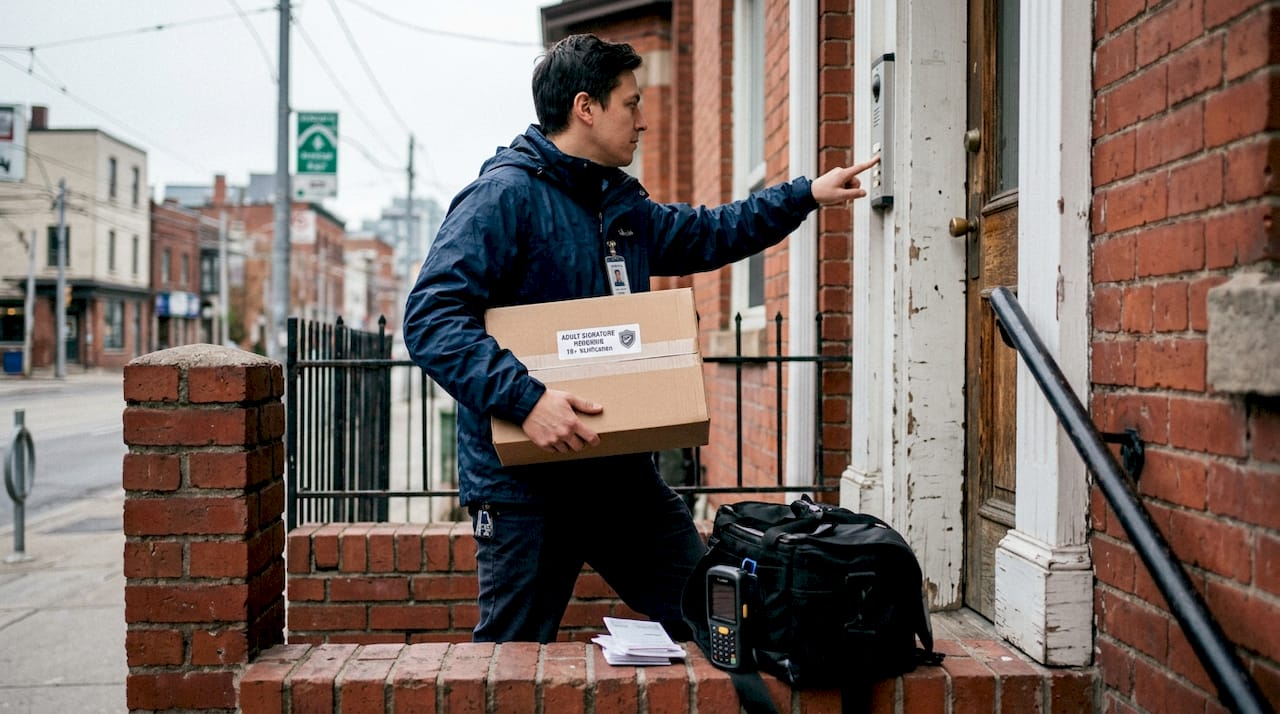
Age verification occurs twice: during online checkout and at delivery. Couriers must see valid government-issued identification confirming the recipient meets the provincial age requirement. No exceptions exist for leaving packages unattended or with someone underage. Most provinces restrict delivery to daytime hours, typically between 9 AM and 9 PM, though exact windows vary.
Transaction limits mirror in-store restrictions, capping purchases at 30 grams dried cannabis equivalent per order. Some provinces impose additional constraints on delivery frequency or total monthly purchases. Cross-provincial delivery remains prohibited, meaning you can only order from retailers licensed in your province of residence.
Pro tip: Always verify a retailer’s licence status through your provincial cannabis authority’s website before placing orders. Legitimate sellers prominently display licence numbers and comply with all verification requirements.
| Province | Minimum age | Delivery allowed | Verification required |
|---|---|---|---|
| Ontario | 19 | Yes, daytime hours | ID at purchase and delivery |
| British Columbia | 19 | Yes, 8 AM to 11 PM | ID at purchase and delivery |
| Alberta | 18 | Yes, restricted hours | ID at purchase and delivery |
| Quebec | 21 | Yes, government stores only | ID at purchase and delivery |
Provincial delivery rules specify packaging requirements, with cannabis arriving in plain, odour-proof containers. Retailers cannot advertise delivery services in ways that appeal to minors or make unverified health claims. Understanding these restrictions helps you shop safely online whilst supporting legal businesses.
Medical cannabis users operate under different legal frameworks than recreational consumers. Healthcare practitioners authorise medical use by issuing documents specifying daily gram amounts, which determine maximum possession limits. These limits typically exceed the 30-gram recreational threshold, allowing patients to maintain adequate supply between purchases.
Purchasing channels differ significantly. Medical users buy directly from Health Canada-licensed producers or designated retailers authorised for medical sales. Recreational consumers access provincial retail systems, whether government-operated or private licensed stores. This separation ensures medical patients receive consistent products and dosages critical for treatment efficacy.
Key distinctions include:
Pro tip: Medical users travelling across provinces should carry authorisation documents and keep cannabis in original packaging with prescription labels. This prevents confusion during police interactions or border crossings within Canada.
Legal protections for medical users include workplace accommodations and housing rights that don’t extend to recreational consumers. Landlords cannot prohibit medical cannabis use outright, though they may restrict smoking methods. Understanding these differences helps you navigate medical versus recreational frameworks effectively.
Where you can consume cannabis varies dramatically across provinces. British Columbia and Ontario allow consumption anywhere tobacco smoking is permitted, including many public outdoor spaces. Saskatchewan, New Brunswick, and Prince Edward Island restrict consumption to private residences, prohibiting use in vehicles, parks, or sidewalks.
Home cultivation presents another area of provincial divergence. Federal law permits growing up to four plants per household, but Quebec and Manitoba enacted outright bans despite this allowance. Courts have upheld these provincial restrictions, meaning residents face penalties for home cultivation even though it’s federally legal.
Pro tip: Check municipal bylaws before starting home cultivation. Some cities impose additional restrictions on outdoor growing, plant visibility from public spaces, or proximity to schools regardless of provincial rules.
| Province | Public consumption | Home cultivation | Plant limit |
|---|---|---|---|
| Ontario | Tobacco-equivalent rules | Allowed | 4 per household |
| British Columbia | Tobacco-equivalent rules | Allowed | 4 per household |
| Alberta | Restricted locations | Allowed | 4 per household |
| Quebec | Private only | Prohibited | 0 |
| Manitoba | Private only | Prohibited | 0 |
These variations create compliance challenges for Canadians moving between provinces or travelling. What’s legal at home might violate rules elsewhere. Always research provincial regulations before consuming or transporting cannabis across provincial borders to avoid unintended violations.
Certain situations require extra attention to avoid serious legal consequences. Driving whilst impaired by cannabis carries the same penalties as alcohol impairment, including licence suspension, fines up to $1,000 for first offences, and potential criminal charges. Police use standardised field sobriety tests and oral fluid screening devices to detect recent cannabis use.
International travel presents absolute prohibitions. Transporting cannabis across Canadian borders remains illegal regardless of destination country’s laws or your medical authorisation. This includes travel to US states where cannabis is legal. Border officials can deny entry, seize products, and impose lifetime travel bans for cannabis possession.
Tourists visiting Canada must follow provincial age and possession rules. Your home country’s laws don’t apply, and ignorance provides no legal defence. Many hotels and accommodations prohibit cannabis consumption on premises, even in provinces allowing public use. Always confirm property policies before consuming.
Pro tip: Medical users experiencing emergencies can possess cannabis in hospitals or care facilities with proper documentation. Keep authorisation papers accessible and inform healthcare providers about your medical cannabis use to ensure appropriate care.
“Understanding legal exceptions and edge cases protects you from unintended violations. When in doubt, consult provincial cannabis authorities or legal professionals before proceeding.”
Key edge cases include:
These legal exceptions require careful navigation to protect your rights whilst respecting legitimate restrictions.
Now that you understand Canada’s cannabis legal framework, applying this knowledge safely enhances your experience. GreenSociety offers expert resources helping you navigate product selection, preparation methods, and consumption best practises within legal boundaries. Whether you’re exploring cannabis edible recipes or following a cannabis flower checklist for quality assessment, informed choices lead to better outcomes.
Our guides emphasise safe consumption respecting provincial regulations whilst maximising enjoyment. Learn about cannabis health benefits, proper storage techniques, and dosage considerations that align with legal possession limits. These resources complement your legal knowledge with practical application strategies.
Federal law sets 18 as the minimum age, but provinces establish higher limits. Most provinces require users to be 19, whilst Alberta permits 18-year-olds and Quebec mandates 21. Always verify age requirements for your specific province before purchasing.
Federal law allows up to four plants per household, but Quebec and Manitoba prohibit home cultivation entirely. Other provinces permit growing within the four-plant limit, though municipalities may impose additional restrictions on outdoor cultivation or plant visibility. Check provincial home growing rules before starting.
Licensed retailers verify age during checkout and again at delivery. Couriers must see valid government identification confirming you meet provincial age requirements. No exceptions exist for unattended delivery or accepting packages through someone underage. Delivery typically occurs during regulated daytime hours specific to your province. Learn more about online purchase verification.
Canada enforces zero tolerance for cannabis-impaired driving. First offences carry minimum $1,000 fines and immediate licence suspension. Subsequent violations result in mandatory jail time, longer suspensions, and criminal records. Police use field sobriety tests and oral fluid screening to detect impairment. Review impaired driving rules to understand enforcement protocols.
Yes, you can transport cannabis between provinces for personal use within legal possession limits. However, you must comply with the destination province’s consumption and cultivation rules upon arrival. What’s legal in your home province may violate rules elsewhere, particularly regarding public consumption or home growing. Always research provincial regulations before travelling with cannabis.