Free Shipping
on orders over $150.00
$0.00
$150.00
Add $150.00 more for free shipping!


Cannabis has long carried a reputation as purely recreational, but that picture is changing fast. Canadian researchers and international health bodies are now documenting real, measurable benefits for pain, sleep, and mood under specific conditions. This guide walks you through how cannabis works inside your body, which wellness goals have the strongest evidence behind them, how different products and delivery methods compare, and what risks you need to weigh before adding cannabis to your self-care routine.
| Point | Details |
|---|---|
| ECS explains cannabis effects | Understanding the endocannabinoid system shows why cannabis affects pain, sleep, and mood. |
| Benefits are short term | Most wellness benefits are modest and supported mainly for short-term use in adults. |
| Method impacts experience | How you use cannabis—smoke, vape, edible, or topical—changes the onset, duration, and side effect profile. |
| Risks rise with frequent use | Tolerance, memory issues, and dependency risks increase with higher doses and frequent use. |
| Evidence-based use is best | Combining current research with careful trial and error can maximise benefits and minimise harm. |
Cannabis contains compounds called cannabinoids, the two most studied being THC (tetrahydrocannabinol) and CBD (cannabidiol). THC is the compound responsible for the psychoactive “high,” while CBD is non-intoxicating and often associated with calming effects. Both interact with a network inside your body called the endocannabinoid system (ECS).
The ECS is a signalling network made up of receptors, enzymes, and naturally occurring compounds your body already produces. Think of it as a dimmer switch for several key biological processes. CB1 and CB2 receptors are the two main receptor types: CB1 receptors sit mainly in the brain and central nervous system, influencing pain perception and mood, while CB2 receptors are concentrated in immune tissues and regulate inflammation.
When cannabinoids bind to these receptors, they modulate how your body responds to pain, stress, and illness. This is why cannabis affects so many different systems at once. Here is what the ECS helps regulate:
A growing body of research continues to map how cannabinoids influence these pathways, giving us a clearer picture of where cannabis may genuinely help. For a plain-language breakdown of how THC and CBD differ in practice, the CBD vs THC guide is a solid starting point.
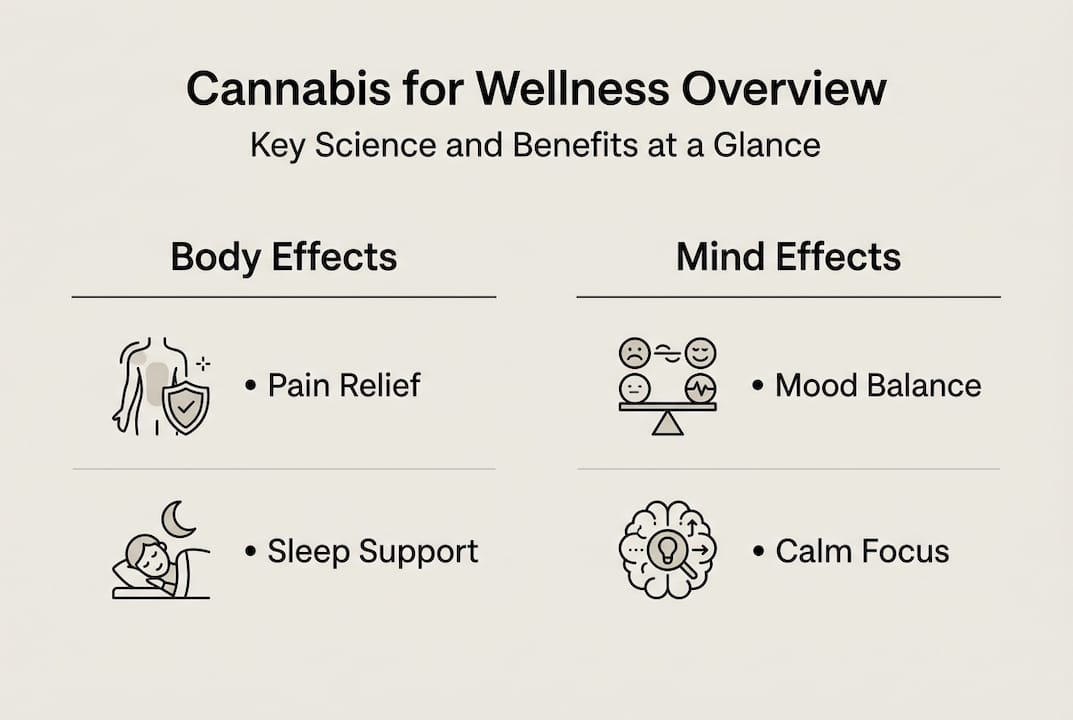
With the basics of the ECS in mind, let us look at what this means for practical health outcomes. The evidence is promising in some areas and thin in others, so it pays to be specific.
79% of studies show short-term improvements in health-related quality of life with medicinal cannabis, including sleep and pain. That is a meaningful signal, but “short-term” is the operative word. Long-term data remains limited.
| Condition | Evidence strength | Best product type | Key risk |
|---|---|---|---|
| Chronic pain | Moderate | High THC:CBD ratio | Dizziness, adverse events |
| Sleep disruption | Moderate | THC-dominant or balanced | Dependence with long-term use |
| Anxiety | Low to moderate | CBD or low-THC | May worsen with heavy use |
| Cognitive ageing | Preliminary | CBD | Insufficient data |
For chronic noncancer pain, high THC:CBD products provide small short-term relief but also increase adverse events like dizziness. Low THC:CBD or CBD alone shows no measurable benefit for pain in current trials. You can read more in our CBD for chronic pain article and our chronic pain guide.
“Wellness applications primarily via ECS modulation; best for short-term chronic pain and sleep in adults… risks limit long-term self-care.”
For sleep, cannabis and mood research suggests some improvement in generalised anxiety and social anxiety, but high-quality trials are still limited. Our CBD for sleep and cannabis for anxiety guides cover these topics in more depth.
Who tends to benefit most:
Where evidence is weakest: cognitive ageing, long-term mental health outcomes, and conditions beyond pain and sleep.
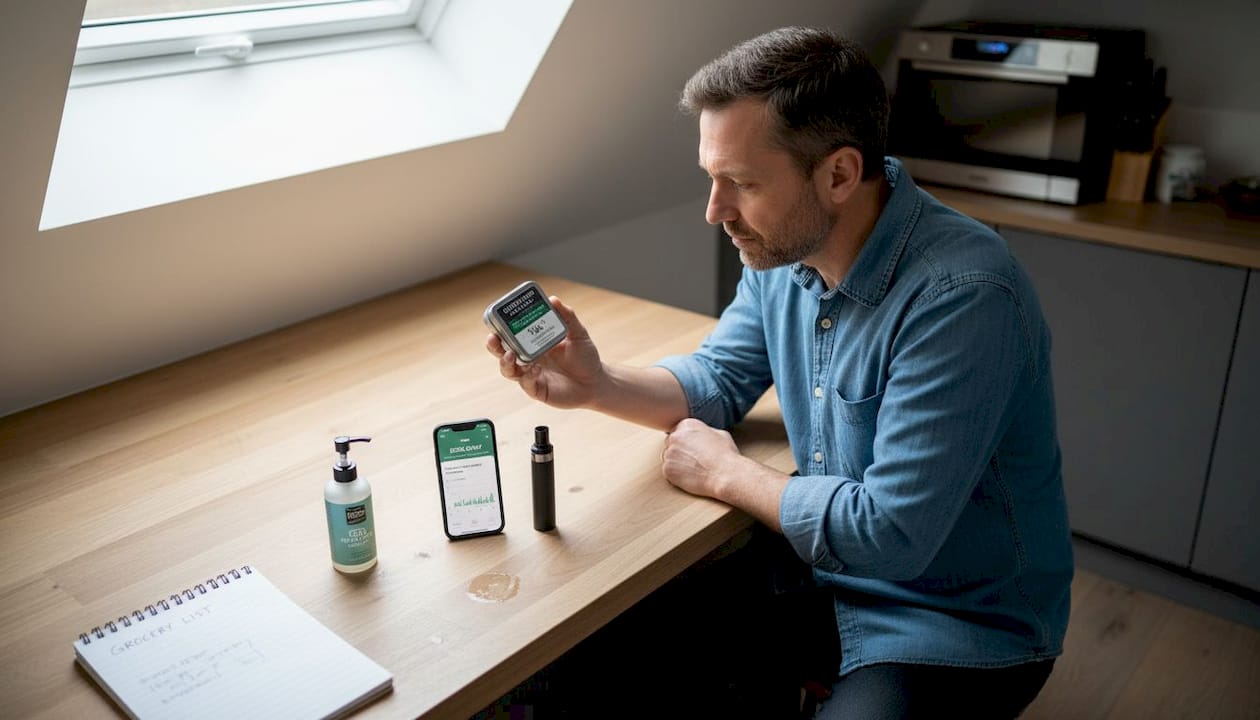
Once you are familiar with the evidence on benefits, understanding how you use cannabis matters just as much as what you use. Delivery method shapes onset time, duration, intensity, and risk profile.
| Method | Time to effect | Duration | Predictability | Key risk |
|---|---|---|---|---|
| Smoking | 5-15 min | 1-3 hrs | Moderate | Respiratory irritation |
| Vaping | 5-15 min | 1-3 hrs | Moderate to high | Lung irritation (device-dependent) |
| Edibles | 30-120 min | 4-8 hrs | Low | Easy to overconsume |
| Topicals | 15-45 min | 2-6 hrs | High | Minimal systemic effect |
Inhalation methods such as smoking and vaping deliver faster relief than edibles, making them easier to dose in real time. Edibles take longer to kick in but produce longer-lasting effects, which suits people managing overnight pain or sleep issues. Our edibles vs smoking guide and consumption methods article break this down further.
For a low-risk first trial, follow these steps:
Pro Tip: Edibles are processed through your liver, which converts THC into a more potent form. This is why a 10 mg edible can feel far stronger than inhaling the same amount. If you are new to edibles, start at 2.5 mg and give it a full two hours before deciding whether to take more.
Choosing a method is only part of the wellness equation. Understanding the risks ensures you get more of the benefit and less of the downside.
Common side effects include:
Tolerance develops with repeated use, reducing symptom relief by approximately 0.5% per session. Higher THC doses may temporarily restore relief but also increase side effects. The practical takeaway: using cannabis daily for wellness may gradually require more to achieve the same result.
For memory, the data is sobering. Heavy cannabis use impairs working memory, with brain activity reduced by 63 to 68% in heavy or recent users. High-potency products are also linked to higher rates of problem use. See the tolerance evidence for a deeper look at how this plays out over time.
Pro Tip: Keep a simple log of your dose, delivery method, and how you felt for at least two weeks. Patterns emerge quickly, and this data helps you make smarter adjustments rather than guessing. Our wellness checklist and CBD vs THC risks guide are useful companions here.
To manage tolerance, consider taking regular breaks of several days, rotating between lower and higher THC products, or switching to CBD-dominant options during rest periods.
With risks and benefits on the table, it becomes easier to decide if cannabis fits your wellness plan. Not everyone is an equally good candidate.
Best-fit profiles:
Higher-risk profiles:
A 2025 review highlights a consistent gap: patient-reported benefits tend to be high, but systematic reviews show low certainty, small effect sizes, and real risks including addiction and psychosis. This does not mean cannabis has no place in wellness. It means the decision deserves honest reflection.
“The gap between patient-reported benefit and clinical evidence is real. Overestimating benefits or minimising risks leads to poor outcomes.”
For older adults, a cannabis and ageing overview suggests some benefit for pain and sleep, but also heightened sensitivity to side effects. If you are exploring cannabis to manage anxiety, starting with CBD-dominant products and low doses is the most cautious path.
Before trying cannabis for wellness, ask yourself: Is my goal short-term symptom relief or long-term management? Have I spoken with a healthcare provider? Do I have any risk factors that increase my vulnerability to side effects?
As you weigh your options for integrating cannabis into your wellness routine, having access to trustworthy products and clear information makes all the difference.
At Green Society, we stock a curated range of wellness-focused cannabis products, from CBD products to a wide selection of incredible edibles suited to different needs and experience levels. Whether you are just starting out or refining your routine, our cannabis and your health guide offers practical context to help you shop with confidence. Every order is handled discreetly, shipped quickly, and backed by a commitment to product quality. Explore our catalogue and find what fits your wellness goals.
Cannabis shows short-term sleep and pain benefits in older adults, but side effects like dizziness and cognitive changes are more pronounced with age. Medical guidance is strongly advised before starting.
Tolerance builds with repeated use, gradually reducing the relief you feel per session. Starting low and adjusting slowly helps preserve effectiveness over time.
THC delivers stronger symptom relief but carries more side effects, while CBD is milder with fewer risks. For chronic noncancer pain, high THC:CBD products show small short-term gains; CBD alone shows no measurable pain benefit in current trials.
Yes. While some people experience reduced anxiety, mixed evidence for anxiety shows that heavy or chronic use can worsen symptoms, particularly with high-THC products.
Heavy use impairs working memory and is linked to higher rates of dependence and mental health problems. Long-term daily use carries meaningful risks that outweigh the wellness benefits for most people.