Free Shipping
on orders over $150.00
$80.00
$150.00
Add $70.00 more for free shipping!
-
×
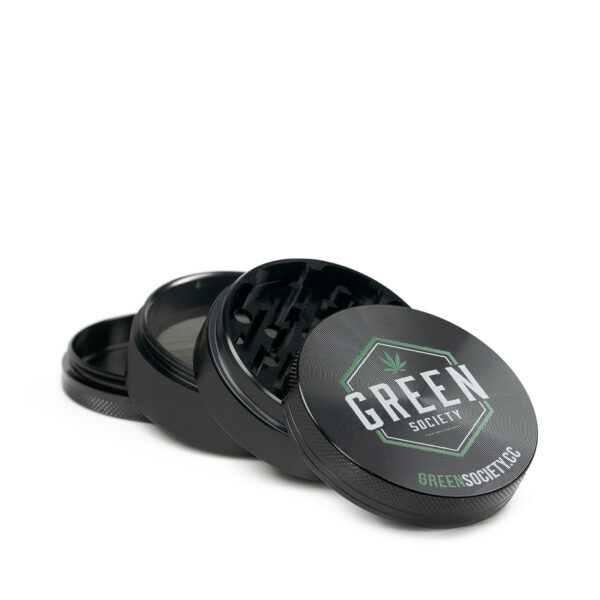 Green Society Herb Grinder
$40.00
Green Society Herb Grinder
$40.00

TL;DR:
- Cannabis’ impact on work performance depends on strain, dose, consumption method, and job type, with THC impairing key cognitive functions for hours. Self-assessment of impairment is unreliable, as THC impairs metacognition, potentially leading users to overestimate their productivity while underperforming. Responsible use involves understanding specific conditions under which cannabis aligns with work goals and timing consumption to minimize cognitive and safety risks.
Whether you use cannabis recreationally on weekends or more regularly, the question of how it affects your work performance is one worth taking seriously. The reality is far more nuanced than either camp suggests. Cannabis does not universally destroy focus, nor does it reliably boost creativity. What actually happens depends on the strain, the dose, how you consume it, the type of work you do, and how often you use it. This guide cuts through the noise with evidence-based answers that help you make smarter decisions about when, how, and whether to use cannabis in relation to your work life.
| Point | Details |
|---|---|
| Short-term effects matter | Productivity drops for 3-6 hours after cannabis use due to impaired memory, attention, and reasoning. |
| Method impacts impairment | Vaping causes faster and more intense decline in cognitive performance than smoking or edibles. |
| Job type influences risk | Analytical and safety-sensitive roles face higher risk, while routine tasks are less affected. |
| Legalization impacts are nuanced | Legal cannabis does not harm job rates, but can increase workplace absences. |
| Know your limits | Self-awareness and honest self-assessment are key to balancing cannabis use with personal productivity. |
With misconceptions about cannabis and productivity widespread, let’s clarify what science really shows about how cannabis impacts key mental functions that matter at work.
The core issue is that THC, the main psychoactive compound in cannabis, interacts directly with brain regions responsible for memory, attention, reasoning, and motivation. These are not minor functions. They are the engine of productive work. Acute THC exposure impairs working memory, sustained attention, analytical reasoning, and psychomotor functions critical for productivity, with effects lasting 3 to 6 hours post-inhalation. That window covers most of a standard workday if you use in the morning.
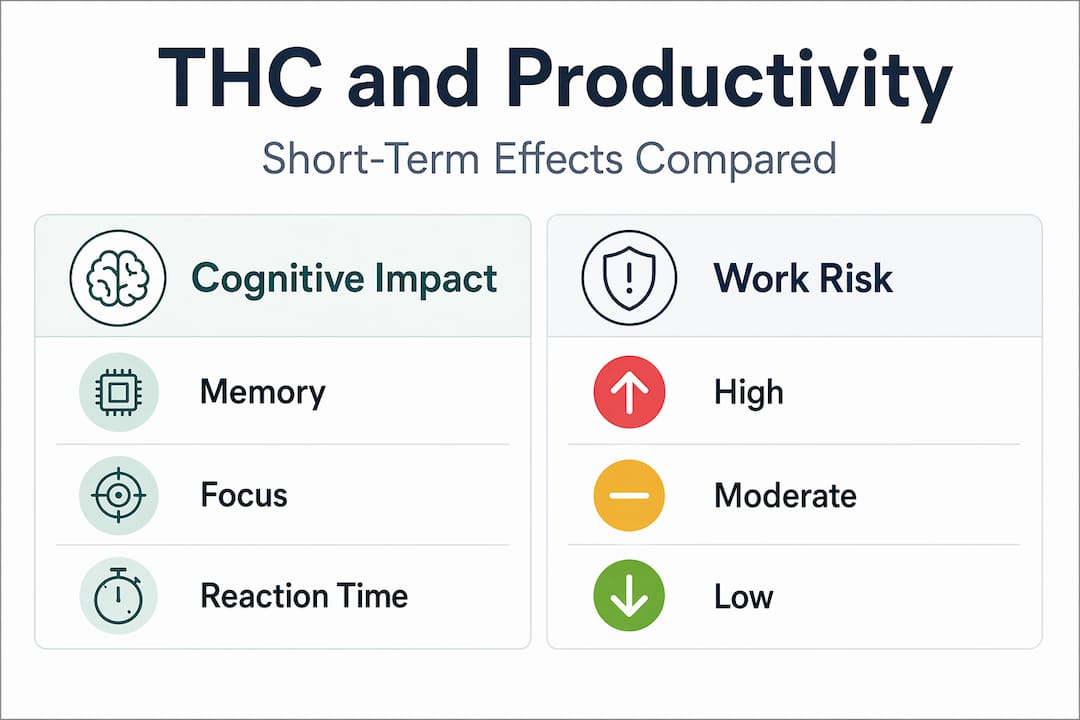
Here is a breakdown of how cannabis impairment maps to specific work functions:
| Cognitive function | Short-term THC effect | Risk level for work |
|---|---|---|
| Working memory | Significantly impaired | High |
| Sustained attention | Reduced | High |
| Analytical reasoning | Slowed and less accurate | High |
| Psychomotor speed | Reduced reaction time | Very high (safety roles) |
| Creative thinking | Mixed results | Moderate |
| Routine pattern tasks | Minimal change | Low to moderate |
One of the trickiest aspects of acute THC impairment is that users commonly feel sharper, more focused, or more creative while under the influence. This self-assessment is unreliable. The brain’s capacity for accurate self-evaluation is itself impaired when THC is active, meaning you may genuinely believe you are doing excellent work while your actual output is measurably weaker. This is not a small quirk. It is a meaningful risk, particularly for anyone whose work affects others.
Longer-term patterns of heavy use bring a different but equally serious concern. Chronic cannabis use reduces dopamine synthesis in the striatum, potentially contributing to reduced motivation and what researchers call amotivational syndrome. Dopamine is the brain’s reward chemical. When its production is blunted, everyday tasks feel harder to start and less satisfying to complete. This is not about willpower. It is a measurable neurochemical shift that can quietly undermine your drive over time.
Understanding the THC vs CBD differences is also important here, because CBD does not carry the same cognitive burden as THC. Many users are switching to CBD-dominant products precisely to access therapeutic benefits without the productivity risks tied to high-THC consumption.
Pro Tip: If you use cannabis for anxiety or sleep and worry about next-day fogginess, explore CBD options or high-CBD strains with low THC content. The cognitive trade-offs are significantly smaller.
“Users often rate their own performance higher while impaired. This metacognitive gap is one of the most underappreciated hazards of cannabis use during work hours.” — Research summary on THC and cognitive self-assessment
Knowing cannabis can impact mental performance, the way it is consumed also matters, a lot. Different methods can change how fast and how much productivity is affected.
Think of it this way: if impairment is the outcome you want to minimise, the speed and intensity of onset matters enormously. Vaping delivers THC into the bloodstream almost immediately, with peak plasma levels reached within minutes. That rapid spike is what produces a more intense initial high, but it also means a sharper, faster cognitive drop. According to pharmacological effects of vaporized cannabis, vaping may impair cognition more acutely than smoked or oral cannabis because inhalation peaks faster and reaches higher blood concentrations in less time.
| Consumption method | Onset time | Peak impairment | Duration of effects |
|---|---|---|---|
| Vaping | 1 to 5 minutes | 15 to 30 minutes | 2 to 3 hours |
| Smoking | 5 to 10 minutes | 20 to 40 minutes | 2 to 3 hours |
| Edibles | 30 to 90 minutes | 2 to 3 hours | 4 to 8 hours |
| Tinctures (sublingual) | 15 to 45 minutes | 1 to 2 hours | 3 to 5 hours |
Edibles present a uniquely tricky situation for workers. Because the onset is delayed, users sometimes consume more than intended, expecting the effects to arrive sooner. The result can be unexpectedly intense impairment that arrives hours later, right in the middle of the workday. This is one of the most common mistakes made by newer cannabis users.
Smoked cannabis sits somewhere in the middle. The onset is faster than edibles but slower and slightly less intense than vaping. For those who use cannabis recreationally in the evening, smoked or edible products may be preferable precisely because they are easier to plan around a work schedule.
If you are curious about how vaping compares to other delivery methods in more detail, our cannabis vape guide walks through everything from hardware to dosing considerations.
Pro Tip: If you use cannabis the evening before a workday, edibles consumed early in the evening (before 8 pm) are often metabolised more fully by morning than a late-night vaping session would be, giving you more predictability around next-day clarity.
The practical takeaway is clear. The method you choose shapes how sharply and how long your cognitive function is affected. Understanding this gives you real control over the risk profile of your cannabis use relative to your work commitments.
But does cannabis impact all kinds of work and workers the same way? Not quite. The context of your job and your unique patterns of use play a big role in determining the actual risk.

Research consistently shows that THC impairs analytical and attention tasks more than creative ones, and claims about microdosing improving productivity remain unverified by controlled research. This is an important distinction. A graphic designer brainstorming concepts is operating under different cognitive demands than a financial analyst reviewing data models or an engineer operating heavy equipment.
Here is how different job categories are affected:
The longer-term picture for heavy users is concerning regardless of job type. Cannabis use and low job complexity have reciprocal negative effects on career outcomes like pay and prestige. In other words, frequent cannabis use and less demanding work tend to reinforce each other in ways that can stall career advancement over years, not just during individual intoxicated periods.
“The most important variable is not whether someone uses cannabis, but whether they use it in ways that allow them to stay sharp when it matters most.” — Occupational health research synthesis
Understanding the broader economic impact of marijuana in Canada also adds context to this conversation. Cannabis is a legitimate industry that supports thousands of jobs. The goal is not abstinence for its own sake. It is informed use that does not quietly sabotage your career.
Exploring workplace realities, let’s look at what actually changes after legalization, both for broader employment trends and your own career path.
Canada’s legalisation of recreational cannabis in 2018 provided researchers with a real-world laboratory for studying macro-level employment effects. The findings are more nuanced than advocates or critics predicted.
Key findings from post-legalisation research:
| Use pattern | Employment risk | Cognitive risk | Career trajectory risk |
|---|---|---|---|
| Occasional evening use | Very low | Very low | Negligible |
| Weekend recreational use | Low | Low | Negligible |
| Daily evening use | Low to moderate | Low to moderate | Moderate over time |
| Work-hour use | High | High | High |
| Heavy chronic daily use | Moderate (macro) | High | High |
The absence data is worth reflecting on separately. More absences do not necessarily mean workers are calling in sick because they are high. The research points to health issues, including mental health, as a mediating factor. Cannabis, particularly at higher doses, can exacerbate anxiety or disrupt sleep patterns in ways that affect next-week performance rather than next-morning performance. These indirect effects are just as real as direct impairment.
For anyone tracking their own patterns, the most useful question is not “am I impaired right now?” but rather “is my overall relationship with cannabis supporting or undermining my long-term career goals?”
Here is the perspective that most productivity guides miss entirely: the question of whether cannabis helps or hurts your work is almost impossible for you to answer objectively while you are using it.
Metacognition, the ability to accurately assess your own thinking, is one of the first things impaired by THC. This is not a small caveat. It means the confident feeling that you are productive, creative, and on top of things while high is generated by the same brain that is simultaneously less capable of checking whether that confidence is warranted. You are, in a very real sense, the least reliable judge of your own impairment.
We think the most productive cannabis users share one unusual trait: radical honesty about their own limits. They track their output, not just their feelings about their output. They pay attention to feedback from others. They deliberately schedule cannabis use away from work that demands their best cognitive performance, not because they have been told to, but because they have genuinely tested both states and know the difference.
The anxiety angle is also underappreciated. Many people use cannabis to manage cannabis and anxiety interactions, hoping to take the edge off work stress. This can work in the short term but creates a complicated dependency loop when the anxiety itself is partially driven by underperformance caused by impairment. The solution is not necessarily abstinence. It is honest sequencing: manage anxiety with cannabis in the evening, and show up fully present the next day.
Workplace safety rules around cannabis exist for good reason. They are not about moral judgement. They reflect the reality that impaired workers cause accidents, errors, and harm to themselves and their colleagues. Erring on the side of caution in safety-sensitive environments is not a political statement. It is common sense backed by evidence.
The most useful shift is away from “is cannabis good or bad for productivity” and toward “what are the specific conditions under which cannabis use is compatible with my work goals?” That question has an answer. The other one does not.
If you are looking to make more informed choices about the cannabis products you use and how they fit into your lifestyle, Green Society is a great starting point for both education and quality sourcing.
Whether you are curious about low-impairment options like CBD-dominant products, want to understand edible dosing better through our top edibles guide, or are exploring vaping options with a clearer picture of onset timing, Green Society provides the resources and curated product selections to support smarter decisions. Our CBD edibles guide is particularly useful for anyone wanting therapeutic benefits without the productivity trade-offs linked to high-THC consumption. Responsible cannabis use starts with knowledge, and quality products make a real difference in predictability and consistency of effects.
Waiting at least 3 to 6 hours after inhaled cannabis is recommended, as cognitive impairment peaks within this window and includes working memory, attention, and reasoning. For edibles, the window may extend to 8 hours depending on dose.
Not universally. Chronic use reduces dopamine and can contribute to amotivational syndrome, but occasional recreational users typically do not experience the same sustained neurochemical changes as heavy daily users.
Research shows no significant next-day impairments following evening cannabis use, making responsible nighttime use generally compatible with next-morning work performance for most users.
Legalisation does not significantly harm overall employment rates or wages, but workplace absences increase post-legalisation in dispensary-accessible areas, linked primarily to health-related factors rather than direct on-the-job impairment. The labour market effects are modest but worth monitoring at a policy level.