Free Shipping
on orders over $150.00
$0.00
$150.00
Add $150.00 more for free shipping!


TL;DR:
- Current evidence does not strongly support routine use of cannabis for osteoarthritis pain, as most studies show only modest or no benefit. While many patients report personal improvements, controlled trials often fail to demonstrate significant pain relief beyond placebo effects, partly due to product variability and study limitations. Consumers should approach cannabis as an experimental option, use regulated products cautiously, start with low doses, and consult healthcare providers before inclusion in treatment plans.
Cannabis is everywhere in conversations about chronic pain, and arthritis sufferers understandably want to know if it actually helps. The reality, as of 2026, is more nuanced than most headlines suggest. Systematic review evidence does not yet justify routine clinical use of cannabis-based products for osteoarthritis pain, which may surprise those who’ve seen glowing testimonials online. That doesn’t mean cannabis is useless or that exploring it is wrong. It means you need accurate, current information before making decisions that affect your health.
| Point | Details |
|---|---|
| Evidence is limited | Recent reviews show little high-quality proof that cannabis relieves arthritis pain better than placebo. |
| Product differences matter | Effects, safety, and reliability depend largely on product type, THC:CBD ratio, and administration method. |
| Safety is promising but evolving | Most studies report mild side effects and good short-term tolerability, but long-term data is lacking. |
| Start slow and keep records | If trying cannabis legally, start with a low dose, track symptoms, and discuss changes with your healthcare provider. |
| Consult medical professionals | Healthcare guidance is essential before adding or substituting any arthritis therapy, including cannabis. |
Arthritis is not a single condition. It refers to over 100 diseases that cause joint inflammation, pain, and reduced mobility. The two most common forms are osteoarthritis (OA), a degenerative condition where cartilage breaks down over time, and rheumatoid arthritis (RA), an autoimmune disease where the immune system attacks the joints. In Canada, roughly one in five adults lives with some form of arthritis, making it the country’s leading cause of disability.
The pain itself is complicated. OA pain comes from worn cartilage, inflamed synovial tissue, and altered nerve signalling in the joint. RA pain is driven by systemic inflammation and immune responses that can affect organs well beyond the joints. These different mechanisms matter enormously when thinking about which treatments might work.
Conventional treatments offer real but incomplete relief:
Many people reach a point where these options produce diminishing returns or unacceptable side effects. That’s when they start looking at alternatives, and cannabis is consistently at the top of that list. The concept of CBD for chronic pain has gained significant public interest, though as the Clinical Rheumatology 2026 review makes clear, the clinical evidence for OA specifically still lags behind public enthusiasm.
With this context in place, it’s important to examine both the promise and the pitfalls of cannabis for arthritis.
Here is the honest picture: most rigorous clinical trials to date show modest or no significant benefit for arthritis pain when cannabis is compared directly against a placebo. That finding is not trivial. Placebo response in pain trials is notoriously high, often 20 to 30 percent improvement on its own, so if a cannabis product can’t beat that, it raises real questions about its clinical utility.
One of the most cited recent studies is the CANOA trial, a 60-day randomised, double-blind, placebo-controlled trial of a CBD-rich full-spectrum cannabis oil for knee OA. The result? No superiority over placebo for pain relief. This was a well-designed trial, which makes the null finding meaningful rather than dismissible.
“The current body of evidence is limited by dosing and product variability, short trial durations, and very few robust comparisons to standard analgesics.” — Clinical Rheumatology, 2026
What that expert commentary tells us is that the absence of strong evidence is partly a research design problem, not necessarily proof that cannabis is ineffective. Trials often use wildly different products, doses, and patient populations, making it almost impossible to draw clean conclusions.
Here’s a snapshot of what leading studies have found:
| Study type | Pain outcome | Tolerability | Key limitation |
|---|---|---|---|
| CANOA knee OA trial (60 days, RCT) | No benefit over placebo | Good, no serious adverse events | Single product, short duration |
| Systematic review (Clinical Rheumatology, 2026) | Inconsistent, mostly modest | Generally acceptable | Product variability, low comparisons |
| Observational/patient surveys | Frequent self-reported benefit | Variable, higher side effects noted | No control group, reporting bias |
The gap between patient-reported outcomes and controlled trial results is one of the most important tensions in this field. Many people genuinely feel better when using cannabis for pain. That experience is real, but it’s difficult to separate from placebo effect, lifestyle changes, or reduced anxiety about pain, all of which influence how pain is perceived.
For a broader look at what the research says about cannabis for chronic pain, the picture is somewhat more optimistic outside of arthritis specifically, particularly for neuropathic pain. If you’re trying to identify whether specific cannabis strains for pain relief might make a difference, strain choice is just one variable in a very complex equation.
Not all cannabis products are remotely the same, and this is where a lot of consumer confusion originates. Understanding what you’re actually taking is essential to having any consistent experience.
Key product forms include:
Understanding full-spectrum vs isolate CBD matters more than most people realise. Full-spectrum products contain CBD alongside other cannabinoids, terpenes, and trace THC (below 0.3% in hemp-derived products, or higher in regulated cannabis). The theory is that these compounds work better together, which is called the entourage effect. Broad-spectrum removes the THC but keeps other compounds. Isolate is pure CBD only. Clinical evidence for the entourage effect is intriguing but still preliminary.
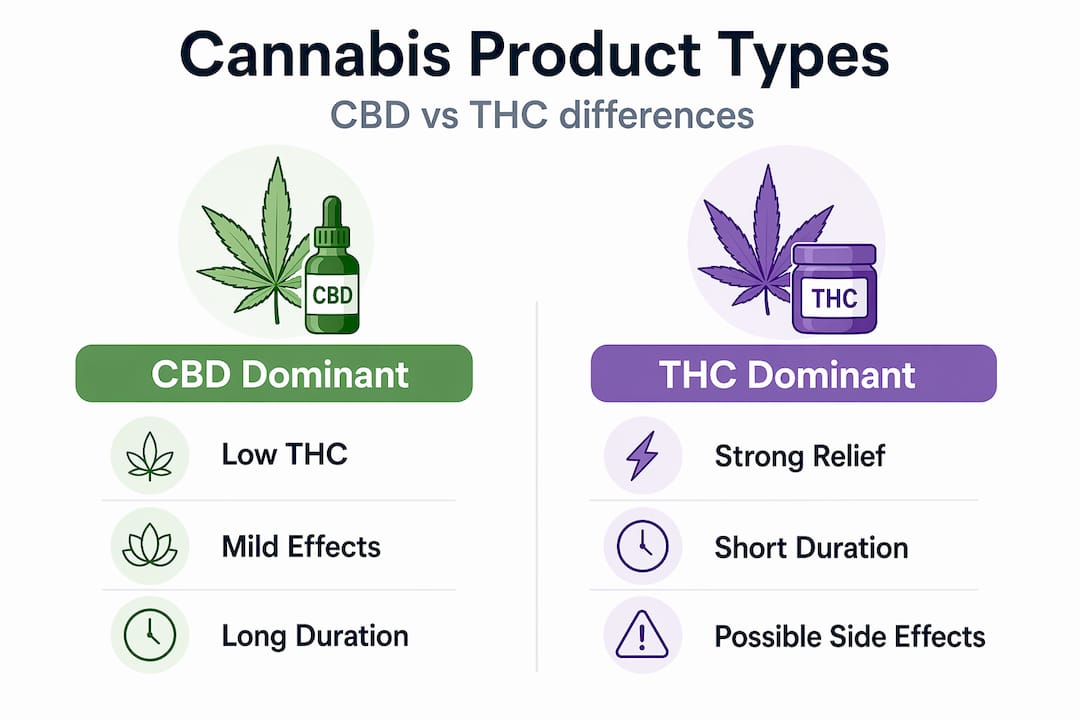
THC:CBD ratio is another critical variable. A 1:1 ratio means equal parts THC and CBD. A 20:1 CBD-dominant product contains very little THC and is unlikely to cause intoxication. A 1:20 THC-dominant product is the inverse. For arthritis specifically, many clinicians lean towards CBD-dominant or balanced ratios to minimise psychoactive effects, though as noted by product variability research, no specific ratio has been proven superior. If you want to understand this topic more deeply, a good resource on understanding THC:CBD ratios can help you navigate the options.
| Product form | Typical onset | Duration | Key consideration |
|---|---|---|---|
| Flower (smoked/vaped) | 2 to 10 minutes | 1 to 3 hours | Hard to dose precisely, respiratory risk |
| Oil/tincture (sublingual) | 15 to 45 minutes | 4 to 6 hours | Better dosing control |
| Edibles | 30 minutes to 2 hours | 6 to 8 hours | Highly variable absorption |
| Topicals | 20 to 40 minutes | 2 to 4 hours | Localised only, minimal systemic effect |
For those exploring cannabis topicals for pain, these are often a sensible first step because they carry the lowest risk of systemic side effects while delivering product directly to the affected area.
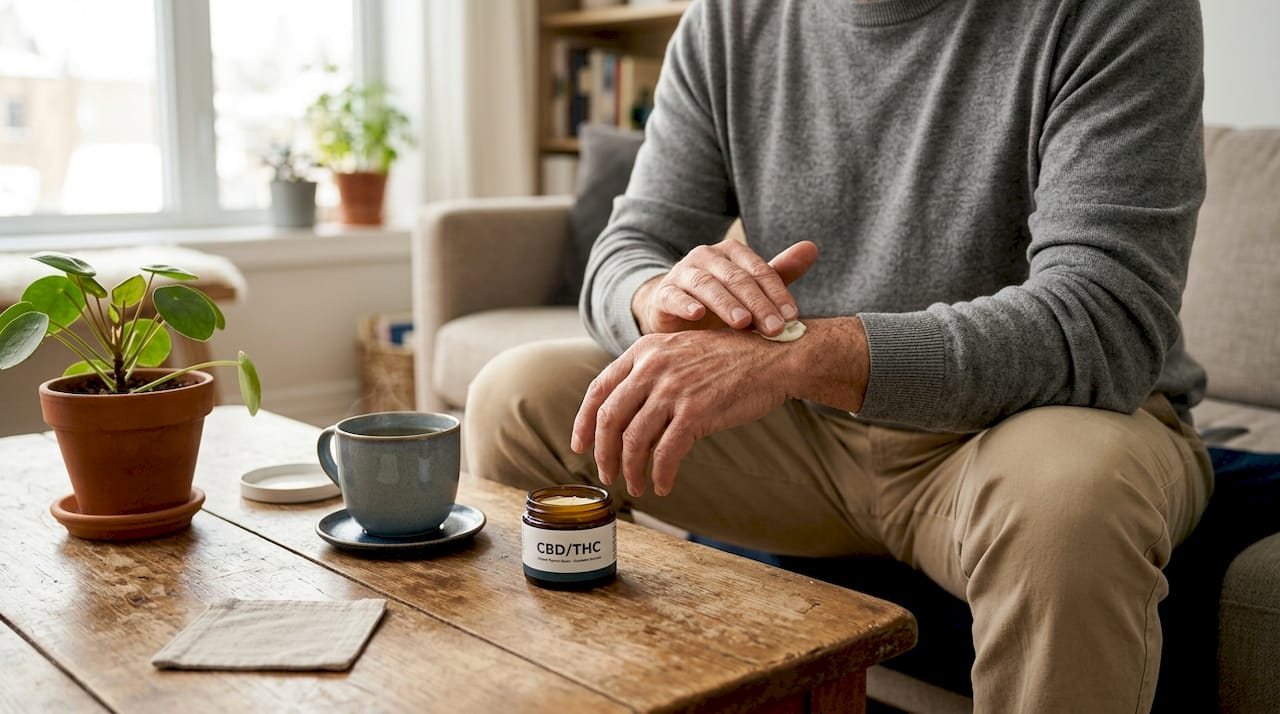
Pro Tip: Always check the label for exact percentages of THC and CBD, not just the marketing description. “High CBD” means different things from different brands. Look for third-party lab testing certificates (often called certificates of analysis) that confirm actual cannabinoid content.
One of the more reassuring findings across recent trials is tolerability. CBD-rich cannabis oils were well tolerated in the CANOA trial with no serious adverse events reported over the 60-day period. That’s genuinely useful information for people worried about trying something new.
That said, common side effects are real and worth knowing:
CBD-dominant preparations generally produce far fewer intoxicating side effects than THC-heavy ones, which is why they’re often recommended as a starting point for pain management. However, long-term safety for any cannabis product in arthritis patients is still unknown. As the Clinical Rheumatology 2026 review notes, standardised dosing and formulation guidance is still needed before robust clinical recommendations can be made. You can find additional guidance on cannabis dosing to help you approach this carefully.
If you’re considering trying cannabis for arthritis relief, here is a practical starting framework:
For more cannabis pain relief tips, practical guidance can help you build a thoughtful approach. And if you want to understand more about what the research says regarding CBD oil benefits, there’s a solid foundation to draw from for informed decision-making.
Pro Tip: Keep a symptom and dosing journal for at least two to four weeks. Note pain scores on a simple scale of one to ten, your sleep quality, and any mood changes. This information is invaluable both for your own learning and for conversations with your healthcare provider.
Here’s something worth saying plainly: the cannabis industry moved faster than the science. Products multiplied, marketing got loud, and clinical research was left scrambling to catch up. That’s not unique to cannabis, it happens with many emerging therapeutics, but it creates a genuine problem for consumers who want reliable answers.
What makes this especially frustrating is that the gap between real-world use and clinical evidence isn’t evidence of failure. It’s evidence of a system that wasn’t designed to evaluate thousands of product variations at once. Traditional pharmaceutical trials test one compound at a controlled dose. Cannabis comes in hundreds of varieties, ratios, and forms, and every batch can differ. The research infrastructure for that kind of complexity takes years to build.
In the meantime, here is what we think matters most for anyone managing chronic pain with cannabis: treat this as an informed experiment, not a guaranteed solution. Set realistic expectations. If your goal is complete pain elimination, cannabis is unlikely to deliver that based on current evidence. If your goal is modest improvement in daily comfort, reduced reliance on other medications, or better sleep despite pain, the picture is more open.
Consumers also play a role beyond their own experience. Sharing detailed, accurate feedback with healthcare providers contributes to the broader understanding of how cannabis performs in real-world conditions. Participating in registries or observational studies, if available in your region, adds to the body of evidence that eventually shapes clinical guidelines. The relationship between patients and researchers needs to be a genuine dialogue, not a one-way broadcast of promises that haven’t yet been proven.
Clinician involvement is non-negotiable here. Adding any new treatment to an existing arthritis regimen, including something as seemingly low-risk as a CBD topical, should involve your healthcare provider. Drug interactions, particularly with blood thinners or immunosuppressants common in RA treatment, are a real consideration that requires professional evaluation.
Navigating cannabis products for health purposes is a lot easier when you have reliable, regulated sources and good educational resources at your fingertips.
At GreenSociety, we’re committed to providing Canadians with access to high-quality, lab-tested cannabis products alongside the information needed to make confident choices. Whether you’re curious about exploring CBD edibles as a low-risk starting point, looking for a broader look at Canada’s best CBD products, or want to understand the key edible benefits before committing to a method, our curated guides and product listings can help you move forward with clarity. All products available through our platform come from regulated, licensed sources, giving you the quality assurance that matters when you’re making health-related decisions.
Current clinical trials do not show that cannabis products significantly outperform placebo for arthritis pain, as the CANOA knee OA trial found no superiority over placebo after 60 days. Some users report personal benefits, but controlled evidence remains limited.
No single product type, ratio, or delivery method has been proven superior because trial variability makes definitive comparisons difficult. CBD-dominant oils or topicals are commonly recommended as lower-risk starting points.
Short-term trials show that CBD-rich cannabis oils are well tolerated with no serious adverse events, though mild side effects like drowsiness and dry mouth are common. Long-term safety data and optimal dosing guidelines have not yet been established.
Combining cannabis with arthritis medications, particularly DMARDs, corticosteroids, or blood thinners, may carry interaction risks and should always be discussed with your doctor before you make any changes to your treatment plan.