Free Shipping
on orders over $150.00
$0.00
$150.00
Add $150.00 more for free shipping!

TL;DR:
- Hemp and cannabis come from the same species, Cannabis sativa, with THC content defining their legal classification. Hemp contains 0.3% or less THC and is grown mainly for industrial uses and CBD, while cannabis has higher THC levels for recreational and medicinal purposes. The legal and practical differences are primarily due to THC concentrations, affecting effects, regulations, and product choices.
Most Canadians have, at some point, stood in front of a shelf of CBD oils, hemp seeds, and cannabis products and wondered: are these actually different things? The short answer is yes, and no. Hemp and cannabis come from the same species, Cannabis sativa, but a single chemical threshold, the amount of THC present, separates one from the other under the law. That small distinction carries enormous consequences for legality, wellness applications, and what you actually feel when you use a product. This guide breaks it all down so you can make confident, informed choices.
| Point | Details |
|---|---|
| Same plant, legal line | Hemp and cannabis are both Cannabis sativa, legally separated by their THC content. |
| THC vs CBD effects | THC produces a high, while CBD supports wellness without intoxication. |
| Recent law changes | 2025 and 2026 rules count all THC forms, so labels and lab tests are more important than ever. |
| Purpose-driven choices | Pick hemp (CBD) for wellness and cannabis for recreational or medical effects—always check legal status and product certificates. |
Now that we’ve identified the root of the confusion, let’s break down what makes hemp and cannabis distinct from each other in clear terms.
Both hemp and cannabis grow from the same plant species, Cannabis sativa. If you placed a hemp plant beside a cannabis plant in a greenhouse, a trained botanist might spot visual differences, but genetically they belong to the same family. The legal and practical distinction has nothing to do with botany and everything to do with chemistry.
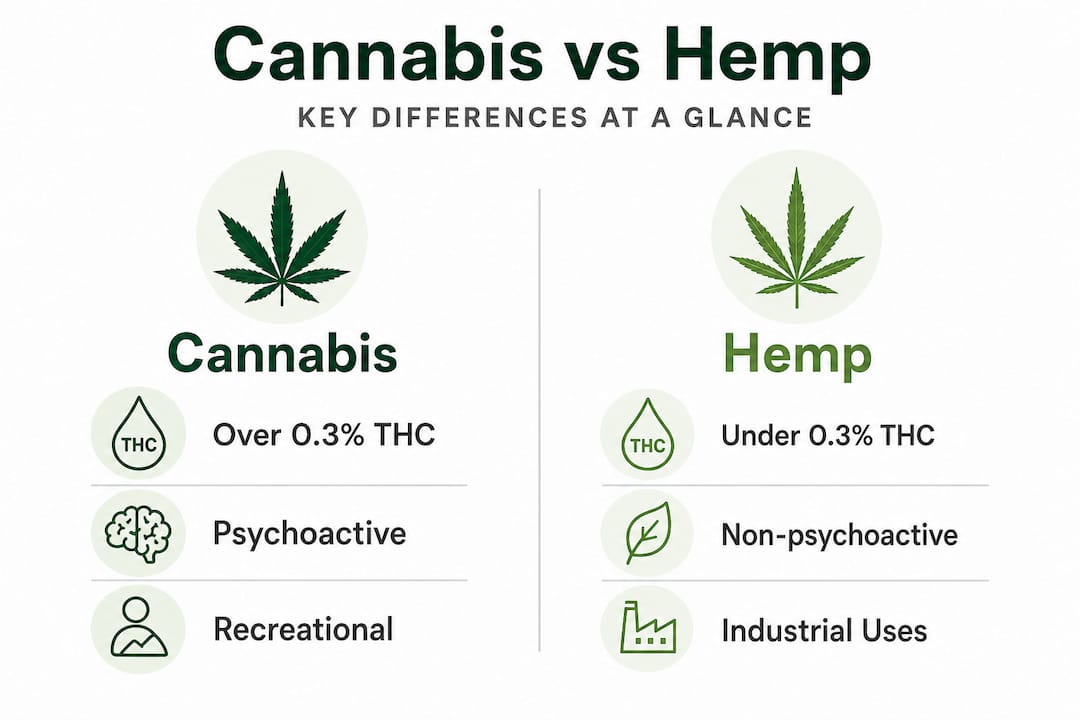
The critical number is 0.3%. According to the THC threshold standard, any Cannabis sativa plant with 0.3% or less delta-9 THC by dry weight is legally classified as hemp. Anything above that threshold is cannabis (often called marijuana in legal texts). That single number unlocks entirely different regulatory frameworks, market access, and consumer experiences.
The difference between hemp and cannabis also shows up in how each plant is grown. Hemp varieties are typically tall, fibrous, and cultivated for industrial purposes, think rope, textiles, paper, seeds, and CBD extract. Cannabis grown for recreational or medical use is usually shorter and bushier, with dense, resinous flowers bred specifically for high THC content. Growers optimise these plants in opposite directions, even though they share the same species name.
Here is a quick side-by-side comparison of the two:
| Feature | Hemp | Cannabis (marijuana) |
|---|---|---|
| Species | Cannabis sativa | Cannabis sativa |
| THC content | ≤0.3% | >0.3% (often 15–30%+) |
| Primary use | Fibre, seeds, CBD products | Recreation, medical |
| Plant structure | Tall, fibrous, minimal flower | Bushy, dense, resinous flowers |
| Legal status (Canada) | Legal with limits | Legal for adults 19+ |
| Psychoactive effect | None | Yes (dose-dependent) |
Key things to know about why this matters:
“The legal distinction is arbitrary from a botanical standpoint. These are the same species. What changes is the THC concentration, and that distinction enables a broad industrial hemp market while keeping high-THC cannabis under tighter control.”
Understanding this foundation makes everything else, from reading a product label to navigating Canadian law, much easier to grasp.
With the basic plant differences clear, it’s vital to understand the compounds that set hemp and cannabis apart, THC and CBD.
THC (tetrahydrocannabinol) is the compound responsible for the psychoactive high most people associate with cannabis. It binds to CB1 receptors in the brain, producing feelings of euphoria, altered time perception, and in some cases, heightened anxiety at high doses. CBD (cannabidiol), on the other hand, is non-psychoactive. It interacts with the endocannabinoid system in a different way, and is widely used for wellness purposes. According to WebMD’s CBD vs THC overview, CBD modulates the endocannabinoid system (ECS) to deliver benefits like anxiety relief and pain management without causing intoxication.
Here is a practical comparison of how these two compounds differ:
| Compound | Source | Psychoactive? | Common uses | Legal status |
|---|---|---|---|---|
| THC | Cannabis (marijuana) | Yes | Recreation, nausea, appetite, pain | Regulated, adult use in Canada |
| CBD | Hemp (primarily) | No | Anxiety, sleep, inflammation, relaxation | Legal with THC limits |
The THC content in modern recreational cannabis strains can reach well beyond 25%, while hemp must legally stay under 0.3%. This is not a minor gap. It is the difference between a product that gets you high and one that does not. For wellness seekers, that distinction is everything.
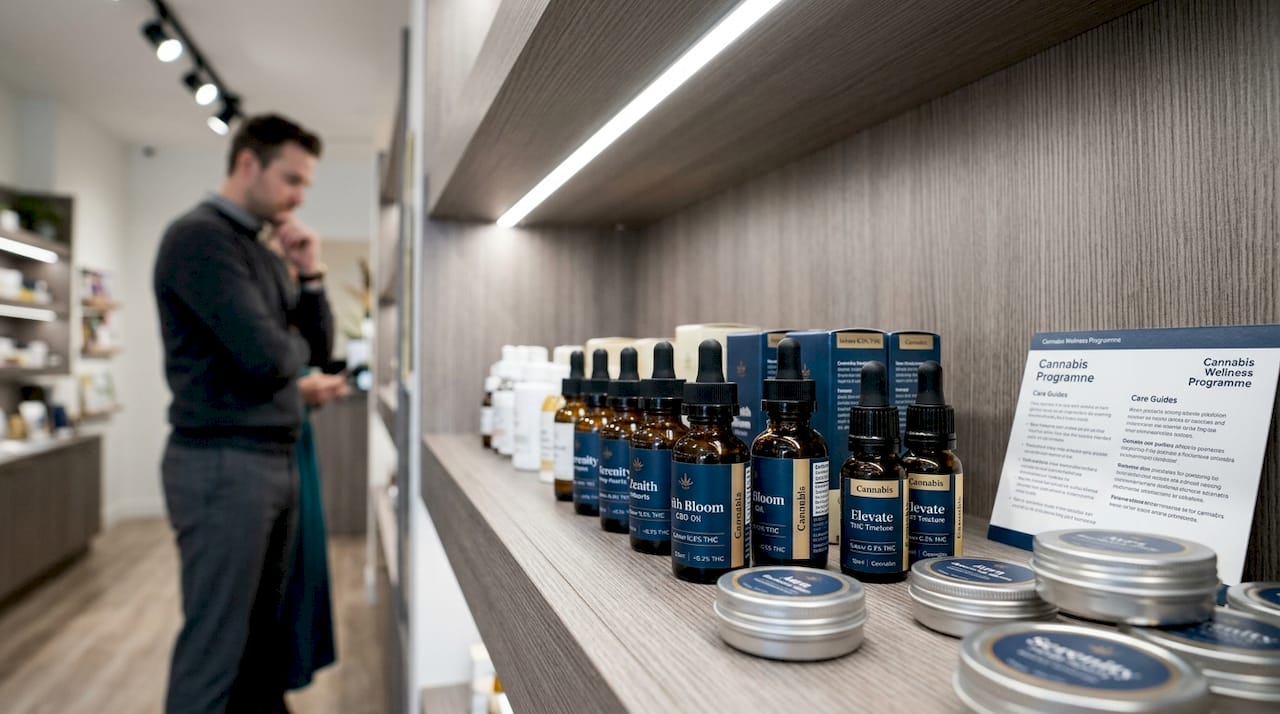
Pro Tip: Before purchasing any CBD product, ask for a Certificate of Analysis (COA). This lab document shows the actual THC and CBD percentages, confirming the product is what the label claims. Many reputable suppliers post COAs directly on their product pages.
Batch-to-batch variation is a real concern in this space. Research from Britannica’s hemp analysis found that only 30 to 41% of cannabis product samples matched their batch mean within a 99% confidence interval, meaning the THC content on the label is not always what you are actually getting. This is precisely why third-party lab testing matters so much when selecting either hemp CBD products or cannabis products.
For a deeper read on how these compounds compare, the THC vs CBD guide covers dosing, effects, and practical use cases in plain language. You can also explore THC vs CBD differences to understand which compound suits your goals before you buy.
Hemp-derived CBD has become popular for good reason. Many users report reduced anxiety, better sleep, and general relaxation without any impairment. Cannabis with higher THC is preferred by those seeking a euphoric recreational experience or specific medical outcomes like appetite stimulation or relief from chemotherapy-induced nausea. Both are valid choices, but knowing which compound does what helps you shop smarter.
Knowing the chemistry isn’t enough. Understanding cannabis and hemp law helps you make legal and informed choices in Canada and beyond.
Canadian law has been relatively clear since the Cannabis Act came into force in 2018. Adults aged 19 and older can legally purchase cannabis for recreational use from licensed retailers, and hemp products with under 0.3% THC are legal without the same restrictions. However, the regulatory landscape has continued to evolve, particularly in response to loopholes that clever marketers were exploiting south of the border.
In the United States, the 2025 Farm Bill tightened the legal definition of hemp to include total THC, not just delta-9 THC. This closed a significant loophole where products high in THCA (the raw, acidic precursor to THC that converts to THC when heated) could be sold as hemp because they technically tested low in delta-9. Under the new definition, THCA counts toward the THC total. If total THC exceeds 0.3%, the plant is legally cannabis, regardless of its delta-9 content alone.
This matters for Canadians because many CBD and hemp products on the market are imported or draw on American supply chains. Knowing how these rules work helps you assess the products you are actually buying.
Here is a snapshot of how legal thresholds work:
| Jurisdiction | Hemp THC limit (plant) | Final product THC limit | Key change (2025) |
|---|---|---|---|
| United States | ≤0.3% total THC | ≤0.4mg per serving | THCA now included in total THC |
| Canada | ≤0.3% delta-9 THC | Regulated by Health Canada | Similar product-level limits |
Key things to understand about legal compliance:
Pro Tip: When buying hemp-derived CBD online, check the COA date. Labs results older than six months may not reflect the current batch, especially for oils and tinctures that can degrade over time.
The uses of hemp in Canada range from textiles to food-grade hemp seeds to wellness products, all governed by Health Canada’s industrial hemp regulations. Meanwhile, hemp oil health benefits are an area where consumers should be especially careful about product sourcing and THC testing, as the market is flooded with products of varying quality.
Staying current with these laws is not just about legal compliance. It protects your health and ensures you are getting the product you paid for.
With the legal framework in mind, let’s talk about real-world choices, and how you can confidently select the right product for your goals.
The decision between a hemp-derived CBD product and a THC-rich cannabis product really comes down to what you want to experience. These are not interchangeable options. They serve different purposes, and pairing the wrong product with your goal leads to either disappointment or, in the case of unexpected THC content, an unwanted experience.
According to research from the National Institutes of Health, hemp CBD is commonly used for pain management, anxiety reduction, and improved sleep, while THC from cannabis is associated with recreational euphoria and specific medical applications such as appetite stimulation and nausea control. When both compounds appear together in a product, the combined effect is sometimes called the “entourage effect,” a synergy where cannabinoids amplify each other’s benefits.
Here is a practical step-by-step framework for choosing:
Pro Tip: If you are new to cannabis and curious about the entourage effect, look for products with a balanced CBD:THC ratio, such as 2:1 or 5:1. These deliver some of the benefits of both compounds without overwhelming effects.
For those focused purely on wellness, cannabis for wellness covers the science behind how cannabinoids interact with the body’s own regulatory systems. If you are specifically exploring CBD oils, the CBD oil health uses guide breaks down common applications, from inflammation to stress relief, with practical guidance for Canadian adults.
The product landscape in Canada is mature and well-regulated enough that informed buyers have excellent options. The key is approaching each purchase with a clear goal and a commitment to checking the label.
Here’s something that rarely gets said plainly in articles like this: the 0.3% THC line is a bureaucratic invention, not a botanical reality. These are the same plant. The threshold was set by American legislation decades ago and has been adopted broadly, not because it perfectly reflects biology, but because regulators needed a number to draw the line somewhere.
For most Canadians, focusing on that line misses the more important questions: What effects do I want? Is this product tested by a third party? Do I know the CBD:THC ratio? These are the real factors that determine whether a product serves you well.
We’ve watched the wellness market flood with hemp-branded CBD products that range from genuinely excellent to practically worthless in terms of actual cannabinoid content. Slapping “hemp” on a label does not guarantee quality. Similarly, high-THC cannabis is not automatically superior for every user. The strongest product is not always the smartest choice.
What actually matters is product quality, transparency from the producer, and a clear match between what you are buying and what you need. Experienced cannabis users understand this instinctively. Newcomers often get distracted by labels, legal categories, and marketing language when they should be asking for lab results and reading up on what each compound actually does.
Our recommendation: use the hemp vs cannabis guide as a starting point, not the end of your research. Laws change fast, product formulations evolve, and your own needs shift over time. Stay curious, check your COAs, and do not let a regulatory label do your thinking for you.
Ready to take the next step? Whether you are exploring CBD for the first time or looking to expand your cannabis experience, there is a lot more to discover.
Green Society offers a full range of educational resources alongside its carefully curated product selection. If you are curious about edibles as an alternative delivery method, the guide to CBD edibles walks you through the tastiest options currently available. Looking at flower? The breakdown of best cannabis flower varieties covers the top strains and trends heading into 2026. And if you want to get hands-on in the kitchen, the collection of cannabis edible recipes gives you practical, enjoyable ways to incorporate cannabis into your routine safely and deliciously. Whatever your goal, we have the information and the products to support an informed, enjoyable experience.
No. Hemp and marijuana both come from Cannabis sativa, but hemp contains under 0.3% THC, making it non-intoxicating while marijuana exceeds that threshold and produces psychoactive effects.
No, properly labelled hemp must legally stay at or below 0.3% THC, which is not enough to cause intoxication for the vast majority of people.
Yes. CBD products derived from hemp are legal for Canadian adults when they meet THC content limits and Health Canada’s regulatory requirements, though final product THC limits apply and vary by product format.
Check the Certificate of Analysis (COA) provided by a third-party lab. Hemp must test at or below 0.3% THC, and any reputable supplier will make this documentation available to buyers before purchase.