Free Shipping
on orders over $150.00
$0.00
$150.00
Add $150.00 more for free shipping!


TL;DR:
- Research suggests CBD can significantly reduce anxiety and promote relaxation, although evidence remains limited. The effectiveness depends on product type, dosage, and individual response, with safer options including oils and tinctures. Always choose verified products, start with low doses, and consult a healthcare professional before use.
Cannabidiol (CBD) is a natural compound extracted from the cannabis plant, and current research shows it can reduce anxiety and promote calmness in many adults. CBD for relaxation has become one of the most searched natural wellness topics in Canada, and for good reason. A 2026 meta-analysis found CBD produced a strong anxiety symptom reduction effect (Hedges’ g = −0.92). That number signals a meaningful clinical signal, even if the evidence still has gaps. This guide explains what the science actually says, how CBD works in your body, which products work best, and how to use it safely.
The scientific case for CBD as an anxiety-reducing compound is growing, but it is not settled. The 2026 meta-analysis published in MDPI reported that strong effect size of −0.92 across multiple studies. Effect sizes above 0.8 are considered large in clinical research, which means the signal is real and worth taking seriously.
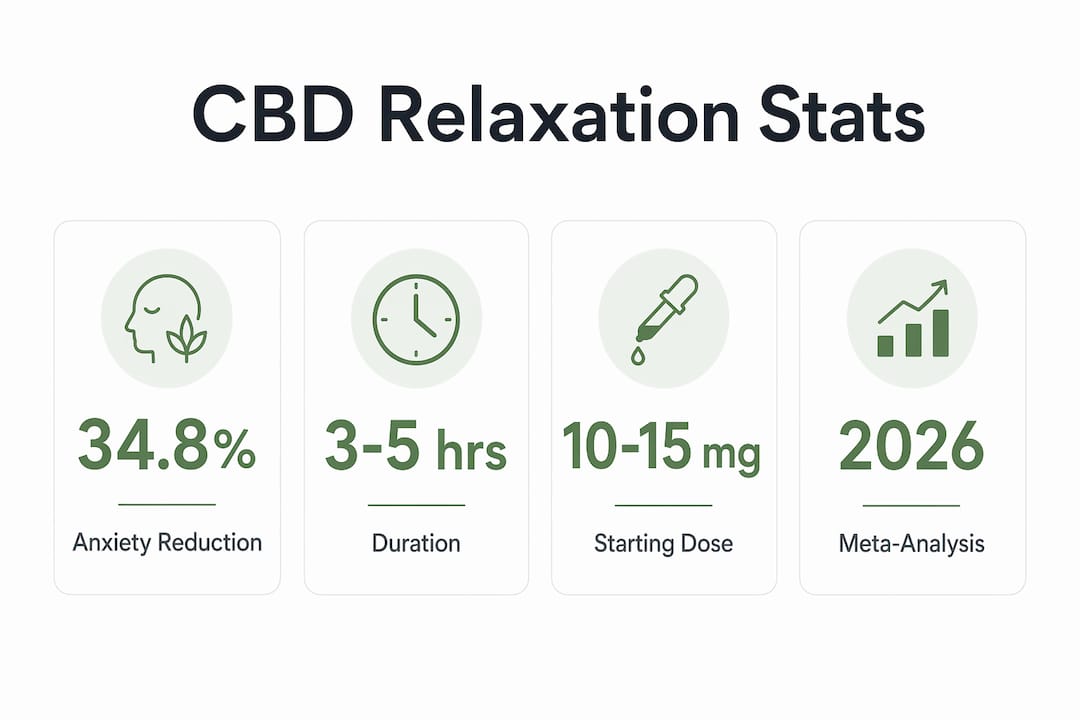
A separate 2026 naturalistic study of 345 adults found CBD-dominant cannabis products reduced anxiety by 34.8% in flower form and 24.9% in edibles over 30 days. Flower outperformed edibles in raw percentage terms, likely because inhaled products reach the bloodstream faster. That speed difference matters when you are trying to manage acute stress rather than background tension.
Not every study agrees. A University of Bath systematic review found no significant effects of cannabinoids on anxiety outcomes, but the authors flagged low certainty and high bias in the available evidence. That finding does not cancel out the positive results. It means the research base is still maturing, and you should treat CBD as a promising option rather than a guaranteed fix.
Key limitations in the current evidence:
The bottom line: the evidence supports cautious optimism. CBD shows genuine promise for stress relief, but you should go in with realistic expectations.
CBD influences the body through two primary pathways. First, it interacts with the endocannabinoid system, a network of receptors throughout the brain and body that regulates mood, sleep, and stress response. Second, CBD modulates serotonin receptors, particularly the 5-HT1A receptor, which plays a direct role in anxiety and mood regulation. Serotonin is the same neurotransmitter targeted by many prescription antidepressants, which helps explain why CBD can produce calming effects without the psychoactive high of THC.
The difference between CBD and THC matters here. THC activates CB1 receptors in the brain directly, which can trigger anxiety at higher doses. CBD does not bind strongly to CB1 receptors. Instead, it modulates them indirectly, which is why CBD-dominant products tend to calm rather than overstimulate. You can explore how cannabis strains affect relaxation differently depending on their cannabinoid ratios.
Product form also shapes the experience significantly. Inhaled CBD flower reaches peak blood concentration within minutes. Edibles produce slower onset but longer duration effects, often taking 60–90 minutes to kick in but lasting 4–6 hours. That slower curve makes edibles well suited for sustained relaxation, like managing a stressful workday, rather than acute relief.
Pro Tip: If you are new to CBD, start with an oil or tincture. The onset is faster than edibles, which makes it easier to gauge your response before committing to a longer-lasting format.
Choosing the right product is as important as choosing CBD itself. Product composition, especially THC content, directly affects whether you feel calmer or more anxious. A product labelled “CBD” that contains significant THC can produce the opposite of the intended effect in sensitive individuals. Always check the cannabinoid ratio before buying.
Dosage is the other major variable. CBD follows an inverted U-shaped dose-response curve: too little produces no effect, the right amount reduces anxiety, and too much can reduce effectiveness again. In public speaking trials, approximately 300 mg produced the strongest anxiety reduction. That is a pharmaceutical-grade dose, far above what most commercial products deliver per serving. Most commercial CBD oils deliver 10–50 mg per dose, which is appropriate for mild to moderate stress relief rather than clinical anxiety.
| Product type | Onset | Duration | Best use case |
|---|---|---|---|
| CBD oil/tincture | 15–45 min | 3–5 hours | Daily stress relief, flexible dosing |
| CBD edibles | 60–90 min | 4–8 hours | Sustained calm, sleep support |
| CBD flower | 5–15 min | 2–3 hours | Acute stress, fast relief |
| CBD topicals | Localised | 2–4 hours | Muscle tension, not systemic anxiety |
Third-party lab testing is non-negotiable when selecting a product. Certificates of analysis (COAs) confirm actual cannabinoid content and screen for contaminants like pesticides and heavy metals. A product without a COA is a product you cannot trust. Reputable Canadian retailers publish COAs on their product pages or provide them on request.
Pro Tip: Start at 10–15 mg of CBD per dose and hold that dose for at least one week before adjusting. The inverted U-shaped curve means more is not always better, and patience gives you accurate feedback.
CBD has a generally favourable safety profile, but it is not risk-free. Side effects can include drowsiness, irritability, and unusual behaviours. Some individuals experience worsened mood, particularly at higher doses. These effects are more common when CBD is combined with other substances that affect the central nervous system.
Drug interactions are the most serious safety concern. CBD can interact with benzodiazepines and antidepressants, adding to their sedative effects and potentially requiring dose adjustments. If you take any prescription medication, consult your doctor or pharmacist before starting CBD. This is not optional advice. CBD behaves like an active drug in the body, and treating it as a harmless supplement when you are on other medications is a genuine risk.
Key safety points to keep in mind:
Understanding potential side effects of CBD edibles is especially relevant if you choose that format, since the delayed onset can lead to accidental overconsumption.
Building a consistent CBD practice takes more than just buying a product. These steps give you a structured approach that produces reliable results.
For Canadians exploring cannabis for anxiety relief, understanding the difference between CBD-dominant and THC-containing products is the single most important decision you will make before buying.
CBD for relaxation works best when you choose a quality product with a verified cannabinoid profile, start at a low dose, and treat it as one part of a broader stress management approach.
| Point | Details |
|---|---|
| Evidence is promising but limited | A 2026 meta-analysis shows strong anxiety reduction, but evidence quality remains low overall. |
| Dosage follows an inverted U-curve | Around 300 mg reduced anxiety most in trials; commercial doses of 10–50 mg suit mild stress relief. |
| Product form changes the experience | Edibles last longer; inhaled flower acts faster. Match the format to your specific relaxation need. |
| THC content changes outcomes | CBD products with significant THC can increase anxiety. Always verify cannabinoid ratios via a COA. |
| Drug interactions require medical advice | CBD interacts with benzodiazepines and antidepressants. Consult a healthcare provider before starting. |
Most people who are disappointed by CBD made the same two mistakes: they bought a product without checking the cannabinoid profile, and they gave up after one week. Neither approach gives CBD a fair trial.
The research on dosing is genuinely counterintuitive. The inverted U-shaped curve means that doubling your dose when you feel nothing is often the wrong move. I have seen people take 100 mg thinking more is better, then report feeling foggy and anxious, which is exactly what the dose-response data predicts. Patience and precision matter more than volume.
The other thing most articles miss is that CBD is not a standalone solution. The adults who report the most consistent benefit are the ones who pair it with something else: a regular sleep schedule, a 20-minute walk, or even just five minutes of intentional breathing before bed. CBD appears to lower the threshold for relaxation, not produce it from nothing.
My honest view is that the University of Bath review and the MDPI meta-analysis are both right, just about different things. The Bath review is correct that the evidence base is weak and biased. The MDPI data is correct that real-world users experience meaningful anxiety reduction. The gap between those two findings is a product quality and dosing problem, not a CBD problem. Buy better products, dose more carefully, and give it time.
— Juiced
Greensociety is a trusted Canadian online cannabis platform with a full catalogue of CBD products and educational resources to help you shop with confidence.
Whether you are comparing CBD product types and formats or looking for the right edible to support your evening wind-down, Greensociety provides clear product information, COA access, and fast discreet delivery across Canada. The Greensociety blog also covers edible benefits for Canadians in detail, so you can make an informed choice before you buy. Start with the product guides, check the cannabinoid ratios, and order with confidence.
CBD (cannabidiol) is a non-psychoactive compound from the cannabis plant that interacts with serotonin receptors and the endocannabinoid system to reduce anxiety and promote calmness. A 2026 meta-analysis found a strong anxiety symptom reduction effect (Hedges’ g = −0.92) across multiple studies.
There is no single effective dose for everyone, but research shows approximately 300 mg produced the strongest anxiety reduction in clinical trials. For everyday stress relief, most adults start at 10–25 mg and adjust gradually based on personal response.
CBD oil acts faster (15–45 minutes) and is easier to dose precisely, making it better for flexible daily use. Edibles take longer to kick in but last 4–8 hours, making them well suited for sustained calm or sleep support.
Yes. CBD interacts with benzodiazepines, antidepressants, and other medications that affect the central nervous system. Consult your doctor or pharmacist before using CBD if you take any prescription drugs.
CBD derived from cannabis is legal in Canada under the Cannabis Act when purchased from a licensed retailer. Always buy from a regulated source to confirm product safety, accurate labelling, and legal compliance.