Free Shipping
on orders over $150.00
$0.00
$150.00
Add $150.00 more for free shipping!


TL;DR:
- Cannabis overconsumption involves ingesting more THC than the body can process safely, leading to acute toxicity and potential long-term health issues.
- Edibles pose a higher risk due to delayed onset and stronger, longer-lasting effects, especially with high-potency products above 70% THC.
Cannabis overconsumption is defined as consuming more THC than your body and mind can process safely, resulting in acute toxicity symptoms or long-term health complications. The risks of cannabis overconsumption range from immediate panic attacks and cardiovascular stress to chronic conditions like cannabis use disorder (CUD) and cognitive impairment. With legal cannabis now widely available across Canada, and products reaching THC concentrations above 70%, understanding where the line is has never been more urgent. This guide covers the acute effects, the pharmacology behind edible overdoses, the long-term damage from heavy use, and the practical steps you can take to stay on the right side of that line.

The most common immediate signs of cannabis overconsumption are anxiety, rapid heart rate, nausea, dizziness, and disorientation. Emergency department data show that 17.3% of acute cannabis toxicity cases present with cannabis-induced anxiety disorder, 11.7% involve panic attacks, and 6.1% involve hallucinations. These numbers reflect real clinical presentations, not worst-case scenarios.
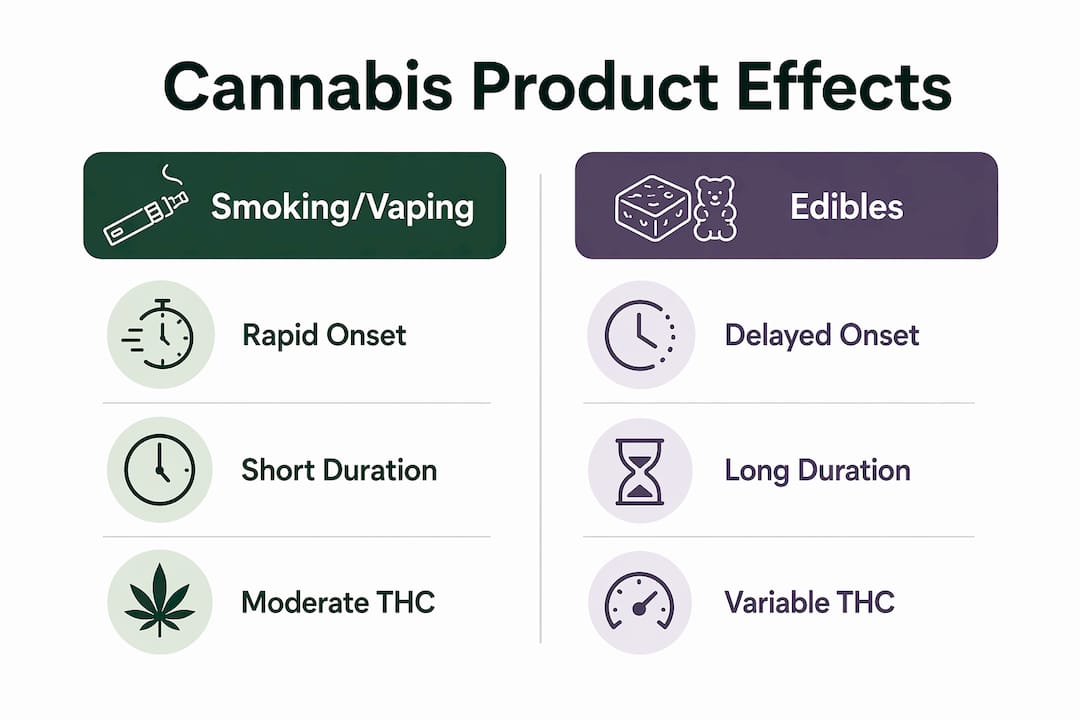
Symptoms vary significantly by consumption method. Smoking or vaping delivers THC to the bloodstream within minutes, so the peak effect arrives quickly and users can self-regulate more easily. Edibles and concentrates are a different story. The onset is slower, the peak is harder to predict, and the intensity can catch even experienced users off guard.
Acute THC toxicity is generally non-fatal, but it can produce severe tachycardia, vomiting, and psychotic episodes that require emergency care. The Government of Canada recognises cannabis poisoning as a medical emergency, particularly when high-potency products or edibles are involved. The key distinction worth knowing: during an acute “too high” episode, reality testing remains intact. You know something is wrong. That differs from chronic psychosis, where that awareness is lost.
Several individual risk factors raise your chances of a severe reaction. These include infrequent use, high doses, high-THC/low-CBD products, a personal or family history of anxiety, and female sex. Youth and people with pre-existing mental health conditions face the highest risk of a distressing experience.
Pro Tip: If you feel your heart racing or anxiety spiking after consuming cannabis, stop consuming immediately, move to a calm environment, drink water, and focus on slow breathing. These early signs are your body’s signal to stop, not to redose.
Edibles are the single most common cause of unintentional cannabis overconsumption in Canada. The reason is pharmacokinetic. When you eat cannabis, the liver converts THC into 11-hydroxy-THC, a metabolite that crosses the blood-brain barrier more efficiently than inhaled THC. The result is a stronger, longer-lasting effect from the same nominal dose.
The timing compounds the problem. Oral cannabis onset ranges from 45 to 120 minutes, with peak effects arriving between 2 and 6 hours, and the total experience lasting up to 10 hours. Most overconsumption incidents follow the same pattern: a user eats a gummy, feels nothing after 45 minutes, takes another dose, and then both doses hit simultaneously. The delayed onset of edibles causes exactly this redosing trap, leading to intense and prolonged intoxication that can last well into the following day.
Product potency adds another layer of risk. Concentrates like shatter, wax, and live resin can exceed 70% THC. Standard dried flower typically sits between 15% and 25% THC. Edibles sold through licensed Canadian retailers are capped at 10mg THC per package, but unlicensed products carry no such limit. Understanding these differences before you choose a product is not optional. It is the foundation of safe use.
The table below compares onset, peak, duration, and typical THC levels across the main product types.
| Product Type | Onset | Peak Effect | Duration | Typical THC Level |
|---|---|---|---|---|
| Dried Flower (smoked) | 2–10 minutes | 30–60 minutes | 2–4 hours | 15%–25% |
| Vape Cartridge | 2–10 minutes | 20–45 minutes | 2–3 hours | 50%–80% |
| Edibles | 45–120 minutes | 2–6 hours | 6–10 hours | 5–10mg per serving |
| Concentrates | 1–5 minutes | 15–30 minutes | 2–4 hours | 60%–90% |
You can read a detailed breakdown of edibles vs. smoking on the Greensociety blog, which covers the clinical differences in risk windows between these two methods.
Pro Tip: With edibles, always wait at least two hours before considering a second dose. Set a timer if needed. The most common mistake is assuming the product is not working.
Frequent cannabis overuse causes measurable, lasting damage across multiple body systems. The most well-documented chronic risk is cannabis use disorder. About 20% of all cannabis users develop CUD, and that figure rises to 33% among daily users. From 2015 to 2021, adverse events related to recreational marijuana use increased 1.5-fold, reflecting the growing potency of available products.
Physical dependence is real. Regular cannabis use produces withdrawal symptoms including irritability, sleep disturbances, and cravings when use stops. Many users do not recognise these symptoms as withdrawal because cannabis is widely perceived as non-addictive. That perception is inaccurate and worth correcting.
The cardiovascular risks are significant and underreported. Frequent cannabis use roughly doubles the risk of stroke and myocardial infarction, with greater effects observed in women. High-potency products above 70% THC are also linked to higher rates of problematic use, poorer mental performance, and risky behaviours like driving while impaired.
Mental health effects deserve particular attention. Heavy use of high-THC, low-CBD products is associated with increased rates of anxiety, depression, and in vulnerable individuals, psychosis. Youth are especially at risk. Cannabis use before age 18 is linked to earlier onset of psychotic disorders and greater long-term cognitive impairment than adult-onset use.
The table below summarises the chronic health risks by body system.
| Body System | Chronic Risk | Key Risk Factor |
|---|---|---|
| Psychiatric | Anxiety, depression, psychosis | High-THC/low-CBD products, youth use |
| Cardiovascular | Stroke, myocardial infarction | Frequent use, especially in women |
| Respiratory | Bronchitis, chronic cough | Combustion-based consumption |
| Cognitive | Memory impairment, reduced processing speed | Early onset, heavy daily use |
| Dependence | Cannabis use disorder, withdrawal | Daily use, high-potency products |
One often-overlooked clinical concern: if you use cannabis heavily and are scheduled for surgery, preoperative disclosure is critical. Heavy cannabis use affects anaesthetic management and post-operative pain control in ways that can complicate your recovery.
Harm reduction for cannabis is straightforward in principle and requires consistent practice. The following steps reflect current evidence on reducing the negative effects of cannabis and avoiding the conditions that lead to overconsumption.
The Greensociety blog has a detailed cannabis dosage guide that walks through these principles with product-specific examples. For a broader framework, the 2025 dosage guidelines resource covers safe consumption across flower, edibles, and concentrates.
Pro Tip: If anxiety is a recurring issue with your current products, try switching to a strain or product with a higher CBD-to-THC ratio. CBD moderates THC’s psychoactive intensity without eliminating the effect entirely.
The most effective way to prevent cannabis overconsumption is to understand your product’s potency, respect the delayed onset of edibles, and start with the lowest effective dose every time.
| Point | Details |
|---|---|
| Acute symptoms are predictable | Anxiety, tachycardia, and panic attacks are the most common signs of overconsumption. |
| Edibles carry the highest risk | Onset of 45–120 minutes causes redosing errors that lead to intense, prolonged intoxication. |
| CUD affects 1 in 3 daily users | Cannabis use disorder develops in 33% of daily users and includes real withdrawal symptoms. |
| High-THC products amplify all risks | Products above 70% THC are linked to mental health issues, cardiovascular events, and dependence. |
| Low-and-slow dosing prevents most problems | Starting with 2.5mg THC and waiting before redosing eliminates the majority of overconsumption incidents. |
The most persistent misconception I encounter is that cannabis is safe because it is natural and legal. Legality is a regulatory status, not a health endorsement. The risks of cannabis overuse are real, measurable, and increasingly well-documented as research catches up to legalisation.
What concerns me most is the gap between product potency and user awareness. A decade ago, most flower sat at 10%–15% THC. Today, concentrates routinely exceed 80%. Users who learned to dose with older products are applying the same habits to a fundamentally different substance. That mismatch is where most serious adverse events originate.
The other issue I see consistently is the normalisation of daily use without any recognition of dependence risk. One in three daily users develops cannabis use disorder. That is not a fringe outcome. It is a predictable consequence of chronic high-dose use, and it deserves the same frank conversation we have about alcohol dependency.
My position is this: cannabis can be used responsibly by adults, but responsible use requires accurate information about what you are consuming. Product labels, THC percentages, and onset windows are not fine print. They are the information you need to make a safe decision. If you are using cannabis medicinally, talk to a healthcare provider about your consumption patterns. If you are using recreationally, treat potency with the same respect you would give any other psychoactive substance.
The research on managing anxiety with cannabis is also worth reading if you use cannabis for stress relief. Overconsumption is one of the most common triggers for cannabis-induced anxiety, which is the opposite of what most users are seeking.
— Juiced
Understanding the risks of overconsumption is the first step. Choosing the right products is the second. Greensociety provides detailed product information, potency data, and educational guides to help you make informed decisions before you buy.
Whether you are curious about edibles on the market today or want to understand how different formats affect your experience, Greensociety’s blog and product pages give you the context to choose wisely. Every product listing includes THC and CBD content so you can apply the low-and-slow approach from the moment you browse. Safe cannabis use starts with knowing what you are buying.
A fatal overdose from THC alone has not been documented, but acute cannabis toxicity is a recognised medical emergency. High doses, especially from edibles or concentrates, can cause severe anxiety, vomiting, tachycardia, and psychotic episodes requiring emergency care.
Edible effects typically last 6–10 hours, with onset between 45 and 120 minutes and peak effects between 2 and 6 hours after consumption. This extended window is the primary reason edibles carry a higher overconsumption risk than inhaled cannabis.
Cannabis use disorder is a clinical condition characterised by compulsive cannabis use despite negative consequences, including withdrawal symptoms like irritability, sleep disruption, and cravings. It affects approximately 20% of all cannabis users and up to 33% of daily users.
CBD can moderate some of THC’s adverse effects, including anxiety and paranoia. Choosing products with a balanced THC-to-CBD ratio reduces the likelihood of a distressing experience, particularly for users sensitive to THC’s psychoactive effects.
The most common signs are a racing heart, intense anxiety or panic, nausea, dizziness, and a feeling of depersonalisation. If these symptoms appear, stop consuming, move to a calm space, stay hydrated, and wait for the effects to subside.