Free Shipping
on orders over $150.00
$40.00
$150.00
Add $110.00 more for free shipping!
-
×
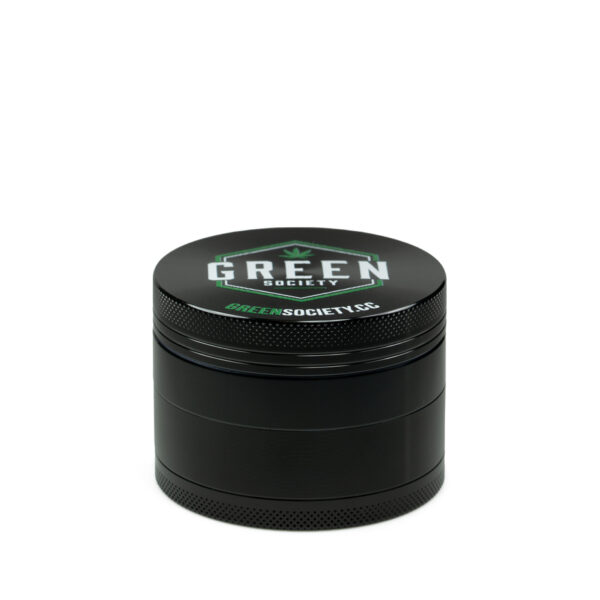
 Green Society Herb Grinder
$40.00
Green Society Herb Grinder
$40.00

TL;DR:
- Canadian cannabis industry produces 44 million kg of plastic waste annually, much ending in landfills.
- Eco-friendly packaging options include recyclable, compostable, or recycled materials like PCR plastic and mycelium.
- Consumer demand for sustainable packaging can influence industry practices and regulatory reforms.
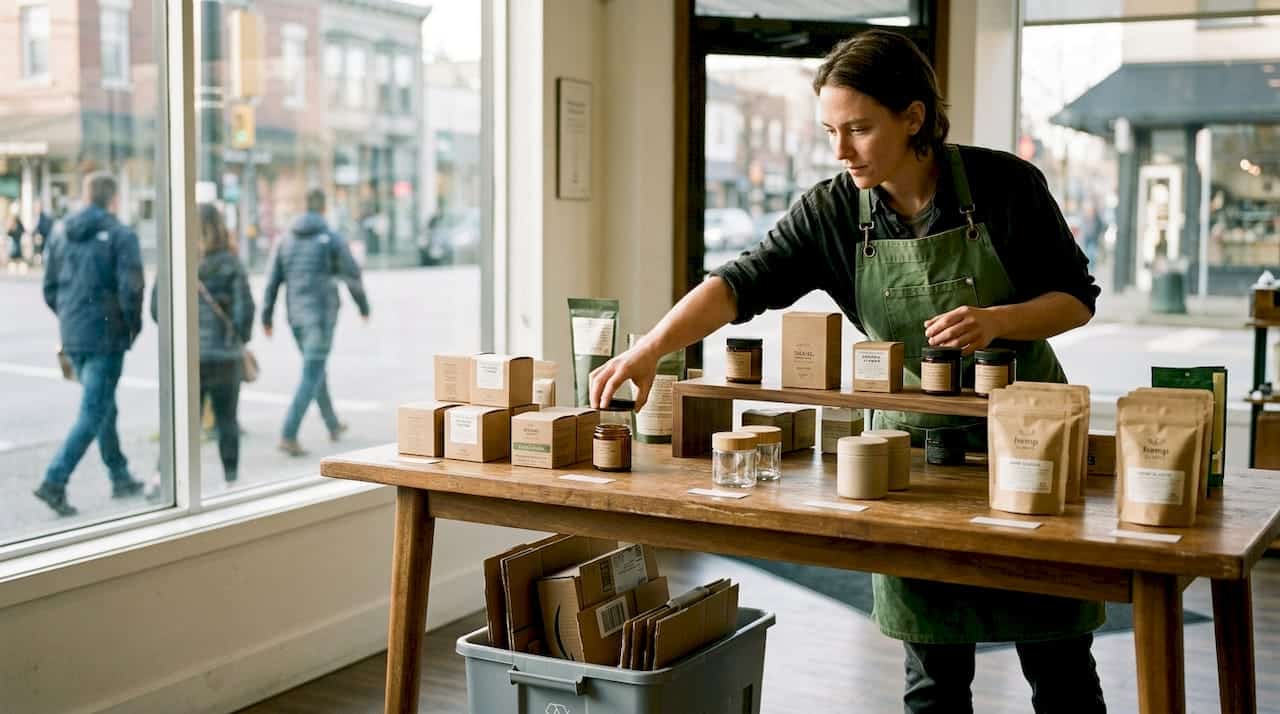
Canadian cannabis packaging generates 44 million kilograms of plastic waste every single year. That number is staggering, and it lands squarely on the shoulders of an industry that many consumers expect to do better. If you care about what you put in your body, it makes sense to care about what wraps it too. This guide walks you through why cannabis packaging is such a problem, what truly eco-friendly options look like, and how your buying decisions can push the entire market in a greener direction. You have more power here than you might think.
| Point | Details |
|---|---|
| Plastic waste is a huge issue | Canadian cannabis generates over 44M kg of plastic packaging waste each year. |
| Labels matter | Eco-friendly packaging should specify compostable, recyclable, or PCR materials with credible certifications. |
| Consumer demand works | 78% of buyers now prefer eco-friendly options, speeding up sustainable changes in the market. |
| Innovation is ongoing | New trends like mycelium, ocean plastic, and smart packaging are shaping the future of cannabis sustainability. |
| Your choices drive change | Asking questions and choosing green products helps shift the industry to more sustainable options. |
The cannabis industry arrived with a lot of promise. Legal, regulated, and in theory more accountable than the underground market it replaced. But one thing nobody fully anticipated was the packaging problem. Every pre-roll, every edible, every gram of flower comes wrapped in layers of plastic, foil, and child-resistant mechanisms that are nearly impossible to recycle.
The Canadian cannabis industry produces around 44 million kg of plastic waste a year. Most of it ends up in landfill, where it can take centuries to break down. Along the way, it fragments into microplastics that contaminate soil and water. This is not a distant, abstract problem. It is happening right now, in communities across the country.
Part of what makes this so frustrating is that regulation itself is part of the obstacle. Health Canada requires child-resistant closures and tamper-evident seals on cannabis products. Those requirements are legitimate. But they often push manufacturers toward thick, multi-layer plastics that are simply not recyclable in most municipal systems. The result is a compliance-driven packaging nightmare.
That said, consumer pressure is already shifting things. Here is what the current landscape looks like:
The good news is that 78% of shoppers now say they prefer eco-friendly packaging. That is a powerful signal. When buyers demand better, brands respond. Learning about sustainable packaging strategies is the first step toward making that demand count.
“The cannabis industry has an opportunity to lead on sustainability, but only if consumers make it clear that greenwashing is not enough.” — Plastic Pollution Coalition
The urgency is real. But so is the momentum.
Not all green claims are created equal. Brands slap words like “eco,” “natural,” and “sustainable” on packaging without much accountability. To cut through the noise, you need to understand what these terms actually mean.
Here are the four key concepts to know:
| Material type | Compostable | Recyclable | PCR content | Shelf life | Child-resistant |
|---|---|---|---|---|---|
| Standard plastic | No | Sometimes | No | Excellent | Yes |
| PCR plastic | No | Sometimes | Yes | Excellent | Yes |
| Kraft paper | No | Yes | Sometimes | Moderate | Limited |
| Certified compostable bioplastic | Yes | No | No | Moderate | Emerging |
| Mycelium | Yes | No | No | Short | Experimental |
| Ocean plastic | No | Sometimes | Yes | Good | Yes |
Over 60% of US cannabis processors now use compostable packaging, up from just 25% in 2021. Canada is following, but more slowly. Part of the challenge is that compostable materials can struggle with moisture and freshness over long supply chains.
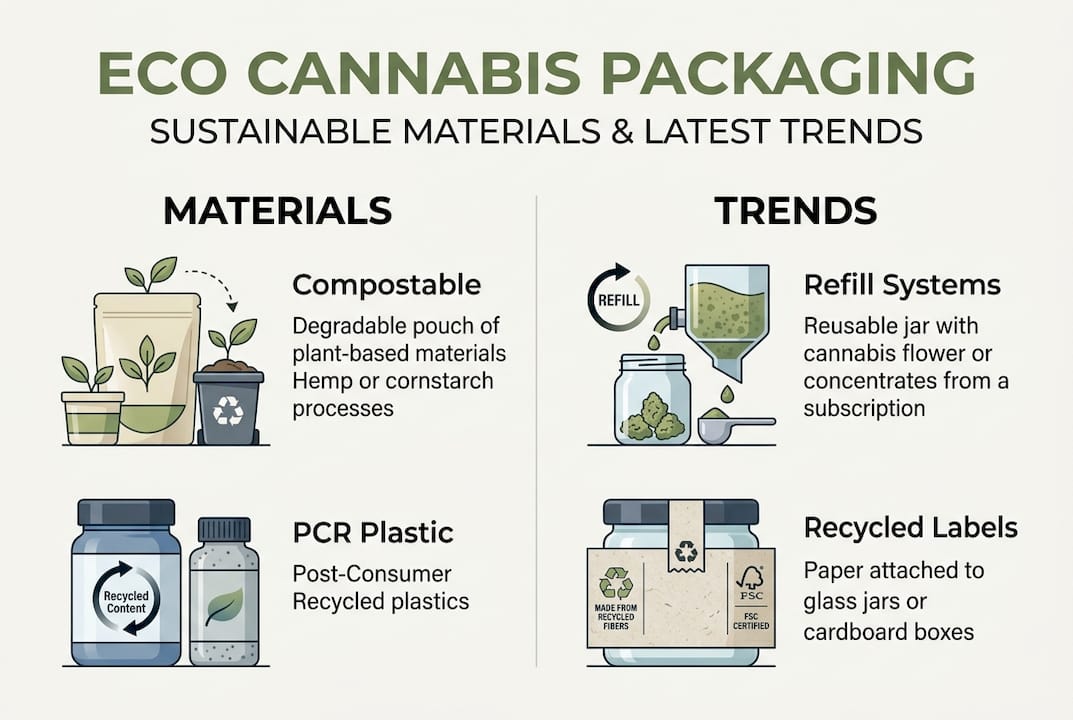
You can also explore innovations in eco-packaging to see what materials are being tested right now.
Pro Tip: Look for third-party certifications like BPI (Biodegradable Products Institute) or TÜV Austria’s OK Compost label. These are independent verifications, not just marketing language. If a brand cannot point to a certification, treat the claim with scepticism.
Knowing how to properly dispose of these materials matters just as much as choosing them. Check out how to recycle packaging for a practical breakdown by material type.
The packaging industry is moving fast, and cannabis is no exception. Some of what is being developed right now is genuinely exciting. Some of it is still years away from being practical at scale.

Here are the most significant emerging materials and their key traits:
| Material | Source | Key benefit | Current limitation |
|---|---|---|---|
| Mycelium | Mushroom roots | Fully compostable | Short shelf life, experimental |
| Ocean plastic | Recovered ocean waste | Reduces marine pollution | Still plastic, limited supply |
| Bioplastics | Plant starch | Compostable versions available | Needs industrial composting |
| PCR plastic | Recycled consumer goods | Reduces virgin plastic demand | Not compostable or biodegradable |
| Hemp fibre paper | Cannabis plant byproduct | Renewable, recyclable | Limited child-resistant options |
Beyond materials, the industry is exploring structural changes to how packaging works:
Regulation is the central tension here. As emerging solutions show, new models like refill systems, mycelium, and smart digital packaging are possible, but compliance requirements can slow their adoption significantly.
“Regulations can drive or hinder innovation; the most promising path forward combines smarter rules with genuinely circular design.”
Canada has an opportunity to learn from US state-level experiments and leapfrog some of the early mistakes. Staying informed about cannabis packaging trends and the future of cannabis packaging helps you understand where the industry is genuinely heading versus where it is just talking about going.
Knowing where the industry is heading, here is what you can do right now to choose truly green cannabis products.
How to evaluate a product’s packaging before you buy:
Questions to ask your retailer or brand:
Proper disposal matters just as much as what you buy. Compostable packaging needs to go to an industrial composting facility, not your blue bin. PCR plastic follows standard plastic recycling rules. Paper and cardboard are generally the easiest to handle correctly.
78% of consumers now say they prefer cannabis packaged with eco-friendly materials. That is a majority. When you vote with your wallet, you are part of a very large group that brands are actively paying attention to.
Pro Tip: Leave reviews and send feedback to brands specifically about packaging. Companies track this data. A pattern of feedback about sustainability pushes it up the priority list faster than most people realise.
The sustainable consumer guide and cannabis recycling steps are solid resources for building this habit into your regular purchasing routine.
Most conversations about sustainable packaging focus on swapping one material for another. Replace plastic with compostable bioplastic, problem solved. But that framing misses something important.
The most eco-friendly package is often the one that never gets thrown away at all. Refill systems and reusable containers eliminate the disposal question entirely. Yet these options get far less attention than flashy new materials, partly because they require behaviour change from consumers, not just manufacturers.
There is also a systemic issue that individual choices alone cannot fix. Regulations often slow genuine progress due to safety requirements and compliance burdens that disproportionately affect smaller, more innovative producers. A small brand with a brilliant compostable design may struggle to get it approved while a large company with a compliance team sails through with conventional plastic.
This is where engaged buyers matter beyond their individual purchases. When you ask hard questions, share information, and choose brands that are genuinely transparent, you create market pressure that regulators and industry bodies notice. Policy follows culture. Culture follows consumers.
For a deeper look at the systemic picture, deeper eco-packaging insights are worth your time.
If you are ready to put this knowledge into action, Green Society makes it easier to shop with sustainability in mind. Our platform helps you navigate cannabis product categories with quality and responsibility as equal priorities.
We have put together resources on sustainable cannabis packaging so you can make informed choices without spending hours researching every brand. Whether you are looking for flower, edibles, concentrates, or accessories, you can explore Green Society and find products that align with your values. Conscious shopping does not have to be complicated. We are here to help you make it simple.
Eco-friendly cannabis packaging includes certified compostable bioplastics, recycled paper, mycelium, ocean plastics, and PCR content. Emerging packaging materials like mycelium and ocean plastic are gaining traction as viable alternatives to conventional single-use plastics.
Look for credible third-party certifications like BPI or TÜV Austria, clear recycling codes, and transparent company labelling. Not all green claims are meaningful, so seek independent verification rather than relying on vague marketing language.
Follow local recycling or composting guidelines and check the packaging itself for disposal instructions. Eco-packaging requires proper disposal to actually deliver its environmental benefit, so placing compostables in landfill defeats the purpose.
Access to eco-friendly packaging varies by province due to differing regulatory frameworks and supplier markets. Regulations drive innovation but also create tension, meaning some provinces are further ahead than others in what is available to consumers.
Yes. Increased demand for sustainable packaging shifts industry behaviour and reduces overall waste. With 78% of consumers preferring eco-friendly packaging, collective purchasing decisions are already pushing brands to change their practices.
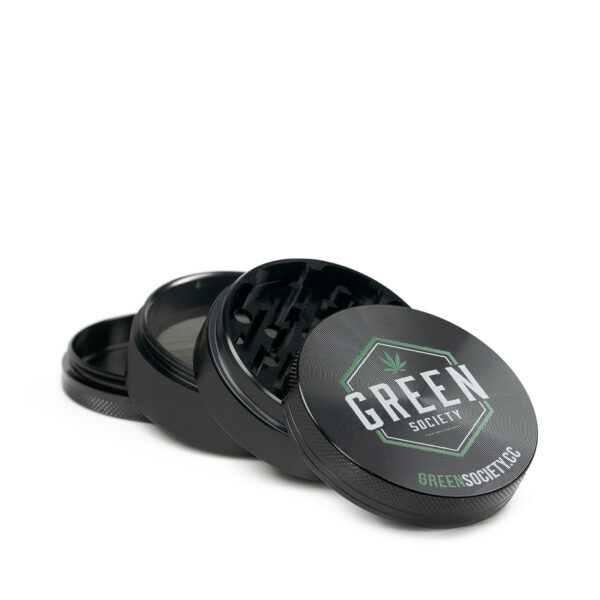 Green Society Herb Grinder