Free Shipping
on orders over $150.00
$0.00
$150.00
Add $150.00 more for free shipping!

TL;DR:
- Lab testing ensures cannabis products meet safety, potency, and quality standards in Canada.
- Legal cannabis has significantly fewer contaminants like pesticides and mycotoxins than illicit products.
- Lab results are essential but must be complemented by ongoing transparency and proper handling practices.
Many Canadian adults assume that buying legal cannabis automatically means buying safe cannabis. That assumption is partly right, but it misses something important. What actually separates a safe product from a risky one is rigorous, mandatory lab testing. Lab-tested cannabis refers to products that have been evaluated by ISO 17025-certified laboratories under Health Canada’s Cannabis Laboratory standards, checking for everything from potency accuracy to pesticide contamination. Without that testing, even a product that looks and smells perfectly fine could carry hidden hazards. Understanding exactly what lab testing means, and why it matters for your health, puts you in control.
| Point | Details |
|---|---|
| Independent laboratory testing | Lab-tested cannabis is screened by certified labs to meet Health Canada safety standards. |
| Lower risk than illicit | Legal lab-tested products have far fewer contaminants than untested black market cannabis. |
| Transparent potency and ingredients | Lab reports disclose actual THC/CBD content and screened contaminants, helping buyers make informed decisions. |
| Limits and exceptions exist | Not all products are perfect—potency can vary and recalls still happen even in legal markets. |
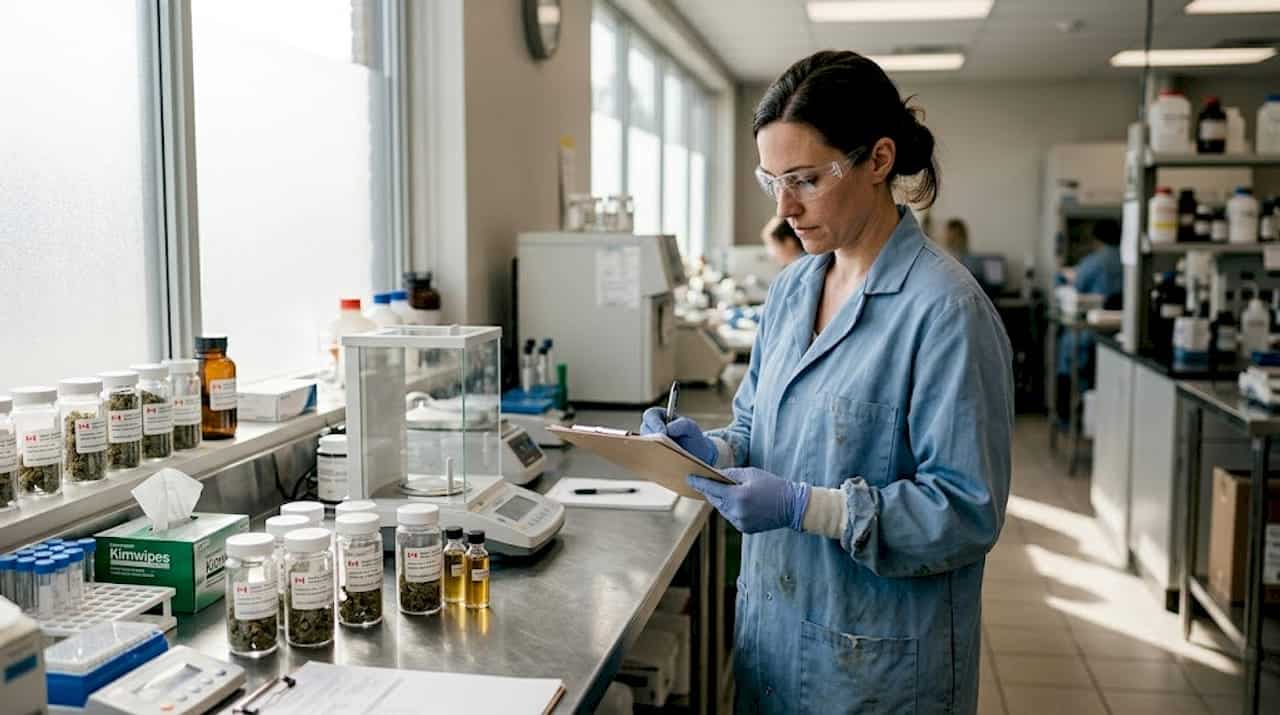
In Canada, “lab-tested” is not a marketing phrase. It is a legal requirement. Under Health Canada’s Cannabis Lab-tested cannabis regulations, licensed producers must have their products tested by ISO 17025-certified laboratories before those products ever reach a shelf or your front door. ISO 17025 is the international standard for testing and calibration laboratories, meaning these facilities meet strict competence and impartiality benchmarks. It is the same standard used in pharmaceutical and food safety testing.
Understanding lab testing importance starts with knowing what these labs are actually doing. They are not simply eyeballing the product. They use sophisticated analytical instruments to measure dozens of characteristics simultaneously, producing a detailed certificate of analysis, often called a COA. That document is the record that ties a specific batch of cannabis to a set of verified results.
Here is a quick overview of what lab testing confirms:
The importance for Canadian consumers is real and practical. A product without this certification could claim any potency on the label, and there would be no independent verification to back it up. Lab testing removes that ambiguity.
“Licensed cannabis must be tested by an accredited laboratory before it can be sold, giving consumers verified data about what they are consuming.” This is the core promise of Canada’s regulated market.
Simply put, lab testing transforms cannabis from an unknown substance into a documented, verified product. That is the foundation everything else builds on.
Once you understand what lab testing is, the logical next question is: what exactly gets checked? The answer is more thorough than most people realise. Testing covers potency, terpenes, pesticides, heavy metals, microbes, mycotoxins, solvents, and moisture levels across 96 pesticides and multiple heavy metal categories.
Here is a breakdown of the main test categories and why each one matters:
| What is tested | Primary concern | Common method used |
|---|---|---|
| THC, CBD potency | Over/underdosing | High-Performance LC (HPL) |
| 96 pesticides | Long-term toxicity | LC-MS/MS (mass spectrometry) |
| Heavy metals | Heavy metal toxicity | ICP-MS |
| Total aerobic microbes | Risk of respiratory infection | Culture-based and PCR |
| Water activity/moisture | Post-pack mould growth | Water activity sensor |
| Other mycotoxins | Cancer risk from fungal toxins | LC-MS/MS |
Pro tip: Even a product that looks pristine can carry microbes or excess moisture that won’t show until you check the COA. Before purchasing, ask your dispensary for the certificate of analysis or check official Health Canada guidelines to understand what limits apply.
Each testing method listed above is purpose-built for sensitivity. LC-MS/MS, for example, can detect pesticide residues at parts-per-billion levels. That level of precision is what makes modern lab testing so powerful, and so different from simply trusting that a product “looks clean.”
Now that you know what is tested, the real-world gap between legal and illicit cannabis becomes much clearer. The data is striking. Legal cannabis had significantly lower contaminants than illicit samples: 94% of illicit products tested positive for pesticides, versus trace levels in just 2% of legal samples. Perhaps more alarming, mycotoxins appeared in 12% of illicit samples and 0% of legal ones.
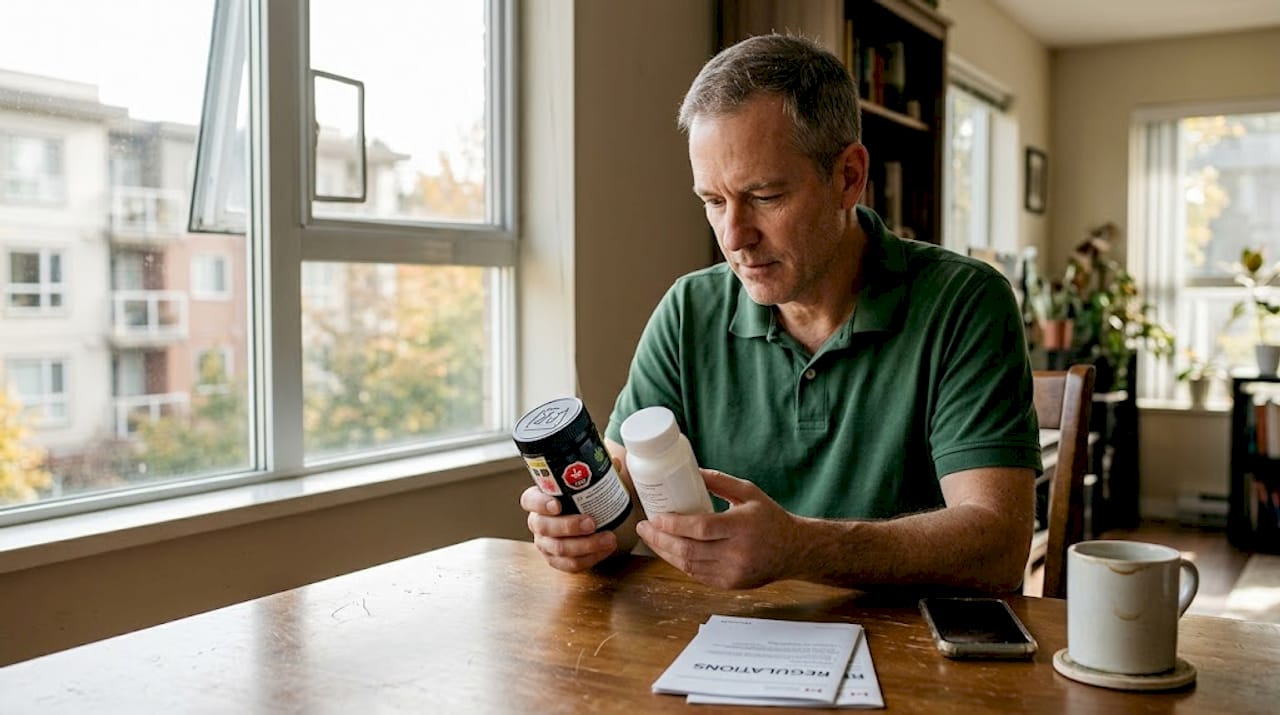
These are not small differences. They represent a fundamental gap in product safety. And according to research from health risk analysis on heavy metals, heavy metals in legal cannabis pose low risk even for heavy users, suggesting that regulatory limits are set at genuinely protective levels.
| Safety factor | Legal lab-tested cannabis | illicit untested cannabis |
|---|---|---|
| Products with pesticides | ~2% (trace levels only) | 94% of sampled products |
| Products with mycotoxins | 0% | 12% of sampled products |
| Heavy metal safety | Low risk per research | No monitoring or limits |
| Label potency accuracy | Within regulated variability | No verification |
| Active recall system | Yes, national notifications | None |
The importance of testing shows up clearly in potency accuracy too. Legal producers must disclose THC and CBD levels measured in a certified lab. With illicit products, the label, if there is one, reflects nothing but a guess.
Key practical differences you should know:
If you have ever wondered why the price difference exists between legal and illicit cannabis, testing infrastructure is a big part of the answer. Safe supply has a cost, and that cost reflects genuine protection.
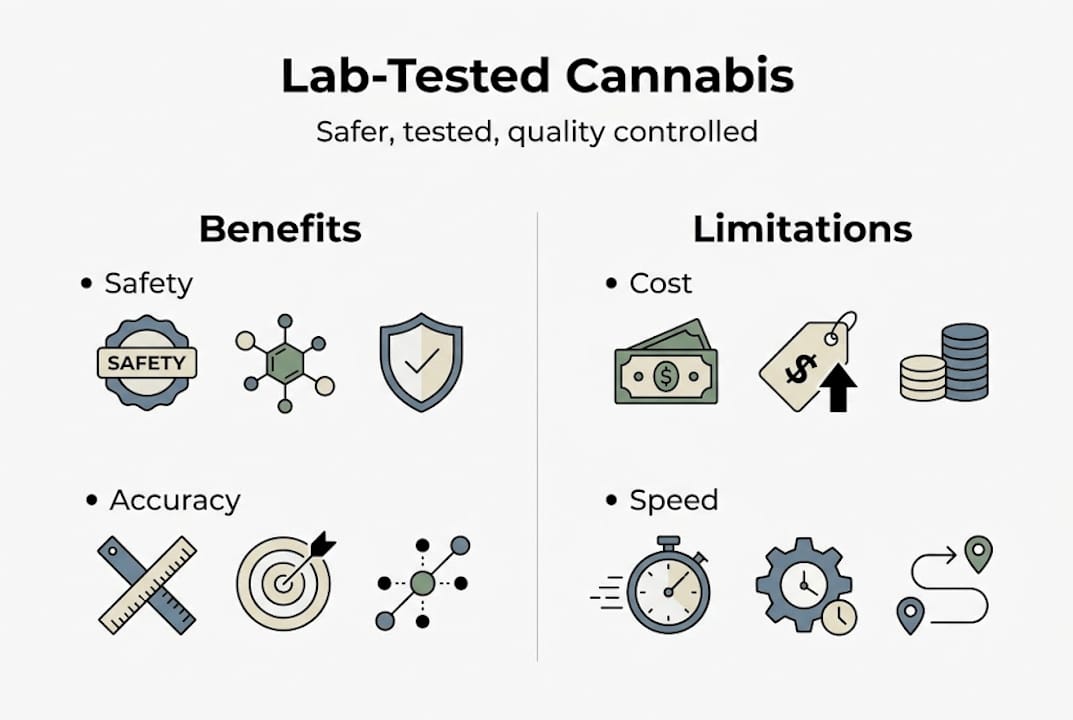
Lab testing offers real, documented benefits, but it is not a perfect system. Understanding both sides helps you make genuinely informed choices.
Key benefits of lab-tested cannabis:
That said, testing ensures safety and dosing accuracy, but limitations include allowed potency variability and occasional recalls due to failed tests after the initial certification. The allowed variability for potency labels in Canada is roughly plus or minus 15 to 20%, which means a product listed at 20% THC could legally test anywhere in that range. That matters if you are dosing carefully.
Product type also affects how thorough testing can be. Edge cases include concentrates, edibles, and vapes: concentrates require solvent testing, edibles need homogeneity checks to ensure every bite has consistent dosing, and new spectroscopic methods are emerging to improve speed and accuracy. These categories are genuinely more complex to verify.
“The COA tells you a great deal, but it reflects a snapshot of one tested batch. Your job is to choose producers who test consistently and transparently, not just once.”
Pro tip: Before buying, cross-reference the how to read lab results guide to understand COA language, and check Health Canada’s recall database to confirm no active alerts apply to your product.
Emerging technologies like near-infrared spectroscopy are being explored to speed up testing without sacrificing accuracy. The system is improving, but right now, knowing its limits is as valuable as knowing its strengths.
Here is something we genuinely believe, and it runs a little against the grain of standard advice: a COA is necessary, but it is not sufficient. Lab results confirm what was in a specific batch at a specific moment. They do not tell you how the product was handled after testing, how it was stored, or whether the producer has a culture of ongoing transparency.
We have seen plenty of situations where a technically compliant product still disappoints, because rigorous testing paired with poor handling practices creates a different kind of problem. Real quality comes from a combination of certified testing and a supplier who treats transparency as an ongoing commitment, not a checkbox.
Smart buyers look beyond the certificate. They consider whether a brand publishes current batch results, how promptly it responds to recall situations, and whether it communicates honestly about variability. Safe cannabis quality and trust is built over time, through consistent behaviour, not just a single document. The COA gets you in the door. The supplier’s track record is what earns your long-term trust.
If you are ready to put this knowledge to work, Green Society makes it straightforward to find cannabis products backed by real lab testing and sourced from trustworthy producers. Our flower grading guide helps you understand quality indicators beyond the label, while our resources on why lab testing matters give you a deeper foundation for every purchase.
At Green Society, we believe informed consumers make better choices and have better experiences. Browse our catalogue, use our educational resources, and feel confident knowing you are shopping from a platform that prioritises verified quality and transparent product information. Safe, satisfying cannabis starts with knowing exactly what you are choosing.
Lab-tested cannabis in Canada means the product has been evaluated by an ISO 17025-certified, Health Canada-accredited lab for potency and a broad range of safety contaminants before it can legally be sold.
Yes. Data clearly shows legal cannabis has far fewer contaminants than illicit products, with 94% of illicit samples showing pesticides compared to trace levels in just 2% of legal samples.
Lab tests cover potency, terpenes, pesticides, heavy metals, microbes, mycotoxins, residual solvents, and moisture levels across dozens of individual substances.
Yes. Some recalls still occur when batches fail post-market checks or microbial limits are exceeded, though the recall system itself is a safety feature not found in the illicit market.
No. Testing requirements vary by product type: concentrates need residual solvent testing, and edibles require dose uniformity checks that flower products do not.