Free Shipping
on orders over $150.00
$40.00
$150.00
Add $110.00 more for free shipping!
-
×
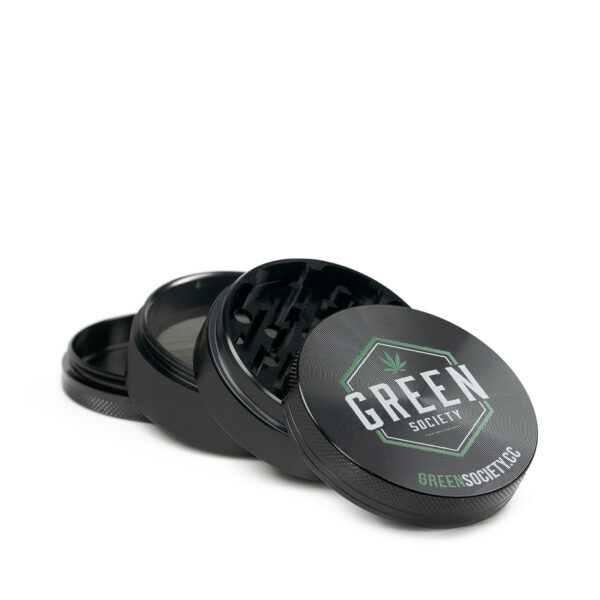 Green Society Herb Grinder
$40.00
Green Society Herb Grinder
$40.00


Many pet owners assume that because cannabis is natural, it must be harmless to animals. That assumption is wrong, and it’s becoming a serious problem. Accidental cannabis exposures in pets have climbed sharply since legalisation, with veterinary clinics across Canada reporting more cases every year. The truth is that dogs and cats process cannabinoids very differently than humans do, and what feels like a mild experience for you can be genuinely dangerous for them. This guide breaks down the real risks, how to spot trouble fast, and exactly what to do if your pet gets into your stash.
| Point | Details |
|---|---|
| THC is highly toxic | Even small amounts of THC can cause serious illness in pets and should always be avoided. |
| CBD is safer but not risk-free | CBD is generally well-tolerated by dogs and cats, though quality varies and contamination is possible. |
| Act fast in emergencies | Prompt recognition and action in cannabis exposures can save your pet’s life. |
| Prevention is best | Careful storage, quality products, and veterinary advice are the foundation of pet safety. |
Not all cannabis products carry the same risk for your pet, but none of them are completely off the hook either. The cannabis plant contains hundreds of compounds, and the two most relevant for pet safety are THC (tetrahydrocannabinol, the compound that produces a high) and CBD (cannabidiol, a non-intoxicating compound). Understanding the THC vs CBD differences is the first step toward protecting your animals at home.
THC is toxic to dogs and cats, even in small amounts, and symptoms can appear quickly after exposure. Pets are most commonly exposed through edibles left within reach, cannabis oils spilled or licked from surfaces, secondhand smoke in enclosed spaces, and raw plant material chewed from bags or containers. Even a single cannabis-infused brownie can be enough to cause serious distress in a medium-sized dog.
Why are pets so much more vulnerable? Dogs have higher CB1 receptor density in their brains than humans, which means THC binds more aggressively and produces a stronger, more prolonged effect. Cats are also sensitive, though they tend to be more selective about what they ingest.
Here is a quick comparison of exposure types and their risk levels:
| Exposure type | Risk level | Common scenario |
|---|---|---|
| THC edibles | High | Pet finds food left on counter |
| Cannabis flower | Moderate | Pet chews on plant material |
| CBD oil (pure) | Low to moderate | Accidental spill or overconsumption |
| Secondhand smoke | Low | Smoking in enclosed room with pet |
| Synthetic cannabinoids | Very high | Contaminated or unregulated products |
The most dangerous exposures involve:
Remember: There is no safe dose of THC for pets. Even trace amounts in a product labelled as CBD-only can cause symptoms if the product has not been properly tested.
Understanding the risks is only half the battle. Recognising the signs early can make a real difference in how quickly your pet recovers.
THC toxicity signs include ataxia (wobbly, uncoordinated movement), lethargy, vomiting, urinary incontinence, dilated pupils, and in serious cases, tremors or seizures. Symptoms typically appear within 30 to 90 minutes of ingestion and can last anywhere from 6 to 24 hours depending on the dose and the size of the animal.
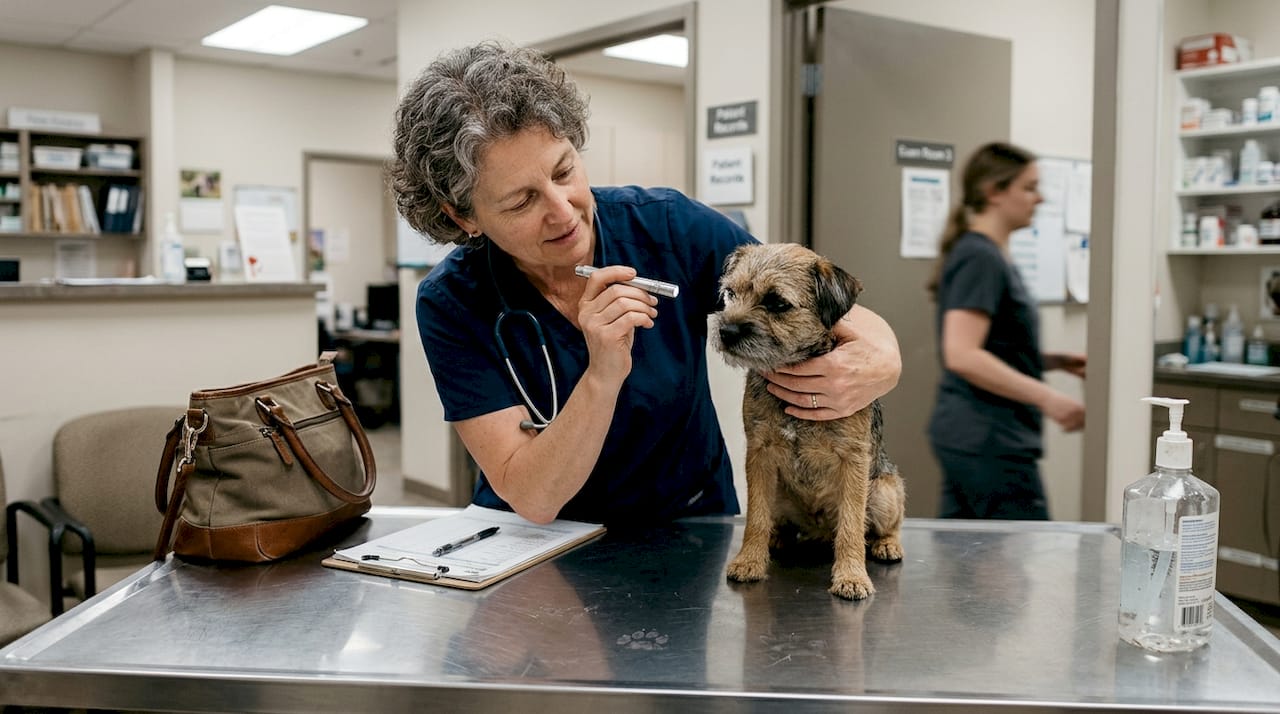
For CBD exposure, the picture is different. CBD is generally well-tolerated by most pets, with GI upset being the most common complaint. Many animals show no symptoms even at higher doses, though this should never be taken as an invitation to experiment without veterinary guidance.
Here is a severity guide to help you decide how urgently to act:
| Severity | Symptoms | Action |
|---|---|---|
| Mild | Lethargy, mild wobbling, drooling | Monitor closely at home |
| Moderate | Vomiting, incontinence, disorientation | Call your vet immediately |
| Severe | Seizures, coma, extreme tremors | Emergency vet visit now |
Steps to take when you first notice symptoms:
Important: Cats often hide discomfort. If your cat seems unusually still, glassy-eyed, or refuses food after a potential exposure, treat it as a moderate case and contact your vet.
Less common species like rabbits and birds are even more sensitive to airborne cannabis compounds, so keep them well away from any cannabis use in the home.
Knowing how to spot toxicity sets the stage for understanding exactly how different cannabis compounds affect pets.
THC and CBD are not interchangeable, and their effects on animals are dramatically different. THC acts directly on the central nervous system, causing the intoxicating and potentially dangerous effects described above. CBD works through different pathways and does not produce intoxication, which is why its safety profile in pets is considerably better.
| Factor | THC | CBD |
|---|---|---|
| Toxicity risk | High | Low |
| Intoxicating | Yes | No |
| Common symptoms | Ataxia, tremors, vomiting | Mild GI upset |
| Recovery time | 6 to 24 hours | Usually hours |
| Therapeutic evidence | None (harmful) | Mixed, some promise |
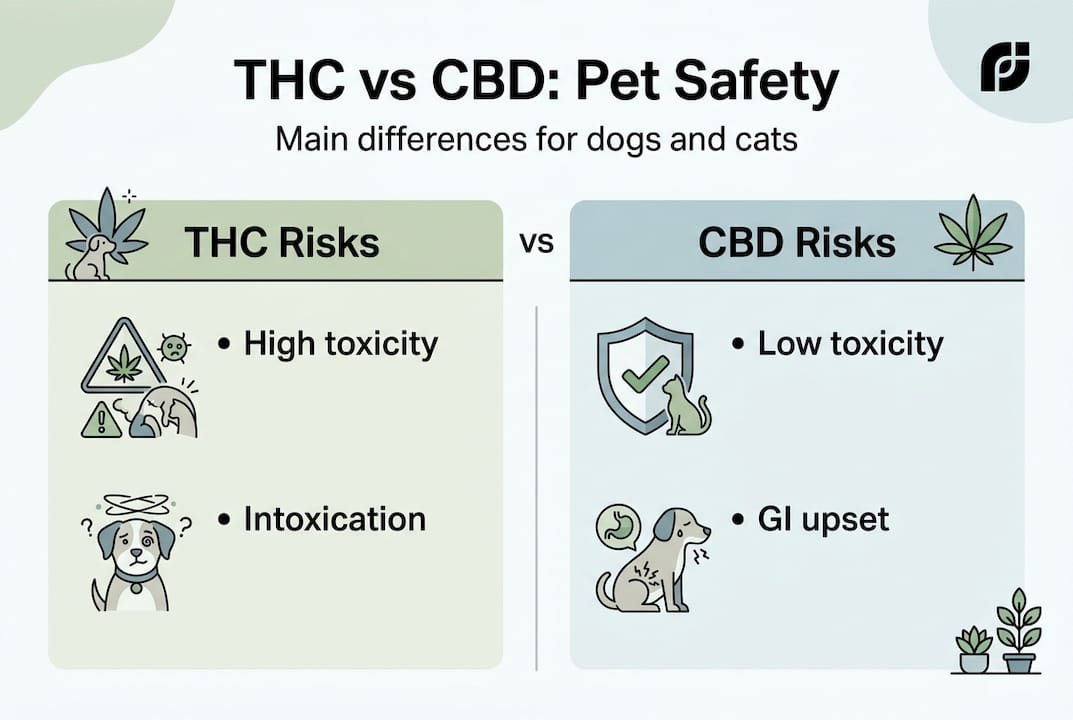
CBD has a better safety profile in pets, but there are no FDA-approved uses, and products can contain THC as a contaminant. This is the critical issue: a product marketed as pure CBD may still contain enough THC to cause symptoms in a small dog.
The research on CBD benefits for pets is still developing. Evidence for CBD in epilepsy is mixed, and there is no proven efficacy for acute pain management. Some studies show promise for anxiety and inflammation, but vets urge caution.
Pro Tip: If you are considering CBD for dogs or other pets, always seek vet advice before starting. Ask specifically for a product with a certificate of analysis from a third-party lab, and confirm the THC content is below 0.3%.
Quality control is non-negotiable. Products without independent lab testing are a gamble, and that gamble involves your pet’s health.
Understanding product differences and benefits means little without a clear plan of action for emergencies.
If you suspect your pet has ingested cannabis, act quickly and calmly. Treatment is supportive, meaning vets focus on managing symptoms rather than reversing the exposure. The prognosis is excellent, and most pets recover fully within one to three days.
Here is what to do, step by step:
Veterinary treatment may include IV fluids, anti-nausea medication, and in severe cases, sedation to manage tremors. Review cannabis edibles emergency guidance to understand what to expect.
Pro Tip: Save your vet’s after-hours number and the Pet Poison Helpline (1-800-213-6680) in your phone right now. In a real emergency, you will not want to be searching for it.
Prevention is always better than treatment. Store all cannabis products in locked, child-proof containers placed well out of reach. Never leave edibles on counters or tables. Treat cannabis storage the same way you would treat medication storage in a home with children.
With prevention in mind, here is how to make cannabis use in your home safer for all pets.
The quality of the cannabis products you bring home directly affects the risk level for your animals. CBD products vary greatly in quality and contamination risk, and third-party testing combined with veterinary consultation are the two most important safeguards.
When reading a product label or lab report, look for:
Understanding third-party testing for cannabis is genuinely important, not just a marketing checkbox. Mislabelled products are more common than most people realise, and the consequences for pets can be serious.
Pro Tip: Use cannabis product quality indicators as a checklist before every purchase. If a product cannot provide a current COA, do not buy it.
Safe storage checklist for pet-owning households:
A veterinarian-client-patient relationship (VCPR) is also non-negotiable if you are considering any cannabis product for your pet. A vet who knows your animal’s health history is the only qualified person to guide that decision.
Most cannabis safety advice for pet owners is reactive. It tells you what to do after something goes wrong. That is useful, but it misses the bigger opportunity.
The owners who truly protect their pets are the ones who treat cannabis storage and product selection as a household safety protocol, not an afterthought. They choose products with verified lab testing for safety, they store everything securely before an incident ever occurs, and they have their vet’s number ready before they need it.
Here is the uncomfortable truth: most accidental pet exposures are entirely preventable. They happen because cannabis was left on a coffee table, an edible was mistaken for a regular snack, or a product was purchased without any quality verification. None of those situations require bad intentions. They just require a moment of inattention.
Legal cannabis is not going away, and neither are pets. The responsibility falls on owners to close the gap between those two realities. That means demanding quality, storing products properly, and staying informed. Reactive advice is a safety net. Proactive habits are the real protection.
If you are serious about responsible cannabis use in a home with pets, the products you choose matter as much as how you store them.

At Green Society, every product in our catalogue is selected with quality and transparency in mind. Whether you are exploring CBD product types for the first time or looking for Canada’s best-selling CBD products, we make it easy to find options backed by proper testing. Use our quality indicators guide to shop with confidence and bring home only products you can trust around your family, including the four-legged members.
THC is toxic at even mild doses for both dogs and cats, and no amount should be considered safe. Always keep all THC-containing products completely out of reach of animals.
Contact your veterinarian or a pet poison helpline immediately, because prompt veterinary care significantly improves outcomes. Note what was ingested and how much, and follow your vet’s instructions without delay.
No. CBD products vary in quality and may contain THC contamination, so only use lab-tested, pet-specific CBD products after consulting your veterinarian.
Yes. Secondhand cannabis smoke can cause mild symptoms, particularly in confined spaces, so always ventilate the area thoroughly and keep pets in a separate room when smoking.