Free Shipping
on orders over $150.00
$40.00
$150.00
Add $110.00 more for free shipping!
-
×
 Green Society Herb Grinder
$40.00
Green Society Herb Grinder
$40.00


TL;DR:
- Cannabis effects are primarily determined by genetics, specifically cannabinoids and terpenes.
- Strain labels like indica and sativa are unreliable; chemoprofiles predict effects better.
- Lab-tested genetic data reveals significant diversity, impacting consistency and experience expected from strains.
You pick a strain labelled “sativa” expecting an energising afternoon buzz, but end up sinking into your couch. Sound familiar? Millions of cannabis users experience this disconnect every session, and the culprit is almost never the label. It’s the genetics underneath. While names like Blue Dream or OG Kush have become shorthand for specific experiences, they’re only as reliable as the genetic lineage behind them. Understanding how cannabis genetics actually work will transform how you shop, what you buy, and most importantly, how you feel.
| Point | Details |
|---|---|
| Genetics drive experience | Cannabis genetics determine the effects, flavours, and aroma of each strain. |
| Chemoprofile over strain name | Lab-tested cannabinoid and terpene profiles offer more reliable guidance than indica/sativa labels or names. |
| Genetic diversity matters | Wide genetic variation means even strains with the same name can perform differently. |
| Smart selection tips | Focus on documented genetics and chemoprofiles when choosing strains for effects or flavour. |
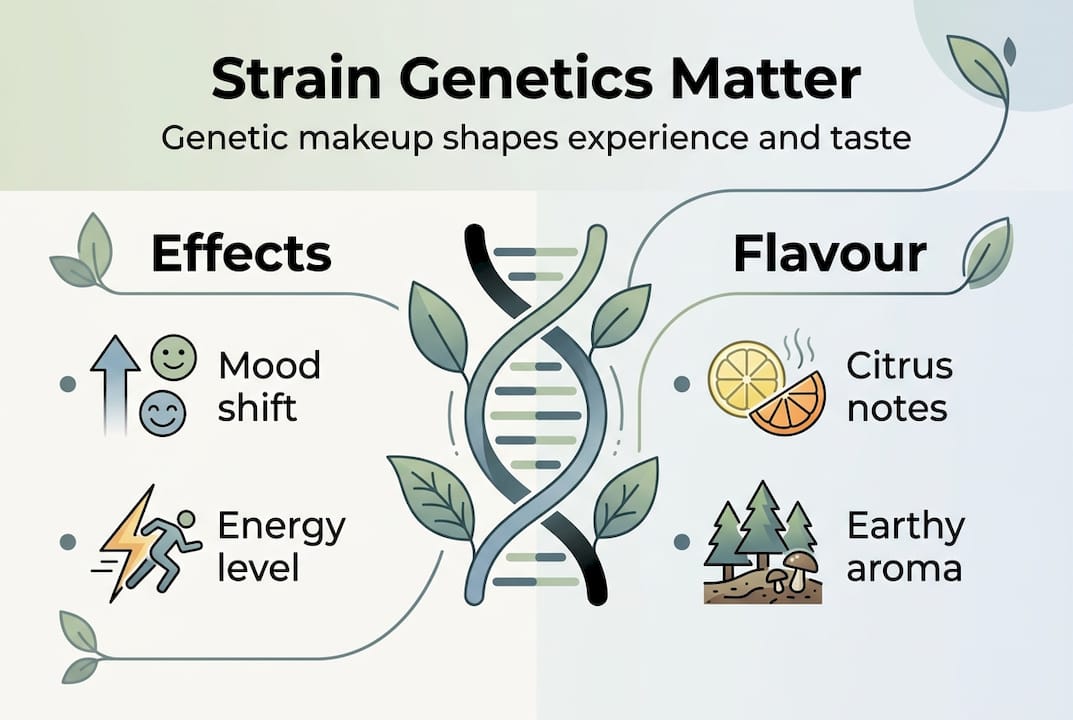
Every cannabis plant carries a genetic blueprint that controls which compounds it produces and in what quantities. Those compounds, primarily cannabinoids like THC, CBD, and THCV, along with aromatic molecules called terpenes, are the real architects of your experience. Genetics determine which enzymes a plant expresses, and those enzymes build each compound from scratch.
Terpenes are where things get especially interesting. Myrcene, one of the most common terpenes, produces that earthy, musky aroma and has a notably sedating influence. Limonene, on the other hand, delivers a bright citrus scent and tends to promote uplifting, mood-enhancing effects. β-caryophyllene smells like black pepper and is the only terpene known to directly bind to cannabinoid receptors, offering anti-inflammatory properties. As NCADD on cannabis compounds confirms, terpenes and cannabinoids, genetically determined, drive effects via the entourage effect.
The entourage effect explained describes how cannabinoids and terpenes work together rather than in isolation. A high-THC strain loaded with myrcene will feel very different from the same THC percentage paired with limonene. The combination amplifies some effects and dampens others, creating a completely unique experience profile.
“Flavour and aroma aren’t just sensory pleasures, they are functional signals. The terpene profile you smell before you consume is already telling you how you’re likely to feel.”
Here’s a quick look at how key terpenes compare:
| Terpene | Aroma | Primary effect |
|---|---|---|
| Myrcene | Earthy, musky | Sedating, relaxing |
| Limonene | Citrus, lemon | Uplifting, mood boost |
| β-caryophyllene | Pepper, spice | Anti-inflammatory |
| Linalool | Floral, lavender | Calming, anxiety relief |
| Pinene | Pine, fresh | Alertness, memory support |
Key takeaways on genetics and effects:
Once you start reading your cannabis through the lens of genetics, names and classifications start to feel much less important than what’s actually in the plant.
Recent breakthroughs in cannabis research have taken our understanding far beyond the basics. A landmark study published in Nature constructed the first comprehensive cannabis pangenome, essentially a map of the full genetic variation across numerous cannabis varieties. The findings are striking and have direct consequences for how you shop.
A pangenome compiles genetic information from many individual plants rather than relying on a single reference genome. This approach captures the full range of genetic diversity within a species, and cannabis turns out to have an enormous amount of it. According to the Nature pangenome study, pangenome research shows high genetic diversity across cannabis varieties, with cannabinoid synthase genes remaining relatively stable but genetic variants significantly affecting minor cannabinoids like THCV.
What does this mean in practice? The genes that build THC and CBD are broadly conserved. You can generally trust that a strain bred for high THC will consistently produce high THC. But the minor cannabinoids, the ones that contribute nuance to your experience, are far more variable and depend on specific, unique genetic sequences that may or may not be present in a given plant.
This also explains something frustrating that many enthusiasts encounter:
Stat to know: Cannabis pangenome research identified enough genetic variation to suggest that many strains sold under identical names are, genetically speaking, entirely different plants.
Here’s how legacy strains and new hybrids compare in terms of genetic predictability:
| Characteristic | Legacy strains | New hybrids |
|---|---|---|
| Genetic stability | High | Variable |
| Terpene consistency | Reliable | Less predictable |
| Minor cannabinoid presence | Often documented | Often unknown |
| Lab data availability | Growing | Inconsistent |
Lab testing for genetics bridges the gap between what a strain is called and what it actually delivers, making it an essential step in any informed purchase decision.

The terms indica and sativa have been used for so long that they feel like scientific fact. They’re not. These labels were originally applied based on plant morphology, meaning the physical appearance of the plant, including height, leaf shape, and branching patterns. They were never meant to predict how you’d feel after consuming.
Dr. Ethan Russo, a leading cannabis pharmacologist, has been direct on this point. His research, detailed in the expert perspective Dr. Russo, underscores that relying on indica or sativa labels for predicting effects is effectively meaningless, and that terpene profiles are what actually drive the entourage-driven differences in experience between varieties.
“The sativa/indica distinction as commonly applied is not a reliable guide to effect. What matters is the biochemistry: the terpene and cannabinoid content working together.”
This is a significant shift from how most dispensaries still market products. Plenty of so-called “sativa” strains contain high levels of myrcene and produce deeply relaxing effects, while certain “indicas” loaded with limonene can feel energising. The label describes the plant’s appearance, not its chemistry.
What actually predicts your experience:
As NCADD strain guidance notes, prioritising lab-tested chemoprofiles over strain names leads to far more predictable outcomes for effects and flavours.
Pro Tip: When browsing strains, skip the indica or sativa label entirely. Go straight to the terpene breakdown and cannabinoid percentages. If that information isn’t available, it’s worth asking your source why not.
For anyone still navigating the indica vs sativa differences debate, the clearest guidance is this: those labels are a starting point at best. The indica and sativa myths run deep in cannabis culture, but letting chemoprofiles guide your choice means fewer surprises and better sessions.
Knowing the theory is one thing. Using it to actually improve your next purchase is what matters. Here’s a step-by-step approach to choosing strains based on genetic principles rather than guesswork.
Pro Tip: Keep a simple notes app entry after each session. Log the strain name, the terpene profile if available, the THC and CBD percentages, and how you felt. Over a few sessions, clear patterns will emerge that are personalised to your own biology.
Worth noting: According to NCADD strain genetics advice, focusing on lab-tested chemoprofiles rather than strain names delivers significantly more predictable outcomes across different consumers.
Consistent genetics also matter for what is the entourage effect to work as expected. When a producer maintains stable genetic lines, you can trust that the same strain will deliver a reliably similar experience batch to batch. When genetics are inconsistent, the entourage effect may behave unpredictably even if the THC number looks the same.
After years of watching cannabis culture evolve, one thing becomes clear: genetics are the foundation, but they’re not the whole building. We’ve seen customers choose scientifically optimal strains based on perfect terpene profiles, and still report unexpected results. Biology is personal, and cannabis is no exception.
Your endocannabinoid system, your metabolism, your stress levels on a given day, even how recently you ate, all of these modify how genetics translate into experience. A strain with the exact same chemoprofile can feel subtly different depending on whether it was grown indoors under optimal lighting or rushed to market without proper cure time.
The freshness and handling of a product after it leaves the cultivator matters enormously. Terpenes are volatile. They degrade with heat, light, and time. A strain with a brilliant genetic profile can arrive as a shell of itself if storage and handling weren’t taken seriously.
Smart consumers layer their knowledge: start with genetics, verify with strain testing insights, then pay attention to cultivation source, freshness, and your own response. The goal isn’t to find the universally perfect strain. It’s to build enough self-awareness about your own biology and enough product literacy to make excellent choices consistently.
Genetics will always matter. But they work best as the starting point of a larger conversation with yourself about what you actually need.
Now that you’ve built a solid foundation in cannabis genetics, putting that knowledge to work is the natural next move.

At GreenSociety.cc, we carry a wide selection of lab-documented, genetically grounded products that make it easier to shop by what matters. Whether you’re drawn to the deeply relaxing profiles of classic buy indica strains or want to brush up before your next purchase with our cannabis flower checklist, we’ve got resources built for curious, informed consumers. You can also go deeper with our detailed genetics guide to refine your understanding and make every session count. Smarter choices start with better information, and we’re here to provide both.
Yes, genetics determine the levels of cannabinoids and terpenes, which combine to shape effects like relaxation, euphoria, or energy through the entourage effect.
Due to high genetic diversity across cannabis varieties, two plants sold under the same name may come from entirely different genetic lineages and produce noticeably different effects.
Choosing based on certified lab-tested chemoprofiles is far more reliable than relying on strain names or indica and sativa labels, which describe appearance rather than effect.
Minor cannabinoids, shaped by unique genetic variants, can subtly shift the experience by influencing appetite, alertness, or mood, even when present in small amounts.