Free Shipping
on orders over $150.00
$0.00
$150.00
Add $150.00 more for free shipping!


TL;DR:
- Cannabis flower grading is informal, inconsistent, and varies between retailers.
- Visual, aromatic, and curing qualities are more reliable indicators than grade labels alone.
- Always verify with third-party lab reports and personal inspection rather than relying solely on grades.
You might assume that an AAAA-grade bud is always the best flower on the shelf, but that assumption can cost you money and leave you disappointed. Cannabis flower grading has no official standard, no industry regulator, and no universal rulebook. Every retailer sets its own criteria, which means one seller’s top-shelf AAAA could be another’s mid-range AAA. Understanding how grading actually works, and what those letter grades really mean, puts you in control of every purchase you make.
| Point | Details |
|---|---|
| Grading is unregulated | Cannabis flower grades like AAAA–A are retailer-defined and may vary widely between sources. |
| True quality goes beyond grades | Look for visual trichome coverage, aroma, and lab results instead of relying solely on letter grades. |
| COAs are better than letters | Certificates of Analysis and hands-on inspection offer more reliable quality signals than grade labels. |
| Smart shopping means scepticism | Always double-check grades against visual, aroma, and test evidence to ensure you get the best flower. |
Cannabis flower grading is an informal system that producers and retailers use to rate and market bud quality. Unlike the grading systems used for meat or produce, cannabis grading has no government body behind it, no third-party auditor, and no binding rules. Retailers assign grades based on their own internal criteria, and those criteria can shift between vendors, regions, and even product lines.
The most common grading scale you’ll see in Canada runs from A (entry-level) up to AAAA or even AAAAA (premium or “quads”). Some retailers swap letter grades for marketing terms like “Top Shelf,” “Craft,” or “Connoisseur Grade.” These labels are created and applied entirely at the retailer’s discretion, so it pays to understand the industry grading terms before you shop.
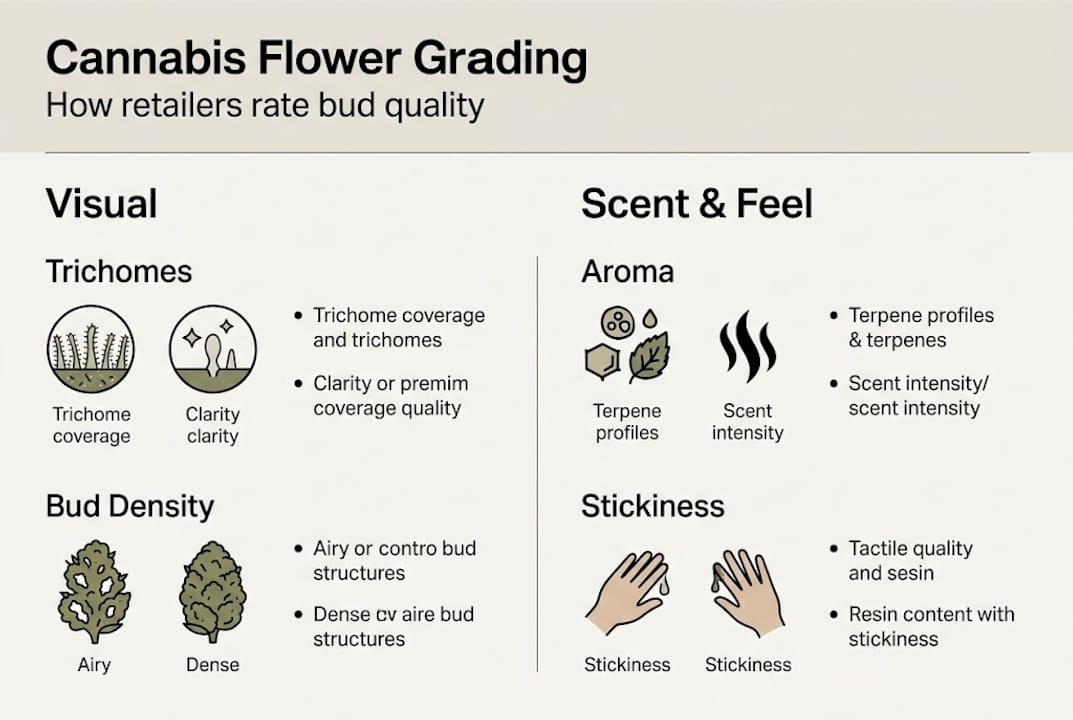
What do most retailers actually assess when they assign a grade? Here are the core criteria:
“Grades aim to help consumers make purchasing decisions, but without standardisation, those letters can be inconsistent or misleading across different sellers.”
Good quality assurance for cannabis goes beyond what a single letter can communicate. Grades are a useful shorthand, but treat them as a starting point rather than a verdict.
Now that you know what grading means, let’s unpack the real-world criteria retailers use to assign those grades. Each factor carries weight, and knowing which ones matter most will sharpen how you read a product listing.
The table below shows how each grade typically compares across the most important quality indicators in cannabis:
| Criterion | AAAA | AAA | AA | A |
|---|---|---|---|---|
| Bud density | Very dense, tight | Dense | Moderate | Loose, airy |
| Trichome coverage | Heavily frosted | Good coverage | Moderate frosting | Sparse |
| Aroma | Rich, complex | Noticeable, pleasant | Mild | Faint or flat |
| Trim quality | Excellent | Good | Acceptable | Rough |
| Cure and moisture | Perfect | Good | Adequate | Variable |
| THC range (approx.) | 25–35% | 20–25% | 15–20% | 10–15% |
As the primary grading criteria show, a grade is a composite score, not a single measurement. A bud can score high on visual appeal but fall short on aroma, and a retailer may still call it AAAA.

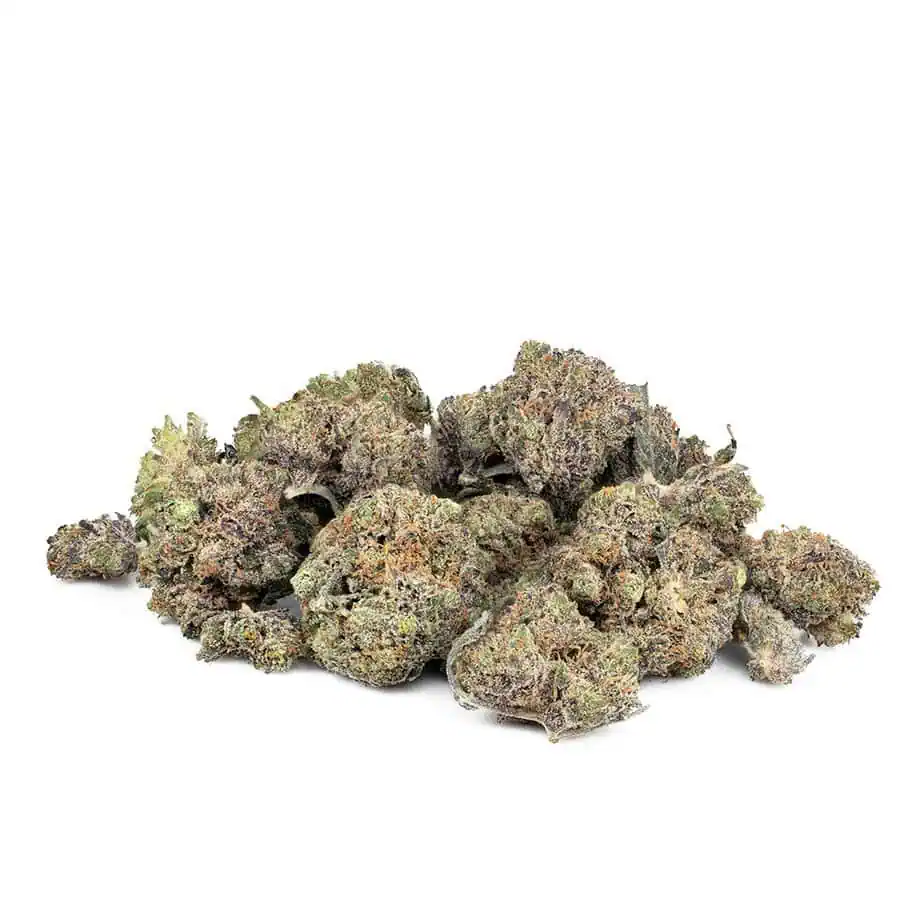
This is why THC percentage alone is a poor proxy for quality. A highly potent flower with a flat, one-dimensional scent often delivers a less satisfying experience than a mid-potency strain with a rich, layered terpene profile. Terpenes drive flavour and can also influence effect. When you’re browsing signs of quality cannabis, always consider aroma and structure alongside numbers.
Pro Tip: When examining flower, rub a small bud between your fingers. If it leaves a sticky resin behind and releases a complex scent, that’s a stronger quality signal than the grade letter printed on the package.
With the grading criteria laid out, it’s important to recognise why those grade letters alone shouldn’t be the final word on quality. The core problem is simple: nobody checks the grades.
No industry body verifies whether a retailer’s AAAA claim holds up. A producer can label flower as top-shelf without any third-party confirmation. This creates a real risk of grade inflation, where sellers boost a grade to justify higher prices, knowing that most consumers won’t have the tools or knowledge to push back. As grading research confirms, the system is subjective, unregulated, and retailer-defined, making inconsistencies and unreliability common across sellers.
| Retailer | Same strain, same batch | Grade assigned | Price per gram |
|---|---|---|---|
| Retailer A | Blue Dream (22% THC) | AAAA | $12 |
| Retailer B | Blue Dream (22% THC) | AAA | $8 |
| Retailer C | Blue Dream (22% THC) | AA+ | $7 |
The table above illustrates a real pattern in the Canadian online cannabis market. The same strain from the same batch can carry different grades and wildly different prices depending on who’s selling it.
THC percentage is sometimes used as the primary basis for a grade, but this shortcut misses the full picture. Aroma, trichome density, and cure quality are just as crucial to the overall experience, and a well-cured AA flower can genuinely outperform a poorly cured AAAA. Reviewing quality assurance resources can help you develop a more complete framework for evaluating what you’re buying.
The grade inflation problem also feeds on consumer psychology. Shoppers often equate higher grades with safety and quality, so retailers know that labelling something AAAA increases perceived value, even without objective justification. Understanding why quality matters beyond the label helps you resist that pull.
Pro Tip: Always ask for a Certificate of Analysis (COA) before making a significant purchase. A COA is a third-party lab report that shows actual cannabinoid and terpene levels. It doesn’t lie the way a grade label can.
With an understanding of how grades can mislead, let’s focus on actionable strategies for making confident, informed flower purchases. Grades should be your starting point, not your final decision.
Here’s a practical step-by-step approach to identifying quality cannabis before you commit to buying:
One counterintuitive insight that experienced buyers know: AAA-grade flower often represents the best value on the market. Many AAAA listings carry a price premium that reflects marketing effort more than a meaningful quality gap. If the COA looks good and the flower passes your sensory checks, a AAA label shouldn’t put you off.
“Trust your senses and verify with data. Trichomes, aroma, and lab results tell you far more than a letter ever will.”
Learning to read cannabis lab reports is one of the highest-leverage skills you can develop as a cannabis consumer. It takes the guesswork out of purchasing and gives you real information to compare across products.
After years of watching the cannabis market evolve, one thing stands out clearly: buyers who chase grades almost always leave value on the table. The letter system can be helpful as a rough filter, but it hides more than it reveals.
The truth is that cannabis quality is experienced, not labelled. You feel it in the complexity of a well-grown terpene profile. You see it in the way trichomes catch the light. You notice it in how cleanly the flower burns and how the flavour holds across a session. None of that is captured in an A-to-AAAA scale defined by someone trying to sell you something.
Some of the most memorable experiences we hear from our customers come from AAA strains they almost passed over because of the grade. Meanwhile, plenty of AAAA purchases have disappointed simply because the label did all the talking. The most reliable buyers we see are the ones who combine their own inspection with COA data, using the connoisseur’s aroma guide to build vocabulary for what they’re tasting and smelling. That kind of knowledge compounds over time and makes every purchase smarter.
Ready to put these grading insights to use? At GreenSociety.cc, we make it easier to shop with the knowledge you’ve just built.
Start with the cannabis flower checklist to run through every quality factor before making your next pick. If you’re leaning toward relaxing, body-focused effects, explore our curated selection where you can buy Indica strains with product details designed to help you compare beyond just the grade. We pair product listings with educational context so you can shop by what actually matters: terpene profiles, structure, cure quality, and verified potency. Your best cannabis experience starts with the right information.
These are retailer-defined letter grades rating flower quality based on features like bud structure, trichome coverage, aroma, and sometimes THC, but meanings vary widely across sellers. As grading standards confirm, AAAA typically implies 25 to 35% THC and premium characteristics, while A grades sit closer to 10 to 15% with more basic appeal.
No. Grades are subjective and unregulated, so some AAA strains offer better quality and value than popular AAAA listings, especially when grade inflation is involved. Always inspect flower yourself before relying on the label.
Prioritise visual inspection for frosty trichomes, dense buds, complex aromas, and a sticky feel. Where possible, ask for Certificates of Analysis to verify the actual cannabinoid profile rather than trusting the letter grade alone.
Yes. Grade inflation is common and a lack of standardisation means grades can be misleading across different sellers. Third-party lab results and your own sensory inspection are consistently more reliable tools for assessing flower quality.