Free Shipping
on orders over $150.00
$40.00
$150.00
Add $110.00 more for free shipping!
-
×
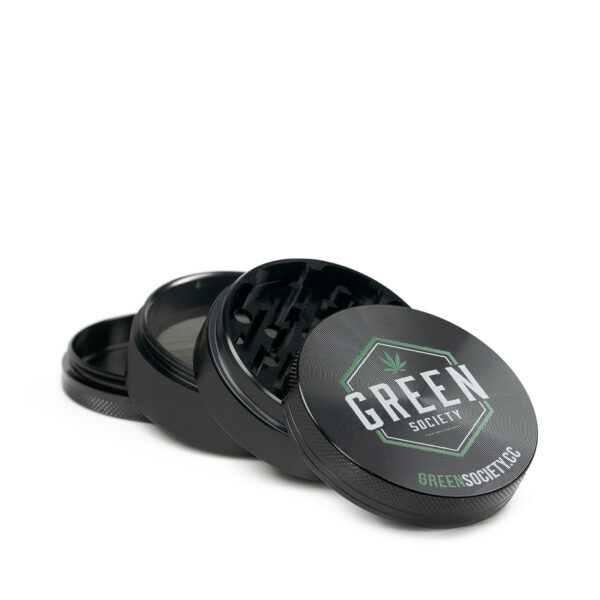 Green Society Herb Grinder
$40.00
Green Society Herb Grinder
$40.00

TL;DR:
- Hemp-derived CBD oil remains federally legal in 2025 if it contains no more than 0.3% delta-9 THC by dry weight, but federal restrictions prevent it from being marketed as a food or supplement. State laws impose additional restrictions, such as age limits and product bans, creating a complex legal landscape for consumers. The upcoming 2026 rule change will drastically limit THC content per container, potentially removing many full-spectrum CBD products from the market.
Hemp-derived CBD oil is federally legal in the United States in 2025, provided it contains no more than 0.3% delta-9 THC by dry weight under the 2018 Farm Bill. That single sentence answers the core question, but it misses the full picture. The FDA still blocks CBD from food and dietary supplements, dozens of states layer on their own age restrictions and product bans, and a federal redefinition of hemp scheduled for November 2026 threatens to pull many popular products off shelves. If you are researching CBD oil legality 2025 before making a purchase or starting a wellness routine, this guide covers every layer you need to understand.
Hemp-derived CBD is federally legal in the United States when it contains no more than 0.3% delta-9 THC by dry weight. The 2018 Farm Bill removed hemp from the Controlled Substances Act, which is the legislation that had previously treated it the same as marijuana. That single threshold, 0.3% delta-9 THC, is what separates a legal hemp product from a federally controlled substance.
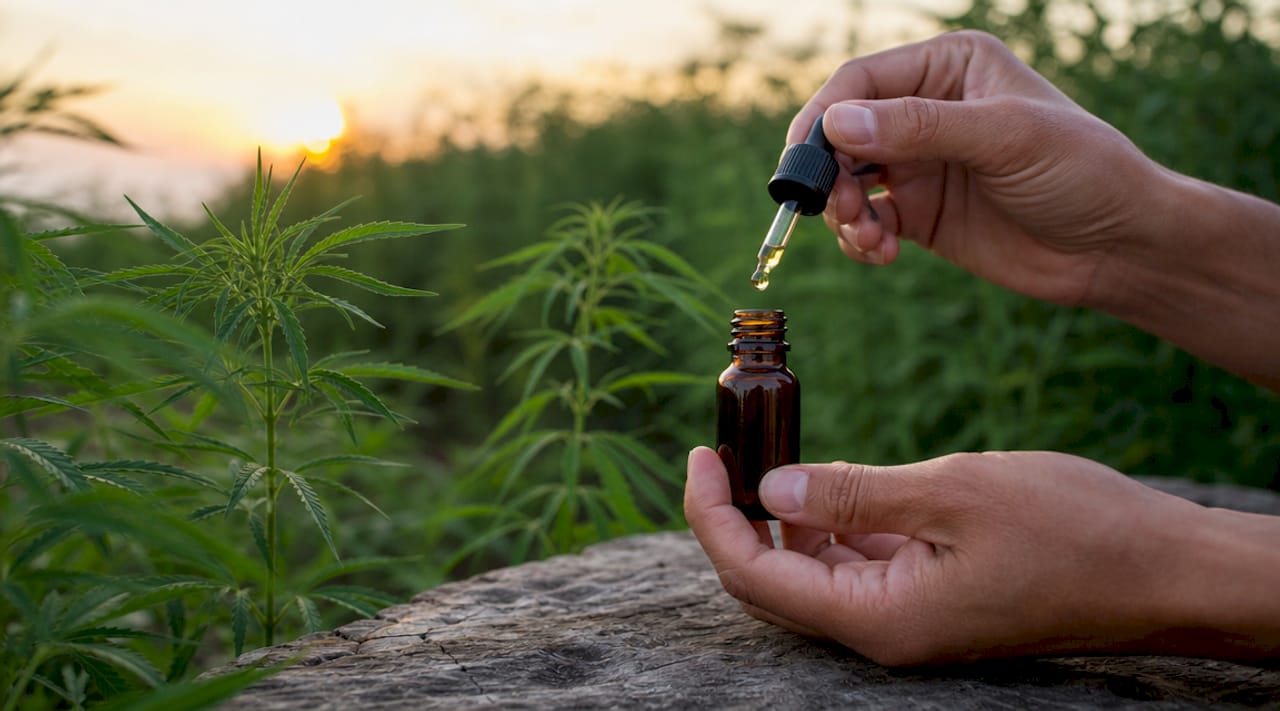
The FDA, however, retained authority under the Federal Food, Drug, and Cosmetic Act. The result is that CBD cannot be marketed as a food ingredient or dietary supplement at the federal level. This creates a strange situation where a product can be grown and sold legally but cannot be labelled as a health supplement. Most CBD oils, tinctures, and topicals currently on the market exist in a grey zone where the Farm Bill permits them but the FDA has not formally approved their product category.
There is one notable FDA carve-out worth knowing. The FDA does not prioritise enforcement against hemp-derived CBD provided to Medicare beneficiaries through specific programmes, provided the products meet applicable restrictions. This exception is narrow and does not apply to general retail sales, but it signals that the FDA is capable of nuance when political pressure demands it.
Pro Tip: When reading a product label, look for “hemp-derived CBD” and a certificate of analysis confirming delta-9 THC at or below 0.3%. Products that only say “hemp extract” without specifying cannabinoid content are harder to verify.
The distinction between hemp and cannabis matters enormously here. The legal difference between hemp and cannabis comes down entirely to that THC threshold. Two plants can look identical; the chemistry determines which one is federally legal.
Federal legality sets the floor, not the ceiling. State-specific laws govern sales and age restrictions in ways that override federal ambiguity, and the variation across states is significant. Buying CBD oil legally in one state does not guarantee that the same product is legal to possess or purchase in another.
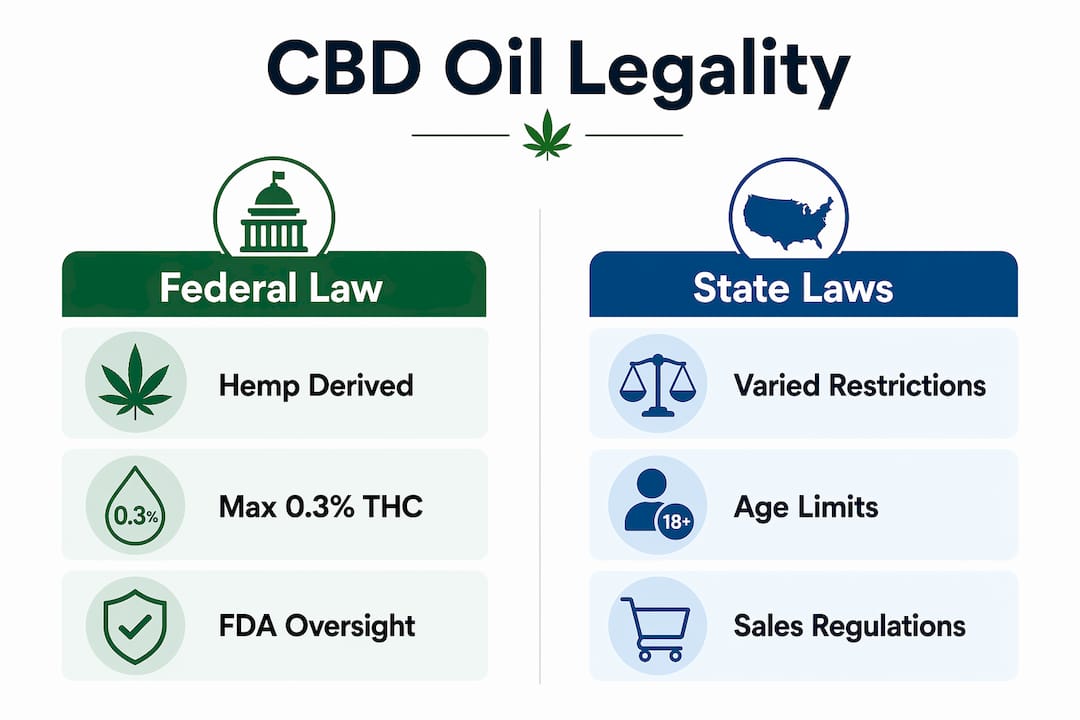
Age restrictions are the most common state-level addition. Many states require purchasers of consumable hemp products, including CBD, to be at least 21 years old. This surprises many consumers who assume that because hemp is federally legal, it is available to anyone over 18. In practice, states like Texas have aligned hemp purchase age requirements with those for alcohol.
Product-specific bans add another layer of complexity. Texas, for example, prohibits cannabinoid vapes and places strict restrictions on smokable hemp products. This is not an isolated case. Several states have moved to restrict or outright ban hemp-derived vapes, citing concerns about youth access and unregulated potency. The key restrictions consumers encounter at the state level include:
Industry voices describe this shift as a move from a generalised legal hemp era to a state-specific, highly regulated market where compliance is critical for consumer protection. That framing is accurate. The practical implication for you as a consumer is straightforward: always check the laws in the state where you are buying, not just where the product was made.
The most significant shift in CBD oil laws 2025 and beyond is not happening right now. It is scheduled for November 12, 2026. The federal hemp definition will change from a percentage-based threshold to a total THC-per-container limit of 0.4 mg. That is a dramatic reduction from the current framework and will affect a large portion of the CBD market.
The current 0.3% delta-9 THC rule applies to the dry weight of the plant material. A 30 ml bottle of full-spectrum CBD oil can contain a meaningful amount of total THC under that calculation while still being technically legal. Under the new rule, the same bottle would need to contain no more than 0.4 mg of total THC across all cannabinoids, including THCA. THCA converts to THC when heated, and its inclusion in the calculation closes a loophole that some manufacturers have used to sell high-potency products under the hemp label.
The November 2026 redefinition will likely remove many full-spectrum CBD products from the legal market entirely, forcing manufacturers to reformulate or discontinue product lines. Consumers who currently rely on these products for wellness or therapeutic purposes should be aware that availability may change significantly within the next year.
The political response to this change is active. GOP lawmakers have filed amendments to prevent the scheduled federal recriminalisation of hemp THC products, and the Trump administration has signalled interest in keeping full-spectrum CBD legal while restricting products that pose health risks. The outcome of these legislative efforts is uncertain. Consumers who rely on full-spectrum products should monitor this closely and consider stocking up or identifying broad-spectrum alternatives that would remain compliant under the new threshold.
Practical compliance comes down to four areas: purchase verification, product selection, workplace considerations, and travel risks. Getting each one right protects you from legal exposure that most consumers do not anticipate.
Verify your state’s age requirement before purchasing. Do not assume 18 is the legal age. In states with a 21-plus requirement, purchasing CBD oil as a minor carries the same legal risk as purchasing alcohol underage. Check your state’s hemp programme website or consult your legal cannabis checklist before buying.
Read the certificate of analysis before you buy any product. Third-party lab testing for cannabis confirms actual cannabinoid content, not just what the label claims. A reputable CBD product will have a scannable QR code linking to its most recent lab report. If it does not, treat that as a red flag.
Understand workplace drug testing risks. Full-spectrum CBD products contain trace amounts of THC. Regular use can cause a positive result on a standard urine drug screen, which typically tests for THC metabolites rather than CBD. Broad-spectrum or CBD isolate products carry lower risk, but no hemp-derived CBD product is guaranteed to produce a negative test result.
Do not travel internationally with CBD. Crossing international borders with CBD products is legally risky. U.S. Customs and Border Protection treats cannabis-derived products as controlled substances at the border, and many countries have no legal distinction between hemp-derived CBD and marijuana. Even within the U.S., crossing from a permissive state into one with stricter hemp laws creates legal exposure.
Pro Tip: If you travel domestically with CBD oil, carry the product’s certificate of analysis and original packaging. This documentation demonstrates the product’s legal THC content if you are questioned by law enforcement.
The CBD regulations 2025 environment rewards informed consumers. The more you know about what is in your product and what your state requires, the lower your legal and health risk.
CBD oil legality in 2025 depends on hemp origin, THC content, state law, and an imminent federal redefinition that will reshape the market by November 2026.
| Point | Details |
|---|---|
| Federal legality threshold | Hemp-derived CBD with no more than 0.3% delta-9 THC is federally legal under the 2018 Farm Bill. |
| FDA restrictions remain | CBD cannot legally be marketed as a food or dietary supplement at the federal level. |
| State laws vary significantly | Many states require purchasers to be 21 or older and ban certain products like cannabinoid vapes. |
| 2026 redefinition is coming | The November 2026 rule change limits total THC per container to 0.4 mg, threatening full-spectrum products. |
| Travel carries real risk | Crossing international borders with CBD products is legally dangerous regardless of domestic legality. |
The conversation around CBD legality tends to flatten into a simple yes or no, and that framing does consumers a disservice. The honest picture is that hemp-derived CBD exists in a legally fragile space that has been tolerated rather than formally approved at the federal level. The FDA has never sanctioned CBD as a supplement. The 2018 Farm Bill created an opening, not a guarantee.
What I find most underappreciated is the 2026 redefinition. Most consumers buying full-spectrum CBD oil today have no idea that the product they rely on may not exist in its current form by late next year. The 0.4 mg total THC per container limit is not a minor adjustment. It is a structural change that will force manufacturers to reformulate or exit the market. If you are using a full-spectrum product for sleep, anxiety, or pain management, now is the time to research broad-spectrum alternatives and understand what you would switch to.
State law complexity is the other underestimated risk. I have spoken with consumers who bought CBD products legally in one state and were genuinely surprised to learn they were in violation of the law in their home state. The evolving cannabis laws in 2025 are not static. States are actively tightening regulations, not loosening them. Staying informed is not optional if you want to use these products without legal exposure.
The therapeutic potential of CBD is real and the research base is growing. But the regulatory environment demands that you approach it with the same diligence you would apply to any other product operating in a contested legal space.
— Juiced
Understanding the legal framework is the first step. Choosing the right product is the next one. Greensociety offers a curated selection of CBD products alongside clear educational resources to help you make informed decisions. Whether you are new to CBD or looking to refine your routine, the CBD product guide at Greensociety walks you through what to look for in terms of potency, formulation, and third-party testing. For those who prefer a more approachable format, the CBD edibles range offers precisely dosed options that are easy to incorporate into a daily wellness routine. Greensociety prioritises product quality and consumer education so you can shop with clarity.
Yes. Hemp-derived CBD oil containing no more than 0.3% delta-9 THC is federally legal under the 2018 Farm Bill. The FDA still restricts its marketing as a food or dietary supplement, but the product itself is not a controlled substance.
The federal government sets no minimum age, but many states require purchasers to be at least 21 years old. Always check the hemp regulations in your specific state before purchasing any consumable CBD product.
The November 2026 redefinition limits total THC per container to 0.4 mg, which will likely remove many full-spectrum CBD products from the legal market. Consumers who rely on these products should monitor legislative developments and consider broad-spectrum alternatives.
Crossing international borders with CBD products carries significant legal risk. U.S. customs treats cannabis-derived products as controlled substances at the border, and many countries do not recognise the hemp-versus-marijuana distinction that applies domestically.
Full-spectrum CBD products contain trace amounts of THC that can accumulate and trigger a positive result on a standard drug screen. Broad-spectrum or CBD isolate products carry lower risk, but no hemp-derived CBD product offers a guaranteed negative test result.