Free Shipping
on orders over $150.00
$0.00
$150.00
Add $150.00 more for free shipping!


TL;DR:
- Cannabis regulation in North America is constantly evolving, requiring users to stay informed about local laws, packaging standards, and possession limits. Compliance depends on verifying licenced retailers, examining packaging for safety markers, and understanding jurisdiction-specific rules to avoid legal risks. Regularly updating a personalized cannabis checklist and consulting official resources helps ensure safe, legal consumption in 2025 and beyond.
Cannabis regulations in Canada and across North America continue to shift in ways that catch even experienced buyers off guard. What was fully compliant last year may carry a fine today, and what feels obviously legal in one province can be an offence two hours down the road. Simply being of age and walking into a store is no longer the whole picture. This guide gives you a practical, updated checklist to confirm every step of your purchase and use is legally sound, safe, and free of avoidable surprises in 2025 and beyond.
| Point | Details |
|---|---|
| Check your jurisdiction’s rules | Each province, state, and city can have different cannabis purchase and use laws. |
| Inspect packaging and labelling | Legal cannabis must be sold in tamper-evident, child-resistant packaging with compliant labels. |
| Respect purchase and possession limits | Exceeding legal amounts can lead to fines or criminal charges, even for adults. |
| Federal law still applies | Cross-border purchase, shipping, and travel with cannabis remain legally risky. |
| Use a modular checklist | Customise your legal cannabis checklist for your region and keep it updated as rules evolve. |
Let’s start at the foundation: understanding your obligations where you live, shop, and consume.
Compliance in cannabis is intensely local. The minimum purchasing age is 19 in most Canadian provinces, but it is 18 in Alberta and Quebec has had ongoing debates about raising it further. In American states with legal recreational programmes, the minimum is 21. If you are travelling between jurisdictions, you cannot assume the rules at your destination match home. Checking legal cannabis laws 2025 before you travel is a simple habit that saves real headaches.
Here is a quick breakdown of what to verify for your specific area:
“Rules vary by jurisdiction and even local/operational rules, including packaging and child-resistance standards, age verification, and where consumption is permitted, must be checked before buying or using.” — First-Time Cannabis Buyer Guide 2025
Most provinces now require online retailers to verify age through a digital gateway before you can even browse products. This is not a formality. It is a legal requirement for the retailer, and bypassing it through unverified third-party sites puts you at risk too. Always use the cannabis legalization overview for your region as your starting point.
Pro Tip: Bookmark your provincial or state government’s cannabis page and check it at the start of each season. Regulations are updated more often than most people realise, and the update may affect where you can legally consume, not just what you can buy.
With your jurisdiction identified, your next concern is packaging and labelling, both for your safety and for legal compliance.
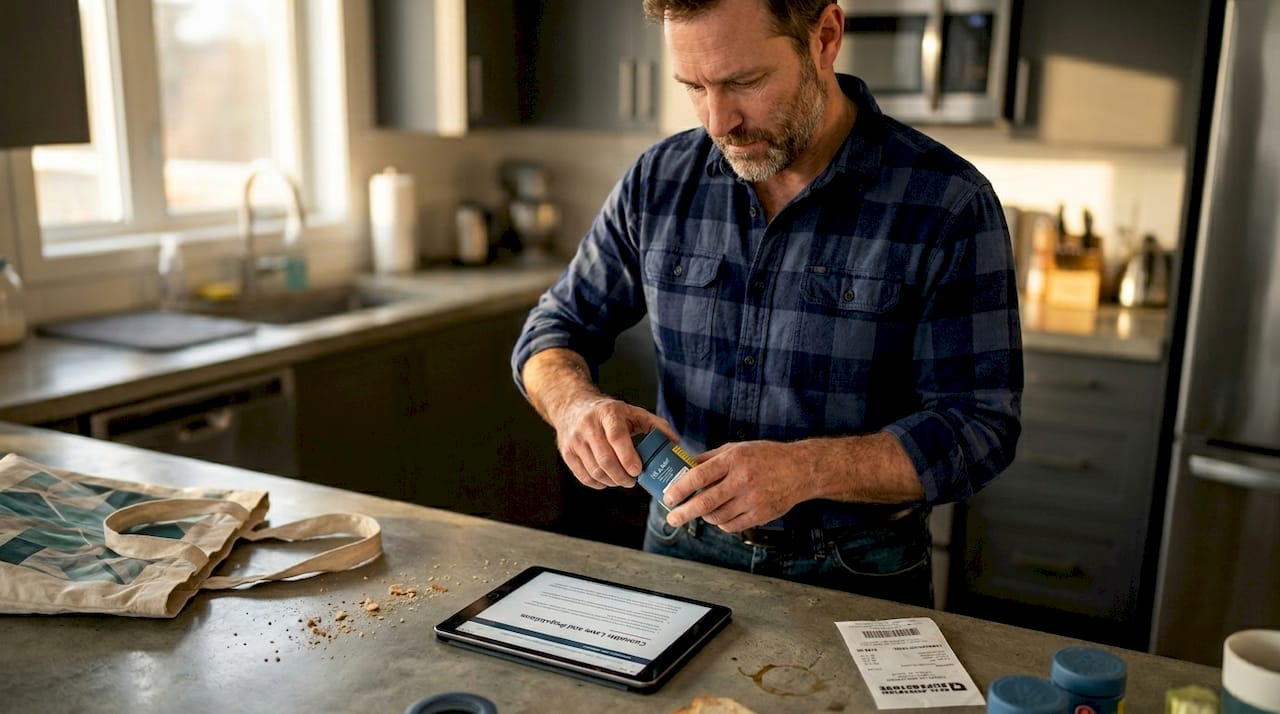
Legal cannabis packaging is not just about aesthetics. It is a regulated system designed to keep products away from children, inform adult consumers accurately, and allow regulators to trace product batches. When you receive a product that does not meet these standards, it is a red flag that the source may not be licensed.
Here is a comparison of what compliant versus non-compliant packaging typically looks like:
| Feature | Compliant packaging | Non-compliant packaging |
|---|---|---|
| Child resistance | Yes, tested mechanism | No lock, easy to open |
| Tamper evidence | Seal or shrink wrap intact | No evidence of tamper protection |
| Label language | Health warnings, batch number, THC/CBD content | Missing health info or no batch number |
| Design | No cartoon characters or child-appealing imagery | Bright cartoon designs or unlabelled |
| Opacity | Opaque or partially opaque | Fully transparent with no warning |
Missouri’s regulatory framework treats packaging compliance as an active enforcement issue, requiring child-resistant, opaque packaging and pre-submission review of product designs. This is not unique to Missouri: these standards are increasingly adopted across North America as regulators close loopholes exploited by grey market sellers.
New York goes further, requiring child-resistant retail packages and incorporating digital age-gating concepts for any website or application targeting consumers 21 and over.
Key things to check on your product label:
Pro Tip: If you receive an online order and the packaging looks unfamiliar or the label seems photocopied or poorly printed, contact the retailer before opening it. Legitimate licensed producers use consistent, professionally printed packaging. Checking eco-friendly packaging rules can also help you understand what sustainable and compliant packaging looks like in the current landscape.
Beyond the box it comes in, knowing what you are allowed to buy and carry is your next step.
Canada’s federal framework sets the personal possession limit at 30 grams of dried cannabis or its equivalent when in public. This equivalency rule is where many people slip up. One gram of dried cannabis equals roughly 0.25 millilitres of cannabis oil or 15 millilitres of a liquid product. An edible portion equivalent to one gram is anything containing up to 10 milligrams of THC.
Here is a practical data table to illustrate the equivalency rules under the Cannabis Act:
| Product type | Equivalent to 1g dried cannabis |
|---|---|
| Dried cannabis | 1 gram |
| Cannabis oil (liquid) | 0.25 mL |
| Edible cannabis | Up to 10 mg THC |
| Solids (edibles by weight) | 0.1 grams |
| Topicals | 1 gram |
The purchase limits in Canada also extend to per-transaction and daily limits at licensed retailers, which typically mirror the 30-gram public possession cap per visit. Medical cannabis patients registered under the ACMPR can possess more, often up to 150 grams or a 30-day supply based on their medical document, whichever is greater.
How to stay within the law at every step:
As local rules confirm, jurisdictional variation means even experienced buyers can find themselves in unexpected situations simply by crossing a provincial border without rechecking limits. The key is building the habit of verifying limits as part of every trip rather than assuming consistency.
No checklist is complete without considering the difference between local and federal laws, especially when it comes to travel or online shopping.
Even in 2025, this is one of the most misunderstood areas for both Canadian and American cannabis consumers. Cannabis is legal for adult recreational use in Canada under federal law, which creates a more unified framework than in the United States. However, Canadians still face federal-level issues when crossing the border into the US or travelling internationally.
In the United States, cannabis remains a Schedule I substance under the Controlled Substances Act. This means that even in Colorado, California, or any other state with a robust legal market, federal authorities retain the legal authority to prosecute cannabis-related activity. Federally regulated spaces such as airports, national parks, and federal courthouses are subject to federal law regardless of state programmes.
Key risks to be aware of:
Buying from unverified online cannabis sources that lack proper licensing is one of the fastest ways to unknowingly step outside both local and federal compliance.
Understanding delivery legality in 2025 is equally important for online shoppers. Even where delivery is permitted, there are strict rules about how it must be conducted, including ID verification at the door and geographic restrictions on where delivery is allowed. Medical designations do not override these rules at the federal level.
Now that you’re informed, here’s a checklist you can customise for your own safe, legal cannabis routine.
The most important thing to understand about any compliance checklist is that it must adapt to your location and situation. As noted in medical cannabis regulation guidance, licensing and packaging requirements can differ materially by state or province, making a universal checklist insufficient on its own. Think of the following as a modular framework you update as rules change.
Your 2025 legal cannabis purchasing and usage checklist:
You can find a detailed wellness cannabis checklist that covers safe and effective use beyond just legal compliance, and pairing it with understanding lab testing for safety gives you a strong foundation for confident purchasing.
Pro Tip: When purchasing online, screenshot the retailer’s licence number and save the order confirmation with the batch details. This takes thirty seconds and gives you clear documentation if a question ever arises about legality or product quality.
A checklist is only as good as its fit. Let’s take a step back and consider what really works in practice.
Here at GreenSociety.cc, we see a common pattern: buyers treat compliance as something they figure out once, then file away. They learn the basics, build confidence, and stop checking. Then a municipal bylaw changes, a new product category gets added with different possession equivalencies, or an online retailer changes hands and loses its licence. Suddenly what felt like a routine purchase becomes a problem.
The uncomfortable truth about legal cannabis in 2025 is that regulations are not static, and the buyers who feel most confident are sometimes the ones most at risk. Overconfidence built on outdated information is a genuine compliance hazard. We have seen this play out in small ways, such as buyers being fined for public consumption in areas where the rules tightened, and in larger ways, such as edible purchases that exceeded the new equivalency caps introduced mid-year.
Small packaging or labelling discrepancies that look minor can actually signal a retailer operating without updated compliance certification. Accepting a product with an illegible batch number or missing health warning is not just a safety concern. It is a purchase that could be challenged if you are ever stopped and questioned.
The practical advice we give our community: always ask questions at the point of sale. A good licensed retailer welcomes these questions and has clear answers. If a seller seems uncertain about their own packaging standards or cannot point you to their licence number, that uncertainty tells you what you need to know. Checking in with resources like the 2025 cannabis trends guide keeps you current on both market changes and regulatory shifts that affect how products are made, labelled, and sold.
Treat your checklist like a living document. Review it, update it, and use it every single time.
Ready to keep learning and make safe, enjoyable choices? Here’s where you can go next.
Building a compliant and satisfying cannabis routine means staying informed well beyond the point of purchase. At GreenSociety.cc, we have put together resources that go deep on every product category so that whether you are a first-time buyer or a seasoned connoisseur, you are always working from current, reliable information.
Start with our cannabis flower checklist for a step-by-step walkthrough of buying and using flower safely and within the law. If edibles are your format of choice, the cannabis edible recipes guide offers practical guidance on dosing, labelling your homemade products, and keeping edibles safely stored and away from children. For those exploring non-psychoactive options, our CBD products guide explains what to look for in compliant CBD products across formats. Your legal cannabis experience is worth protecting. We make that easier.
Legal packaging must be child-resistant, opaque, tamper-evident, and meet all local label requirements for content and health warnings. Missouri’s regulatory framework confirms that compliant packaging standards include pre-submission review for product designs to ensure they do not appeal to minors.
Yes, but only from licensed retailers with proper age and ID verification that meet digital age-gating standards. Canada’s online buying rules require retailer licensing and age-gated checkout with ID confirmation at delivery.
Yes, cannabis remains illegal under US federal law, which can impact travel and online ordering even in legal regions. Schedule I classification means federal prosecution risk exists even where state or provincial programmes allow adult use.
Possession limits vary by jurisdiction and are typically 30 grams of dried flower or its equivalent for recreational users in Canada. As local jurisdiction rules confirm, limits for edibles, oils, and concentrates are calculated using equivalency formulas, so always verify before mixing formats.
Stay updated by checking your provincial or state government’s official cannabis page and trusted industry resources before each purchase or use. Regulations at the municipal level can change without significant public notice, so making this a regular habit is your best protection.